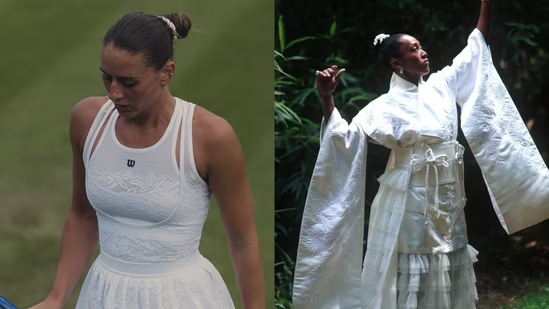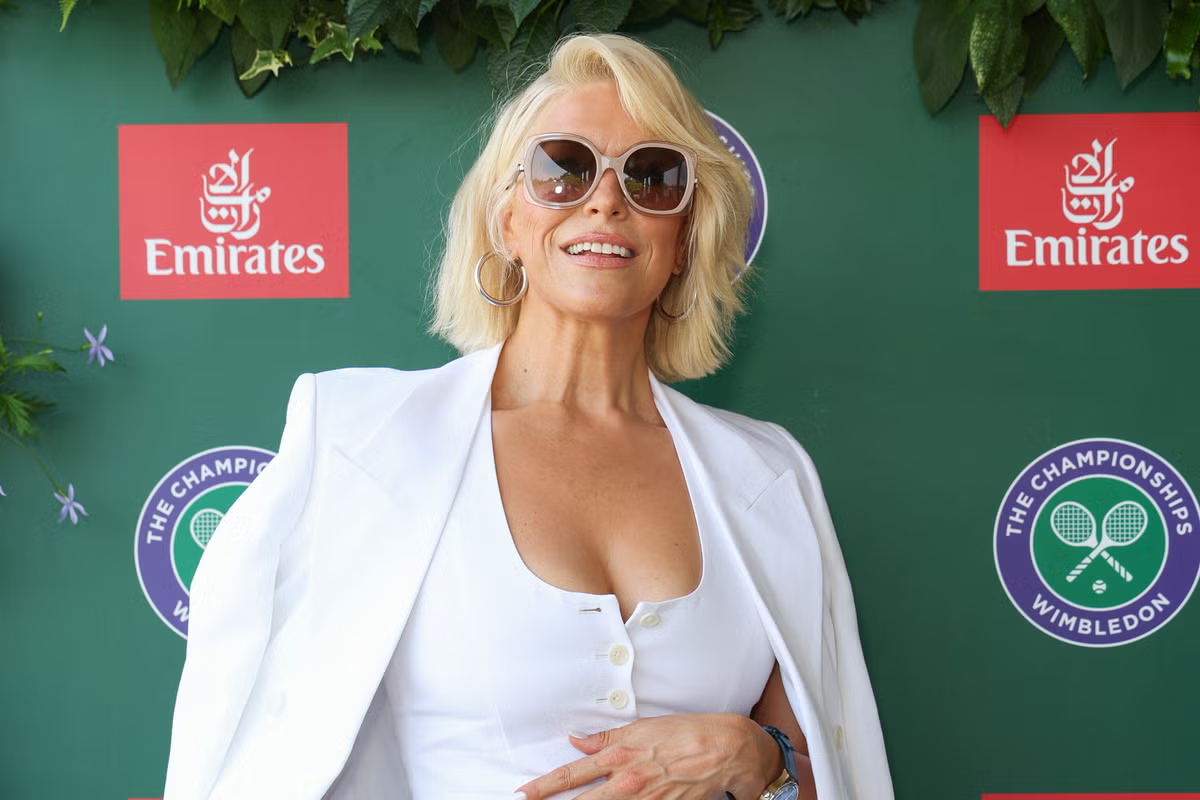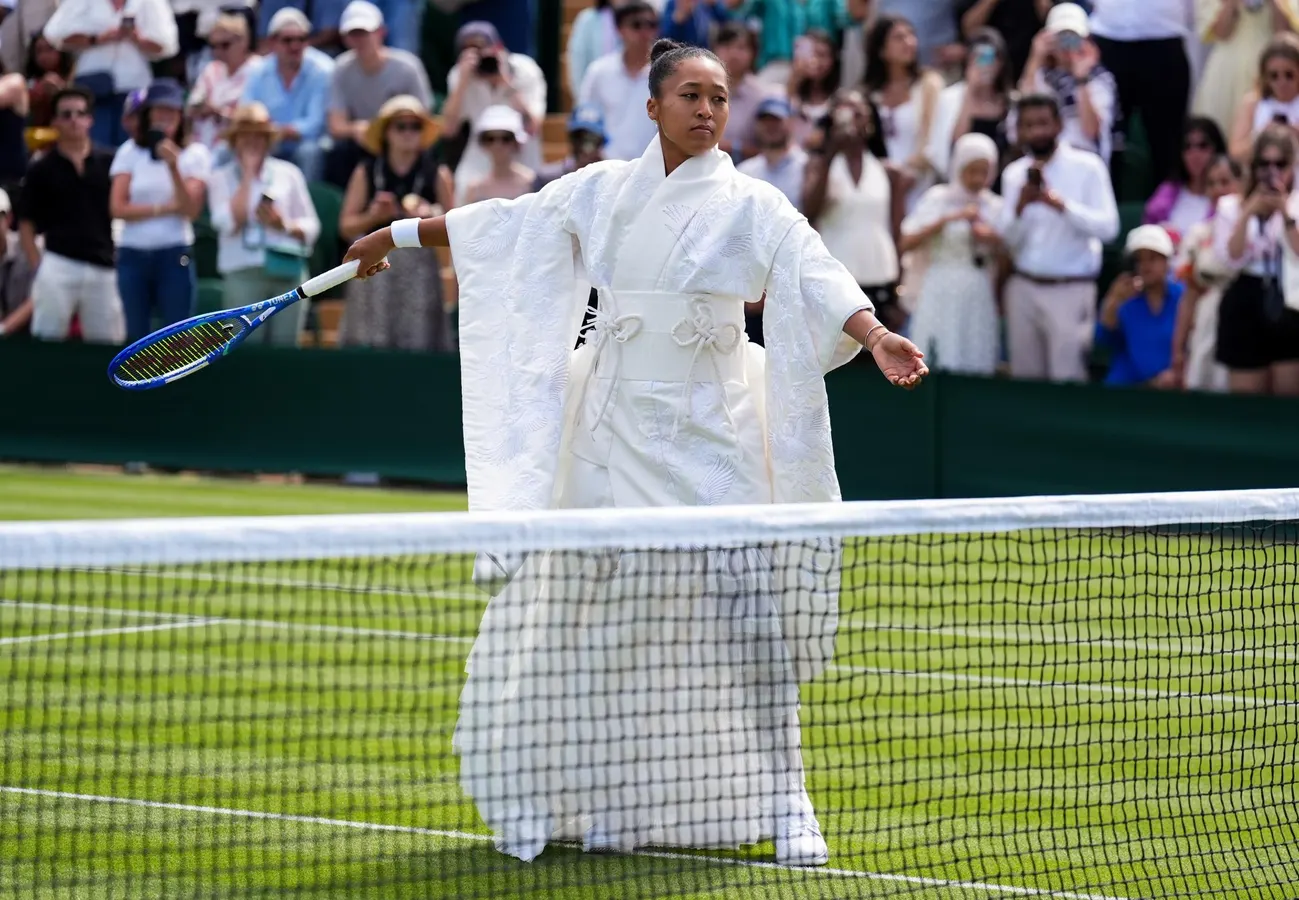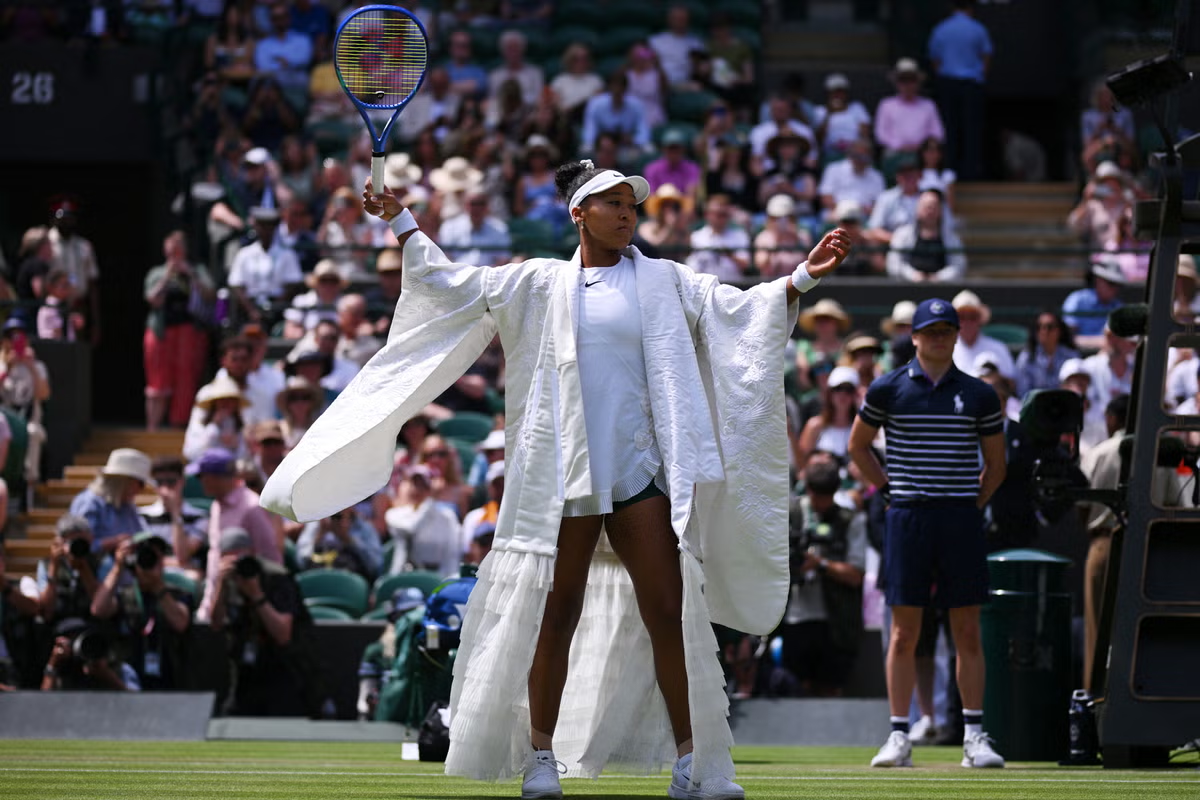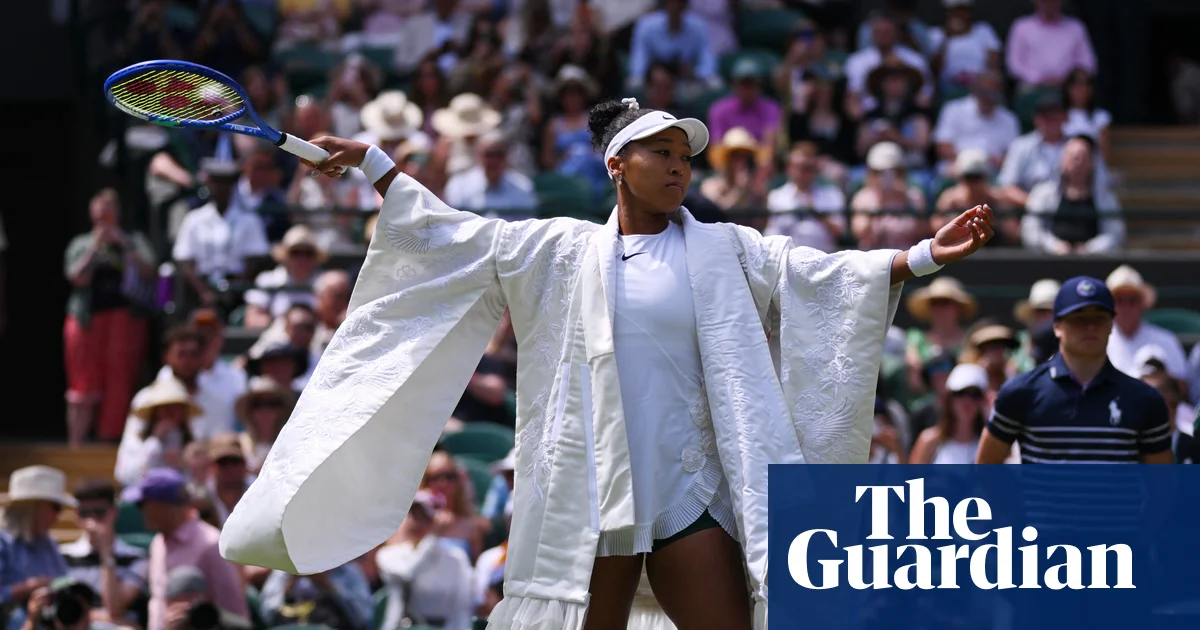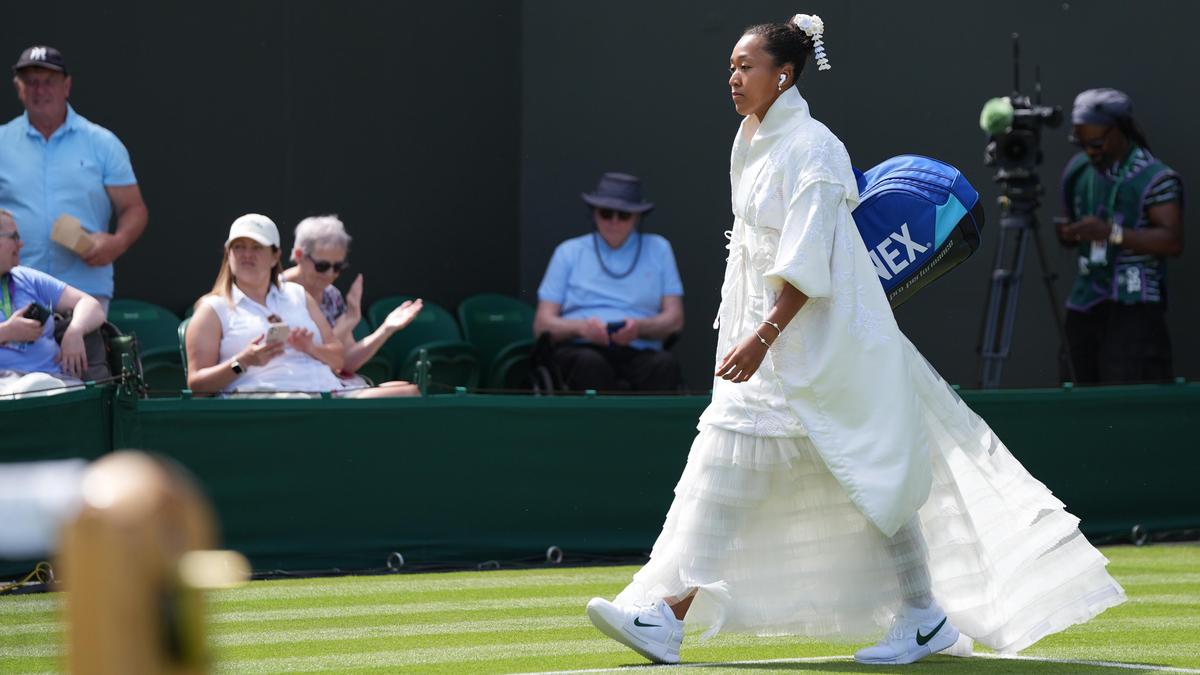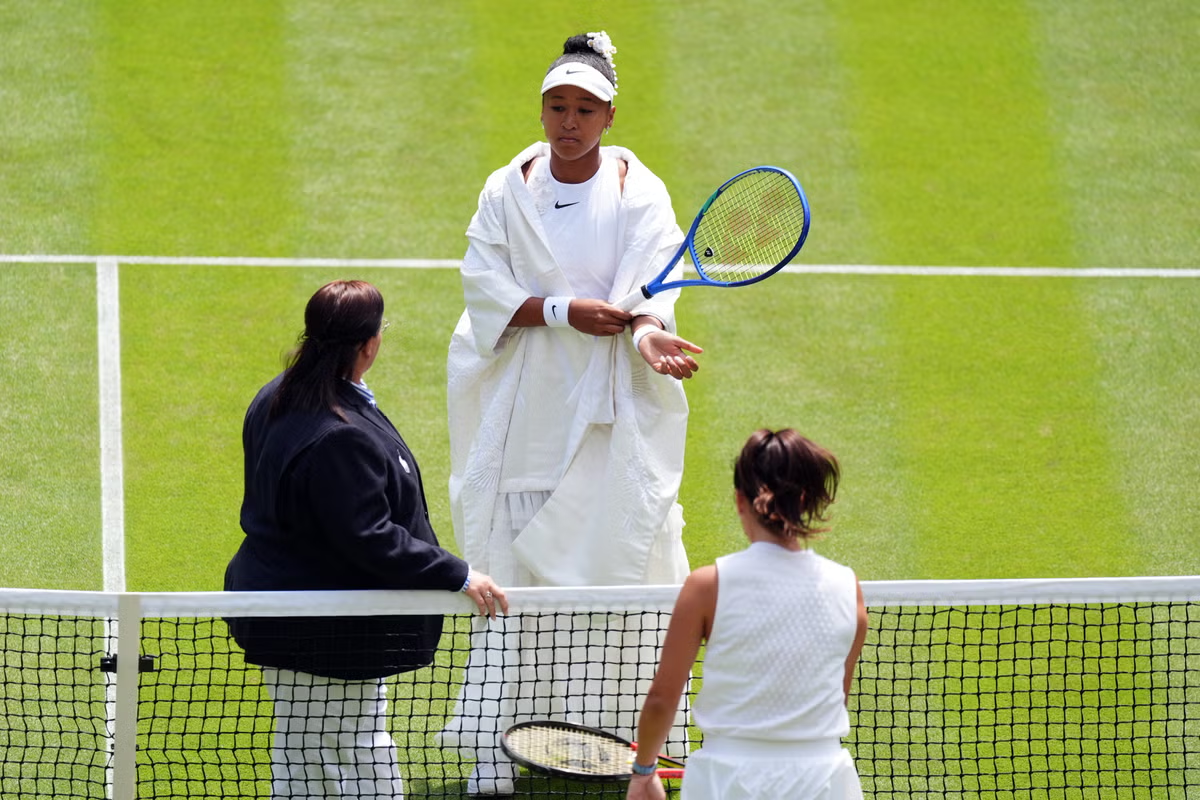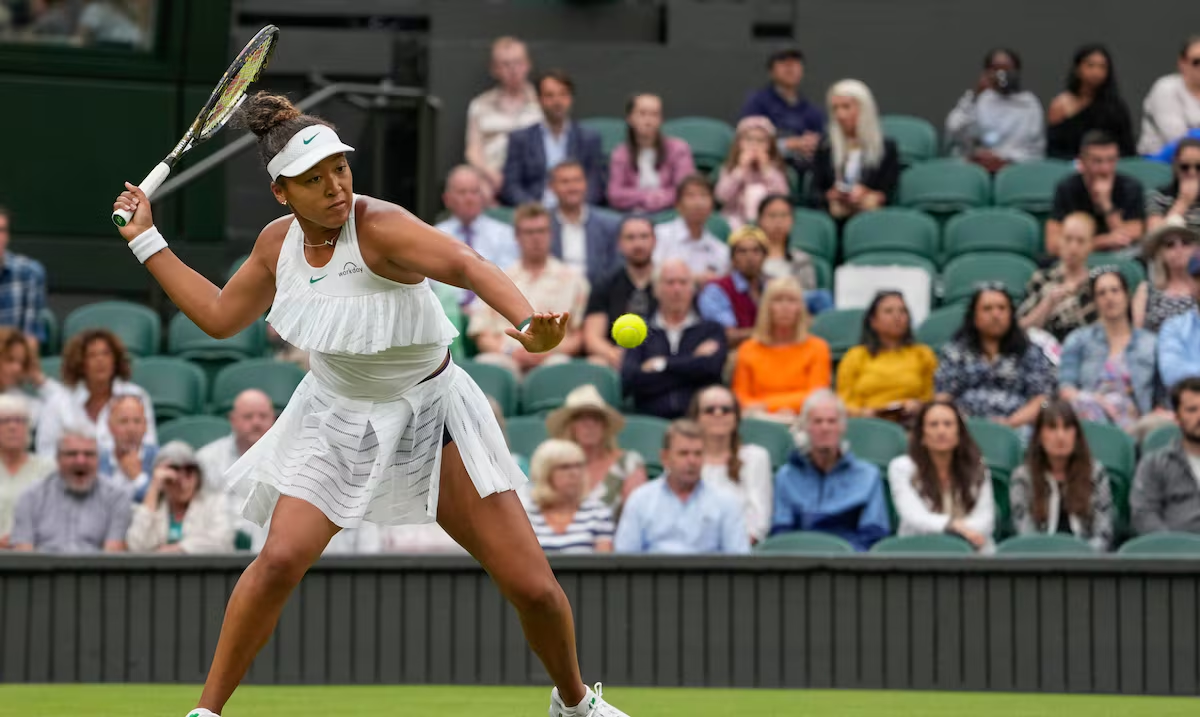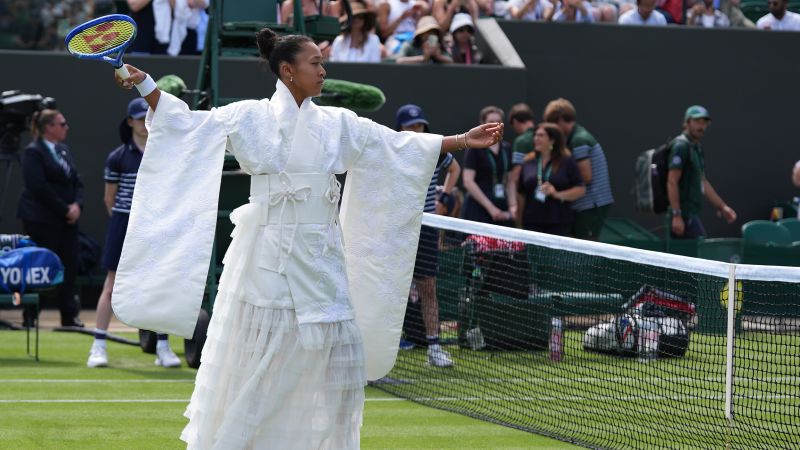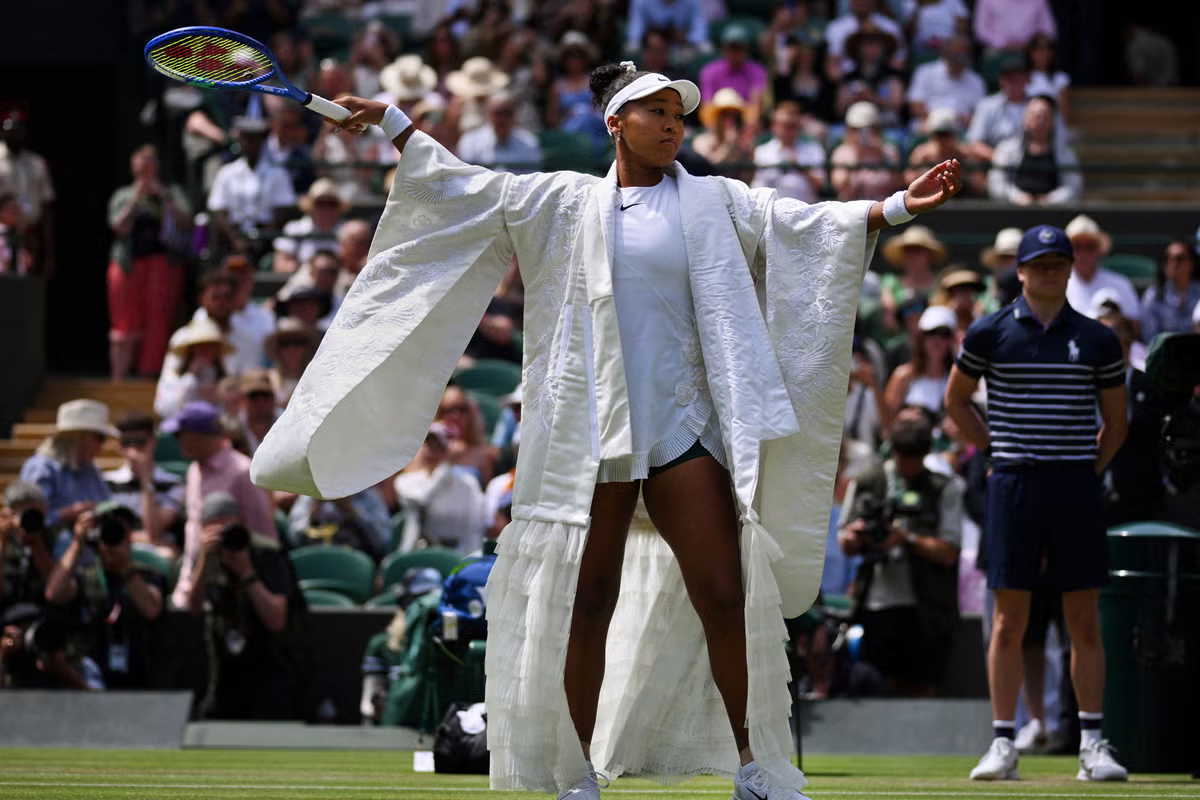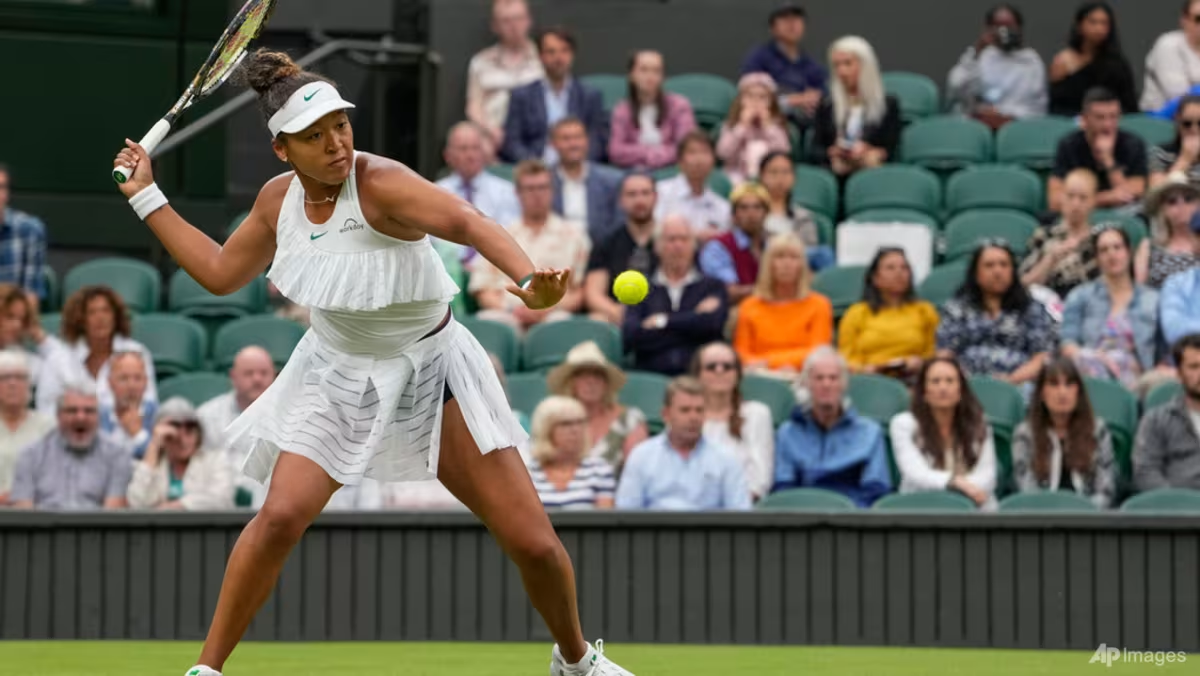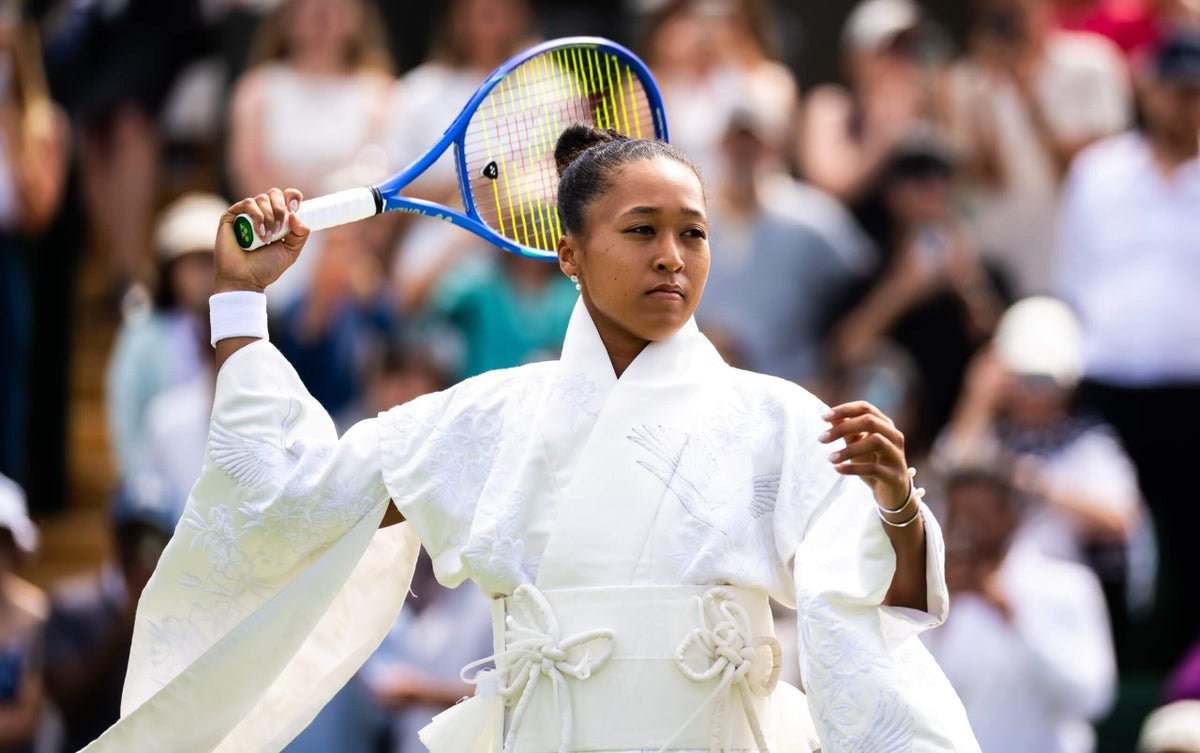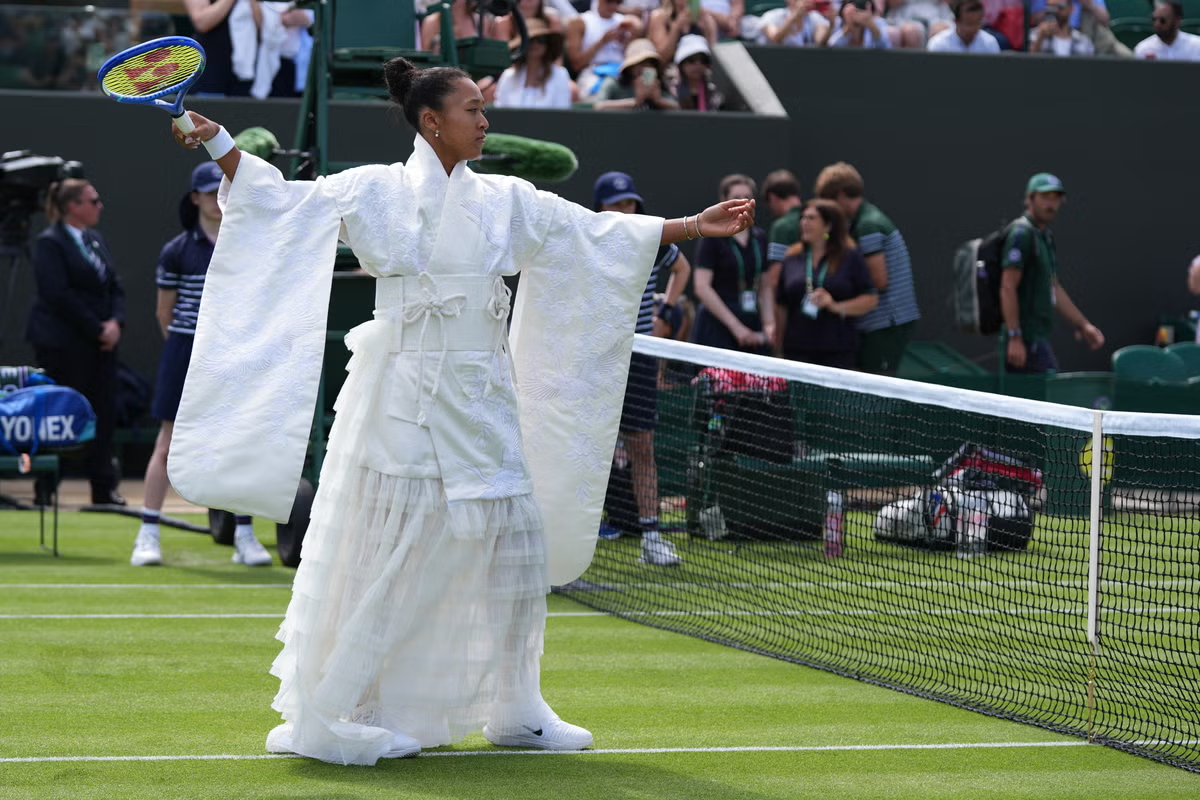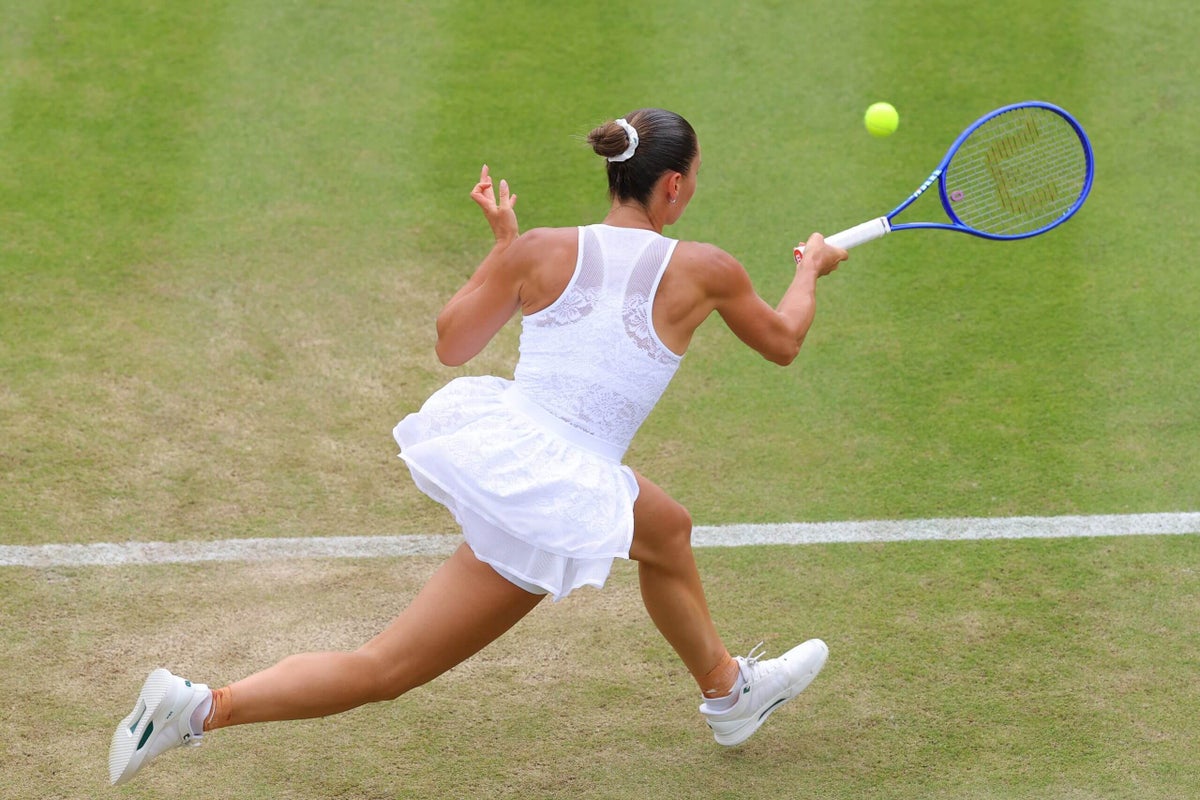
THE ALL ENGLAND CLUB, London — Naomi Osaka has been floating onto the grass wearing Japanese ceremonial couture with intricate three-dimensional flowers. Frances Tiafoe was tearing off tracksuit trousers and Taylor Fritz slipped out of a double-breasted cotton suit and silk scarf. Novak Djokovic has donned a preppy blazer.Once the action begins, Osaka’s tennis dress carries on the embroidered theme; Marta Kostyuk is wearing a dress inspired by her own wedding gown and Coco Gauff has the option of wearing a pleated skirt with a vest that has “lingerie-inspired finishes” or a dress version of the same look.All over Wimbledon, shots are being played and fashion moves made, with an emphasis on silhouette, fabric and feeling over color.The All England Club’s strict policy means player uniforms at Wimbledon must be “almost entirely white,” from their clothes to their socks and their shoelaces. It used to also extend to white underwear, but that rule changed in 2023 to allow players to feel more comfortable in darker colors when menstruating. Otherwise, little pops of other colors are allowed on collars and sleeves, but they must not measure wider than a centimeter. Brand logos and sponsor patches are accepted, but cannot be too big — or too colorful — either.And while the most eye-catching outfits are synonymous with the players who wear them, very few stars — or players whose sponsors are canny enough to see fashion as an opportunity — have the clout to command a custom kit. Even Osaka, who has turned Grand Slams into a fashion runway this year, commissions her walk-on designs herself and employs a creative director. Nike, her clothing sponsor, produces just the dress or the outfit she wears during a match.Naomi Osaka’s walk-on outfits are the highest-profile ones at the majors this year. (Kin Cheung / Associated Press)Still, the way labels explore and play with the all-white rule has become as synonymous with the tournament as the color itself.Be it Osaka, her creative team and Nike, Tiafoe and Lululemon, BOSS and Fritz, Djokovic and Lacoste, Kostyuk and Wilson or Gauff with New Balance and Miu Miu, most brands and designers have spent the past year working on the fashion moments which have wowed at this tournament. Many will already be planning for 2027.Some brands have worked heavily with their players, others have asked for their sign-off at the end of the process. And before a stitch is sewn, manufacturers have to get approval from The All England Club.Why do players wear white at Wimbledon?Ava Wallace and Madison EadesThe rules at Wimbledon are as old as the tournament, which started in 1877. It was to help players look smart, stay cool and stop them visibly sweating through their clothes when playing. The other three majors moved away from the policy decades ago, but at the All England Club the strictness endures.Roger Federer, eight-time Wimbledon champion, was told off in 2013 when he wore white Nike shoes with a bright orange sole. The All England Club banned him from wearing them again. American Andre Agassi, an eight-time Grand Slam champion known for his bold style, which often included denim shorts and loud colors, boycotted three tournaments between 1988 and 1990.At Wimbledon, expressiveness comes by other means.Osaka, the 28-year-old four-time Grand Slam champion, wore a ruffled aquamarine ensemble with a white skirt and parasol at the Australian Open, and a cascading black skirt and shimmery gold on-court dress at the French Open.At Wimbledon, she was all in white. Embroidered cherry blossoms and cranes, and a silhouette inspired by Japanese ceremonial dress — and Lucy Liu’s all-white kimono from “Kill Bill” — defined the creative self-expression of her walk-on outfit, while her dress also featured floral embroidery.When Osaka played her second- and third-round matches, both comfortable wins over Russia’s Anastasia Gasanova and Australia’s Daria Kasatkina respectively, she dropped the full kimono and opted for a light jacket along with a waistband and ruffled train. Then she defeated world No. 1 Aryna Sabalenka, to keep the show going.“When someone talks about Wimbledon or when I think about Wimbledon, it’s obviously the all white,” Osaka said after her first-round win over France’s Elsa Jacquemot.“Then there’s obviously the tradition of it all. In my head when I think about that I think about my cultures, my heritage, which is Japanese and Haitian. Then if I dive deeper into like Japanese culture, I think about the most iconic silhouette, which for me is a kimono. You don’t have to see the color of a kimono to know that it is a kimono.”Coco Gauff’s main sponsor, New Balance, has partnered with fashion label Miu Miu on limited-edition kits for the star. (Adam Davy / PA via Getty Images)For Gauff, different cuts and shapes have defined her on-court look this year, in a collaboration between her kit sponsor, New Balance, and fashion label Miu Miu. She has worn a vest and skirt combination, as well as a dress, both of which feature a lace trim and teardrop loop back.“For me, we wanted to make it kind of feminine because white can be such a feminine color, and delicate a little bit, so we added the lacing details on the trim and just made it romantic,” she said during an interview at a launch event for the collaboration in London ahead of Wimbledon.“Obviously last year I wore something that was kind of like a bridal, some people thought it was like a wedding dress, so it’s a little bit of an ode to that, but not really, in a completely different way.”Gauff has sufficient stature in the sport — but also in her partnership with New Balance — to take a close role in the design of her kit. The design for next year’s tournament is already in progress, partly because clothing sponsors are also businesses with retail plans and partly because of the All England Club’s vetting process.For Italian brand Ellesse, which sponsors world No. 33 Alejandro Tabilo, his first-round Wimbledon exit marked the start of the process for next year’s run.“You have to submit the technical files for the products you are designing so they (AELTC) can approve it,” Davianis Rosales, Ellesse Chile’s key account manager, said shortly after watching Tabilo’s loss to Poland’s Kamil Majchrzak. “Once you have the product ready, they confirm that the product is OK to wear in court.”Rosales said the whole process took them around six months. A player liaison officer at The All England Club did query some details on Tabilo’s outfit, which the 29-year-old wanted to be as light and sweat-wicking as possible.“We had to include more information and then Tabilo’s manager sent the physical samples to the All England Club. It was approved one month ago and double-checked a week before the tournament,” Rosales said.The highest-ranked American man left, Taylor Fritz, said sponsor Hugo Boss approached him over wearing a white suit. (Jan Kruger / Getty Images)For the vast majority of players, even big stars who are signed to large sponsors like Nike or Adidas, they are wearing the same kits as less-fancied players. The difference is in their deals — some will be paid to wear the kit, while others will just receive clothing free of charge without being paid.This makes the walk-on outfit, Osaka’s preserve, vital for self-expression — and gives fashion high visibility, bringing in fans from outside the sport’s obsessives. Fritz’s custom suit, Djokovic’s blazer and Tiafoe’s pull-away pants are just as much shop windows for Boss, Lacoste and Lululemon as they are creative expressions for the players.“It shows your personality, it shows interests outside of your forehands and backhands, and it’s good for the brands,” Tiafoe said during a news conference.Ukrainian Kostyuk, who has become synonymous with Wilson’s current tennis fashion output, was having discussions about what she was going to wear this year back in August 2025. That was when Wilson’s chief creative officer of sportswear, Joelle Michaeloff, sat with Kostyuk in Washington, D.C., and the pair discussed ideas for her dress, which has now sold out. Osaka’s Nike dress sold out before she even wore it in person.“It doesn’t happen often, it just happened (for a) second time that we actually designed a dress together and hopefully we’ll do it many more times. I don’t want to be excessively in this process,” Kostyuk, the No. 12 seed, laughed during a roundtable after her second-round win over Anna Blinkova Thursday.“I think they still should do their job. I can come in, step in when the occasion is good.”Being at the center of tennis fashion leads to players assuming additional pressure, and both Fritz (at Wimbledon) and Osaka (at the French Open) have referenced their fear of losing early in such a high-profile ensemble.But for players who are still in the tournament and those who have lost alike, brands will already be thinking about Wimbledon’s 150th year in 2027, and what they each can do to make their all-white looks stand out from the crowd.
How Wimbledon’s all-white rule inspires outfit creativity from tennis stars and fashion labels
At the oldest Grand Slam, outfits are defined by cut, detailing, silhouette and texture, not color.
1,493 words~7 min read