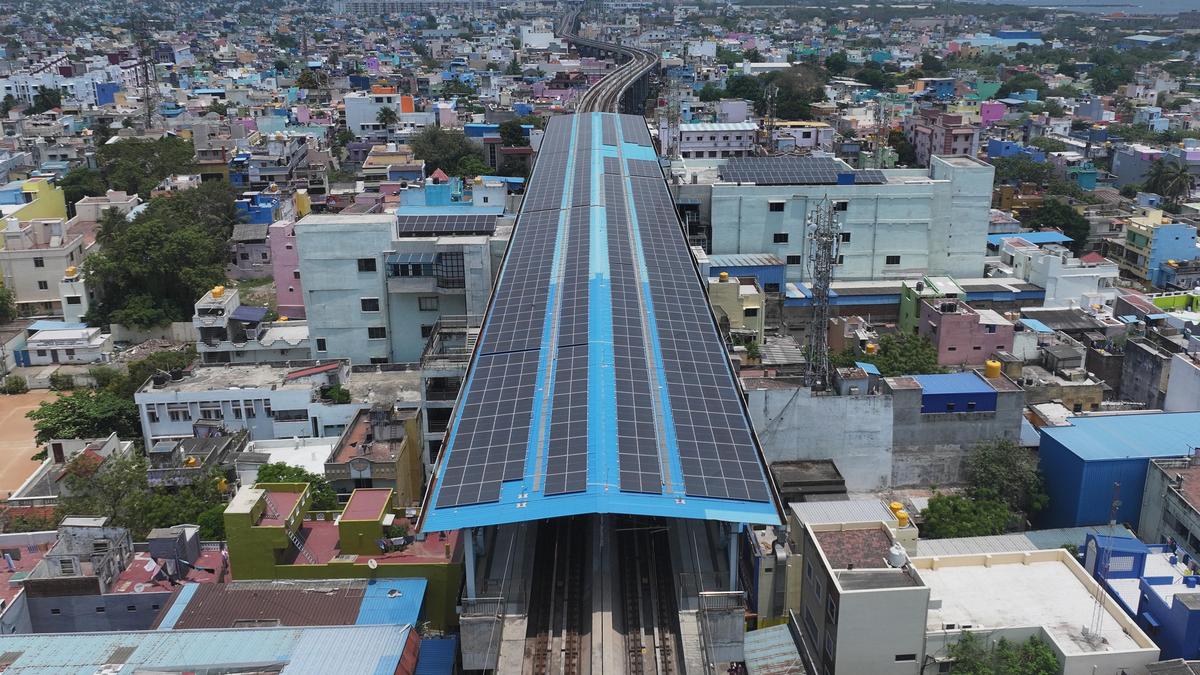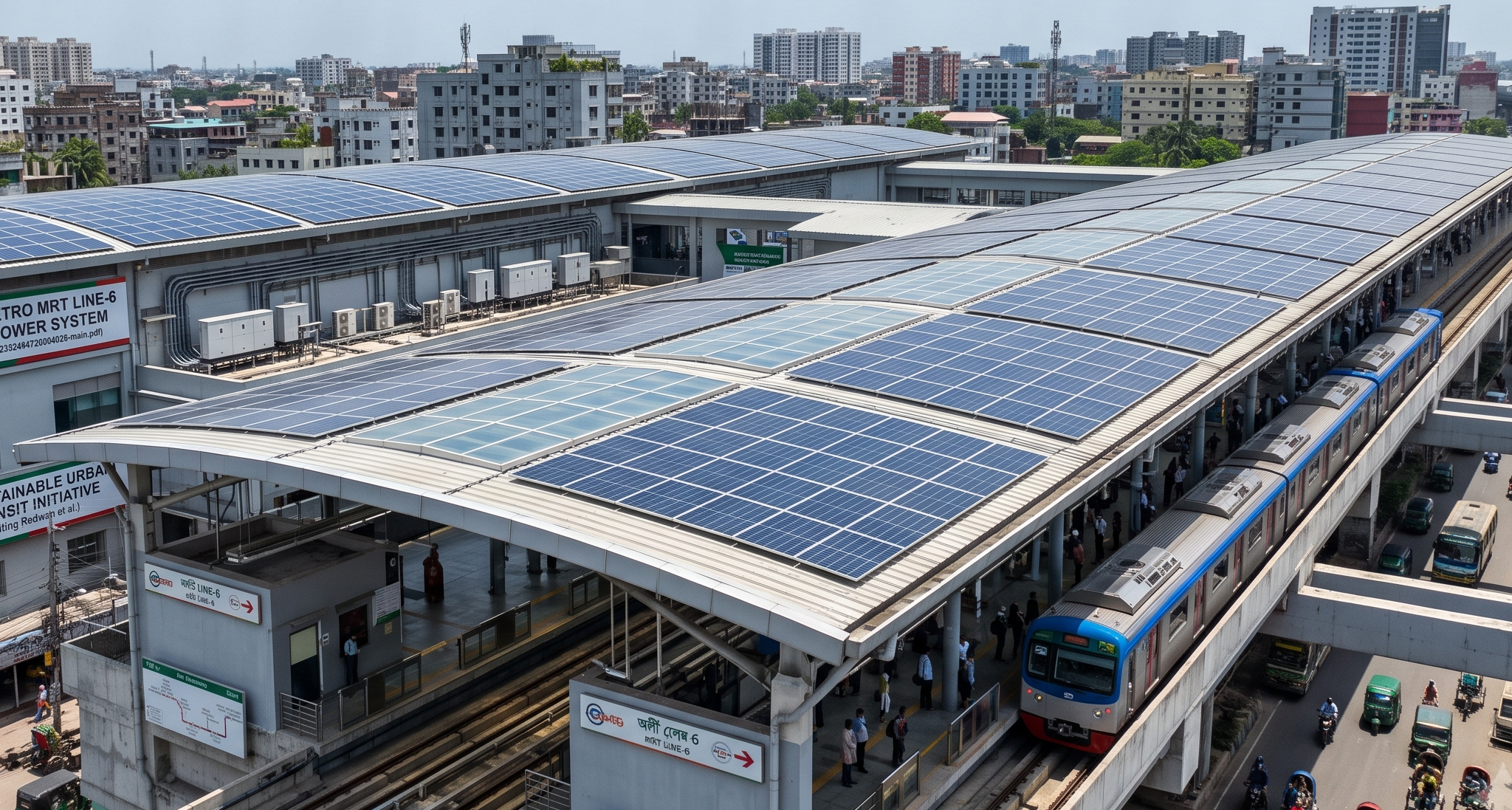
Bangladeshi researchers modelled a 20.38 MW rooftop solar PV system across Dhaka Metro’s MRT Line 6, showing strong technical potential and significant CO₂ reductions.
The study also found attractive economics, including a six-year payback period, high return on investment, and optimal performance across different zonal configurations.
Bangladeshi researchers have modelled the technical and economic potential of integrating rooftop solar PV across Dhaka Metro Rail’s MRT Line 6, finding that a 20.38 MW system could significantly offset auxiliary electricity demand while delivering strong financial returns.
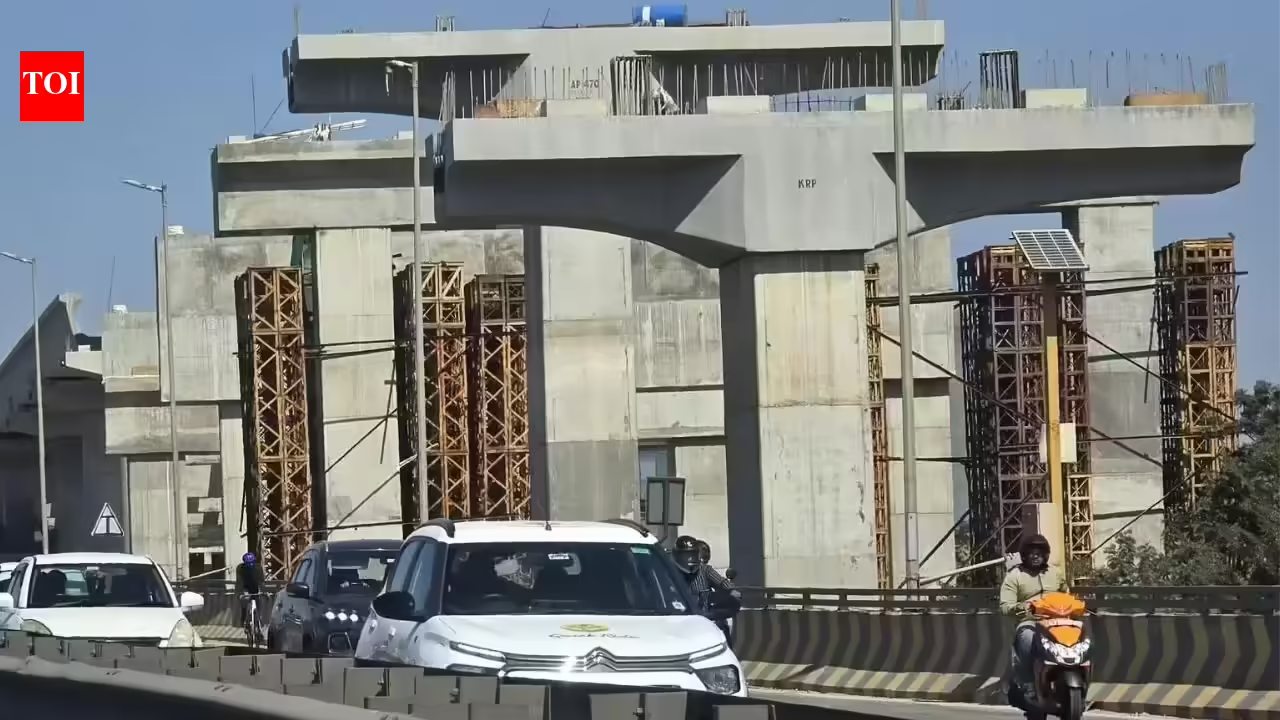
The line, which entered service in late 2022 as Bangladesh’s first metro system, spans 21.26 km. It runs on an elevated alignment from Uttara North in the north of Dhaka to Motijheel in the south, serving 16 stations.
“This study combines two complementary simulation approaches: PVsyst for high-resolution, station-by-station technical modelling across all 16 stations and five depot facilities, and HOMER Pro for techno-economic optimization of hybrid PV–grid–battery systems,” corresponding author Rahat Redwan told pv magazine. “To our knowledge, this is the first study to pair detailed station-level PV design with zone-based hybrid optimization and a full sensitivity analysis for a South Asian metro system.”