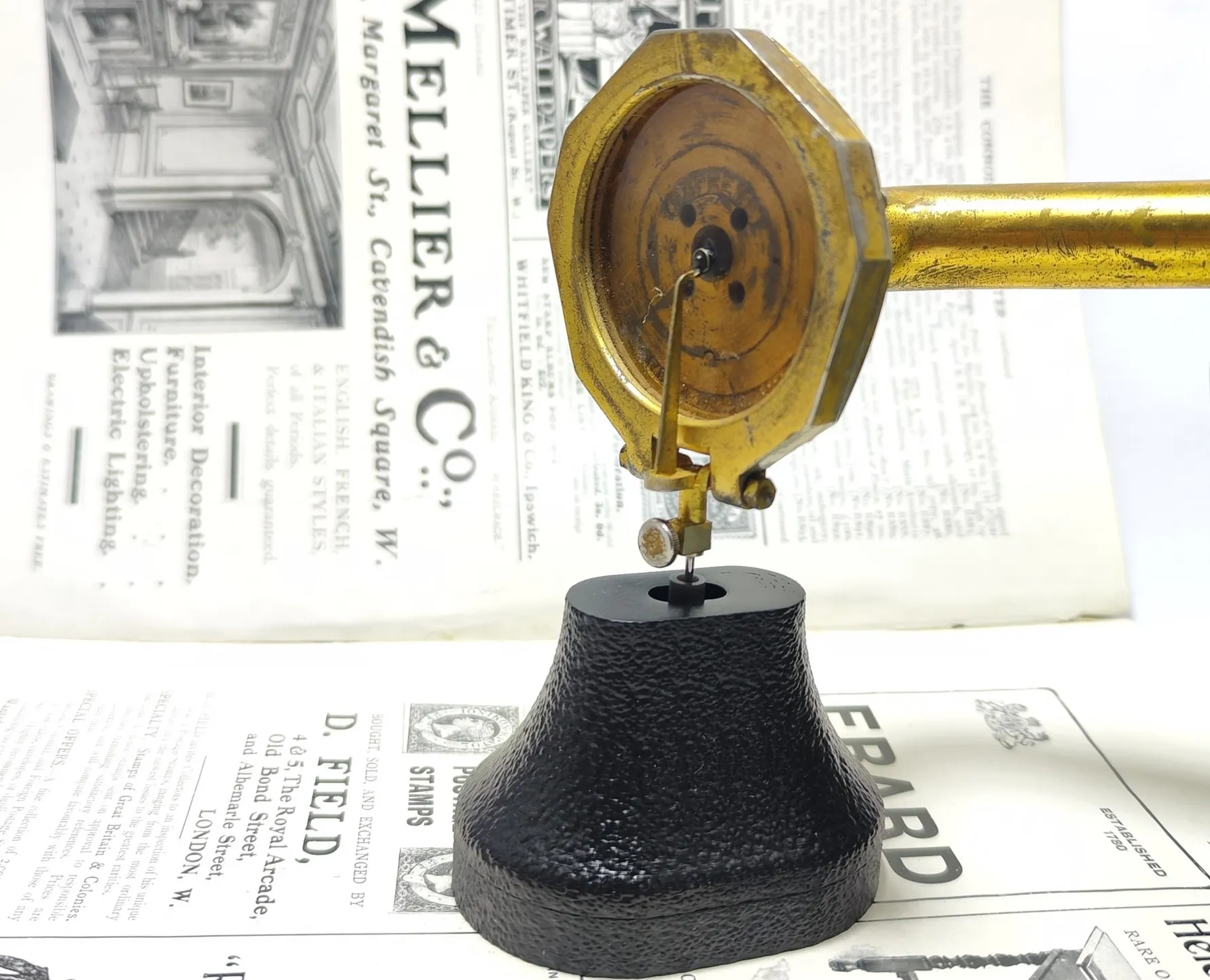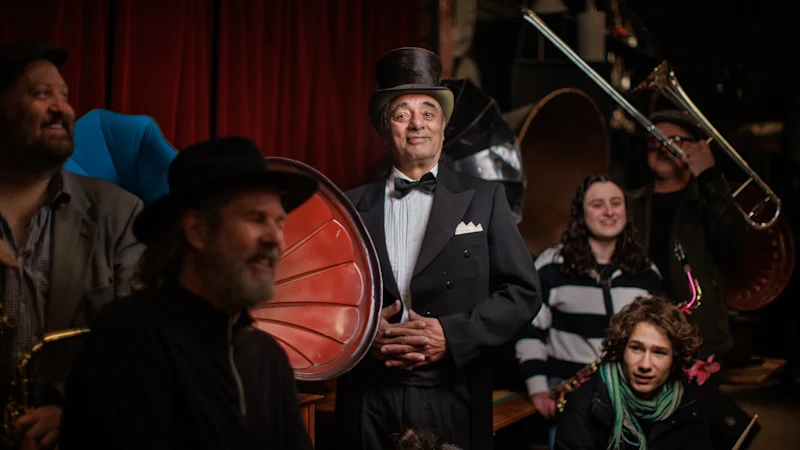
July 6, 2026 — 7:00pmThe first time Henry Williams-Kriegler hears a gramophone is the day he turns up for the photo shoot for this story. And the talented 15-year-old percussionist is seriously impressed.“It’s incredible,” he says. “It’s not a sound like I’ve ever heard before. You really can’t work out where it’s even coming from.”Chunny Bhamra, aka DJ Mono (centre), and friends are hoping to breathe new life into one of the oldest recorded music formats.Simon SchluterWilliams-Kriegler is one of the many local musicians who have been roped into performing as part of a short season of events dedicated to the recorded music player, which ruled the sonic roost from the 1890s until the early 1950s. And the mastermind behind it all – Nairobi-born, Glasgow-raised, Melbourne-based Chunny Bhamra – is hoping it might help kindle interest in a format he’s been listening to his entire life.“There’s never a day goes by that I don’t listen to a 78,” he says in his Scottish brogue, referring to the discs that were the software of the gramophone ecosystem, made of pressed shellac (insect excrement) and rotating at 78 revolutions a minute.The resurgence of vinyl gives him hope that kids reared on MP3s might be open to engaging with another analogue format; they just need a good shellacking to get there.“Once they actually hear the records, they’re blown away, really,” he says. “It’s not stereo, it’s not like a modern system, it’s an all-encompassing event. It’s an experience, really, isn’t it?”Emil Berliner’s hand-cranked machine, patented in 1887, was the first to use discs instead of cylinders.For Bhamra, who will appear at the series in East Brunswick as his alter-ego, DJ Mono, (“because my hearing’s not that great,” he quips), it’s more than an experience. It’s an obsession. He has about 30 gramophones in Melbourne, where he’s lived for about a decade, with another 1000 or so in storage in Hong Kong, where he spent 30 years as a builder. He has about 100,000 78s there, too, and the same here.“I’ve got sheds full of them,” he says. “Mostly [record traders] give them to me because nobody actually wants to play 78s, and they don’t want them ending up in landfill either.”When he plays one for me – When You’re Smiling by British trumpeter Nat Gonella, played on an Expert Senior from 1930 – it’s clean and crisp, nothing like the scratchy 78s I heard as a kid on my parents’ stereo.“The trick,” he says, “is you only use each needle once.” He buys them in batches of many thousands, and they work out about 10¢ each.The shellac, he explains, is much harder than the needle, and so the needle’s fine tip quickly wears away. “And if you keep using it, it effectively becomes a chisel, gouging at the grooves of the record.”Some of the musicians performing with DJ Mono, including Tom Williams (back right) and Henry Williams- Kriegler (with drumsticks).Simon SchluterDespite the delicacy, he’s determined people should have a hands-on experience, picking a gramophone – maybe the Secretariat, with its built-in work desk, or the picnic set-up (“It has a full lunch setting, but it’s so heavy you’d need a porter to carry it,” he observes. “It’s ridiculous”) – selecting a 78, and giving it a spin. With a fresh needle, of course.Bhamra is no purist, though. He used to run a record store in Glasgow, and in the late 1970s made a killing selling punk singles at a local market – “I could shift 1000 a day,” he claims – and describes himself as a child of the late, great radio DJ John Peel, whose tastes were heroically eclectic. “I’d have punk in one ear, and Pennies From Heaven in the other,” he says.That’s much the vibe Tom Williams is going for in the two Saturday night gigs at which DJ Mono will share the stage of the Cross Street Music Hall with local musicians across a range of genres, including, he promises, jazz, hillbilly, surf rock and funk.‘It’s like seeing drawings on a cave – it gives you the story of where we’ve come from.’Tom Williams“It’ll be a street-band kind of vibe, a nice loose energy,” he says. “DJ Mono will play 78s, and little by little the live band will take over, improvising around the tracks. And then coming out the other side, a similar kind of thing [in reverse].”Williams had never heard a gramophone record in the flesh either until he met Bhamra, and he, too, is a convert.“This is such a great time-warp into our passion for music,” he says. “It’s like seeing drawings on a cave – it gives you the story of where we’ve come from, and that really excites me, to connect with it again. I think kids should definitely experience that.“We’re passing the story on, and we’re playing with it in this current time,” he adds. “I think that’s what music has always been about.”The Gramophone DJ artist-in-residence series runs July 11, 14 and 18 at Cross Street Music Hall. Details: merri-bekcityband.comStart the day with a summary of the day’s most important and interesting stories, analysis and insights. Sign up for our Morning Edition newsletter.More:Live musicFor subscribersCity lifeLive musicSee & DoFrom our partners
‘It’s incredible’: Why this DJ is trying to get Gen Zs hooked on the gramophone
Forget the vinyl revival, DJ Mono is backing a resurgence of one of the first recorded music formats – the 78 and the gramophone.
869 words~4 min read