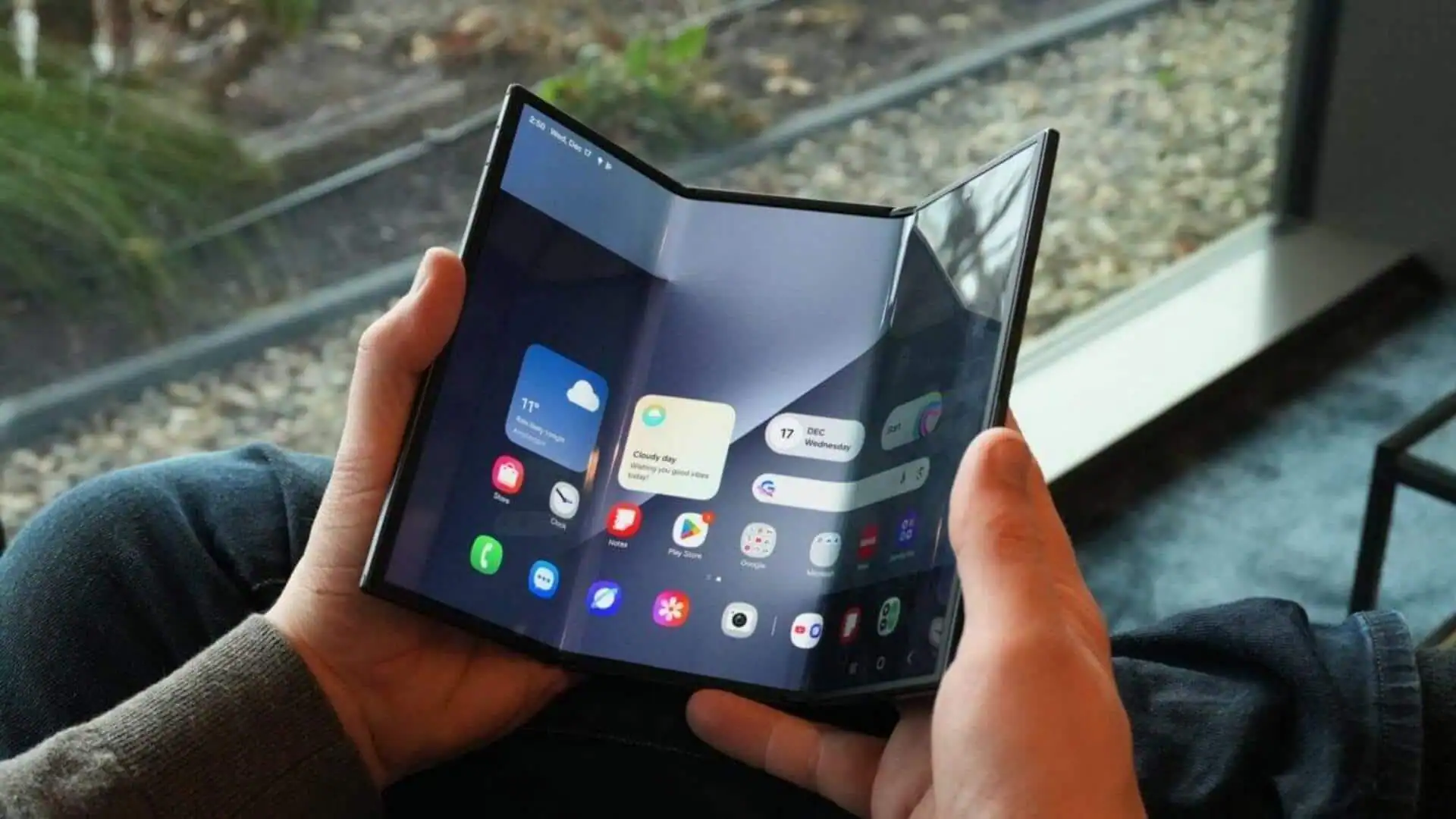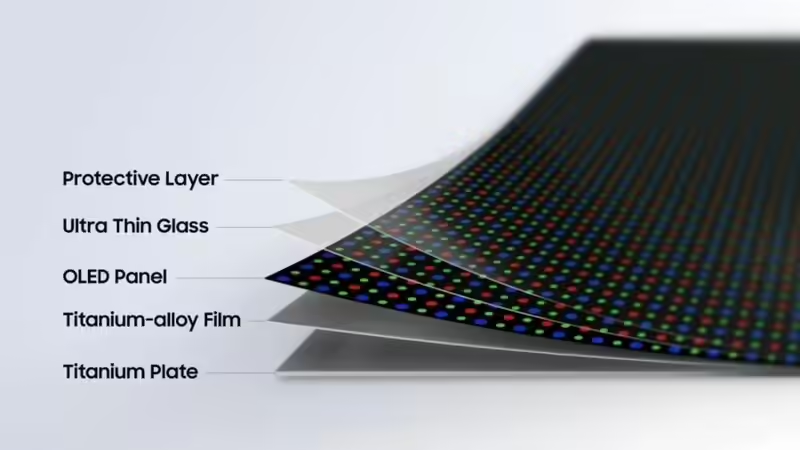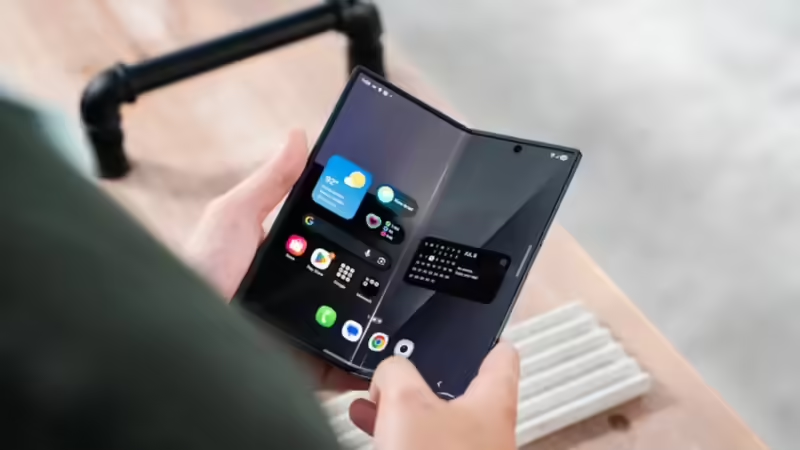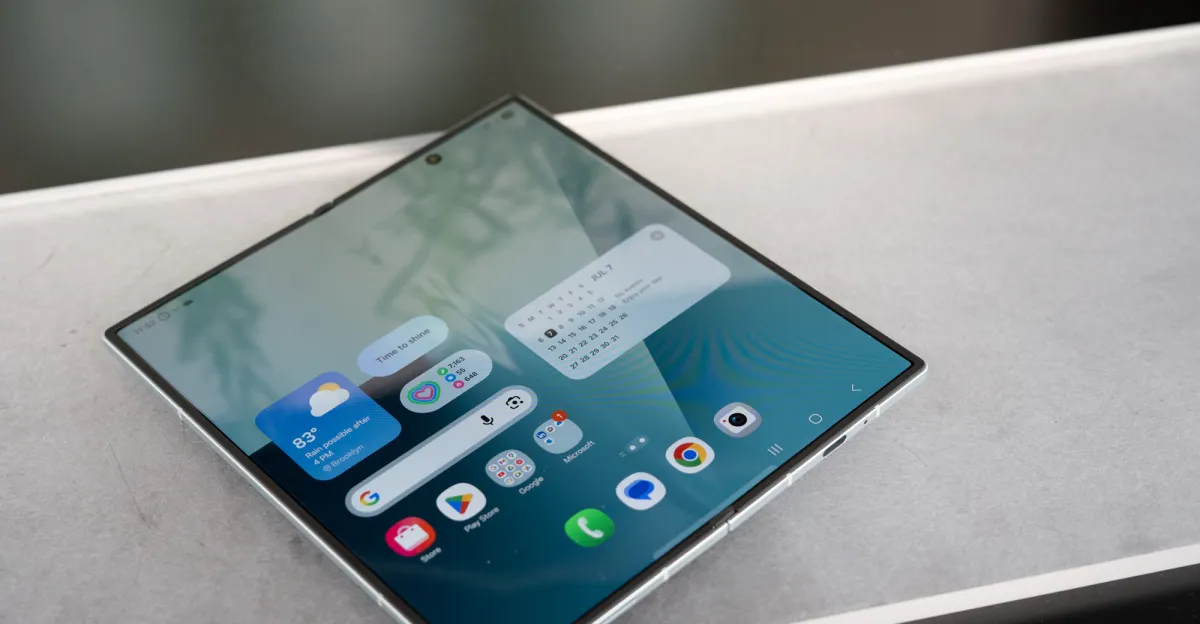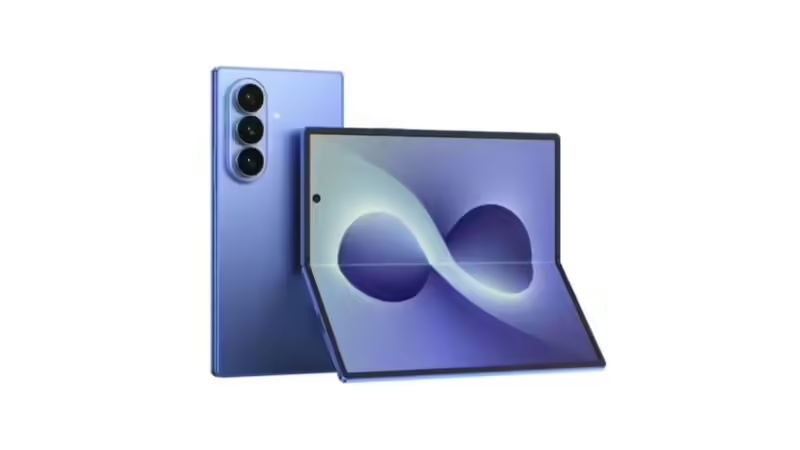
Photo credit: X/@business_todaySamsung is reportedly preparing a significant engineering upgrade for its next-generation foldable smartphone, with new hinge technology aimed at drastically reducing, and potentially nearly eliminating, the visible display crease that has long been a defining compromise of foldable devices. According to reports based on industry leaks and supply-chain insights, the upcoming design shift is expected to appear in the next Galaxy Z Fold series iteration.The development signals Samsung’s continued push to tune up foldable durability, and also improve its appearance, as the competition keeps intensifying in the premium foldable category. As the leak suggests, the company seems to be focusing on structural re distribution of stress across the foldable panel, which may result in a smoother and more seamless screen experience for users during everyday use cases.How Samsung reportedly redesigned the hinge mechanism to reduce crease visibilityAs per the reports, Samsung has allegedly introduced a re-engineered hinge architecture, that sorta changes how the internal folding force gets distributed across the display panel. Instead of concentrating stress along one tight bend radius , the updated hinge is believed to spread the folding curvature across a wider internal chamber. So it ends up reducing sharp folding pressure on the ultra-thin glass layer, which is probably the main thing.The mechanism likely includes refined multi-rail support components that guide the screen into a more gradual arc when closed. According to industry leak-based analysis , this tactic minimizes permanent material deformation at the fold line, which is the primary culprit behind visible creasing in foldable displays. The revised hinge also appears to improve alignment precision, making sure both halves of the display meet more evenly when unfolded. kinda like less mismatch vibes.Why Samsung is prioritizing near-invisible crease technology in foldablesAs per strategic interpretations of the leak, Samsung’s motivation for reducing the crease is linked to boosting consumer acceptance of foldable smartphones as mainstream devices. The visible crease has long been treated as a psychological and visual barrier for potential buyers, even when it doesn’t seriously impact functionality. According to analysts cited in industry discussions, competition in the foldable segment has intensified , so manufacturers are pushing beyond durability and into near seamless aesthetics.Samsung is also likely responding to growing expectations from users who now compare foldables directly with traditional flagship phones, like display perfection matters more than ever. By reducing the crease, Samsung can position devices as more premium, visually uniform, and closer to slab-style smartphones when unfolded. Basically, less “fold,” more “regular phone” look.How the redesigned hinge could enhance user experience?As the leak suggests , the improved hinge design could elevate everyday usability by making the foldable screen feel more continuous and less segmented. A reduced crease improves visual consistency when reading, watching videos, or browsing, especially under direct light, where reflections usually make display folds more obvious. Reports also imply the smoother panel transition may enhance touch interaction across the fold area, cutting down slight tactile interruptions that some users notice.Plus content creators , gamers, and multitaskers could benefit from a more even canvas, where stylus input and split-screen usage feel less warped at the center line. Over time, this refinement may also reduce eye distraction, making long sessions more comfortable, and more immersive for users who rely heavily on large-screen mobile workflows.What the hinge redesign means for the foldable smartphone industryThe reported hinge advancement could be a real turning point in how foldable devices end up evolving, you know. As per industry observers, if Samsung manages to reduce the crease to near invisibility, it may end up becoming a new design benchmark that rivals will feel basically pushed to match. Foldables already shifted from experimental gadgets into premium mainstream devices, still though the crease remained one of the few lingering engineering pain points.A more or less near flat visual experience might speed up adoption among users who were dodging foldables due to worries about durability or plain aesthetics. It could also nudge app developers to adjust interfaces for continuous folding displays, and that might enable more elaborate multitasking layouts, plus immersive media moments. In other words, experiences that are better tuned for screens that look close to seamless.Expected challenges and limitations in eliminating the creaseEven with the reported improvements , getting a completely crease-free foldable display is still technically hard. As per engineering constraints mentioned in industry analysis, repeated folding introduces material fatigue in ultra-thin glass layers, even when stress is distributed more evenly. Balancing long-term durability while reducing visible folding lines is still tricky , because it needs that delicate tradeoff between flexibility and rigidity.According to leak-based interpretations , manufacturing precision may also get more demanding as hinge components become more complex, which could raise production costs. Additionally, environmental factors like heat, dust, and long usage cycles could still affect how the crease changes over time. While the visual improvement could be noticeable, experts suggest that a completely invisible crease remains more of an aspirational goal than a guaranteed outcome, for now.FAQs1. What is Samsung reportedly changing in its new foldable phone?Samsung is reportedly messing around with the hinge mechanism, sort of redesigning it so folding stress gets spread more evenly across the display. If that works as expected it could noticeably cut down the visibility of the crease on upcoming foldable smartphones.2. Why is the crease a problem in foldable phones? The crease shows up because the display gets bent again and again at a same, fixed spot. It usually doesn’t stop the phone from working but it can mess with visual quality and even the user’s overall impression of how smooth the screen feels.3. Will the crease be completely removed in the new design? From what reports are saying, the crease might be greatly reduced, not fully erased. Engineering realities still make a totally invisible fold line extremely hard to achieve.4. How could this change improve daily smartphone use? With a less obvious crease, stuff like reading, gaming, video watching, and multitasking could feel more visually continuous. So the experience may turn out more immersive and less distracting, you know, in day-to-day moments.5. When is this new hinge technology expected to launch? There is no official word yet but the rumors point to a future Galaxy Z Fold series release, depending on production readiness. It also depends on the final testing results and whether Samsung is satisfied with the outcomes.end of article
Samsung reportedly reworks hinge design to nearly eliminate foldable display crease
Samsung is reportedly developing an innovative hinge for its upcoming foldable smartphone, designed to significantly minimize the visibility of the display crease. This cutting-edge design redistributes stress over a larger surface, ensuring a more seamless and immersive screen experience. This strategic move showcases Samsung's ambition to achieve mainstream acceptance by improving aesthetics and set a higher standard for foldable technology.
1,055 words~5 min read