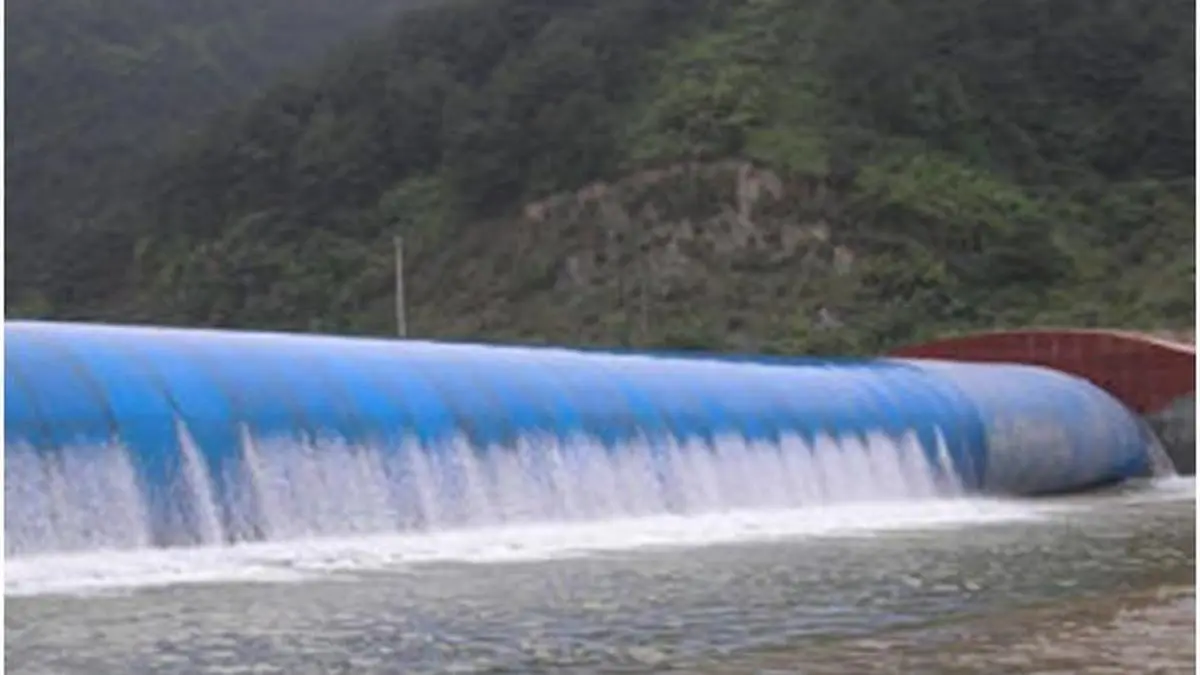
Gujarat is set to construct two air-filled rubber dams on the Heran River in Chhota Udepur district and the Ambika River in Tapi district, in a combined project worth over ₹160 crore. The initiative marks the state’s first use of South Korean technology-based rubber dam systems, aimed at improving irrigation reliability, groundwater recharge and flood control in water-stressed regions.The choice of rubber dams over conventional check dams or gated structures is driven largely by site conditions. Officials noted that the regions have flat terrain and low riverbanks, where traditional structures are less effective in storing water and managing seasonal flows. The inflatable design allows water to be stored during dry periods and quickly released during heavy monsoons, help reduce flooding, erosion and long-term silt buildup.The system uses a rubber bladder mounted on a concrete base that is inflated to hold water and deflated to let river flow pass naturally. The projects also incorporate automation, allowing controlled operation without manual intervention.The larger of the two projects is coming up on the Heran River at Rajvasana in Bodeli taluka of Chhota Udepur, at a cost of over ₹82.97 crore. The structure is currently about 75% complete and is scheduled for completion within 30 months. Once operational, it is expected to provide irrigation support across 3,420 hectares spanning 25 villages. The Rajvasana dam features a 180-metre-long, 3.5-metre-high rubber bladder, which will increase the storage capacity of the existing weir to 3.5 million cubic metres (MCM). The project also includes 900 metres of flood protection wall on the left bank and 500 metres on the right bank. Officials said a 10-year operation and maintenance contract has been included to ensure long-term upkeep.The second project is being developed at Pathakwadi village in Dolvan taluka of Tapi district at a cost of over ₹79.13 crore. It is nearly 90% complete and is expected to bring around 650 hectares of farmland under assured irrigation in villages including Pathakwadi, Dhodiyawad, Unai and Sindhai. Designed using Japanese Code 2000 standards, the structure uses a South Korean-manufactured rubber bladder with a thickness of 18–32 mm and a design life of around 30 years. The dam has a total height of 4.5 metres, formed by a 2.5-metre rubber bladder mounted on a 2-metre concrete base, and spans 280 metres across four sections.It is equipped with a SCADA-based automation system that allows for automatic inflation and deflation without manual intervention. Officials said this helps the structure manage monsoon flows more effectively, allowing water and silt to pass through naturally while maintaining storage during dry periods.The project has been designed for local geographic conditions such as flat terrain and low riverbanks, where traditional check dams have limited effectiveness. Officials added that both dams are expected to improve groundwater levels and provide more stable irrigation and drinking water availability in surrounding villages.Published on July 6, 2026
Gujarat to build two rubber dams on Heran and Ambika rivers for irrigation and flood control
Gujarat plans to build two innovative rubber dams for irrigation and flood control using advanced South Korean technology.
472 words~2 min read