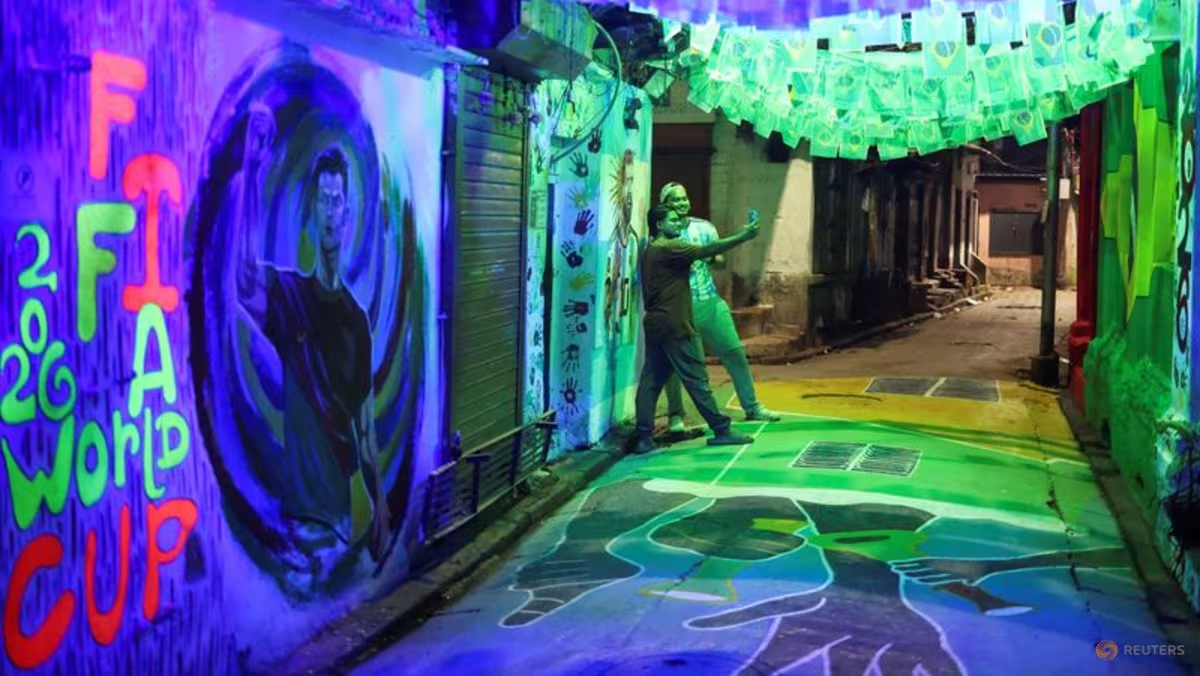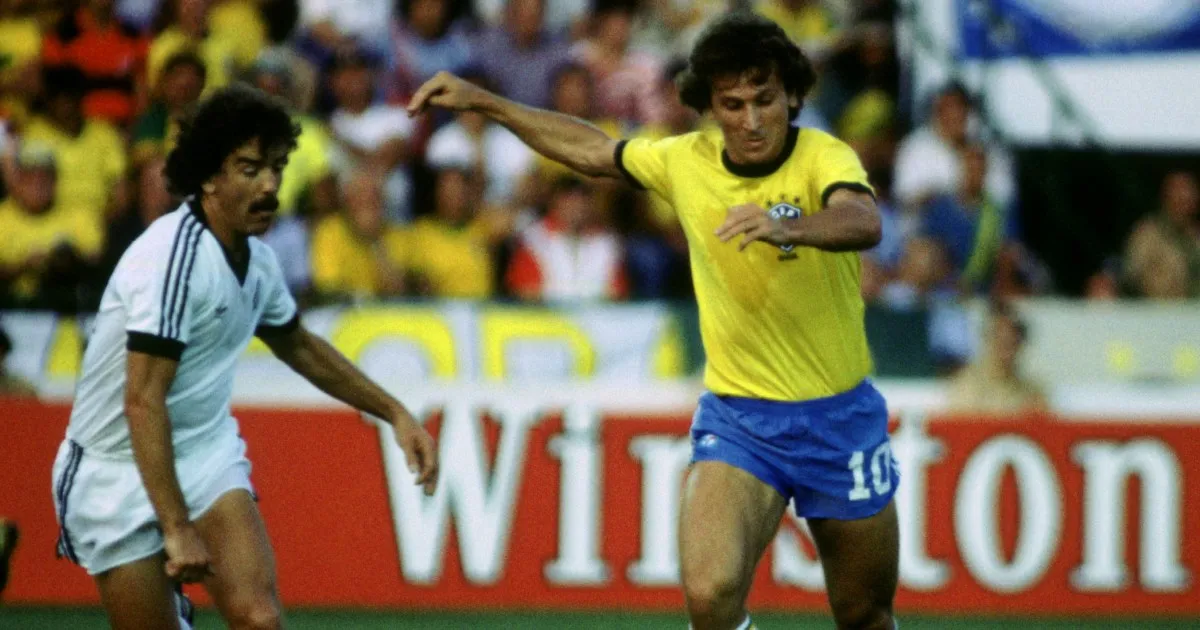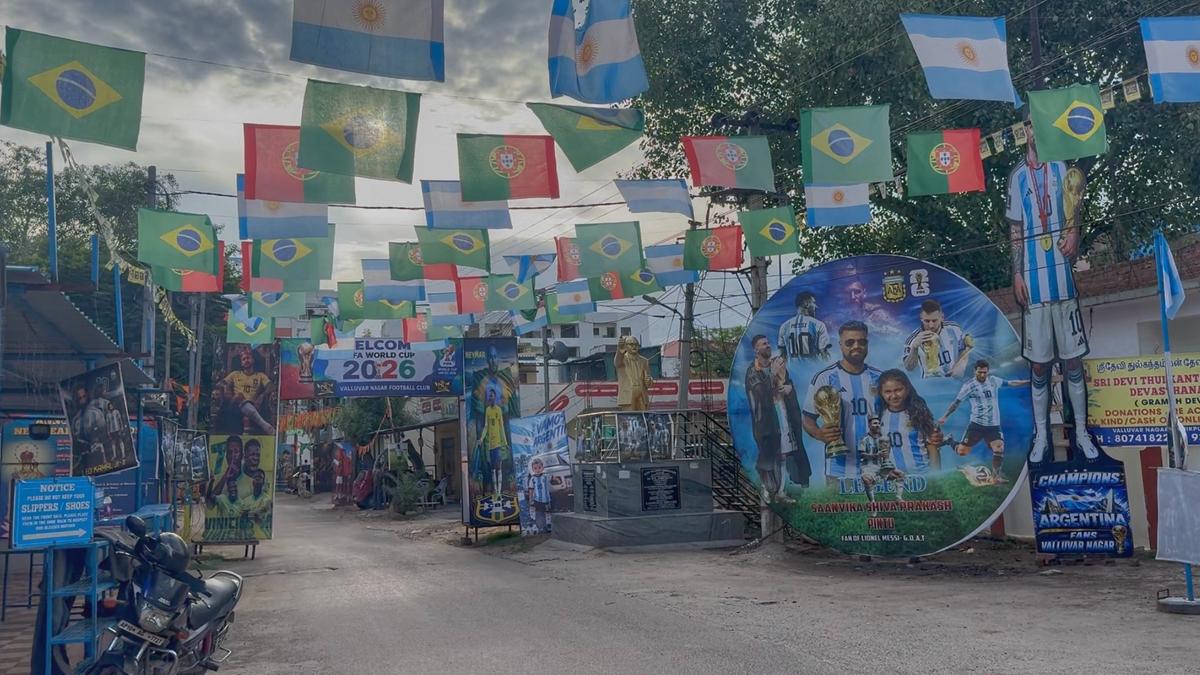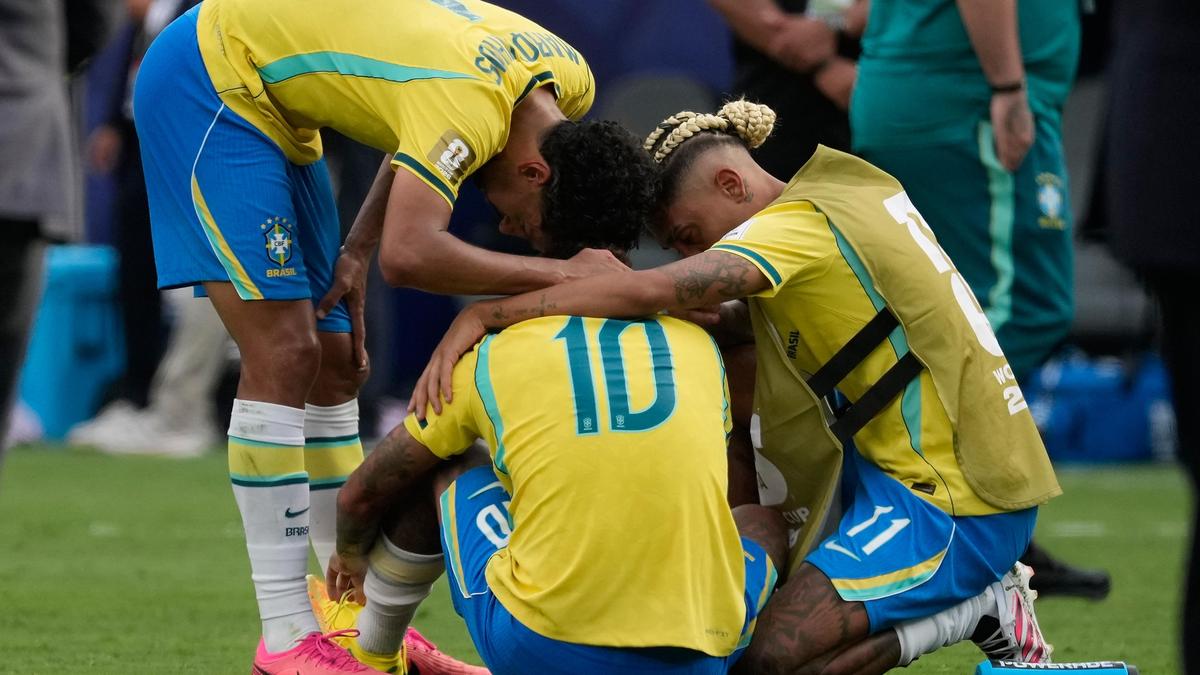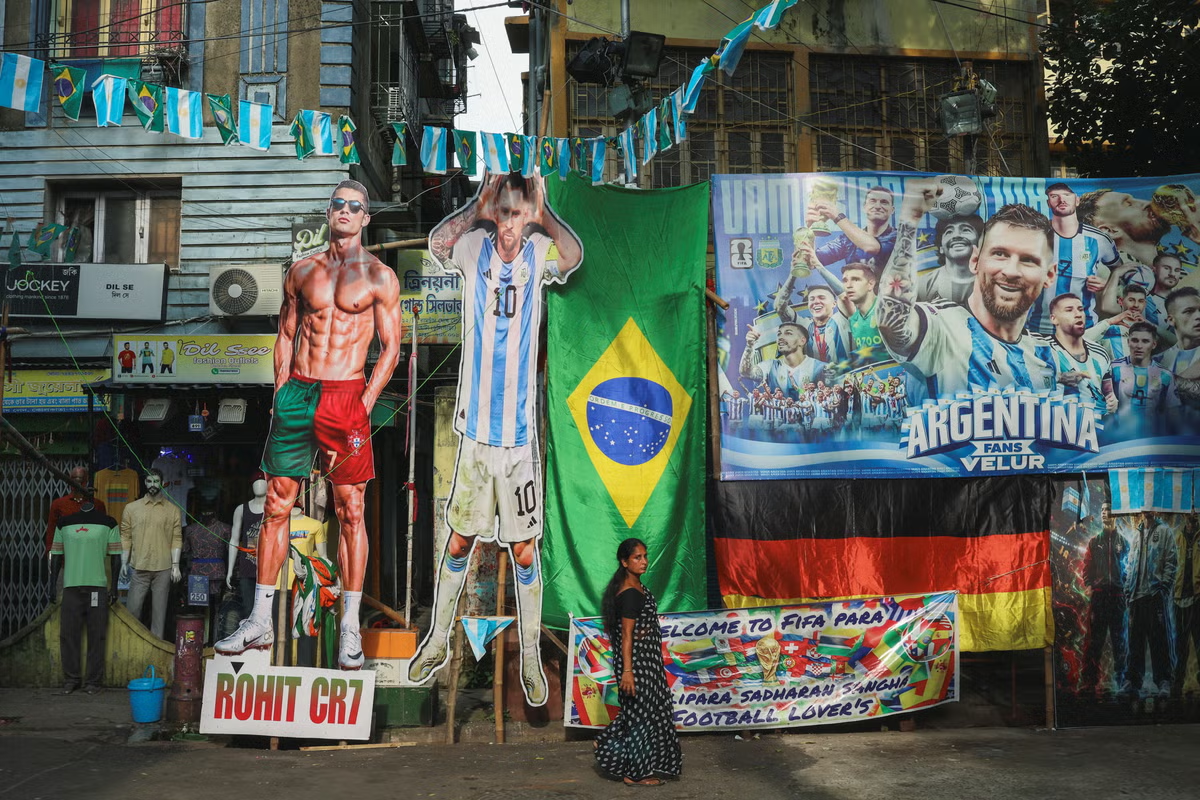
Brazil, the footballing giant, may have crashed out of the FIFA World Cup after being defeated by Norway, but the beautiful game’s quadrennial contest if far from over. As Edward Galeano wrote in Soccer in Sun and Shadow, “years have gone by and I’ve finally learned to accept myself for who I am: a beggar for good soccer. I go about the world, hand outstretched, and in the stadiums I plead: “A pretty move, for the love of God.” And when good soccer happens, I give thanks for the miracle and I don’t give a damn which team or country performs it”.Inarguably, no other sport commands the loyalty, emotion, and cultural influence of football. (REUTERS)While no country can claim that football orginally belongs to them, perhaps no other continent accords mythological status to the ball game as South America’s Mesoamerican communities do.Inarguably, no other sport commands the loyalty, emotion, and cultural influence of football.From the streets of Lagos and Buenos Aires to the stadiums and streets of London, Goa, and Madrid, billions of people follow the game with a devotion that is borderline religious.World Cup finals draw audiences that rival the largest events in human history, while local football clubs inspire generations of fans, shaping identities, communities, and national pride.Yet football’s rise to become the world’s most popular sport was far from inevitable. What began as a series of individual but organised games played across a number of civilisations has grown into a global billion-dollar institution. Its history is a story of empire, industrialisation, migration, technological change, and the enduring human desire for competition and belonging. So, just where and in what forms did the game first originate?Early beginningsUnder the Han dynasty (206 BCE - 221 CE), a game called cuju or ts’u-chü which FIFA recognised in 2004 as the “earliest form of a kicking game”. According to a manuscript uncovered at Mawangdui, cuju originated in the third millennium BCE during the reign of the Yellow Emperor, Huangdi. Although Huangdi is widely regarded as a mythical figure, the manuscript describes the game as having been used as a form of military training. David Goldenblat in his book The Ball is Round posits that “cuju, although played in the era of the Warring States (in the third and fourth centuries BCE), was first formalized as an organized sport under the Han”. The game was an amalgamation of known contemporary sports: basketball, football and volleyball. The game was played with a leather ball stitched together and filled with materials such as fur, feathers, or possibly hemp. Two teams competed on a marked field with goals at either end. While players appear to have been allowed to handle the ball and engage in physical tackling, kicking remained a primary means of moving it across the pitch. Interestingly, women were not excluded from the sport, however because the widespread practice of foot-binding restricted their ability to kick the ball, female players relied on their hips and other parts of the body to display their skill and control.Also Read:HistoriCity: The Great Nicobar’s Past and PresentOver time, cuju evolved as waves of dynasties went by, until it more or less disappeared with the rise of the Ming dynasty (1368-1644). This is not to say that it did not leave a regional footprint. Born out of trade routes--both terrestrial and marine--Goldenblatt notes that in the Malay peninsula, a cross between football and volleyball called sepak raga emerged. Up north, in Japan, a similar game called kemari was played.Westwards, there was Episkyros, played in ancient Greece by two teams, typically consisting of twelve to fourteen players each. The game involved a single ball and, unlike modern football, was a highly physical contest that allowed full contact between players, making it considerably more aggressive than contemporary football. The game was especially popular in Sparta, where it formed part of the military training and physical education of young men.The Romans subsequently adopted the game, adapting it into a version known as harpastum. The name derives from the Greek word harpaston, meaning “to snatch” or “seize,” reflecting the game’s competitive and fast-paced nature. Through this adaptation, elements of the Greek game were carried into Roman sporting culture and preserved for later generations.Spotlight on MesoamericaWhile China may have been cited as a cradle for football, it is in Mesoamerica: the inhabitants of the region that now include the nation-states of Mexico, Guatemala, Belize and Honduras, that the game truly took centre stage. For 3,000 years--the period that saw the emergence of the Olmecs in Central Mexico and the fall of the Aztecs to the conquistadors from Spain in 1521-- every community played the game. And this is well evidenced through archaeological records. Over 1,500 ball courts across Mesoamerica, ranging from simple rectangular playing areas in small settlements to the monumental stepped arenas of major cities such as Chichen Itza. Many others are believed to have been lost to the jungle or destroyed during the Spanish conquest. Alongside these courts, excavations of tombs and other archaeological sites have revealed a rich collection of ceramic figurines, glyphs, carvings, reliefs, and statues that provide valuable insights into the game and the rituals associated with it.Also Read: HistoriCity: Indian history rife with games of succession rivalriesThe game is intrinsic to the creation myths of the sun and the moon. It is through a ball game that a contest between the dark lords of the underworld and mortals takes place. In the first round the brothers Hu Hunahpu and Vucub Hunahpu are defeated and sacrificed, and the head of HunHunahpu displayed on a tree. In the final game the twins of Hun Hanahpu (born by impregnation of a goddess by the head spitting in her hand!), challenge the underworld and defeat them in the ball game repeatedly. They return to earth with the bodies of their father and uncle and place them in the sky as the sun and the moon.The ‘Magical’ Rubber BallToday’s rubber is grown all over the world but even till the 16th century it was only found in South America. And therefore when the Spanish colonialists first saw the bouncing ball being played by the indigenous communities they were flummoxed. It was this mysterious quality of the energetic ball made from the juice of the rubber plant mixed with the roots of morning glory that created a solidified elastic ball in the second millennium that could have led the Mesoamerican communities to accord the game with the ‘magical ball’ with a high mythological status. David Goldblatt writes in The Ball is Round, “Columbus brought examples back to the Spanish court for investigation. Royal chronicler Pedro Mártir de Anglería was flummoxed: ‘I don’t understand how when the balls hit the ground they are sent into the air with such incredible bounce.’”Reintroduction of football in South AmericaThe Spanish conquest of the continent wiped out people, customs and the game. Eurasian diseases killed communities enmasse, and Christianisation and enslavement made them forget their own civilisation and culture along with the beliefs that sustained the ball game. Some varieties of the game survive in remote pockets such as the Ulama and the Pok-ta-pok in Mexico. In most South American countries, many of whom are footballing royalty, the game of their forgotten ancestors returned though their new conquerors, the European nations such as Spain, Portugal and Britain.Also Read: HistoriCity: How ancient India became the ‘Golden Sparrow’ through gold tradeLike in India, the British introduced football in Brazil towards the end of the 19th century. Blatt writes, Charles William Miller, son of a British railway engineer working in Brazil… strived to create a football section within the São Paulo Athletic Club and in 1895 organised a first meeting between a team from his company and players from the Gás Company, another British enterprise”. But, the game didn’t take off in the United States because the new American elites strongly despised the game that to them symbolised the injustices meted out by the redolent British empire.
HistoriCity| Football: A short history of the beautiful game
From the streets of Lagos and Buenos Aires to the stadiums and streets of London, Goa, and Madrid, billions of people follow the game with a devotion that is borderline religious | India News
1,326 words~6 min read