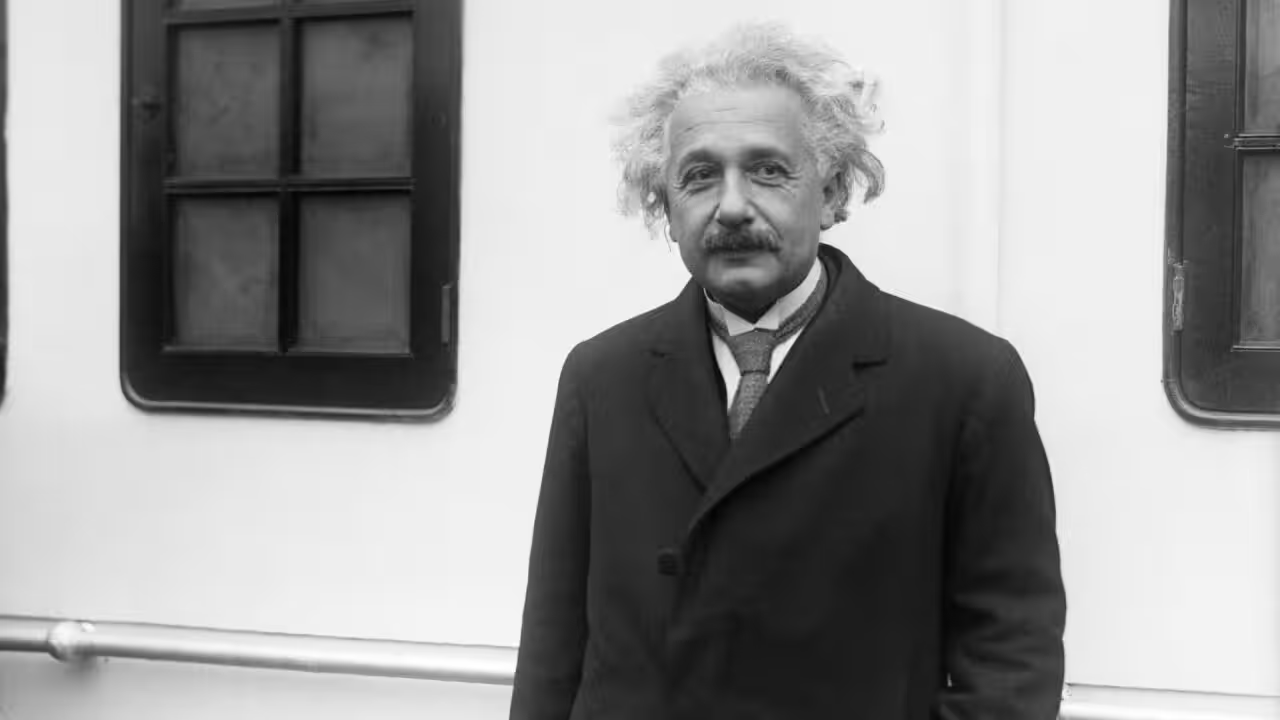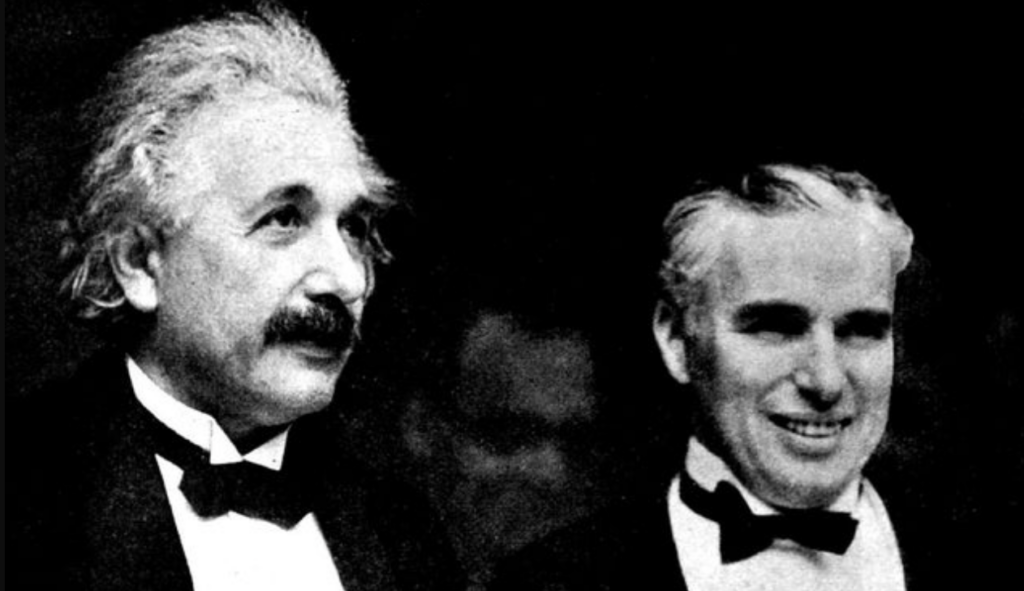
Photo via Wikimedia Commons
“You do not really understand something unless you can explain it to your grandmother,” goes a well-known quote attributed variously to Albert Einstein, Richard Feynman, and Ernest Rutherford. No matter who said it, “the sentiment… rings true,” writes Michelle Lavery, “for researchers in all disciplines from particle physics to ecopsychology.” As Feynman discovered during his many years of teaching, it could be “the motto of all professional communicators,” The Guardian’s Russell Grossman writes, “and especially those who earn a living communicating the tricky business of science.”
Einstein became one of the world’s great science communicators by choice, not necessity, and found ways to explain his complex theories to children and the elderly alike. But perhaps, if he’d had his way, he would rather have avoided words altogether, and preferred acrobatic feats of silent daring to get his message across. We might at least conclude so from his reverence for the work of Charlie Chaplin. Chaplin was the only person Einstein wanted to meet in California during his second, 1930–31 visit to the U.S., when he was “at the height of his fame,” notes Claire Cock-Starkey at Mental Floss, “with newspapers tracking his every move and academics clamoring for explanations of his theories.”