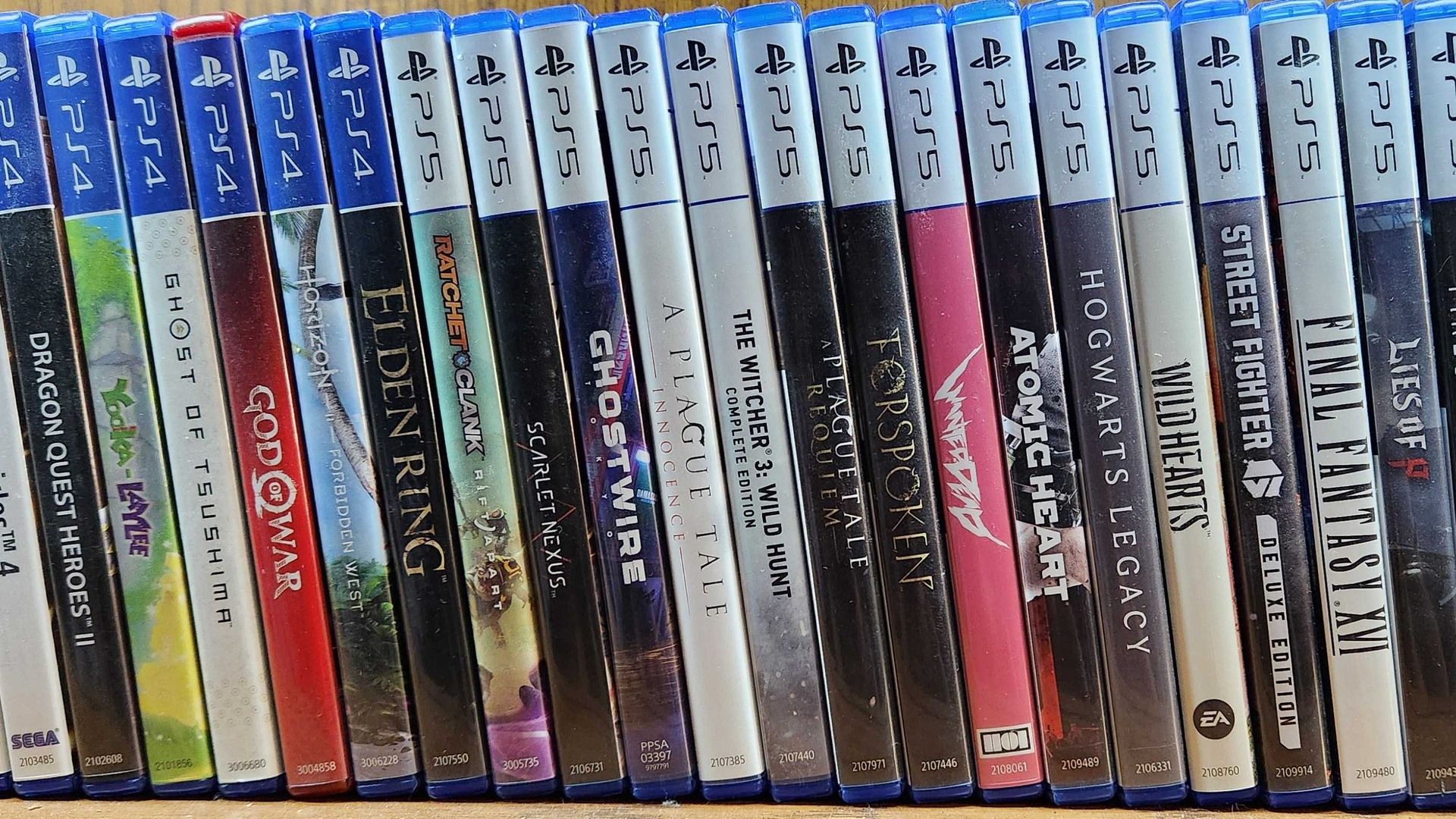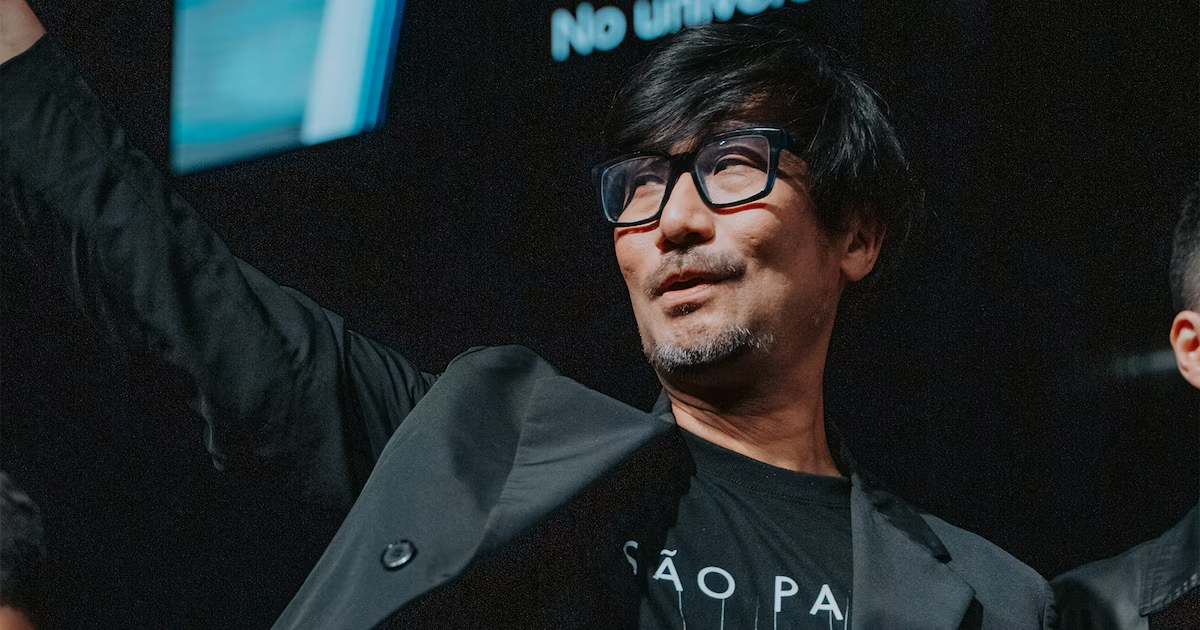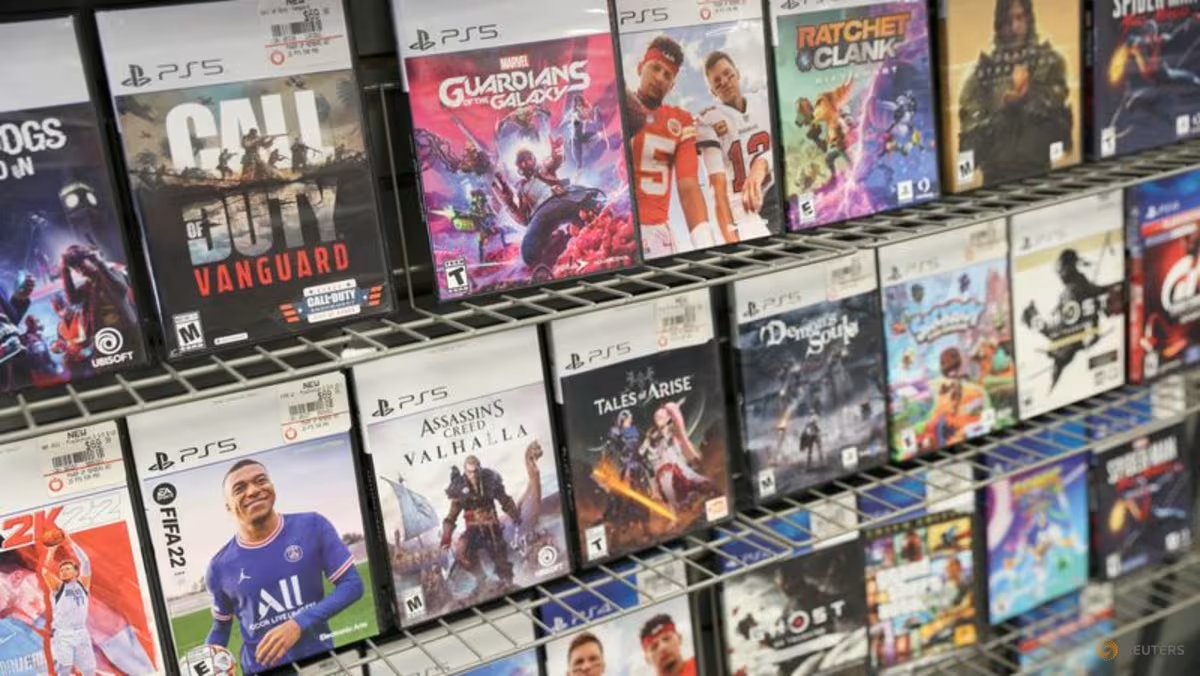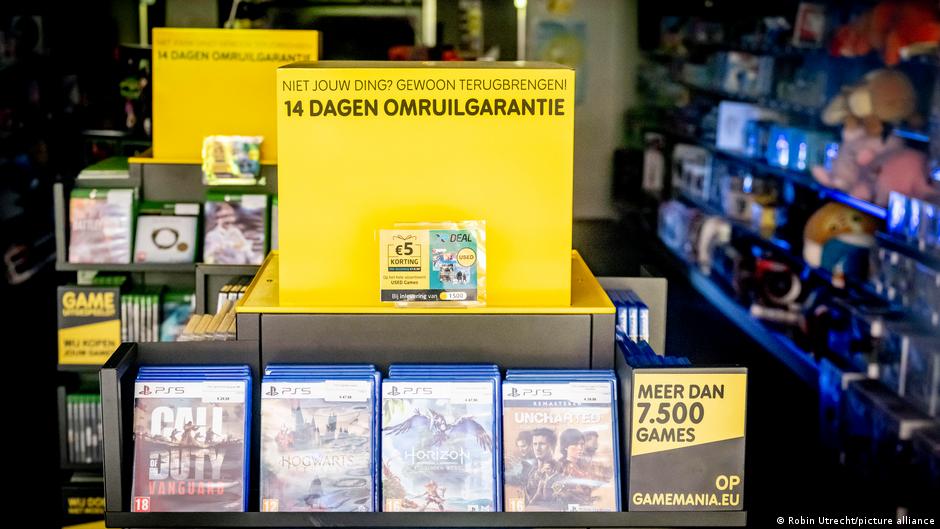
Sony will stop producing physical discs for every new PlayStation game from January 2028, the company confirmed on the PlayStation Blog on 1 July 2026 — and Hideo Kojima, the Metal Gear and Death Stranding creator who has spent four decades filling shelves with Blu-rays, CDs and books, spent the following weekend telling a Rome film festival audience how he feels about it. “I grew up with physical media, so I find it really sad,” he said, in remarks translated by the Japanese-gaming account Genki and reposted by Kojima himself. Gaming’s vinyl moment now has a date.The announcement lands with three consequences worth separating. Sony has confirmed the end of disc manufacturing for new titles, with a January 2028 cutoff. Kojima has drawn the sharpest public line yet between what you buy and what you merely rent. And Nintendo, still shipping full games on cartridges, inherits the title of last physical holdout — a crown that sits looser than it looks. For Indian gamers, the stakes are steeper than anywhere in the West: flat digital pricing, a thriving resale culture and grey-market consoles make the disc the value option here, and its disappearance will cost this market first and hardest.What Sony Actually AnnouncedThe PlayStation Blog post, attributed to Sid Shuman, Senior Director of SIE Content Communications, framed the decision as a response to a consumer “shift away from physical discs to digital”, stating that from January 2028 new games will reach players through the PlayStation Store and digital retail formats only. Sony has told partners two things that soften the edges. Games released before the cutoff can still receive disc reprints afterwards. And publishers may sell boxed retail editions containing download codes — the format reported for GTA 6’s physical version, which ships minus a full-game disc. A box with a code inside is a receipt wearing a game’s clothes.The numbers explain the timing. Sony’s FY2025 fourth-quarter results, published 8 May 2026, recorded an 85 per cent full-game digital download ratio — the highest figure Sony has ever posted — against a full-year average of 78 per cent, up from 76 per cent in FY2024. PS5 lifetime shipments crossed 93.7 million units by 31 March 2026. The disc business Sony is closing had already shrunk to a sliver of its software revenue.MetricFigurePeriod / SourceMetricFigurePeriod / SourceSony full-game digital ratio (quarterly peak)85%FY2025 Q4, Sony results, 8 May 2026Sony full-game digital ratio (full year)78%FY2025, Sony resultsPrior-year digital ratio76%FY2024, Sony resultsPS5 lifetime shipments93.7 millionTo 31 March 2026, SonyUS new physical game spending$1.5 billion (all-time tracked low)2025, Circana (Mat Piscatella)US physical spending at peak~$11.5 billion (approximate; peak year cited as 2008 or 2009)CircanaThe same day carried a quieter announcement with louder history: Sony confirmed the PS3 and Vita digital stores will go offline — the same closure it announced in April 2021 and then reversed after public fury, when then-SIE chief Jim Ryan admitted, “it’s clear that we made the wrong decision here” and kept both stores alive. Five years later, Sony announced the closure again. This time it is going through with it. Retailers have pushed back too — TechRadar reported trade bodies vowing resistance within days of the announcement — though history suggests the pressure that reversed Sony in 2021 carries less force in 2026.A Warning From a Rome Film FestivalKojima’s response arrived from an unusual pulpit. He was a guest at Il Cinema in Piazza, the annual open-air film festival in Rome, sharing a panel with directors including Gaspar Noé, when the question of Sony’s decision came up. His answer, translated by Genki on X on 5 July 2026 and reposted by Kojima — a chain worth noting, since his original remarks were spoken rather than published — moved past the disc within two sentences.He mourned first. “Currently, I’ve been buying up a lot of Blu-rays, such as various movies, and CDs too,” he said, describing a stockpiling instinct that thousands of collectors will recognise. Then he made the distinction that gives his comments their analytical weight. Downloaded games, he explained, still live on your own hardware; the data sits on your drive even after a store closes. Cloud streaming removes that final layer of possession. “There is a server somewhere, and you essentially just have the right to turn the tap,” he said of services such as Netflix and Amazon, describing subscription access as a flow you rent rather than a copy you hold.His fear is what turns the tap off. Kojima warned that shifts in politics, corporate strategy or infrastructure could end distribution of the media people love, saying that if such a change comes, “the data inside will stop being distributed” — and the films and games attached to it go dark. “That is what is frightening,” he added, before widening the lens to his first love: what is happening to games in 2028, he cautioned, “might also happen to movies”, and he asked the audience to keep that in mind. Coming from a film festival stage, addressed to an industry that surrendered to streaming a decade ago, the warning doubled as a eulogy.The 2021 Thread That Called ItWithin hours of Sony’s announcement, a five-year-old Kojima post began circulating again. On 5 August 2021, on his English X account, he wrote that “even digital data will no longer be owned by individuals”, warning that any major change in the world — in a country, a government, an idea, a trend — could sever access to the films, books and music people have loved. He closed the thread with a line that reads today like a thesis statement: “I would be a have-not. That’s what I’m afraid of. This is not greed.”The thread’s power lies in its specificity. Kojima has lived the scenario he describes. P.T., his playable teaser for the cancelled Silent Hills, was delisted from the PlayStation Store after his 2015 split from Konami; players who had downloaded it lost the ability to redownload. His most famous work vanished from the shelf by someone else’s hand. Every collector understands that a shelf answers to its owner. A server answers to a boardroom.When Kojima Loved the CloudHere the story gains a wrinkle his admirers tend to skip. In 2019, Kojima was one of streaming’s loudest evangelists. “I think within the next few years, gaming will move on to streaming,” he told BBC Newsbeat that November, predicting films, dramas and games competing on the same platforms and declaring the new formats streaming enables were “what I want to take on”. Months earlier, in an April 2019 interview with Nikkei Business (reported in translation by DualShockers), he went further still, calling a converged streaming world “the future I’ve always wished for”.That Nikkei conversation contained a detail almost too apt for this story. Explaining how delivery technology shapes art, Kojima reached for the record crate: artists placed their hits on the A-side of vinyl, he noted, and their riskier 20-minute experiments on the B-side, because listeners avoided flipping records for fear of damaging them with the needle. The medium wrote the rules of the music. He understood in 2019 that streaming would rewrite gaming’s rules the same way — he simply expected to be the one composing for the new format. His Xbox-funded horror project OD, developed with Jordan Peele and reported to be cloud-native, suggests he still intends to. Kojima in 2026 is a man recording for the format he fears, which makes him the most credible witness the preservation argument has: he speaks as a beneficiary of the cloud, warning about its terms.The evolution is the story. In 2019 he saw streaming through a creator’s eyes — new canvases, borderless audiences. By 2021 he saw it through a collector’s — revocable access, conditional memory. By 2026 the two views had fused into a single position: build for the cloud, buy for the shelf.Follow the Money, Then Follow ConcordSony’s own explanation — consumer preference — is true and incomplete. The fuller ledger reads like a demolition notice with the economics attached. Dropping discs removes manufacturing, freight and retail margin from every sale. It kills the second-hand market, the leak in every publisher’s pipe, and hands Sony total pricing control through a storefront it owns. Destructoid reported that Sony has already begun repurposing disc-pressing facilities, a claim that remains secondhand and should be read as such. Each brick removed from the physical supply chain lowers cost and raises control. The foundation being poured underneath is a storefront with one landlord.Recent history shows what that landlord can do. Sony “unlaunched” Concord in September 2024, pulling the full-price hero shooter offline 11 days after its 23 August launch, refunding buyers and later shutting developer Firewalk — the first AAA game to be erased rather than merely abandoned. Kotaku noted this week that Sony has also removed films from users’ digital libraries after licensing agreements expired — content people had purchased, gone at contract’s end. Each incident on its own reads as an edge case. Stacked together, they form the load-bearing evidence for Kojima’s argument: digital access is a relationship, and relationships end.Will the PS6 Keep a Disc Drive?The hardware question remains open, and the sourcing demands care. Insider Gaming’s Tom Henderson reported, citing anonymous sources, that the PS6 is planned to launch with an optional detachable disc drive, mirroring the PS5 Slim and Pro approach — which would let owners of existing disc libraries keep playing them even as new pressings end. Sony has confirmed none of this. Analysts quoted in the wake of the announcement have speculated the PS6 will arrive in 2028 at the earliest and skip the drive altogether; treat both readings as informed guesswork until Sony shows silicon.The most substantive counter-argument comes from inside the old Sony. Shawn Layden, former chairman of SIE Worldwide Studios, told the Kiwi Talkz YouTube channel (reported by TechRadar on 4 February 2025) that PlayStation’s global footprint imposes obligations, asking “how much of my market is not able to make that jump?” if Sony went all-digital, and citing rural connectivity as the sticking point. “Sony’s market is globally so huge,” he argued, “I think it would be hard for them to go fully disc-less.” TechRadar paraphrased him adding examples — travelling athletes, military bases with poor connections — though those specifics come via the journalist rather than a captured quote. Layden’s rural-Italy question applies with triple force to rural India, a point Sony’s Tokyo spreadsheets may weigh differently than its Delhi distributors do.Nintendo, the Last Cartridge StandingWhich leaves one company still pressing full games onto plastic. Every Nintendo first-party Switch 2 title — Mario Kart World, Donkey Kong Bananza — ships complete on cartridge, and the company’s president has put his commitment on the record. “Our basic policy is not to simply increase the ratio of digital sales, but to maximize sales of game software, including sales of packaged software, and this policy will remain unchanged in the future,” Shuntaro Furukawa said at Nintendo’s FY2024 financial briefing in May 2024, a statement he has since defended at the company’s 85th shareholder meeting.The holdout crown deserves an asterisk, though. The Switch 2’s Game-Key Cards — cartridges carrying only a licence key, requiring a full download on first launch — have drawn sustained criticism as digital drift in physical packaging. Many third-party Switch 2 releases use the format, driven by the cost of Nintendo’s proprietary cartridges. The counter-counter-argument is worth stating fairly: a Game-Key Card can still be resold, lent or traded, and keeps working after an eShop closes — properties a bare download code lacks. Boutique holdouts such as CD Projekt Red, whose Cyberpunk 2077 Ultimate Edition shipped complete on cartridge, prove full physical remains possible when a publisher chooses it. Nintendo is the last brand meaningfully committed to physical media. It is also inching along the same corridor as everyone else, just several rooms behind.An Industry Losing Its MemoryZoom out and the structural decline is brutal. Circana’s Mat Piscatella reported on Bluesky on 2 March 2026 that US new physical game spending fell 11 per cent in 2025 to $1.5 billion — an all-time tracked low since records began in 1995, down from a peak of roughly $11.5 billion in 2009 (some outlets cite $11.6 billion in 2008; the peak year varies by citation). That is an approximate 87 per cent collapse across 16 years. Xbox travelled furthest first, pioneering the all-digital console with the Series S; its next-generation “Project Helix” hardware is widely reported to be digital-first, alongside a rumoured “Positron” disc-to-digital conversion feature. Both Xbox items rest on reporting rather than Microsoft confirmation.The preservation stakes are documented rather than speculative. The Video Game History Foundation’s July 2023 study, conducted with the Software Preservation Network and authored by library director Phil Salvador, found 87 per cent of classic games released in the United States are critically endangered — only 13 per cent of pre-2010 titles remain commercially available, from a sample of 1,500 titles. Consumers have tried the political route: the Stop Destroying Videogames EU Citizens’ Initiative closed on 31 July 2025 with approximately 1.45 million raw signatures (about 1.29 million verified) and reached the European Commission on 26 January 2026. The Commission’s 16 June 2026 response declined to propose any legal obligation keeping games playable after publishers end support, citing existing IP rights, and promised an industry code of conduct by end-2026 instead. A master tape can outlive its label. A server dies with its subscription revenue.India Pays the Steepest PriceEverything above lands harder in India, for reasons that have little to do with sentiment and everything to do with arithmetic. Start with the myth a disc-free future depends on: that digital is cheaper. In India it is level at best. Death Stranding 2: On the Beach launched on 26 June 2025 at Rs 4,999 for the Standard Edition in both digital and physical form, with the Digital Deluxe at roughly Rs 5,699 — figures that fluctuate with promotions and should be checked against current listings. PlayStation Store India offers thin regional discounting on AAA first-party titles, so the download costs what the box costs. On day one.Then the box starts winning. Flipkart and Amazon. in discount physical stock at a pace the PlayStation Store rarely matches — the DS2 disc has fallen to approximately Rs 3,499 on Flipkart — and the disc retains what the download can never acquire: resale value. India runs a deep second-hand and trade-in culture through outlets such as GameNation, OLX listings, Facebook buy-sell groups and Delhi’s Gaffar Market. Buy at Rs 4,999, finish the campaign, sell at Rs 2,500, and your effective cost halves. That equation is analysis drawn from pricing data rather than a single sourced claim, but any Indian PS5 owner will confirm it from experience. Digital purchases sit locked to a PSN account until the account holder’s grandchildren inherit the login.India pricing snapshotPhysicalDigitalItemPrice / RangePeriod / Source / NotesDeath Stranding 2 Standard (launch, June 2025)₹4,999Launch priceDeath Stranding 2 (current, approximate)~₹3,499Flipkart; near-launch price during/around salesPS5 console (festive offer, 22 Sept–19 Oct 2025)₹49,990 (Disc) / ₹44,990 (Digital)Limited-time festive offerSwitch 2 (grey import, approximate)₹50,000–₹65,000No official channel available; import pricing estimateResale value after purchaseRetainedZeroThe Nintendo comparison sharpens the point. Nintendo maintains zero official presence in India; the Switch 2 arrives via grey imports at roughly Rs 50,000–65,000, stripped of warranty, its GameChat feature dormant here for want of an India calling code. Reseller data puts Delhi and Mumbai wholesale pricing for the PS5 disc edition near Rs 46,800 ex-GST, a reminder of how much of this market moves through channels Sony’s blog posts never mention. The last physical holdout is, for most Indian gamers, the least accessible one — which makes PlayStation’s disc the practical heart of physical gaming in this country, and its scheduled death a distinctly Indian loss.18 Months to Fill the ShelfThe calendar now writes itself. Indian gamers have roughly 18 months to build the disc libraries they intend to keep, and four signals will decide how the era after January 2028 actually plays out: Sony’s official word on a PS6 disc drive, which settles whether old libraries stay playable on new hardware; Nintendo’s next-generation cartridge decision; Circana’s next annual US physical figure, where a sustained rebound would puncture the inevitability narrative; and the EU’s promised end-2026 code of conduct, the first test of whether preservation gets rules or press releases.Kojima, meanwhile, has answered the question his own way — by buying. The man who wished for the streaming future in 2019 spent 2026 stockpiling Blu-rays against it, and both positions are sincere. His A-side observation from the vinyl era holds the real lesson: the medium always writes the rules of the art. For 30 years the disc’s rule was simple — pay once, own forever, lend to a friend, sell when done. From January 2028, PlayStation’s rule becomes the tap Kojima described: pay monthly, ask permission, and hope the hand on the valve stays friendly. The demolition date is set. What Indian gamers should be pricing now is the rent.end of article
Sony Kills PlayStation Discs in 2028: Why Hideo Kojima Fears What Follows
Sony's decision to cease physical disc production for new PlayStation releases starting January 2028 has stirred unease in the gaming community, particularly for visionary Hideo Kojima. This shift toward a digital-only model threatens Indian gamers, who benefit from the affordability of discs and a robust secondary market. This change raises pressing issues around game ownership and long-term accessibility, with Nintendo standing firm as the last major player in physical copies.
2,829 words~13 min read