The Uncompressed Elephant in the Room
Open a shell on your primary storage array. Run du -sh on the directories nobody has touched since 2022. Now look at your cloud bill. There's a good chance you're paying full price to store data that could be sitting in less than half the space.
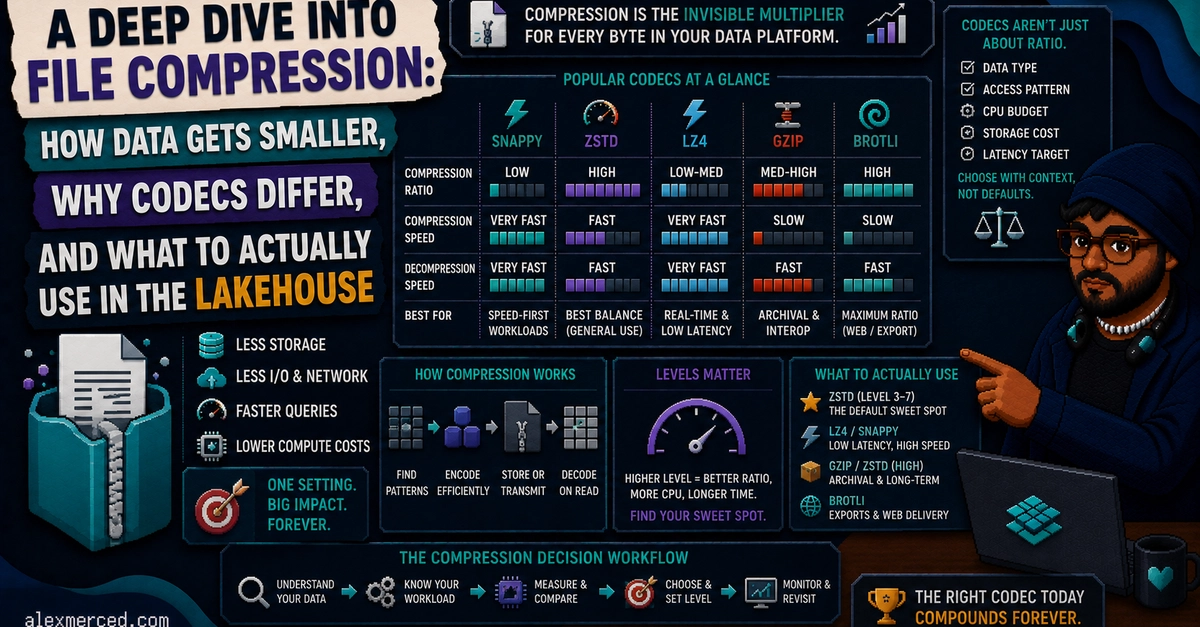
Industry analysts have been saying the same thing for years: somewhere around 80% of enterprise data is unstructured — logs, CSVs, old project exports, documents, media, backups of backups. And unstructured data is exactly the kind of data that modern compression algorithms are good at. Zstd routinely gets 2:1 to 3:1 on typical unstructured payloads, which means 50-66% of that storage footprint doesn't need to exist.
So here's the question worth sitting with: if the algorithms are this good, and the financial case is this obvious, why does so much cold data sit completely uncompressed on expensive primary storage?
The answer isn't ignorance. It's fear — a very rational fear, rooted in how compression tools actually behave once you use them.