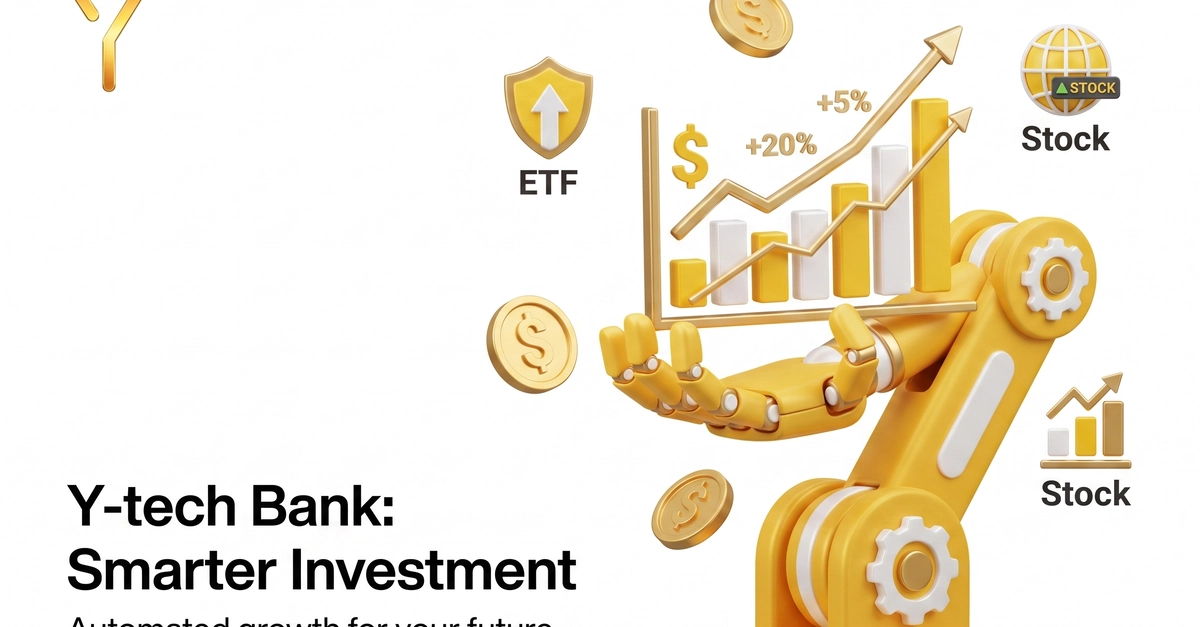
Robo-advisory sounds simple until you try building it inside a full banking platform. Here's how we're thinking about it at Y-tech Bank.
A useful robo-advisor isn't just "fill out a risk quiz, get a portfolio." That's a 2015 product. A modern one needs dynamic risk profiling that updates from behaviour instead of a one-time quiz, cross-domain context so investment decisions know about your banking data, awareness of life events so the portfolio adjusts when something changes, micro-investing built into the same flow, and explanations so users understand what the system is doing and why.
Building it inside a neobank gives you a real data advantage. Traditional robo-advisors like Betterment or Wealthify work with isolated investment data — they know your declared income and risk tolerance, and that's about it. A robo-advisor inside a bank can see your verified income from actual deposits, your monthly expense baseline from transaction history, your upcoming large expenses from recurring patterns, your emergency fund status, your business cash flow if you're an SME user, and tax signals like year-end expenses or self-employment patterns.
That changes recommendation quality a lot. If the system knows your rent is due in 4 days and your salary hasn't landed yet, it shouldn't be telling you to invest this week. If your income jumped 30% this month, it can bump up your contribution automatically.