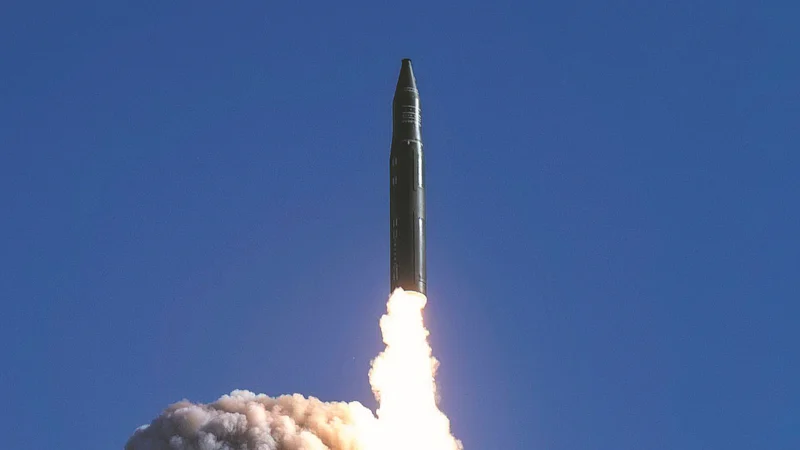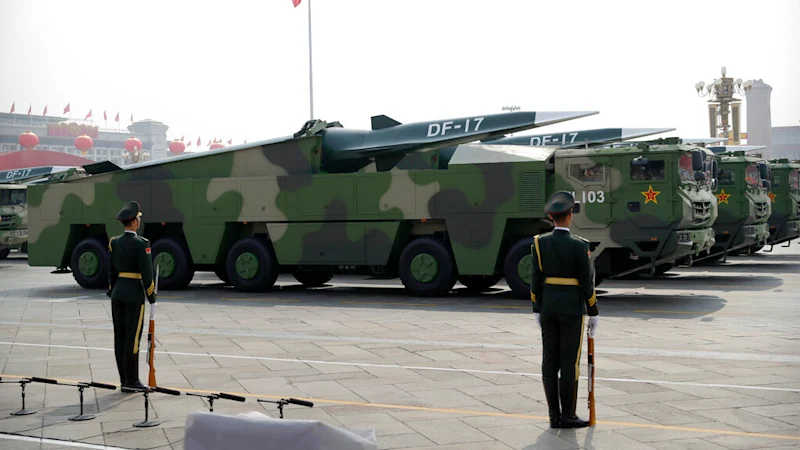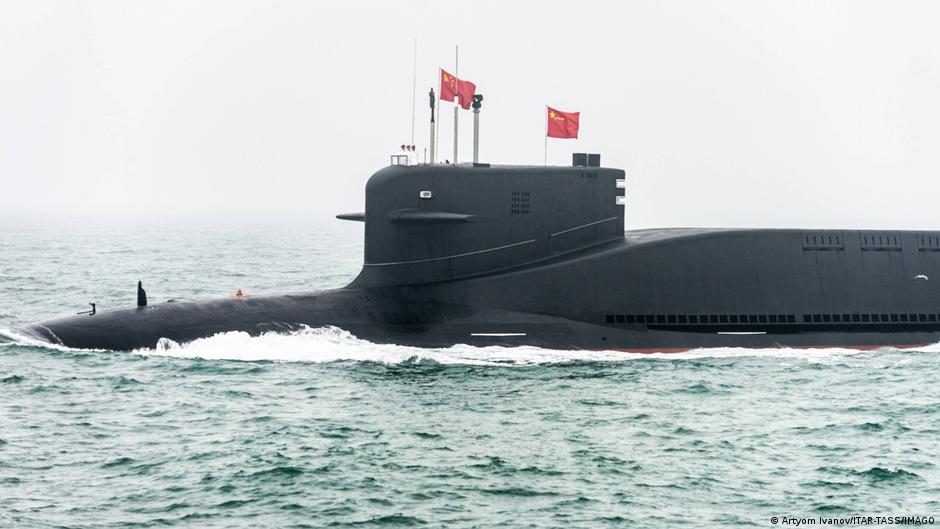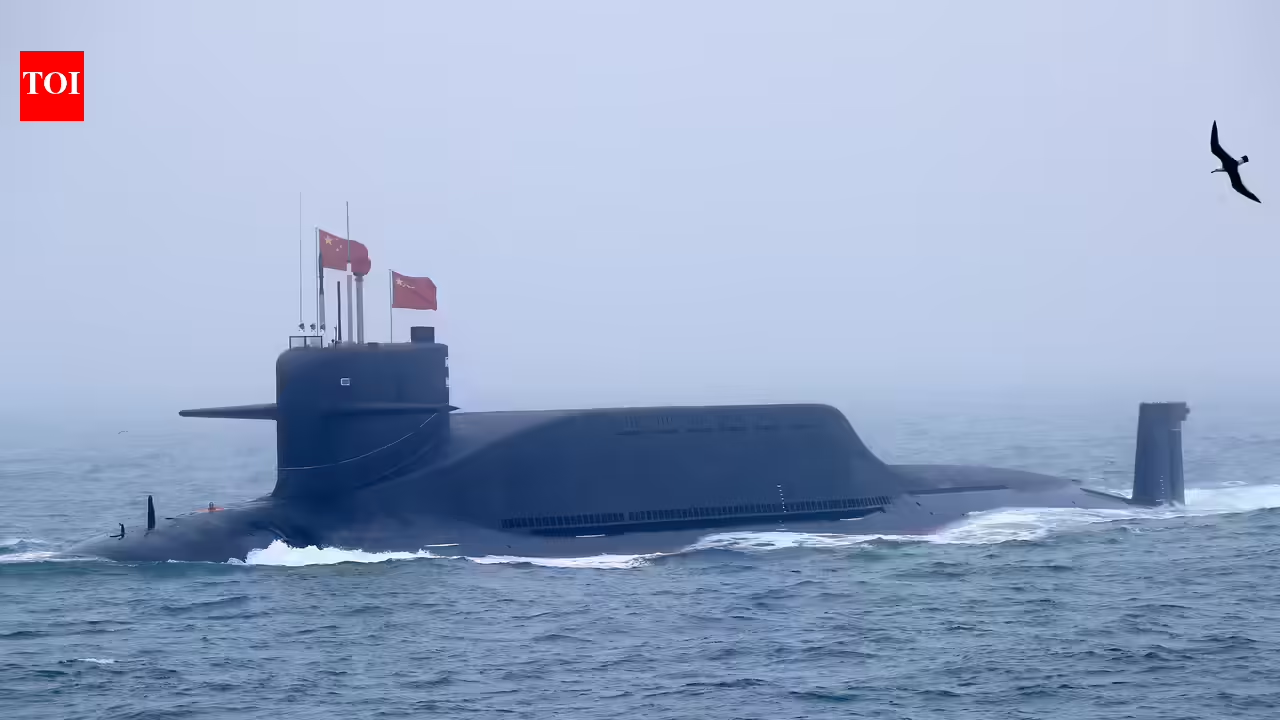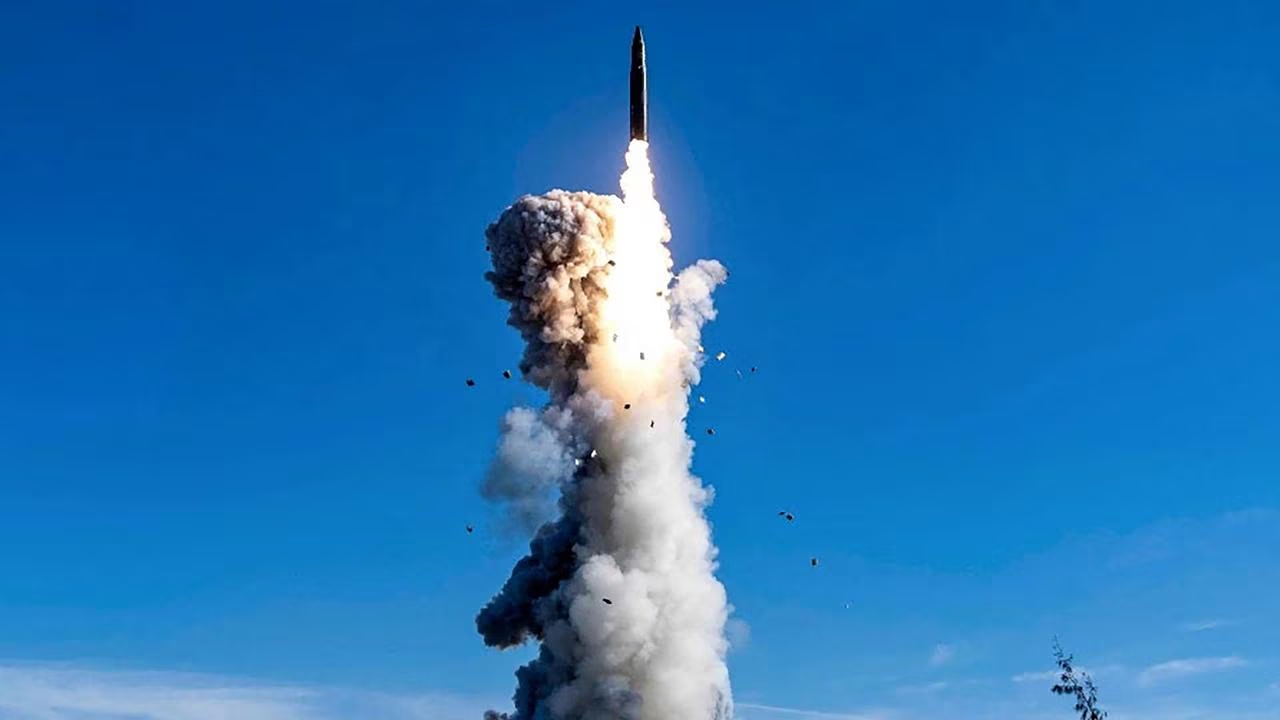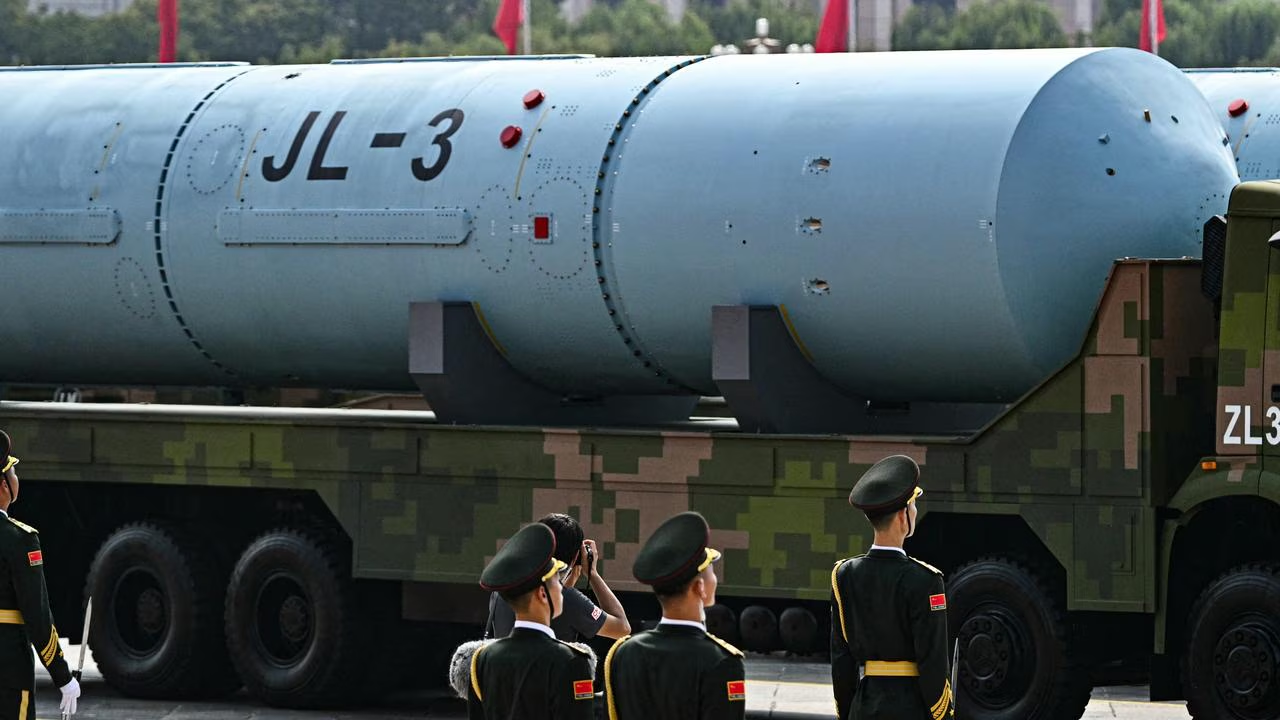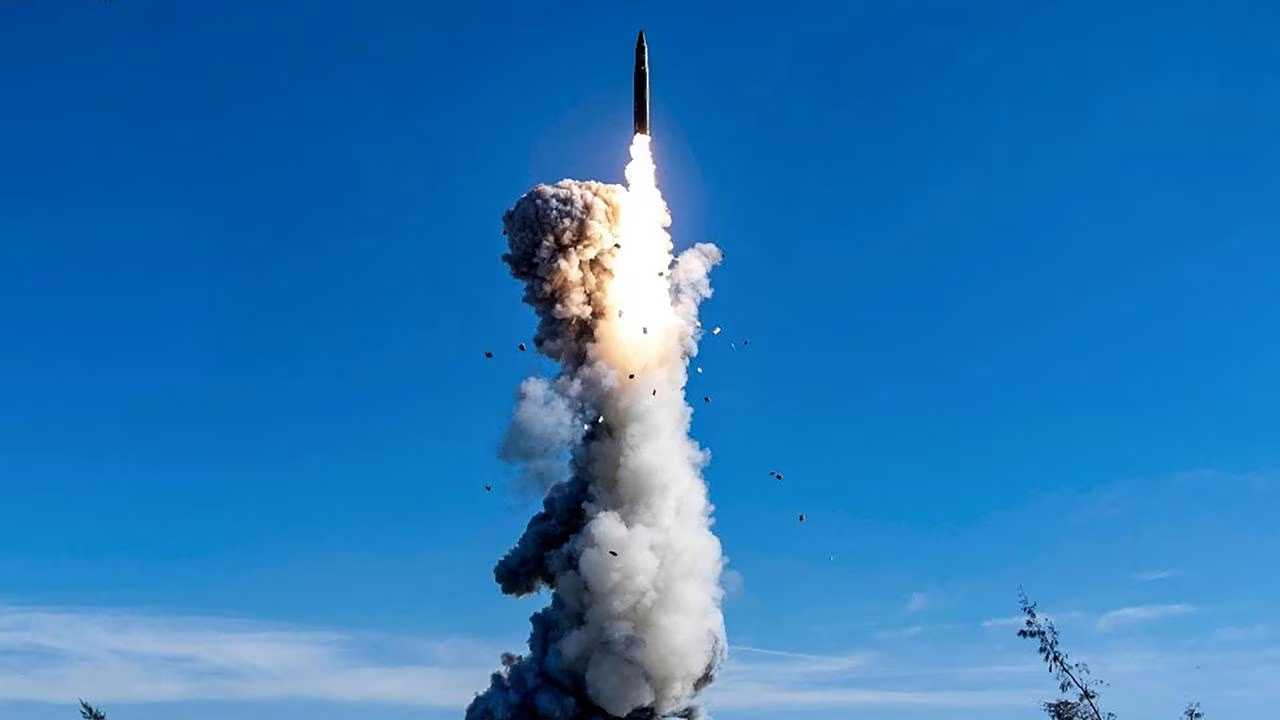
Beijing has launched a missile capable of carrying a nuclear warhead into the South Pacific, according to Chinese state media reports.The dummy warhead was fired from a nuclear submarines at noon (Beijing time) and landed “precisely within the designated waters”.Foreign minister Penny Wong confirmed the rocket was ‘sea-based” while speaking to reporters in Fiji.“This underscores the need for countries of the region to work together,” she said.“This underscores the imperative of countries of the region to work together to ensure that it is Pacific countries who determine our futures if we want the Pacific to remain an ocean of peace.”Senator Wong would not “speak to China’s intent”, but said Australia had been “aware” of a Chinese task group “in the region for some time”.Fronting a long-delayed press conference at around the same time, Deputy Prime Minister and Defence Minister Richard Marles said Canberra was “very concerned about any actions which undermine the stability, the peace and security of the Pacific”.“We are completely committed to the Oceans of Peace declaration that was made by the Pacific Island Forum last year on maintaining peace and security of the Pacific,” he said.China has massively expanded its nuclear arsenal since the state of the decade.Canberra officials were warned directly by the Chinese Embassy earlier today (July 6) about the missile launch.It’s believed Beijing is not happy about Australia signing a new mutual defence treaty with Fiji, according to The Australian.“In the next 24 hours a new missile with a dummy warhead will be fired by China in the South Pacific,” a high-level source told the publication earlier today.The source said the tip off came at around 12.30pm AEST.New Zealand has also been briefed on the upcoming test launch.Prime Minister Anthony Albanese signed the agreement, named the Ocean of Peace Alliance, alongside Fiji Prime Minister Sitiveni Rabuka at the colonial State House – home of Fiji’s President – in Suva, while on a two-day trip to the Pacific.The alliance – Australia’s fourth after pacts with the United States, New Zealand, and Papua New Guinea will require Australia and Fiji to “consult” on whether action should be taken if either country’s “sovereignty, peace, or stability” is threatened.It also requires that both nations recognise an armed attack on any nation within the Pacific would be “dangerous to each other’s peace … declares that it would act to meet the common danger, and declares that it would act to meet the common danger, in accordance with its domestic processes.”Mr Albanese said the alliance – signed alongside the long-awaited Vuvale Union – represented “one of the most significant endeavours Australia has ever undertaken in our history with any country”.Fiji Prime Minister Sitiveni Rabuka – who spearheaded the so-called Blue Pacific Ocean of Peace within the Pacific Islands Forum – said the agreement gave “practical expression to our shared commitment to a rule based international order”.The threat comes as a US defence expert said Aussie politicians were too afraid to name China as a national security threat and are wasting precious time preparing the public for conflict.Atlantic Council director and US defence specialist Markus Garlauskas said he was shocked during his recent visit to Canberra to find China not being named more publicly for its menacing behaviour in the region.The former US intelligence adviser used his appearance at this year’s annual defence conference hosted by the Australian Strategic Policy Institute (ASPI) to warn Washington DC was taking note of the eerie silence.“One of the concerns I’ve had in the last couple of days that I’ve been here in Australia is the unwillingness to name China as a threat to Australia’s national security,” he exclusively told news.com.au.“There are all these oblique references to ‘another country’ or ‘another power’. We were having a conversation about deterrence and defence [at the conference] and over and over again, the People’s Republic of China (PRC) isn’t specifically mentioned as the threat being deterred, or the nature of the military challenge. That, as a foundation, really does concern me.”He said the government and think tanks should launch a public campaign to raise awareness, adding allies were growing increasingly concerned about Australia’s conduct and military preparedness.“[It needs to go] beyond the so-called ‘grey zone’ [of threat] and the military threat, and look at hypothetical scenarios about how the PRC could conduct aggression that could directly affect, or indirectly affect, Australia,” he said.“I think those sorts of conversations are really necessary to help Australians understand why it’s important for them to make the sacrifices necessary to help build up Australia’s defence capabilities.”He suggested Australia learn from the US’ approach of casting China as a threat in movies and books and called on politicians to be more upfront with the public by naming Beijing more publicly.- With NewswireRead related topics:China
China launches nuclear missile in South Pacific reportedly over Fiji deal
Beijing has launched a missile capable of carrying a nuclear warhead into the South Pacific, according to Chinese state media reports.
791 words~4 min read