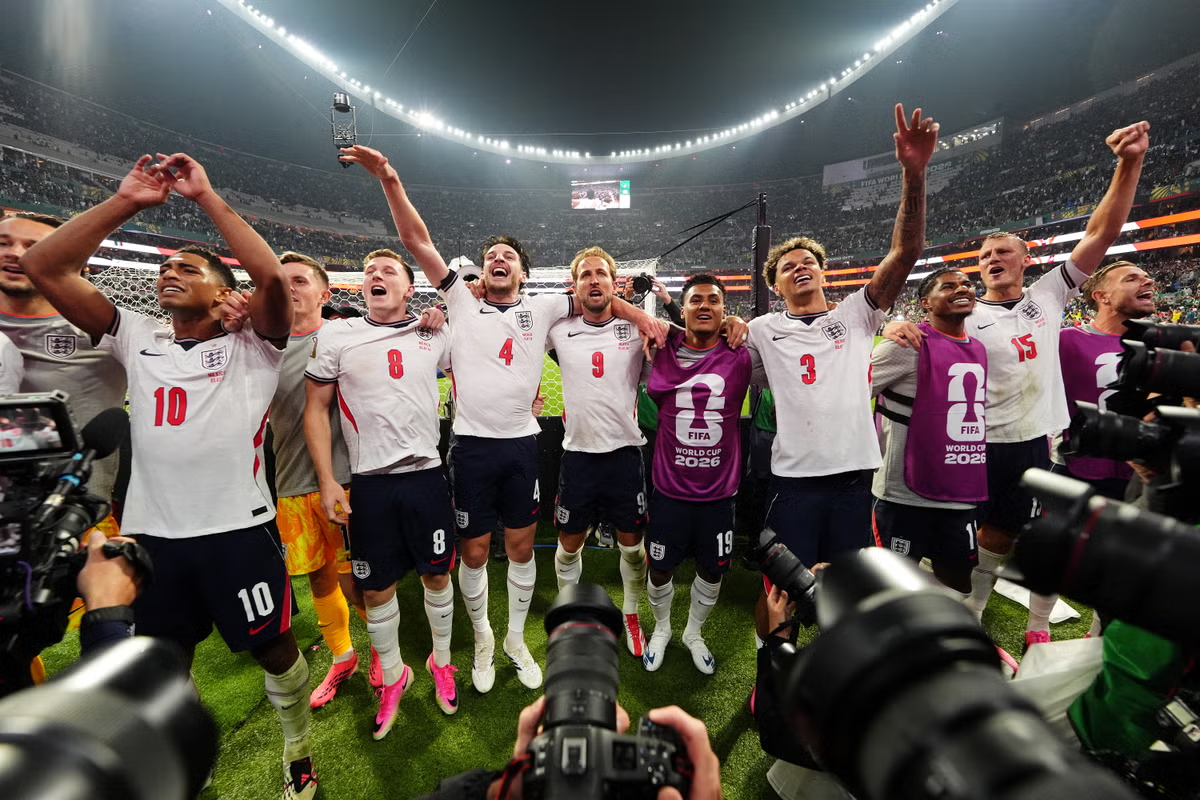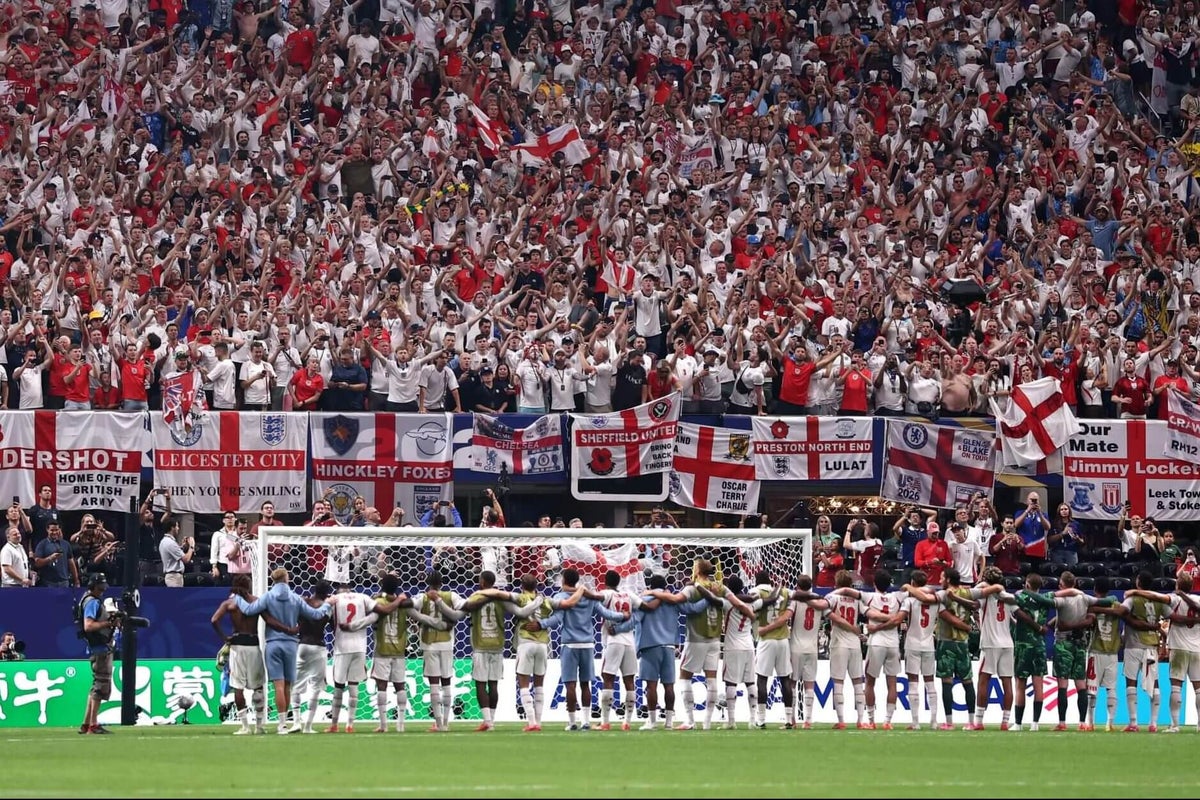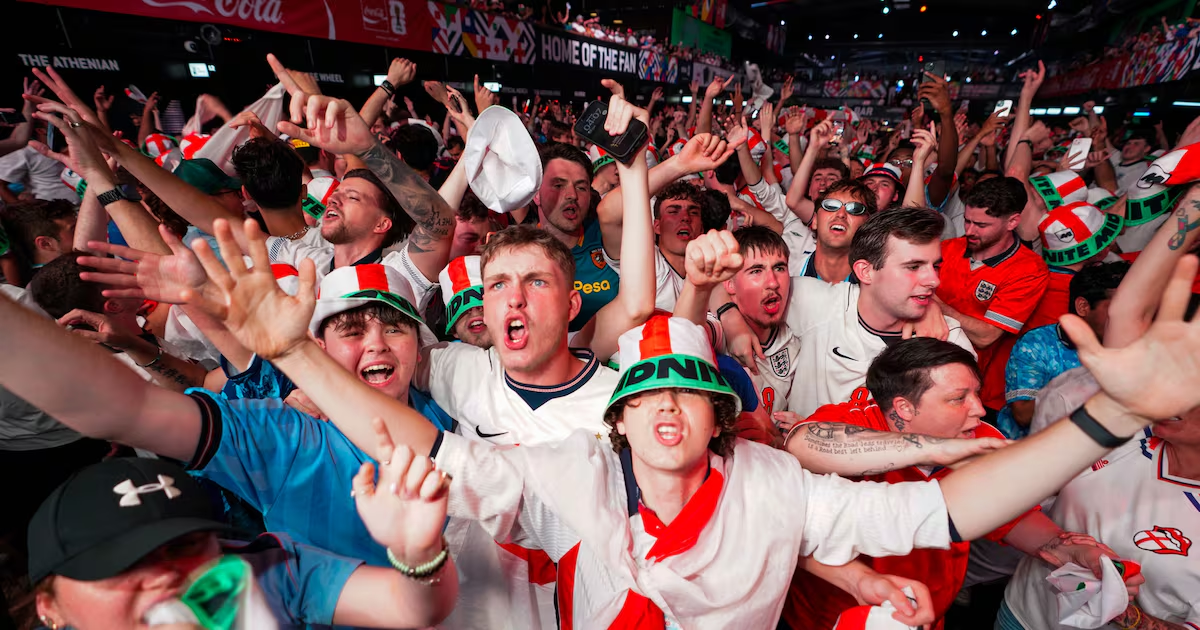
England fans singing Wonderwall after the team’s victory over Mexico was a moment made for the Manchester-based presumptive prime minister, amateur footballer and Oasis fan Andy Burnham. It could be a political opportunity too.It’s coming home – to the 1990sEngland’s dramatic win over the World Cup hosts at Mexico City’s Estadio Azteca on Monday morning guarantees a week or two of endless playing of David Baddiel, Frank Skinner and the Lightning Seeds’ Three Lions declaiming that “it’s coming home”. But while that song rang out in the stadium at the end of the match against Mexico, it is Wonderwall that the fans sang in front of the victorious team.There are a number of theories about why the song has become the unofficial anthem for England fans, among them the fact that it is easy to sing and that nobody knows what it means. But it is also in tune with a broader nostalgia for the 1990s that has seen the return of check skirts, leather jackets and fanny packs as well as a Tate Britain exhibition The 90s: Art and Fashion opening later this year.Burnham echoes this nostalgia, not only in his personal style but in the optimistic tone of his politics, which is in sharp contrast to Keir Starmer’s congenital gloom and the relentless pessimism of Reform UK and the Conservatives. The 1990s was a period of optimism throughout much of the world following the collapse of communism in central and eastern Europe and the end of apartheid in South Africa.In Britain, the fact that John Major extended Conservative government for a number of years after the fall of Margaret Thatcher was not enough to dampen the prevailing sense that things could only get better and were about to do just that. And the creative flowering that the Tate exhibition celebrates was the product of a synergy between art, design, fashion, music and business specific to that time.The so-called Young British Artists who included Tracey Emin and Damien Hirst were part of the last generation who attended art school in Britain before the introduction of tuition fees for higher education in 1998. As the cost of education increased, the arts in Britain became increasingly populated by the middle and upper-middle classes so that by the early 2010s old Etonians were not only dominating the political scene but were taking many of the theatre and film awards too.Burnham’s plans to devolve power to the regions can rebalance Britain culturally as well as politically and economically, bringing working class, regional voices back into the centre of the national debate. His promise to build more council houses and to reduce the cost of living by reining in the privatised monopolies that control utilities such as water and energy has the potential to relieve millions of people from a financial burden that limits their personal and creative potential.With Reform on the back foot on account of Nigel Farage’s unexplained multimillion-pound gifts and the Conservatives yet to regain the confidence of voters, Burnham has an opportunity to take a decisive grip of the zeitgeist in his first weeks in office. And the England team’s World Cup success – for as long as it lasts – will reinforce the mood of optimism he will need to establish at the start of his administration.Football has always been political and it has been part of England’s search for its national identity since the devolution of the 1990s, most recently in 2021 when the former manager Gareth Southgate wrote a letter to fans beginning with the words “Dear England”. That letter was a response to online abuse suffered by players after they took the knee in the wake of Black Lives Matter protests.“Unfortunately for those people that engage in that kind of behaviour, I have some bad news. You’re on the losing side. It’s clear to me that we are heading for a much more tolerant and understanding society, and I know our lads will be a big part of that,” he wrote. We may be about to find out.Please let me know what you think and send your comments, thoughts or suggestions for topics you would like to see covered to denis.globalbriefing@irishtimes.com
England at World Cup could be political opportunity
Burnham’s upbeat tone and England’s defeat of Mexico echoes 1990s optimism that followed fall of communism in Europe and apartheid
695 words~3 min read