Jung Min-kyung
Since 2017, I have covered South Korea’s political and economic landscape as a reporter, with a focus on foreign affairs, inter-Korean relations and security.As a foreign affairs reporter, I closely follow developments from the Ministry of Unification, the Foreign Ministry and the Defense Ministry, tracking shifts in diplomacy, military policy and North Korea’s evolving posture. My work focuses on the intersection of geopolitics, security and policy decisions shaping the Korean Peninsula.Earlier in my career, I also reported on South Korea’s financial sector, covering banking, markets and regulatory developments—experience that continues to inform my understanding of how economic policy intersects with national strategy.
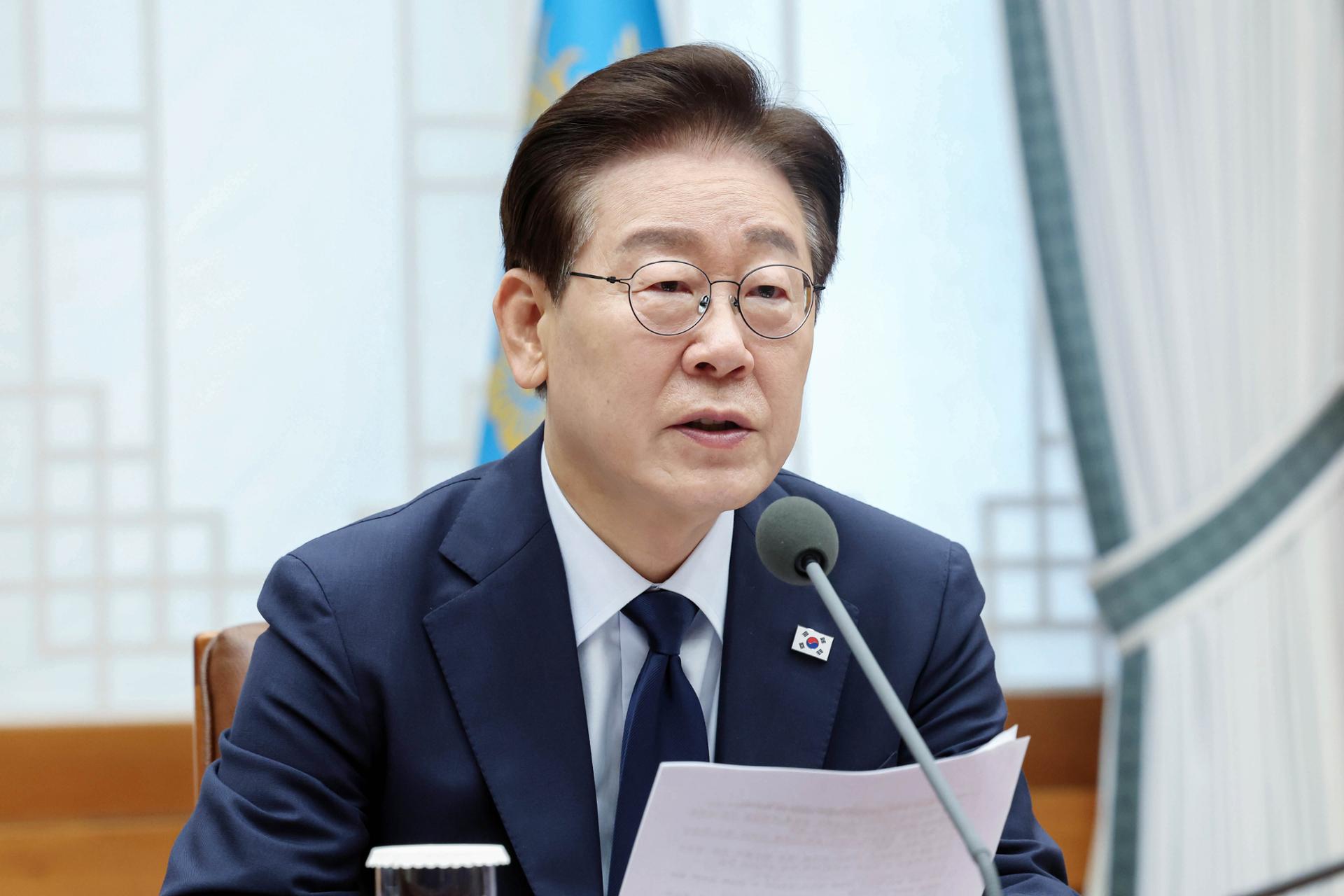
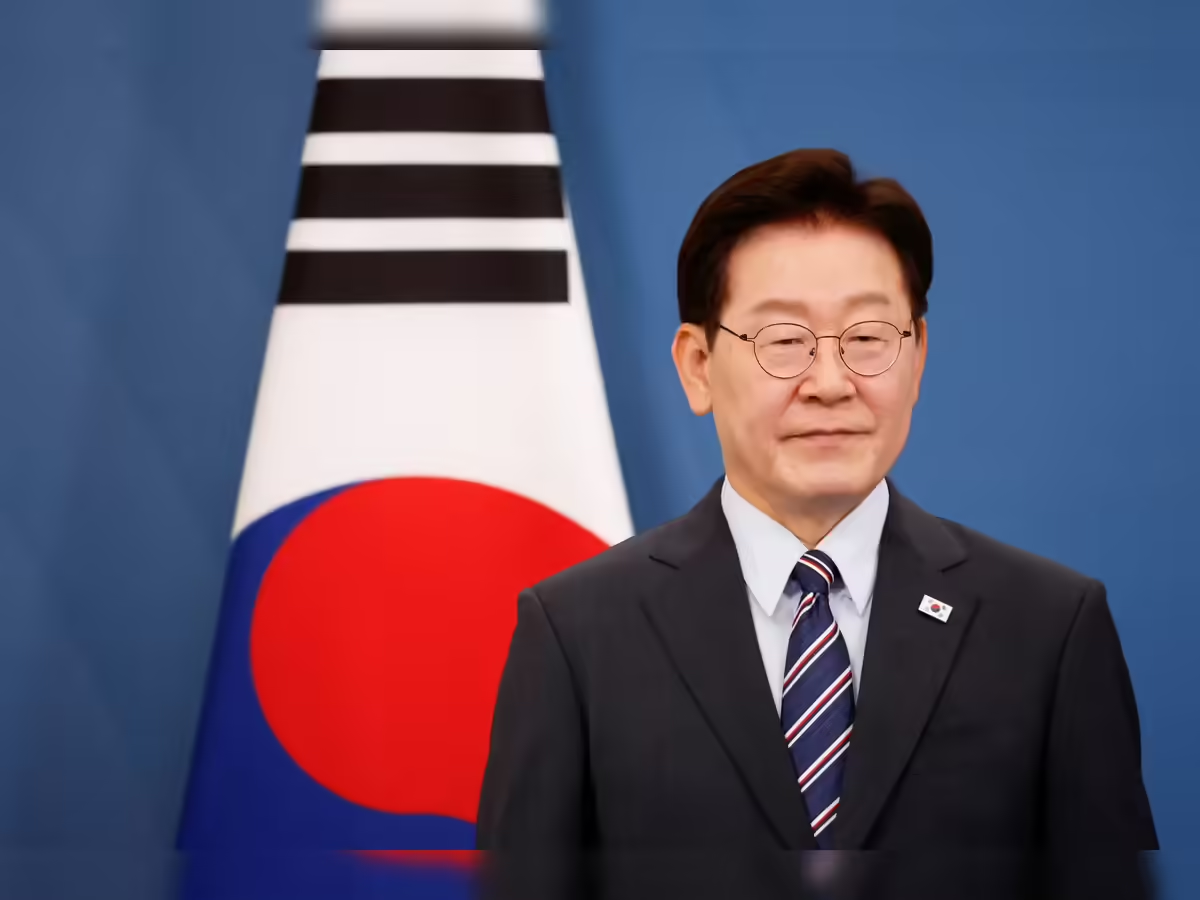
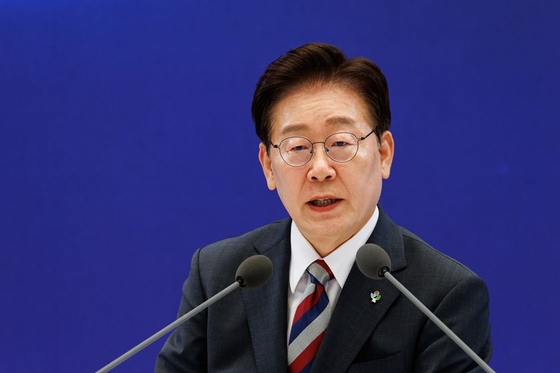
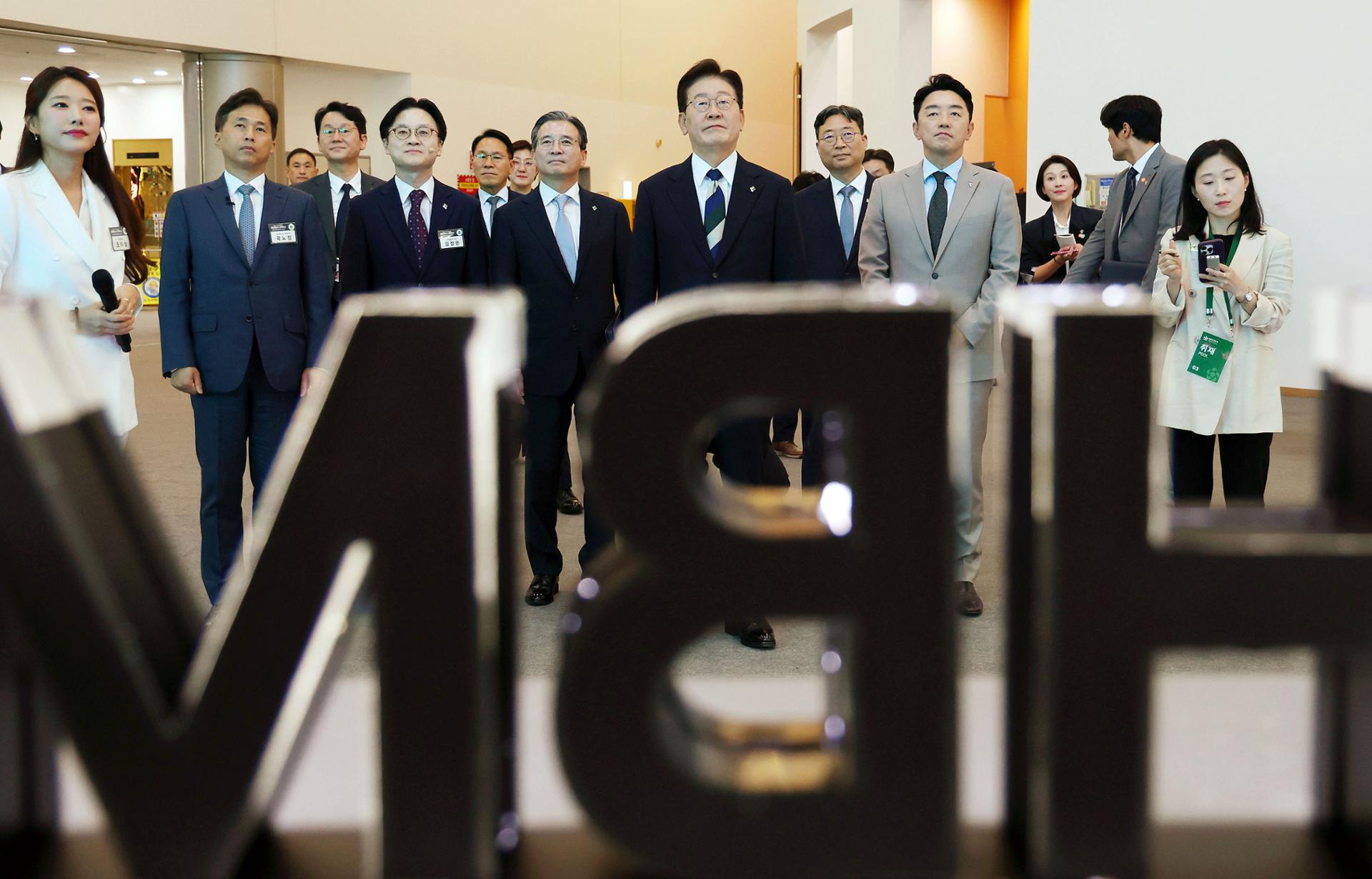
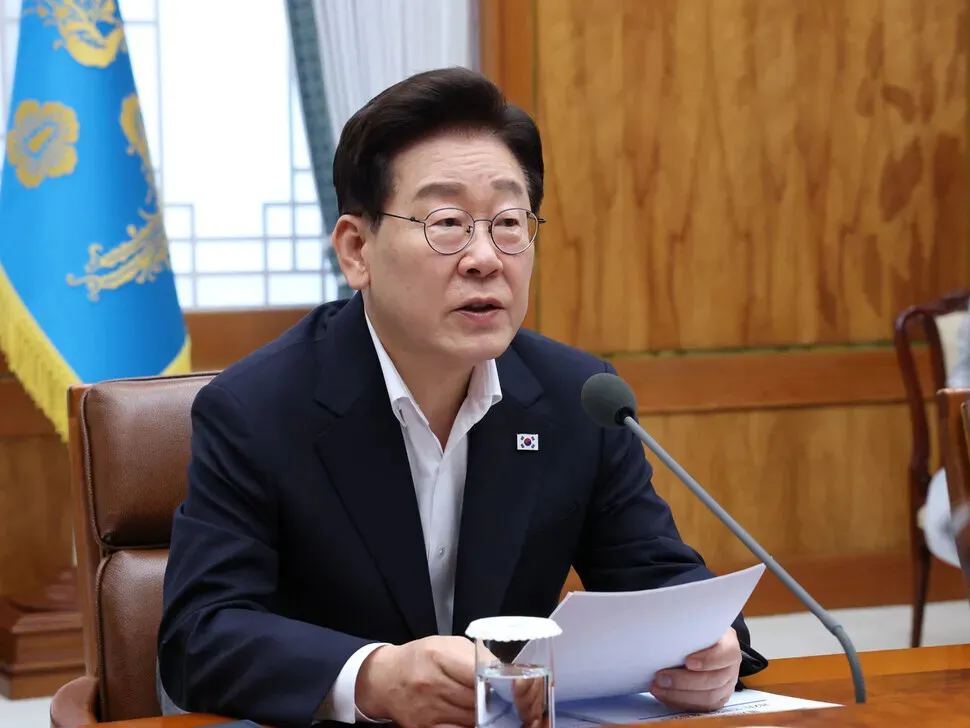
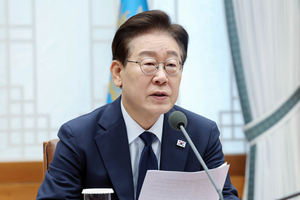
President Lee Jae Myung speaks during a public-private review meeting on the government's mega projects at Cheong Wa Dae in Seoul on Monday. (Yonhap) President Lee Jae Myung on Monday ordered the government to accelerate semiconductor and artificial intelligence investment plans, calling for administrative procedures to be streamlined and carried out in parallel as Seoul races to secure a competitive edge in future industries.In line with Lee's call to accelerate the government's so-called three mega projects, Cheong Wa Dae announced that the Gwangju military airport site is the preferred location for a planned semiconductor manufacturing cluster in the southwestern region — a key pillar of the three projects. Samsung Electronics and SK hynix have pledged to invest a combined 800 trillion won ($522.5 billion) in the cluster.In the morning, Lee presided over a public-private review meeting at Cheong Wa Dae with senior government officials and executives from the country's top chipmakers, Samsung Electronics and SK hynix, to discuss follow-up measures for the three projects.Announced last week, the initiative aims to spur long-term growth through large-scale investments in semiconductors, physical artificial intelligence and AI data centers, as the government seeks to position South Korea at the forefront of next-generation industries.Under the plan, the southwestern Honam region would receive 896 trillion won in investment led by Samsung Electronics, SK hynix and Amkor Technology Korea. South Korea's central Chungcheong region and southeastern Yeongnam region are set to receive 392 trillion won and 312 trillion won, respectively, through projects involving major companies including Samsung, SK, Celltrion, Hanwha, Hyundai Motor Group, Doosan and LG."The world is in the midst of a fierce competition, and an entirely new future is being built around AI," Lee said in his opening remarks."We are in an all-out race that will shape the nation's future. In the end, victory will go to those who move first and move fastest."Calling speed the government's top priority, Lee instructed ministries to identify and remove potential obstacles before they can delay investment."Investment must never be held up by administrative procedures," he said.Lee called for mandatory approval processes, including environmental impact assessments, to be conducted simultaneously whenever legally possible rather than sequentially.He questioned the need to repeat environmental reviews when previous assessments already exist for the same area, saying authorities should make greater use of existing evaluation results.Lee cited the Yongin semiconductor cluster, a massive chip manufacturing hub being developed by Samsung Electronics and SK hynix, saying it took six years from site selection to groundbreaking despite being regarded as a relatively fast project. "By my standards, that is not fast," he said.Lee also called for faster land acquisition by allowing negotiated purchases and compulsory acquisition procedures to proceed simultaneously where permitted under the law, saying the approach could help prevent delays caused by so-called holdout landowners.Preparations to secure electricity and water supplies for the semiconductor cluster should likewise begin immediately rather than waiting for other administrative procedures to conclude, he added.Noting that local governments oversee much of the permitting process, Lee stressed that their cooperation would be essential. He thanked the Gwangju-Jeonnam Special Self-Governing Province Assembly for passing an ordinance to support semiconductor investment as its first local ordinance.Lee also pledged to establish a dedicated task force within Cheong Wa Dae to oversee the projects."The government will provide the maximum level of support possible," he said, adding that stronger-than-expected tax revenue from the semiconductor sector would allow additional fiscal support for the industry.The president also dismissed criticism surrounding the three mega projects."Some criticize the projects on the assumption that they are feasible, asking why their region was left out. Others claim they are a fraud or an impossible political event. I simply don't understand that," Lee said."Either criticize them on the premise that they're impossible or argue about regional imbalance on the premise that they're achievable. I hope people will choose one or the other."Calling on participating companies to be candid, Lee urged executives to focus on practical needs rather than formalities."Let's stop talking in abstract terms or worrying about appearances," he said. "Tell us specifically what you need. Historic tasks move faster when they are approached clearly rather than vaguely."The meeting was attended by Presidential Chief of Staff Kang Hoon-sik, Policy Chief Kim Yong-beom, National Security Adviser Wi Sung-lac and other senior presidential aides, along with Deputy Prime Minister and Finance Minister Koo Yun-cheol and other Cabinet ministers. Kim Yong-kwan, president and head of business strategy at Samsung Electronics' device solutions division, and SK hynix CEO Kwak Noh-jung represented the private sector.In an afternoon briefing, Kang Hoon-sik said company officials identified the Gwangju airport site as the most suitable among several candidates in the Honam region, citing its approximately 8.3 million-square-meter area, existing flat terrain that could shorten construction time, proximity to downtown Gwangju and a KTX station for workforce access, and strong logistics links through nearby roads, the airport and port. The site has emerged as a leading candidate among industry officials because of its access to electricity, water, transportation infrastructure and nearby research facilities."After discussing the first step — site selection — the participating companies concluded that the Gwangju military airport site is the most suitable location among the candidates in the Honam region," Kang said.Kang said the government would move quickly to complete the site selection process in consultation with relevant ministries before launching procedures to develop the industrial complex.