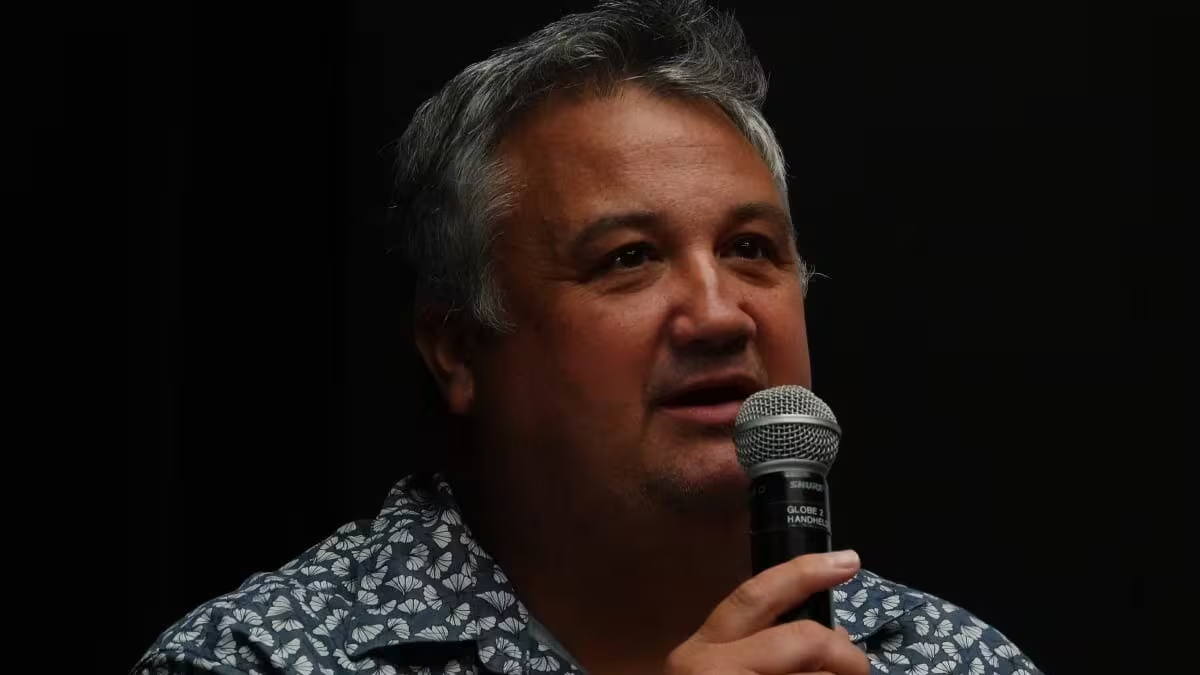
Some patients are waiting up to 13½ years for community healthcare appointments, as pressure continues to mount on services provided outside the hospital system.Recent figures detail the longest wait times for a range of specialities provided in the community. These include audiology, dietetics, occupational therapy, ophthalmology, physiotherapy, podiatry, psychotherapy, and speech and language therapy. As of last March, there were 298,421 people on a community care waiting list, an increase compared to the 290,012 waiting in the same month of 2025.There is significant variation in the longest wait times regarding geography and specialism, according to the data. Data provided to Sinn Féin’s health spokesman David Cullinane show those waiting the longest can be on a list from as few as 11 weeks to as many as 709. Dietetics, dealing with nutrition, in the Longford Westmeath area had the longest wait (709 weeks), followed by ophthalmology in Louth (617 weeks) and then by three Dublin areas for psychology, which had the longest waiting times, ranging from 534 weeks to 591.The lowest longest waits were for speech and language therapy in Roscommon (11 weeks) and in Kerry (16 weeks) and for physiotherapy in Dublin South East (18 weeks).The longest wait time for audiology, for those with hearing problems, was 283 weeks in Mayo, while for an occupational therapy assessment, the longest wait was 534 weeks in Galway.For physiotherapy, the longest someone waited was 354 weeks in Laois, while in Cork, a patient waited 469 weeks for a podiatry appointment.The move to community care is seen as a pillar of the Sláintecare health reforms, as the State endeavours to move away from reliance on the acute hospital system and provide more care to people in the areas in which they live. However, Cullinane was highly critical of the length of time some people have to wait for important services, stating there were significant problems in community care.“Community waiting lists are going up; it’s a very high number. And that’s separate to the almost million [people] on acute hospital waiting list – both active and inactive,” he said.Cullinane cited a lack of staff, with some areas being worse than others, adding that difficulties are spread across different health regions and counties.“Waiting lists are too high. People are waiting too long. And if people wait too long, they will end up getting worse and will end up going into hospital,” he said.The Sinn Féin TD believes there is a need to increase transparency around community waiting lists and for them to be published regularly, as is the case with acute hospital lists.Speaking at a recent meeting of the Oireachtas health committee, Health Service Executive boss Anne O’Connor said there was a significant initiative under way to reduce primary care waiting lists.“We have to provide more timely services in primary care to reduce the demand in our hospital,” she said. A HSE spokeswoman said it regretted “that anyone would have to wait to access care and is committed to delivering efficient, high-quality services for all patients and service users.“A number of new measures are in development which will improve integration, flow and ensure access to the right care at the right time,” said the spokeswoman, adding that the organisation has committed to removing more than 80,000 people from primary care therapy waiting lists by the end of the year.
Patients wait 13½ years for community healthcare appointments
Delays despite community care seen as key pillar of health reforms to move patients away from acute hospitals
553 words~3 min read