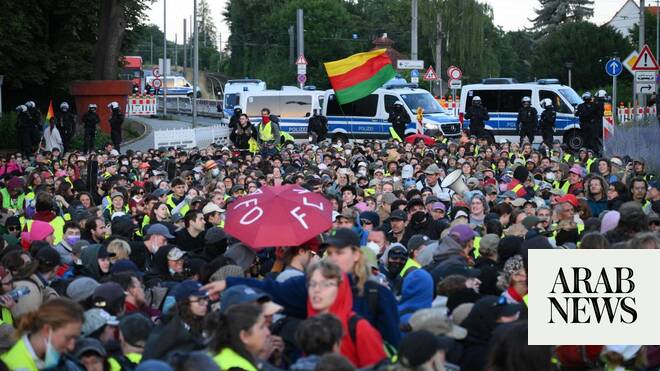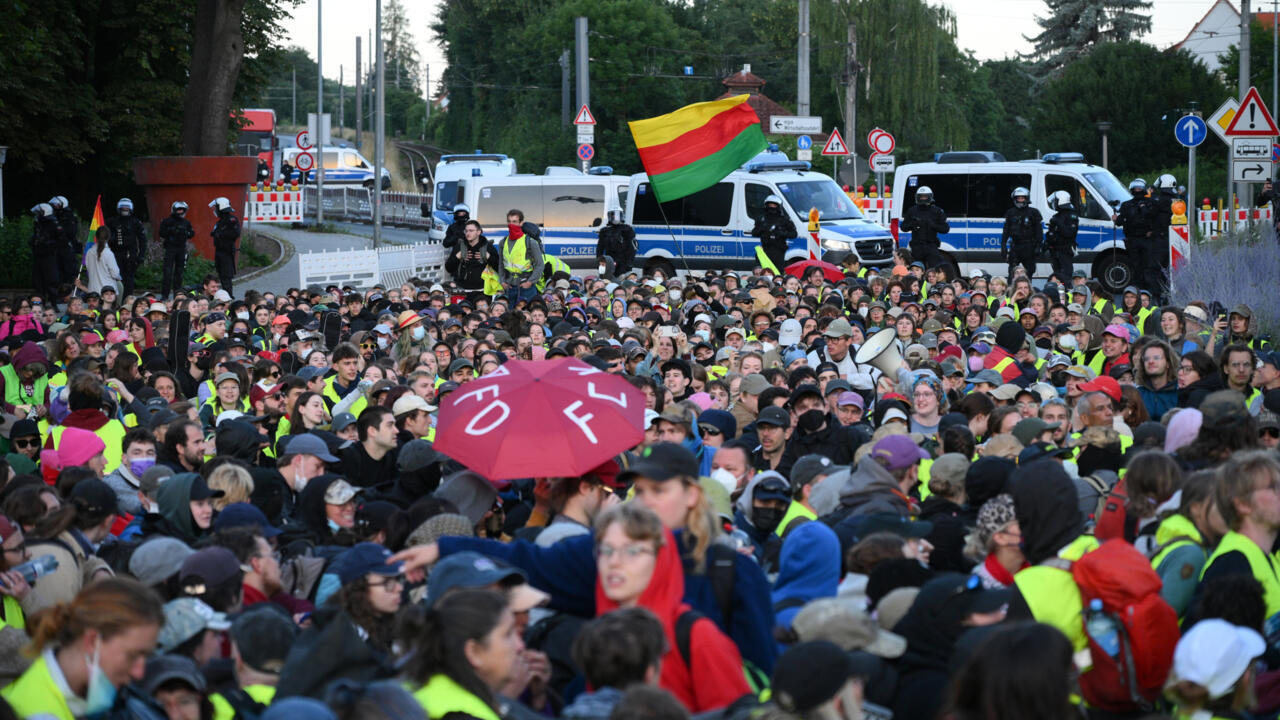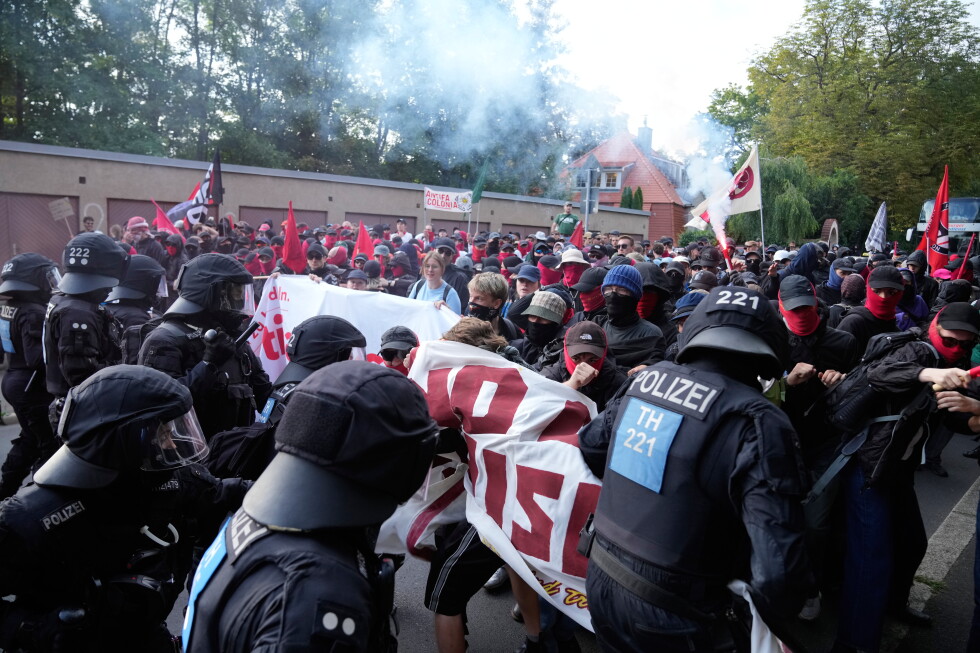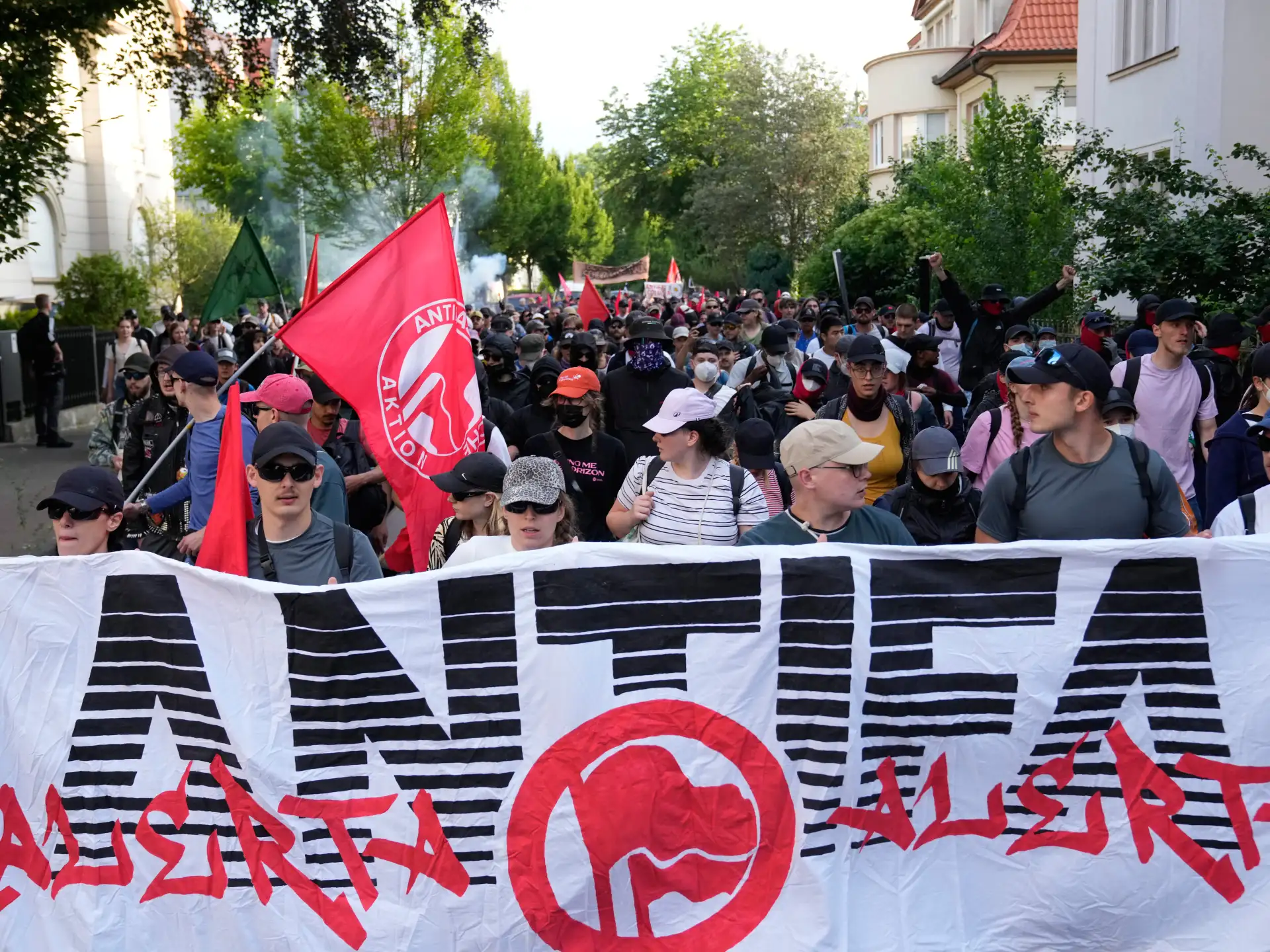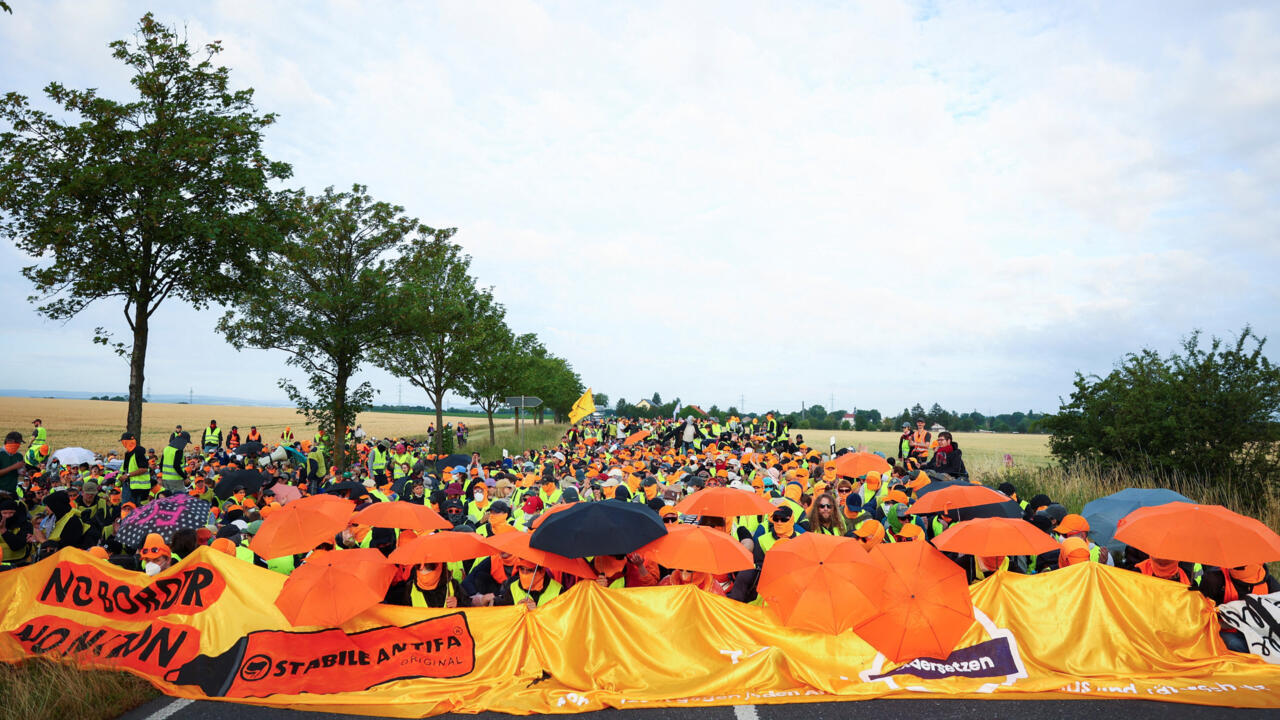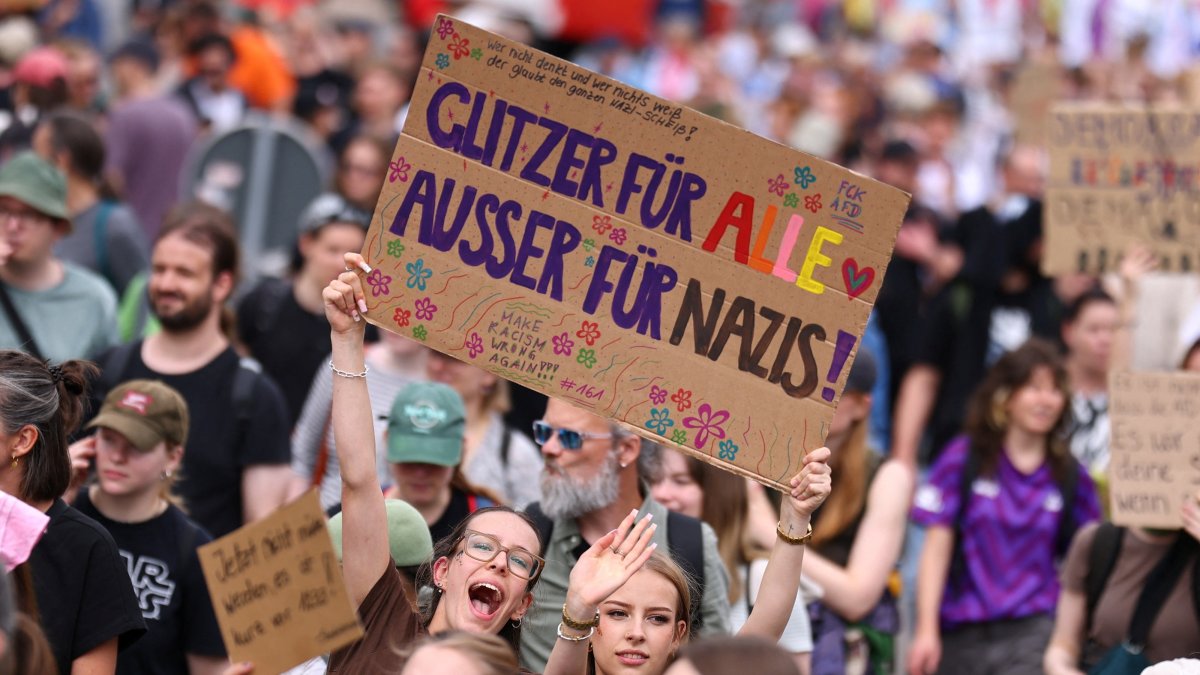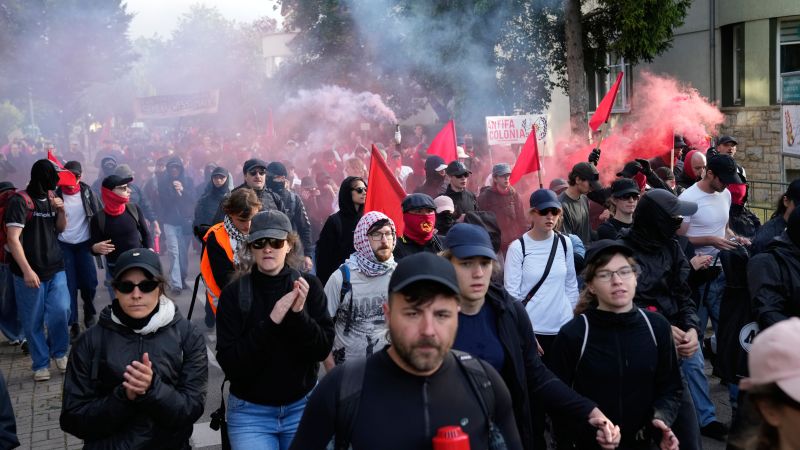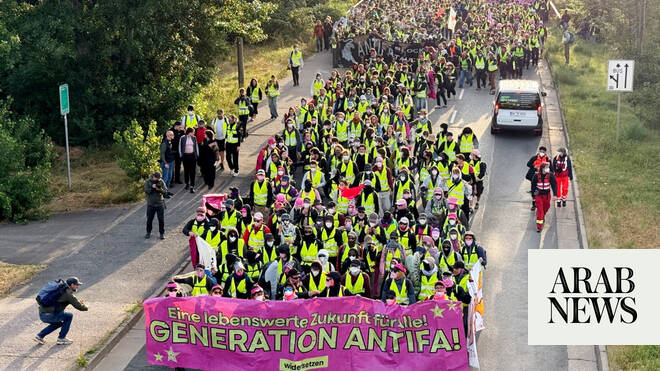
Demonstrators burn flares as they march in Erfurt, eastern Germany early on Saturday, during a protest against the party congress of the far-right AfD, which is soaring in national opinion polls ahead of all other parties. RALF HIRSCHBERGER/AFP
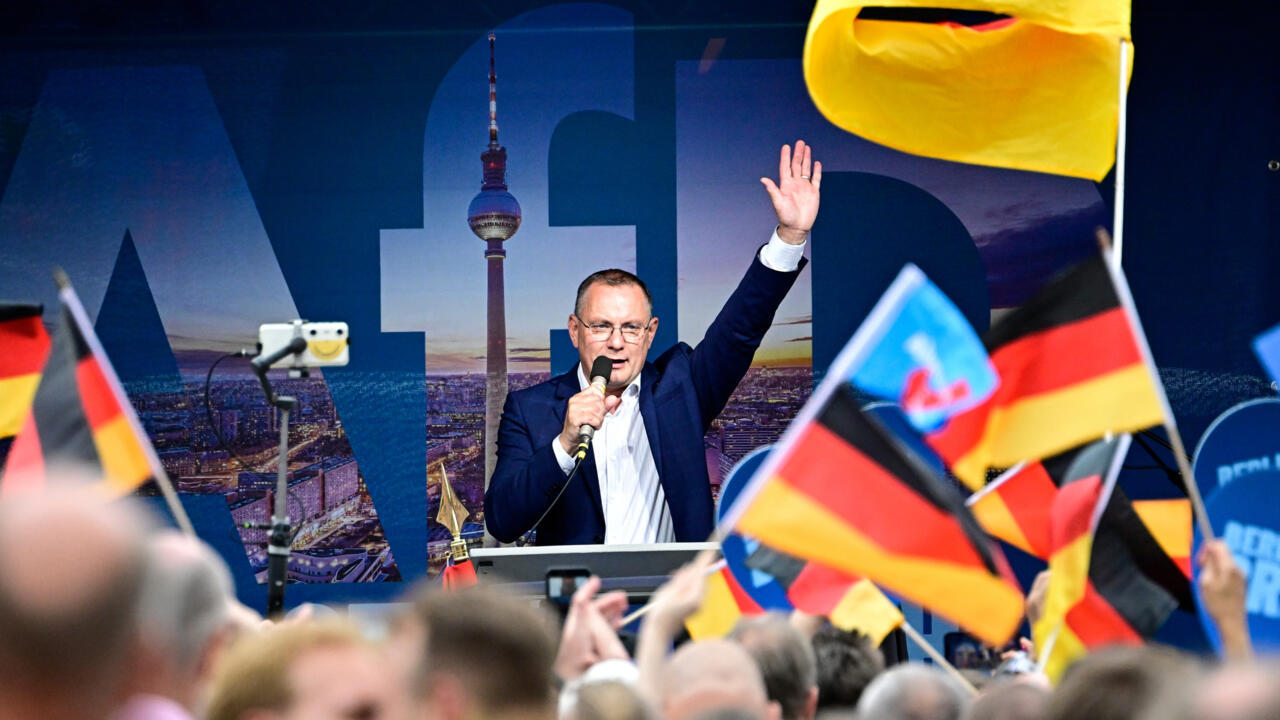
The far-right Alternative for Germany party, or AfD, held its biennial conference in the eastern city of Erfurt over the weekend, making plans for state elections in the fall, against a backdrop of mass public protests in the city.
Germany is divided into 16 states, which have significant levels of devolved power over matters such as health care, education and policing. Soon, voters in three states that were all part of the former East Germany, which is now a heartland of AfD support — Saxony-Anhalt, Mecklenburg-Vorpommern and the city-state of Berlin — will have elections where the party has high hopes of success.
The AfD was founded in 2013 as a Euroskeptic party, but has now taken on board other right-wing opinions, most notably a hard line on immigration. It is perceived as being friendly to Russia, and deliberately provocative by choosing to hold its conference 100 years on from a Nazi party conference in nearby Weimar, at which the Hitler Youth movement was founded and straight-arm salute was introduced, allegations it has denied.