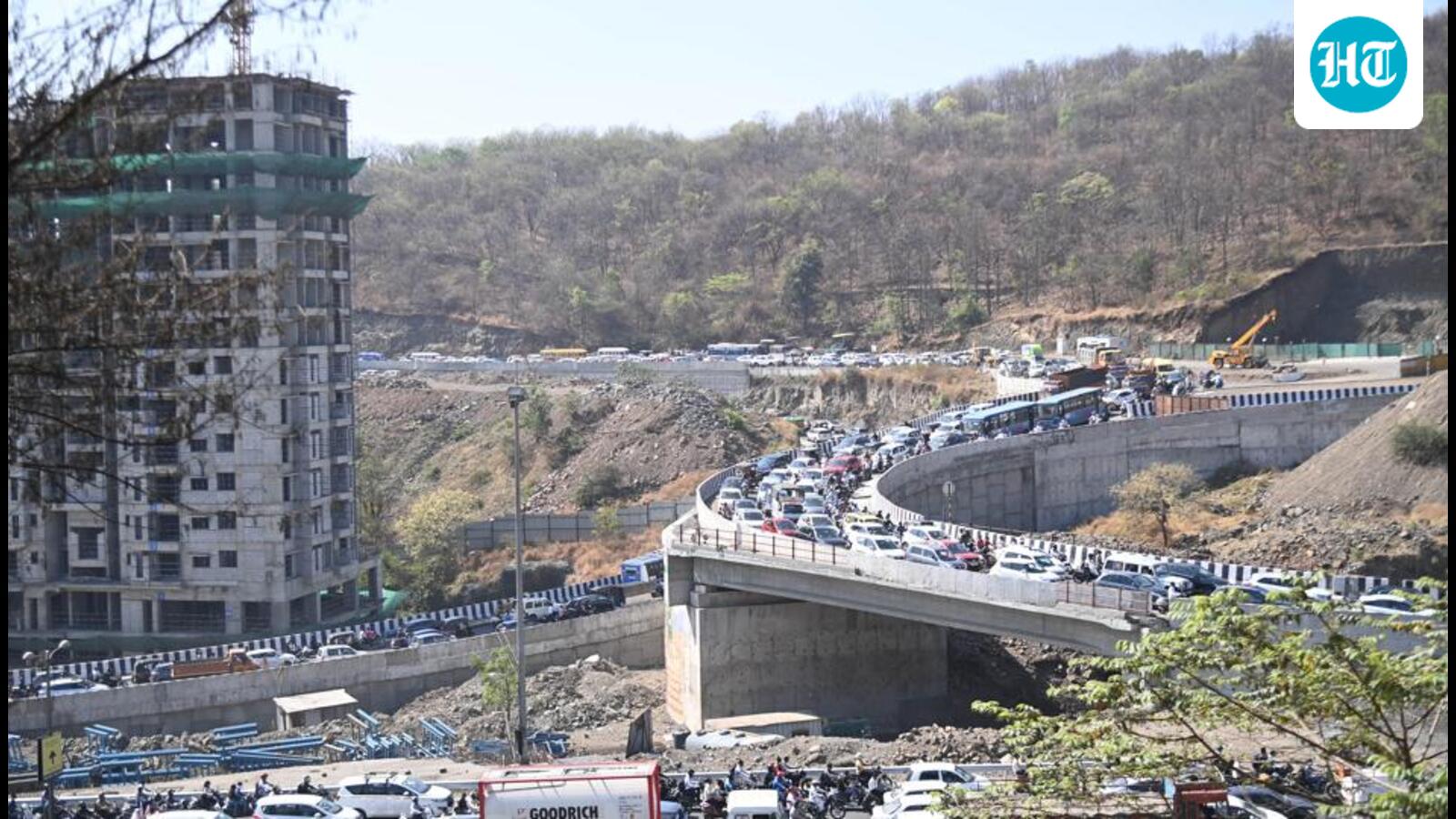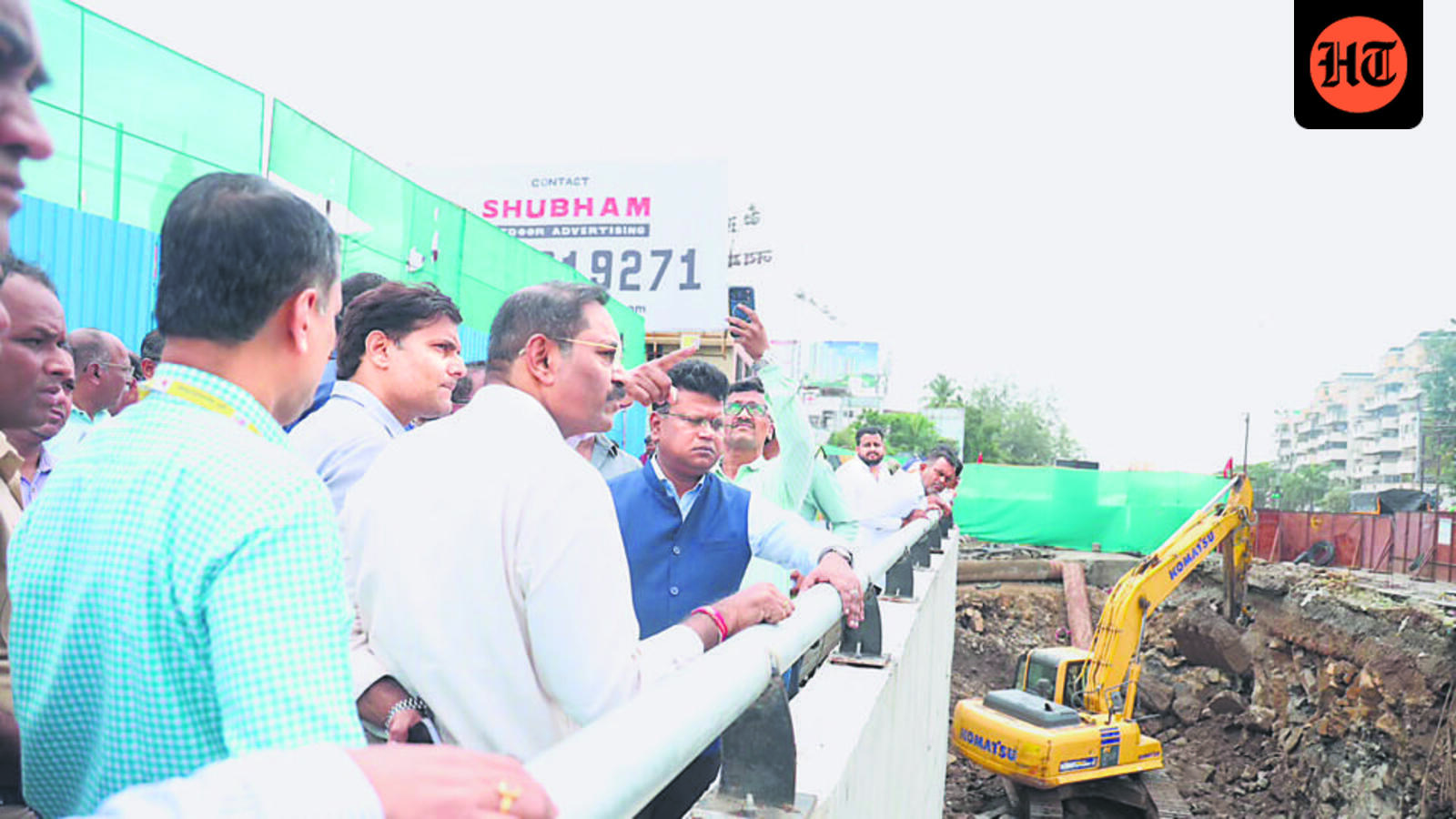
Every few years, Pune rediscovers an old solution to its traffic woes. This time, it is the High Capacity Mass Transit Route (HCMTR) that is back in focus. The Pune Municipal Corporation’s (PMC) decision to appoint an international consultant to revisit the long-pending proposal, coupled with Union Minister Murlidhar Mohol’s assertion that tendering could begin soon, has revived hopes that one of the city’s oldest transport plans may finally move beyond paper. Whether it actually does remains uncertain.Every few years, Pune rediscovers an old solution to its traffic woes. This time, it is the High Capacity Mass Transit Route (HCMTR) that is back in focus. (HT FILE)The HCMTR proposal is almost as old as the problem it seeks to solve. Conceived in the mid-1980s, it envisioned dedicated high-capacity transport corridors criss-crossing Pune, allowing public transport to move without competing with regular traffic while creating alternative road links across the city. It was a forward-looking idea. Instead, it became a planning relic.For nearly four decades, the proposal has remained trapped between changing Development Plans, land acquisition hurdles, court cases, environmental objections and political indecision. Every revision has reduced its scope. Every administration has promised implementation. None has delivered.When HCMTR was conceived, Pune had a population of around 15 lakh. Today, the metropolitan region is several times larger, with thousands of new vehicles joining its roads every month. The city has expanded far beyond what planners anticipated, absorbing villages, creating new residential hubs and shifting employment centres. Reserving transport corridors before urbanisation would have been difficult enough; carving them through densely developed neighbourhoods is vastly harder.Land acquisition remains the biggest obstacle. Large sections of the proposed network pass through built-up residential and commercial areas. Costs have escalated, resistance from landowners has intensified, and revised development plans have spawned fresh legal disputes.That explains why HCMTR has remained a vision rather than a project.Its revival, however, raises a larger question: Is Pune trying to solve today’s congestion with a proposal designed for the city of the 1980s?Not necessarily. Pune urgently needs better east-west and north-south connectivity. The Metro, while transformative, cannot solve every traffic problem. Its network is limited and depends heavily on efficient last-mile connectivity. Flyovers often shift bottlenecks rather than eliminate them.HCMTR could bridge some of those gaps. But whether its original alignments, engineering assumptions and traffic projections remain valid after four decades deserves scrutiny rather than unquestioning revival.Even as HCMTR returns to public debate, another, far more ambitious transport vision is gathering momentum beneath the surface, quite literally.Chief minister Devendra Fadnavis has consistently advocated an underground road tunnel network for Pune. The proposal seeks to create high-speed underground corridors connecting major parts of the city, reducing pressure on surface roads without widespread demolition.Its most discussed component is the proposed twin tunnel connecting Katraj and Yerawada, designed to provide an uninterrupted east-west link beneath some of Pune’s most congested stretches. The government is also considering setting up a Special Purpose Vehicle (SPV) to implement the project.The idea has inevitably earned the nickname “Patal-lok”. Critics question its cost, engineering complexity and long gestation period. Supporters argue that once a city reaches Pune’s level of urban density, building underground may prove less disruptive than carving new roads through established neighbourhoods.Across India, cities are increasingly investing in subterranean infrastructure—not only for Metro systems but also for expressways and utility corridors. Whether Pune can realistically execute such projects remains uncertain, but dismissing the idea outright would be as simplistic as treating it as a cure-all.That is perhaps the real lesson from Pune’s transport history.The city has repeatedly embraced each new proposal while quietly abandoning the previous one. Road widening gave way to flyovers, then Bus Rapid Transit, then Metro. Now HCMTR has returned alongside underground tunnels. Each has been projected as the answer to congestion. None can succeed in isolation.Successful cities build integrated transport systems. Metro lines feed buses. Ring roads divert through traffic. Dedicated transit corridors reduce dependence on private vehicles. Intelligent traffic management improves road efficiency. Safe pedestrian and cycling infrastructure encourages shorter trips without cars.Pune’s problem is no longer a shortage of ideas. It is a shortage of execution.If HCMTR is finally to leave the drawing board, it should be implemented because it still makes sense, not because it has waited for four decades. Likewise, if underground tunnels are to shape Pune’s future, they must emerge from rigorous planning rather than political imagination.Pune’s commuters have heard enough promises. What they need now is a transport strategy that survives beyond the next headline.
Monday musings: Pune’s traffic future: Flyovers, Metro, HCMTR or Patal-lok?
The HCMTR proposal is almost as old as the problem it seeks to solve. Conceived in the mid-1980s, it envisioned dedicated high-capacity transport corridors criss-crossing Pune
749 words~3 min read