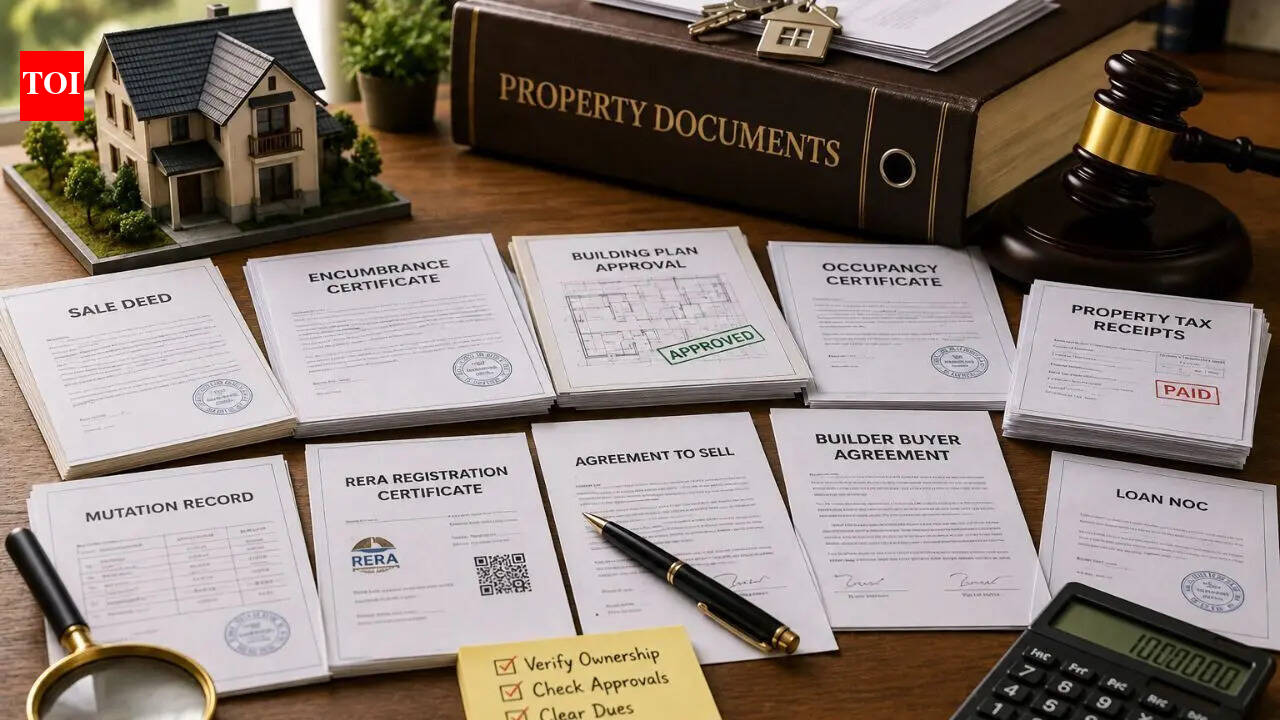
SynopsisIf you are confused by personal finance terms, jargon and calculations, here’s a series to simplify and deconstruct these for you. In the 110th part of this series, Riju Mehta lists the legal certificates that are crucial for home ownership.Buying property? Don't skip these key documentsProperty is one of the most expensive acquisitions for most people. As such, it’s important to conduct due diligence to ensure it’s free from disputes, financial liabilities or fraudulent title claims. This can be done by securing, examining and verifying the following documents carefully during the purchase process.Sale deedThis crucial document proves that the ownership of the property has been legally transferred from the seller to the buyer. It’s important to register it at the sub-registrar’s office after the sale with correct and accurate details.Mother deedThis document provides the history of property ownership and traces its transfer over the years. It helps confirm that the property changed hands legally without any disputes or frauds.Encumbrance certificateThis certificate shows whether the property has any financial or legal liabilities in a specified period. It’s important that you check it for a long duration of around 30 years to ensure the property has no encumbrances.Completion certificateThis is issued by the local authority certifying that the property has been built and completed in accordance with the approved plan and building regulations. It is issued after the building has been constructed.Occupancy certificateThis document is issued by the local municipal authority certifying that the property has been constructed in compliance with the building bye-laws and sanctioned plan, and that it is safe and fit for occupation.Allotment letterThis is issued by the builder, developer, or housing authority to confirm that the property has been allotted to the buyer, usually at the booking stage. It acts as proof that a specific unit has been allotted to the buyer for a given price.Possession letterThis document is issued by the builder or developer, informing the buyer that the property is ready for physical possession after completion.Mutation letterThis document, issued by the local municipal authority or revenue department, updates the legal transfer of property in government records. It registers the name of the new owner, which helps in the correct owner paying the property tax.No-objection certificateIt’s important to have NOCs from various local authorities such as the water board, electricity department, fire department, etc., confirming compliance with the regulatory requirements and ensuring the safety and proper functioning of these utilities.RERA registration certificateThis certificate proves that the project has been registered with the state’s real estate regulator under the Real Estate (Regulation and Development) Act, 2016 (RERA), and can be legally marketed and sold, helping avoid any frauds or misselling of the property.Tax receiptsThe receipts help confirm that the taxes have been paid by the previous owner so that the new owner does not have to bear the financial liability of the overdue taxes and penalty. (Join our ETWealth WhatsApp channel for all the latest updates)...more
Buying a home? 11 property documents every homebuyer must check before purchase - The Economic Times
If you are confused by personal finance terms, jargon and calculations, here’s a series to simplify and deconstruct these for you. In the 110th part of this series, Riju Mehta lists the legal certificates that are crucial for home ownership.
488 words~2 min read