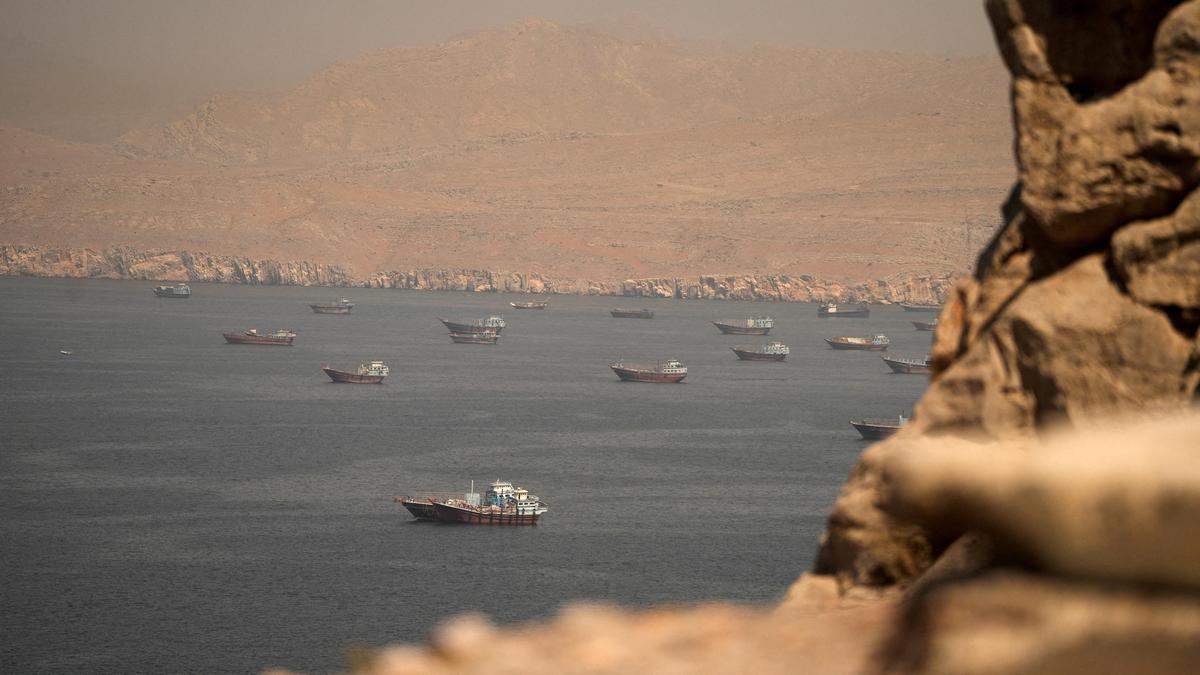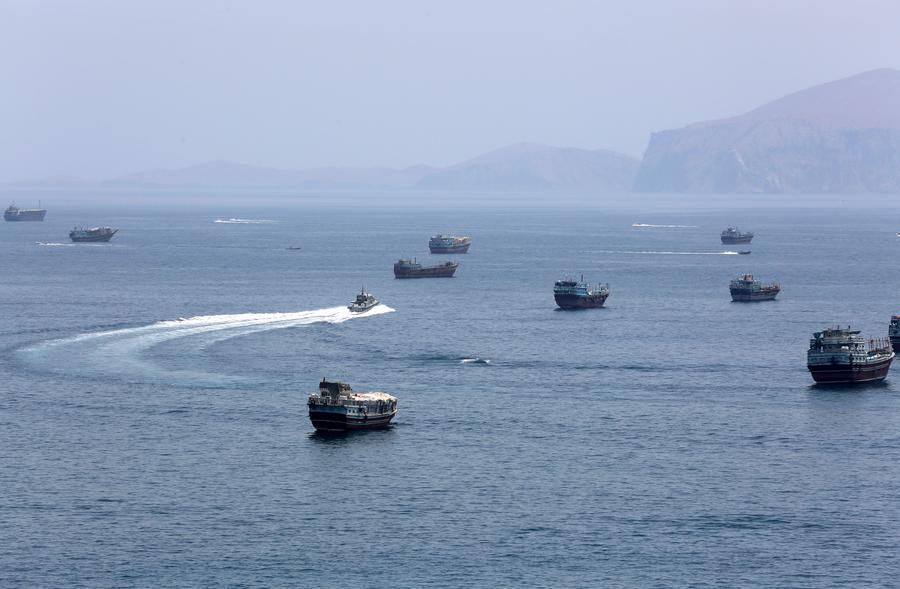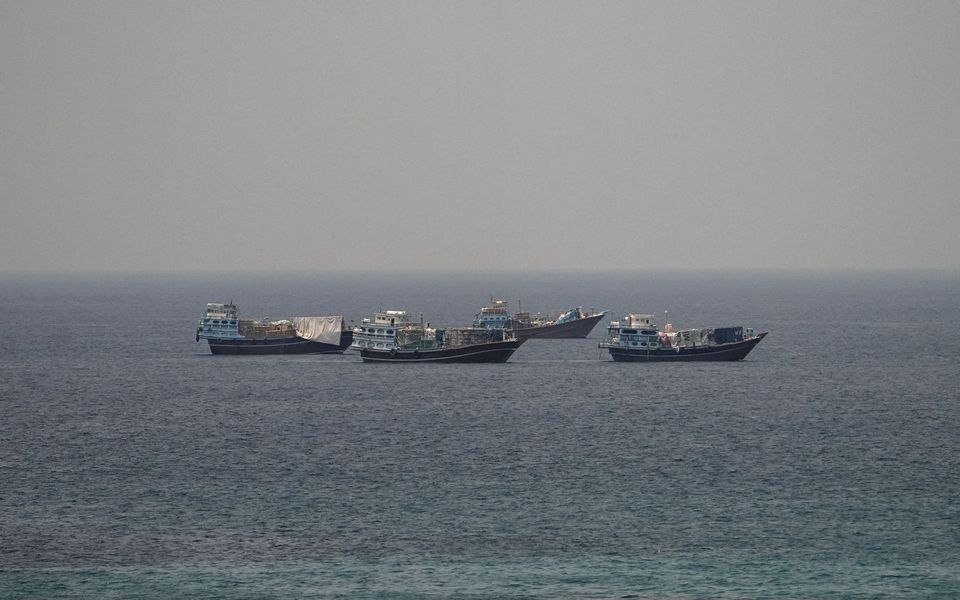
Vessels at the Strait of Hormuz, as seen from Musandam, Oman, on July 1, 2026. [Stringer/Reuters]
US-Iran negotiations point to a political desire on both sides to end hostilities. Despite obvious opposition from the Israeli government, Washington seems to be preparing the ground to start reducing its military presence in the Middle East. The United States’ gradual disengagement will create a power vacuum in the Gulf, which may be covered by an international or exclusively European naval force, whose primary objective will be to safeguard free passage for shipping.
The European Union is already looking into expanding operation Aspides from the Red Sea to the Strait of Hormuz, clearing mines and escorting commercial ships. Meanwhile, Great Britain and France have expressed their intent to lead a “coalition of the willing,” which may also include non-European nations. In any event, Greek Prime Minister Kyriakos Mitsotakis has already declared that our country will be part of such a group. The operational risk must not be underestimated, however. This specific operation bears no comparison to the one in the Red Sea, where the threat stemmed from the Houthi militia, whose capabilities are quite limited.