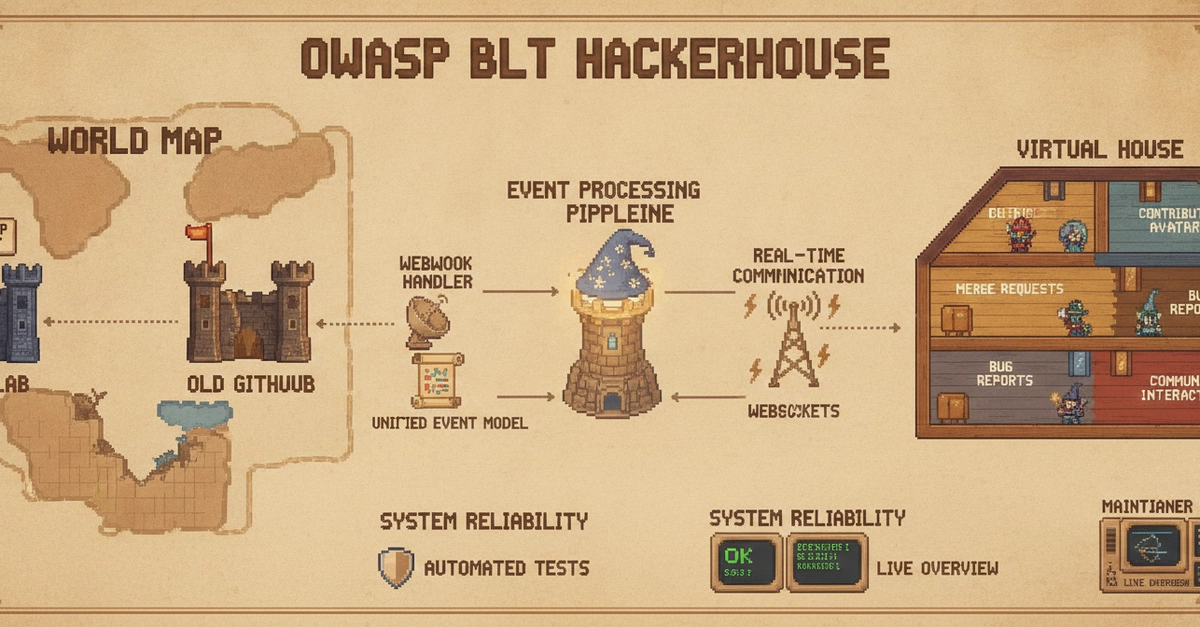
Over the past few weeks, I've had the opportunity to intern with OWASP BLT, where I've been working on BLT HackerHouse a real time platform that visualizes contributor activity in an interactive virtual house.
The idea behind HackerHouse is simple: as contributors open merge requests, report bugs, or interact with the project, their avatars move through different rooms, giving maintainers a live overview of what's happening across the community. Behind that visualization is a backend responsible for processing events, managing contributor state, and delivering updates in real time.
When I joined, I expected my biggest challenge to be designing the backend architecture. Instead, the project took an unexpected turn.
During development, the OWASP BLT GitHub organization became inaccessible, requiring the team to migrate active development to GitLab. It wasn't just a matter of moving repositories documentation, development workflows, CI/CD pipelines, and contributor onboarding all had to be updated while development continued.
It was the first time I'd experienced how quickly the direction of an open source project can change and how important adaptability is. Watching the community reorganize and keep shipping despite the disruption was a valuable lesson in resilience.