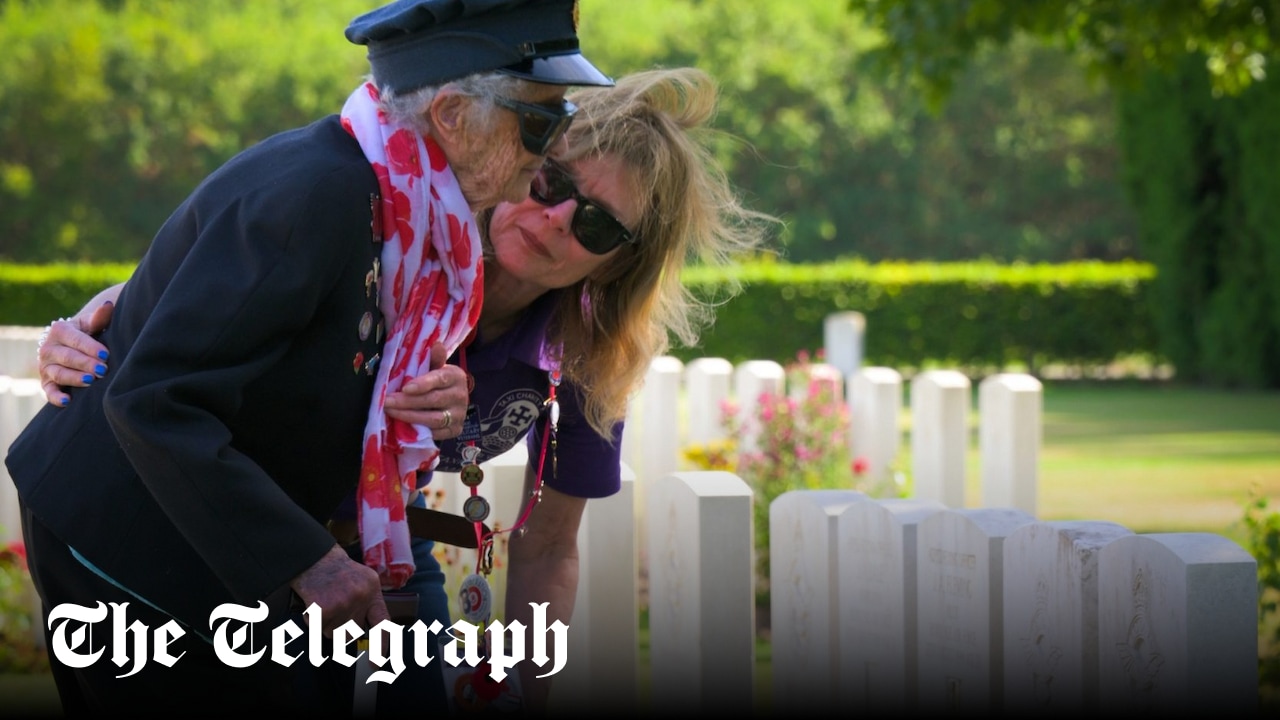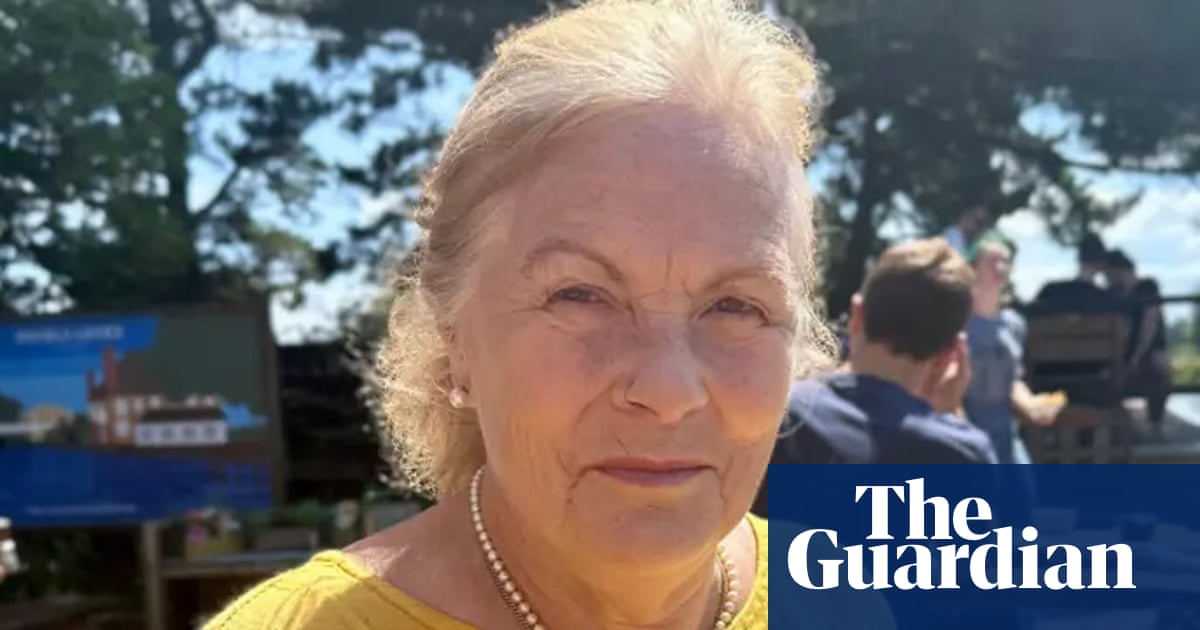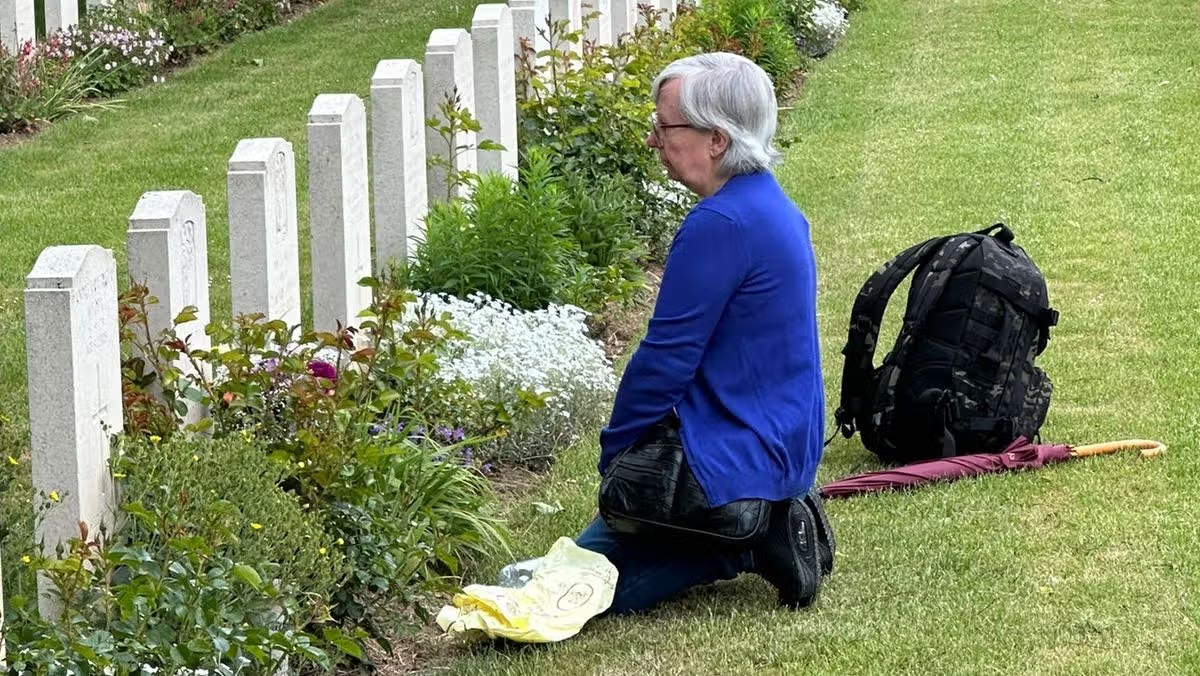
Exclusive Army widow Ann Marooth had been tormented by thoughts of fighting to get her son's body flown back to the UK from Germany but after a trip funded by the Royal British Legion she has finally found some peace.17:35, 05 Jul 2026A widow who lost two children when she was an Army wife has flown back to Germany 50 years after her loss thanks to the Royal British Legion.Ann Marooth, 70, was a teenager when her little boy died just weeks before he was due to turn two.To add to her heartbreak she was then told by the army they would not fly his body home to West Derby in Liverpool, as it was too expensive. So he was buried in a Hannover cemetery.Then during the same posting with husband John, who was a Corporal in the Royal Signals, she suffered a further tragedy when she had a stillbirth.Her little girl, who she never even got to hold or name, was taken away never to be seen again.Now she has returned to visit her little boy Michael’s grave on his birthday along with her son Christopher thanks to the RBL.“It was really strange because we haven't been there for so long but it was like going back in time. It was an upsetting trip and exhausting but I coped better than I thought I would,” she told The Mirror.“It’s absolutely beautiful there, they keep it perfect. There’s rows of plants and flowers."When we got there we were sitting together and put the flowers on his grave and Chris took the paper off the flowers and took them to find a bin.“I had a little chat with Michael then. I wished him a happy birthday and said for this birthday he was 'with his dad'. Because my husband has passed away. “She told how the trip had helped bring her closure, after being tormented by thoughts she should fight to bring him home. Ann admits she has been angry with the army for making her leave her babies behind.But the trip has changed her mind about battling the red tape to get him home: “Michael was four months old when we went to Germany and died a week before his second birthday so that is his home."I think it would be too distressing to bring him home. It’s such a lovely place. I think it’s best if he stays there.“I’m so grateful to the British Legion, if it wasn’t for them I wouldn't have gone back and it helped, it was so calming, all you could hear were the birds singing.”Ann was 19 years old when she flew out to join her late husband John with their baby boy, Michael, in 1973. Tragically the first born died of bronchial pneumonia and was buried in a military cemetery.Talking about her agony as a young grieving mum, she said: “It was a nightmare and didn't feel real when we lost him.“A fortnight earlier, he came out with a rash which was misdiagnosed as measles by the army medic. I knew Michael had already had measles when he was less than a month old.“We were told to take him home and keep him isolated, so I did what they said. The rash cleared up after two weeks, so we went out to the shop and he was really mischievous that day, laughing and running round, and he had a great appetite.“I put him to bed that night but the next morning, after John had gone to work, I found him cold in bed - he had died in the night. I just screamed, a friend called for an ambulance, but there was nothing they could do.“The Army flew my mum over from England to look after me, and after the funeral we went to meet up with Michael’s doctor, and he said there was nothing we could’ve done.“I was a mum for the first two years until Michael died, and then there was just that horrible feeling of loss for the next four. And ever since, of course.“When Michael died, we were given no choice but to bury him there, on Army advice, even though we really wanted to bring him home. But we were young and did as we were told.“I was 20 years old. It was a family officer who came to the house and he was talking to us while I was in tears and distraught. I said ‘we want to take him home’ and there was just sort of silence on their part, they said it ‘would be too expensive’ We said about the cremation he said it would be 'too distressing and I don’t advise that at all'.“It’s probably changed a lot now but back then, they weren’t for the families, we were basically a thorn in their sides."For the next four years, the couple remained in Germany and visited the grave several times a year. Then during the same posting, Ann also suffered a stillbirth.Ann said: “I actually lost two babies out there and it felt like a very lonely place for an Army wife.” Ann explained how she suffered a stillbirth.“It was a little girl but I didn’t see her. They just whisked her off and didn’t tell me what happened to her body,” Ann said.“There was no resting place for her, it just didn’t happen in those days. There wasn't even a choice“It’s something you never thought would happen to you. We'd gone through an awful lot, losing Michael and the thought that we could lose the second baby just didn't enter our heads. After she was born, I didn't see her. They just took her away.“They then put me in a little side ward but I could hear all the other mums that had their babies, I could still hear them crying and when I went to the bathroom I used the same bathroom as they did.”Ann said it was “awful” when they left Germany when John was posted back to England but tried to think they were taking Michael and her little girl with them.Back home Ann became pregnant with son Chris, now 43. The couple struggled to be able to afford return trips to see their son’s grave. "He was our third time lucky," she says.Sadly her late husband John, died of cancer in 2020 and it was her brother-in-law Jimmy who suggested the Royal British Legion might be able to help fund a trip.She said: “Since leaving Germany, we have only been able to visit the grave once, that was 17 years ago. I would’ve gone back more if I could, but I’ve never had the money.Article continues below“It’s been quite emotional returning, it all happened half a lifetime ago, but it’s not something that ever goes away, it’s always there.“I can’t thank the Royal British Legion enough for this, it has put my mind at rest and now I feel that he is in the right place.”RBL Case Officer Angela Murphy said: “This was a very unusual request for the Royal British Legion to receive, but as soon as we heard the details, we knew we wanted to help Ann as much as we could. It’s such a sad situation and even after all these years it must still be difficult. But, thanks to everyone who donates to the RBL, we are able to support people like Ann and others within the Armed Forces community, whatever the need, whenever it’s needed."
A widow is able to return to her son's grave thanks to the Royal British Legion
Exclusive Army widow Ann Marooth had been tormented by thoughts of fighting to get her son's body flown back to the UK from Germany but after a trip funded by the Royal British Legion she has finally found some peace.
1,241 words~6 min read