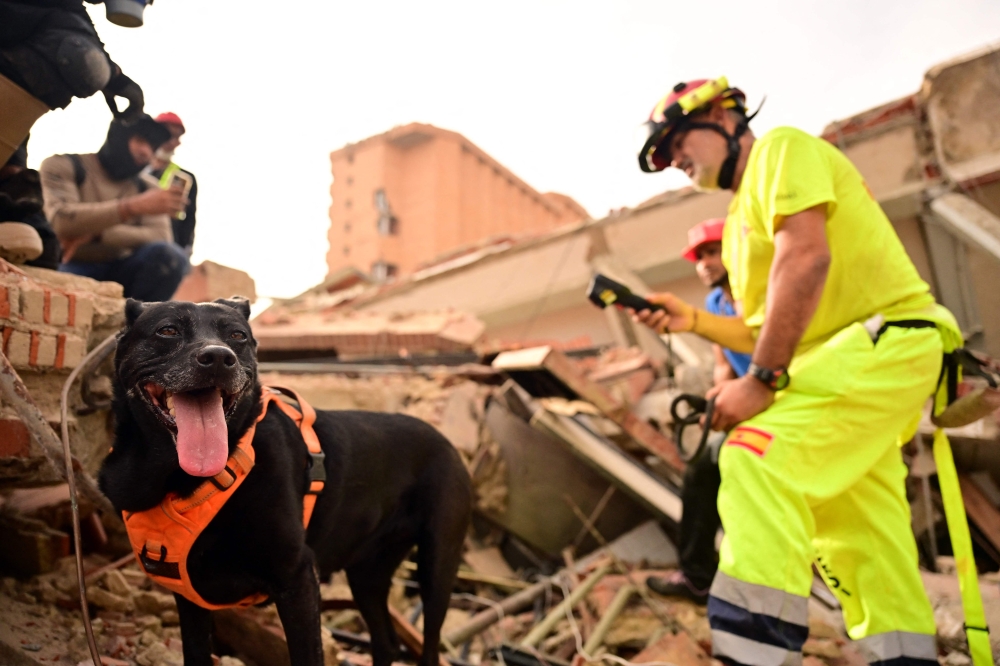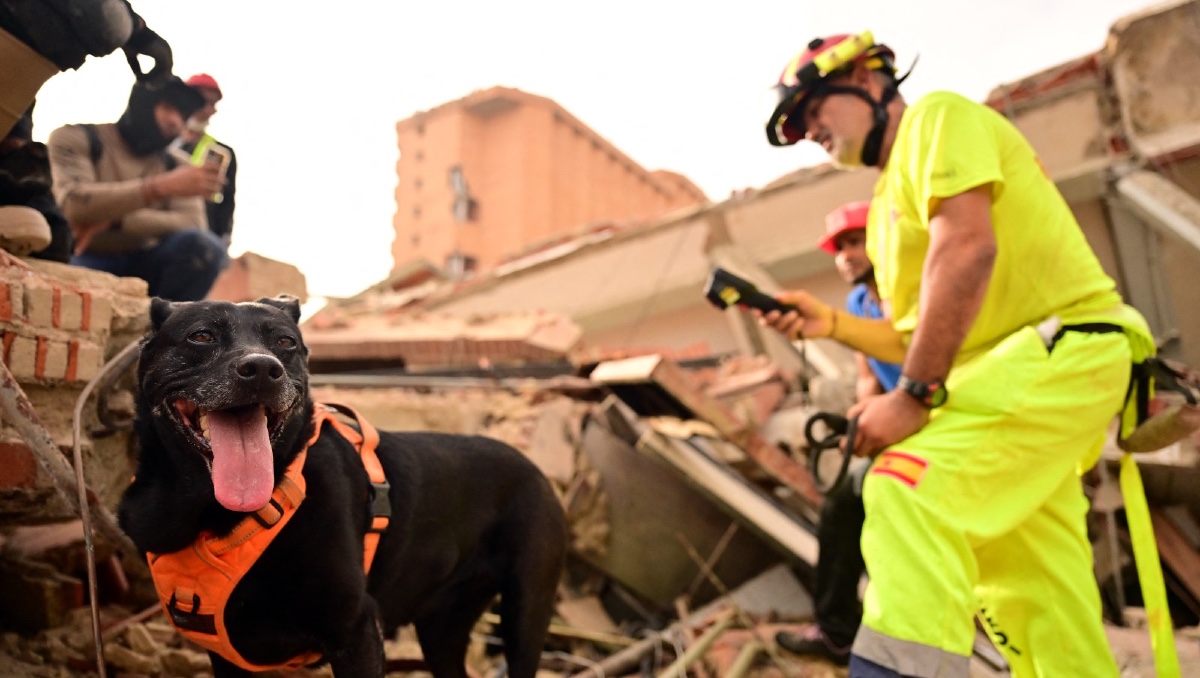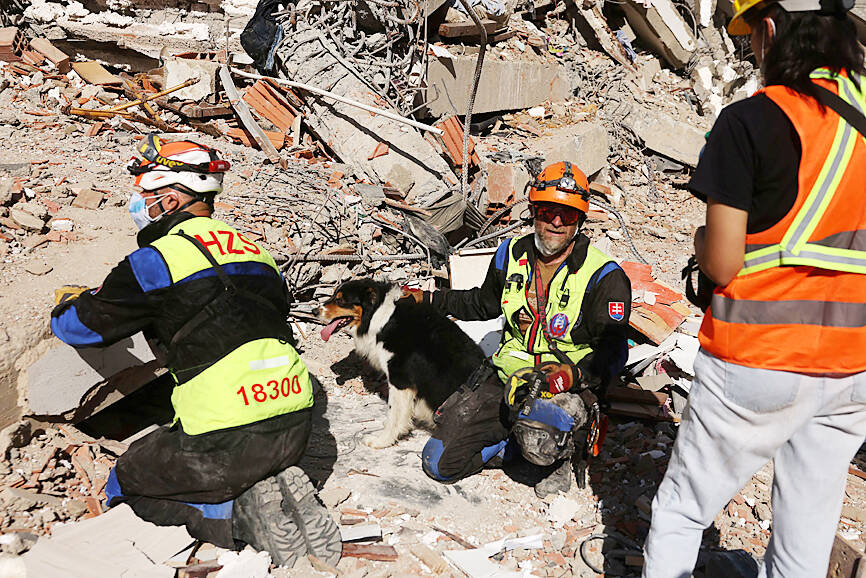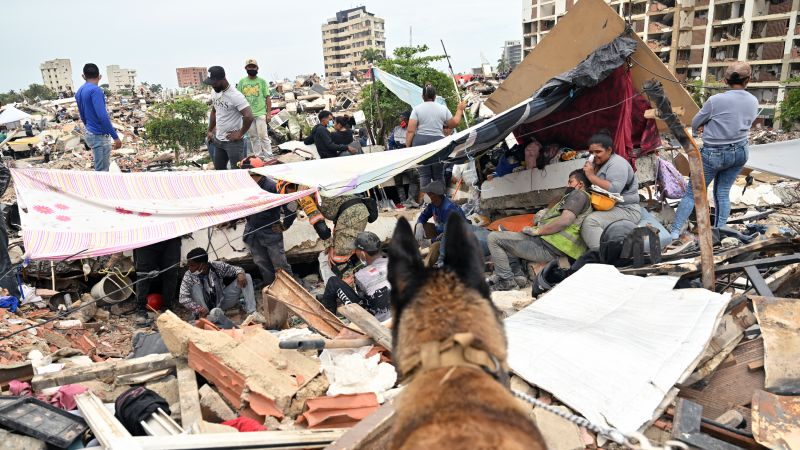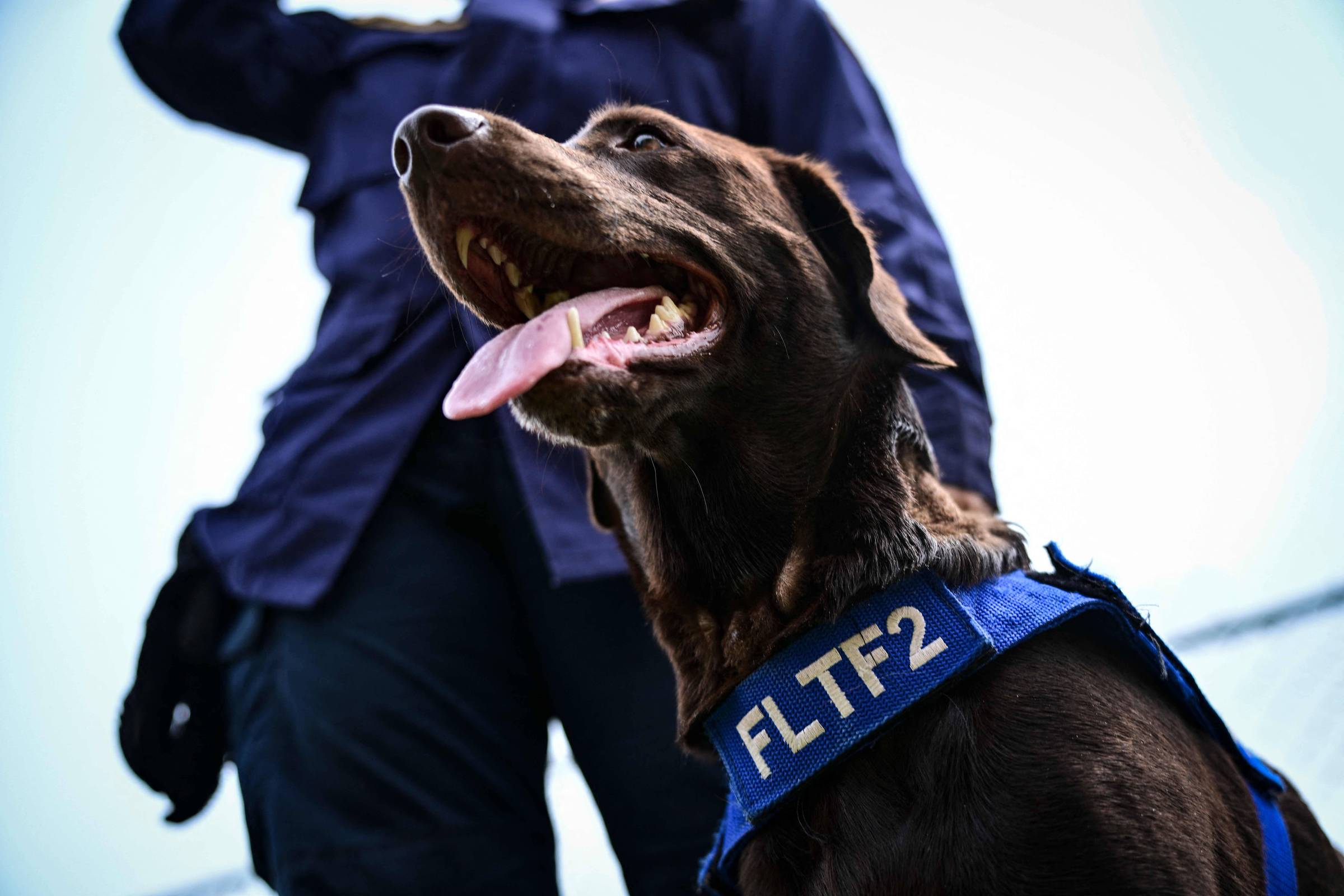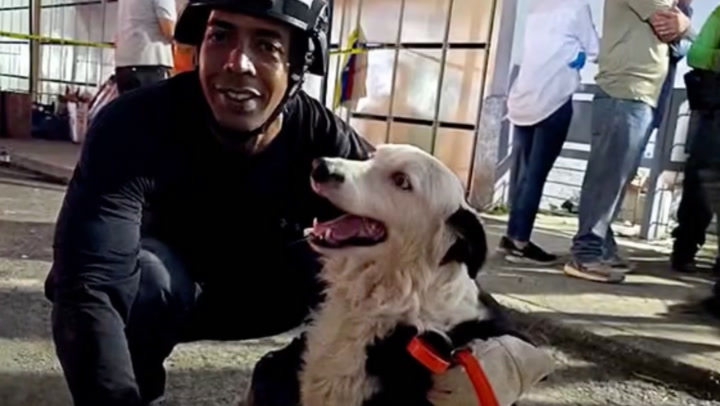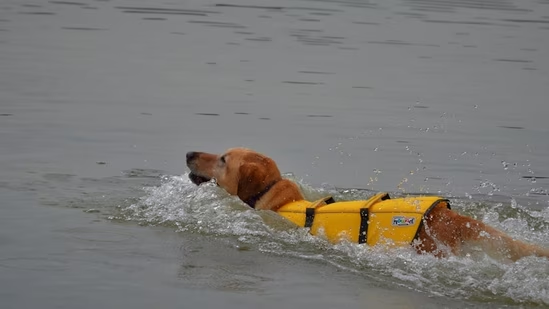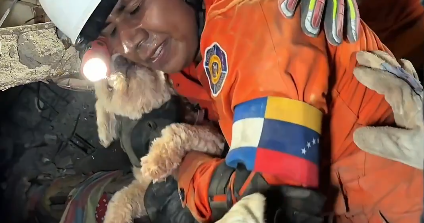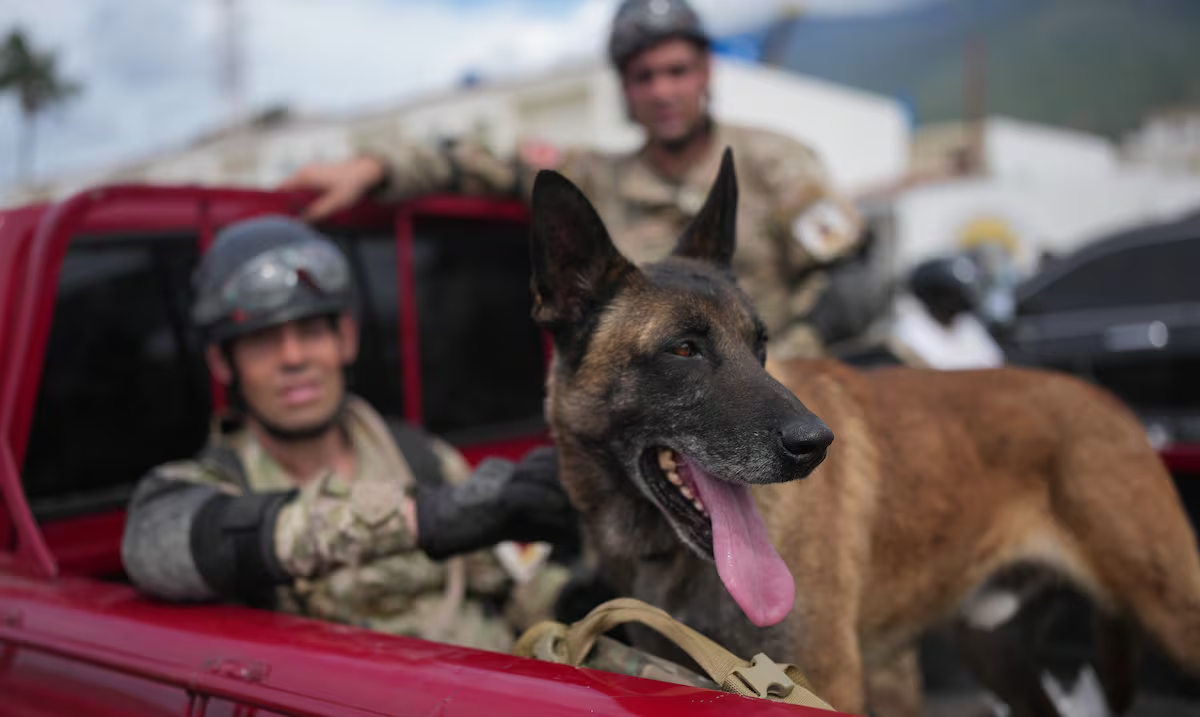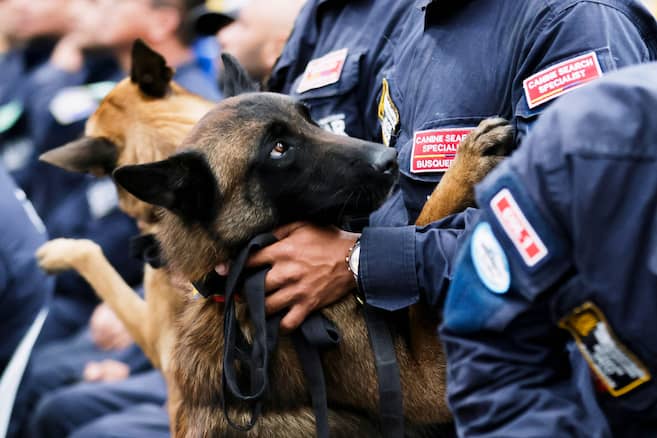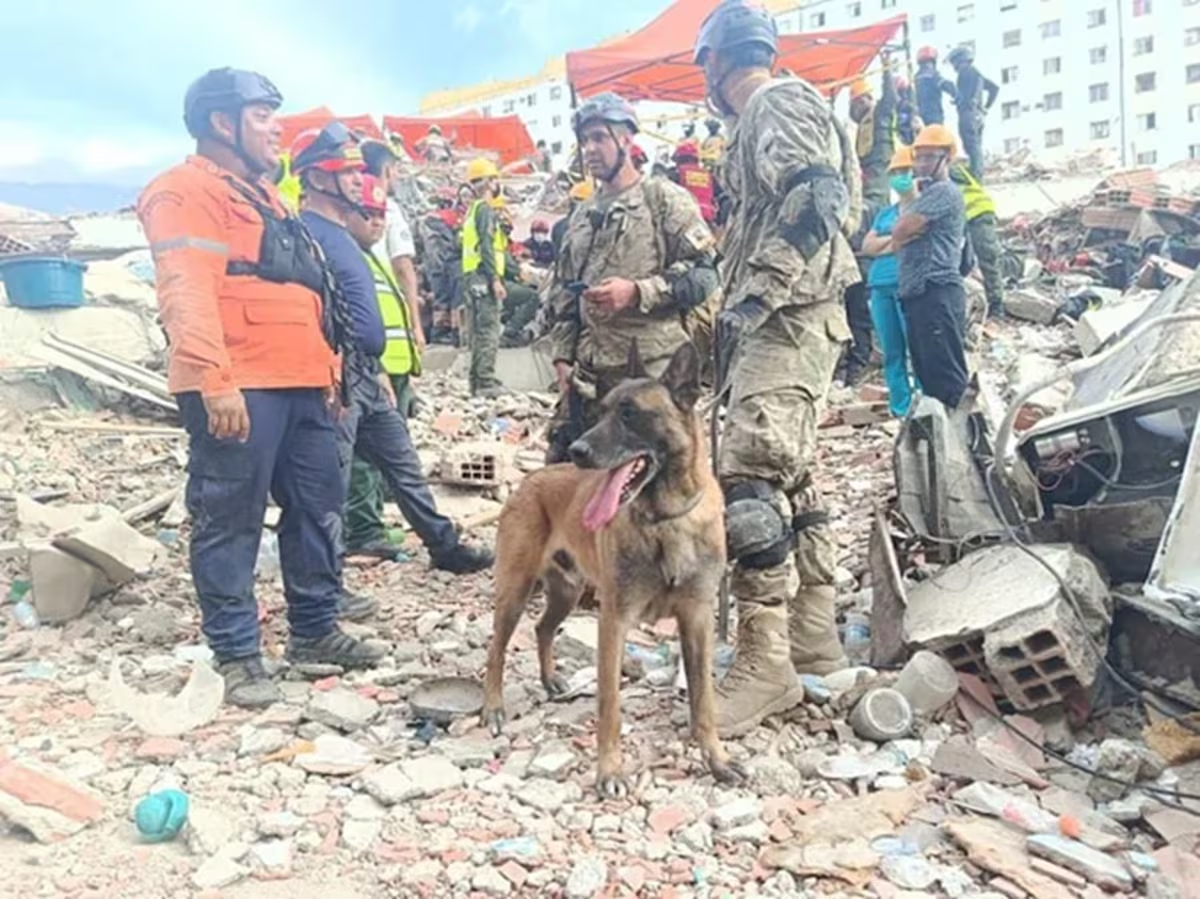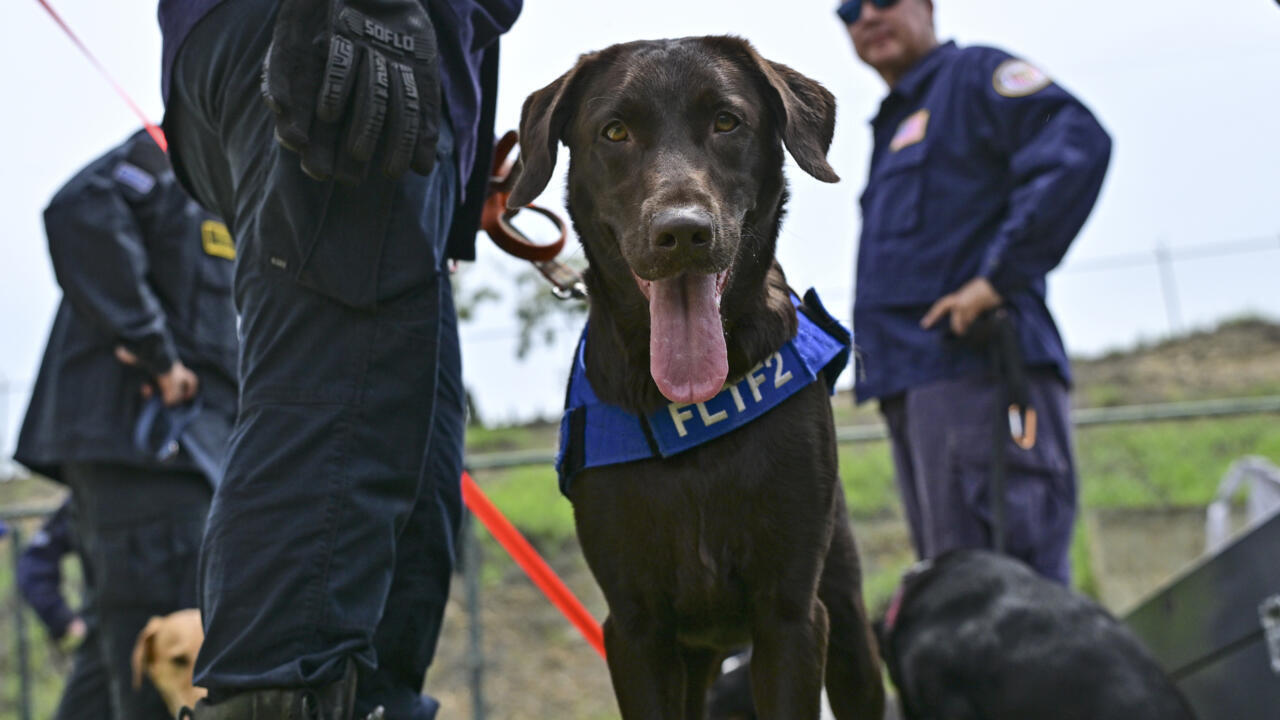
Wearing her blue harness, this restless brown Labrador retriever ventures into the debris of buildings that collapsed in the earthquakes of June 24. She searches for survivors with nothing but her sense of smell.The work of dogs like Sisu, a member of the US rescue team Florida Task Force 2, has proven crucial in finding people alive in a race against time.Eleven days after one of Latin America’s worst earthquake disasters killed nearly 3,000 people, international teams are winding up their missions with little hope of finding more people alive. But the dogs played a key role.The animals are the first to act when teams arrive at a location where survivors are believed to be buried in the rubble. The twin quakes toppled dozens of residential complexes mostly in the coastal La Guaira area."Their work is based on detecting where there are humans" by identifying the temperature, body odor, and carbon dioxide exhaled by the victims, Alexander Parada, also of Florida Task Force 2, told AFP, alongside Piper, a Labrador retriever, who rescued two people in Venezuela, her first mission."They do a job we can't do."When a dog alerts to something, rescuers send a second animal to confirm the finding, said Sylvia Arango, a canine handler since 1998 who manages Sisu.From there, radar or cameras refine the coordinates of where the victims might be.With their sense of smell, search dogs expedite rescue efforts by quickly inspecting large areas, Parada said, which is crucial given that the chances of finding people alive decrease as the initial 72-hour window passes.'Safe'Sisu was one of more than 120 four-legged rescuers from a dozen countries deployed to expedite rescue efforts in several communities in La Guaira, the area most affected by the powerful 7.2 and 7.5 magnitude earthquakes.
Four-legged rescuers lead way after Venezuela quakes
Sisu tackles her missions in the rubble left by Venezuela's two earthquakes with the same determination and energy she uses to chase her favorite toy, an orange and blue ball.
673 words~3 min read