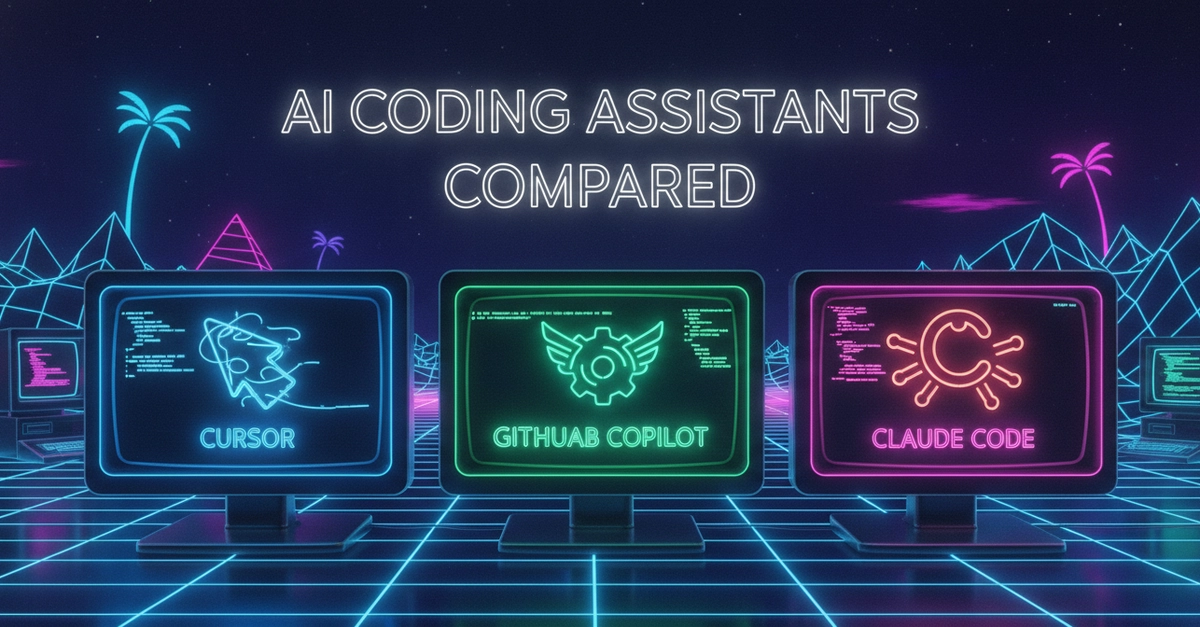
AI coding tools help developers write, debug, review, test, and ship code with LLMs, and in 2026, this means much more than autocomplete. The category includes coding assistants, AI-native IDEs, terminal agents, repo-level agents, and open-source coding models that can run locally or inside existing dev workflows.These tools have moved far beyond simply suggesting the next line – they can understand project context, edit across files, run commands, inspect errors, generate tests, and review pull requests.Now the main goal is to find the tool that fits your workflow. Local coding, enterprise compliance, repo-scale changes, agent automation, etc. – each needs a different setup. We'll help you understand which coding tool works best for you. →Claude CodeClaude Code is a terminal-first coding agent built for real software engineering. It can inspect large codebases, edit multiple files, run commands, debug issues, and handle long refactoring tasks with minimal supervision.OpenAI CodexOpenAI Codex has evolved into an autonomous AI agent platform powered by the GPT-5.5 architecture, providing repository-level refactoring and debugging via a dedicated desktop app, CLI, and web interface.Gemini Code AssistGemini Code Assist is Google’s coding assistant for developers working across Google Cloud, IDEs, and enterprise software workflows. It is useful for teams already inside the Google ecosystem or building cloud-native applications.Gemini Code Assist GitHubCursorCursor is an AI-native code editor that keeps your entire project in context. It's especially strong for inline editing, codebase-aware chat, multi-file changes, and fast day-to-day development inside the IDE.WindsurfWindsurf is an AI-native IDE focused on autonomous development. Its agents can plan tasks, navigate repositories, edit multiple files, and execute longer coding workflows with less manual guidance.Replit AgentReplit Agent is built for turning prompts into working apps inside the browser. It can generate code, install dependencies, fix errors, and deploy projects without leaving the Replit environment.GitHub CopilotGitHub Copilot is the default choice for many developers thanks to its deep integration with GitHub and major IDEs. It excels at inline code completion, pull requests, code reviews, and enterprise development.AiderAider is a Git-first AI pair programmer for the terminal. It edits files, commits changes, and works directly with your repository, making it a good fit for developers who prefer the command line.Amazon Q DeveloperAmazon Q Developer is the successor direction to AWS CodeWhisperer and is best understood as AWS’s AI coding and cloud development assistant. It is useful for teams working heavily with AWS services, infrastructure, cloud apps, and enterprise development workflows.Amazon Q Developer GitHubSourcegraph CodyCody is built for large codebases. Using Sourcegraph's code graph, it can answer repository-wide questions, trace dependencies, explain unfamiliar code, and generate changes across complex projects.ClineCline is an open-source coding agent that works directly inside your IDE. It can edit files, run terminal commands, use external tools, and complete multi-step coding tasks with user approval.Best Open-Source AI Coding Models in 2026Qwen3-Coder / Qwen3-Coder-NextQwen3-Coder is Qwen’s open-weight coding family for agentic software work with long code context: editing repos, using tools, running terminal-style tasks, etc.Qwen3-Coder-Next is the efficiency play: an 80B MoE model that activates only 3B parameters per forward pass, built with hybrid attention and trained on executable coding tasks with environment feedback. In practice, it targets local coding agents and lower-cost repo-level workflows.Qwen3-Coder / Qwen3-Coder-Next GitHub Qwen3-Coder / Qwen3-Coder-Next Paper Kimi K2.7 CodeIt is a 1-trillion parameter open-weight Mixture-of-Experts (MoE) powerhouse by Moonshot AI that acts as an autonomous engineer. It blends elite agentic autonomy with unmatched multi-file execution. It natively cuts overthinking by 30%, executing long-horizon tasks like refactoring code repositories, invoking developer tools, and running test loops with a massive 256K context window.Devstral 2Devstral 2 is a specialized, open-weight coding model family developed by Mistral AI. Purpose-built for multi-file codebase manipulation, terminal operations, and tool use, it powers autonomous software engineering agents like Cline or OpenHands. The family has dense Devstral 2 (123B) model and the local-friendly Devstral Small 2 (24B) model, both boasting an expansive 256K context window.How to Choose an AI Coding Tool: A Quick GuideThe best AI coding tool in 2026 depends less on “which model writes the best function?” and more on what kind of workflow you want to automate.If you want a terminal-first coding agent for serious repository work, start with Claude Code, OpenAI Codex, or Aider. These tools are strongest when you need multi-file edits, debugging loops, refactoring, command-line execution, and Git-based workflows.If you want an AI-native IDE, try Cursor or Windsurf. Cursor is especially good for fast day-to-day coding, inline edits, and codebase-aware chat. Windsurf is better if you want more autonomous development flows where the agent plans, navigates the repo, and works through longer tasks.If you want a browser-based app builder, Replit Agent is the easiest starting point. It is useful for turning prompts into small apps, installing dependencies, fixing errors, and deploying without setting up a full local environment.If you work inside a major cloud or enterprise ecosystem, choose the assistant that fits your stack. GitHub Copilot is still the safest default for GitHub-native teams and enterprise development. Gemini Code Assist fits Google Cloud workflows. Amazon Q Developer is the natural option for AWS-heavy teams. Sourcegraph Cody is useful for large codebases where repository-wide understanding matters.If you want open-source or local control, look at Cline, Aider, and open-weight coding models such as Qwen3-Coder / Qwen3-Coder-Next, Kimi K2.7 Code, and Devstral 2. This path gives you more flexibility around data, deployment, model choice, and agent customization — but usually requires more setup and engineering discipline.In short: use Copilot for mainstream productivity, Claude Code or Codex for agentic repo-level work, Cursor or Windsurf for AI-native development, Replit for fast app creation, Cody for large-codebase search, and open models when control and customization matter most.
Best AI Coding Tools in 2026: Assistants, Agents, IDEs & Open Models
AI coding tools compared in 2026: open-source models, coding assistants, and IDEs — from StarCoder and Replit to Claude Code and Cursor.
938 words~4 min read