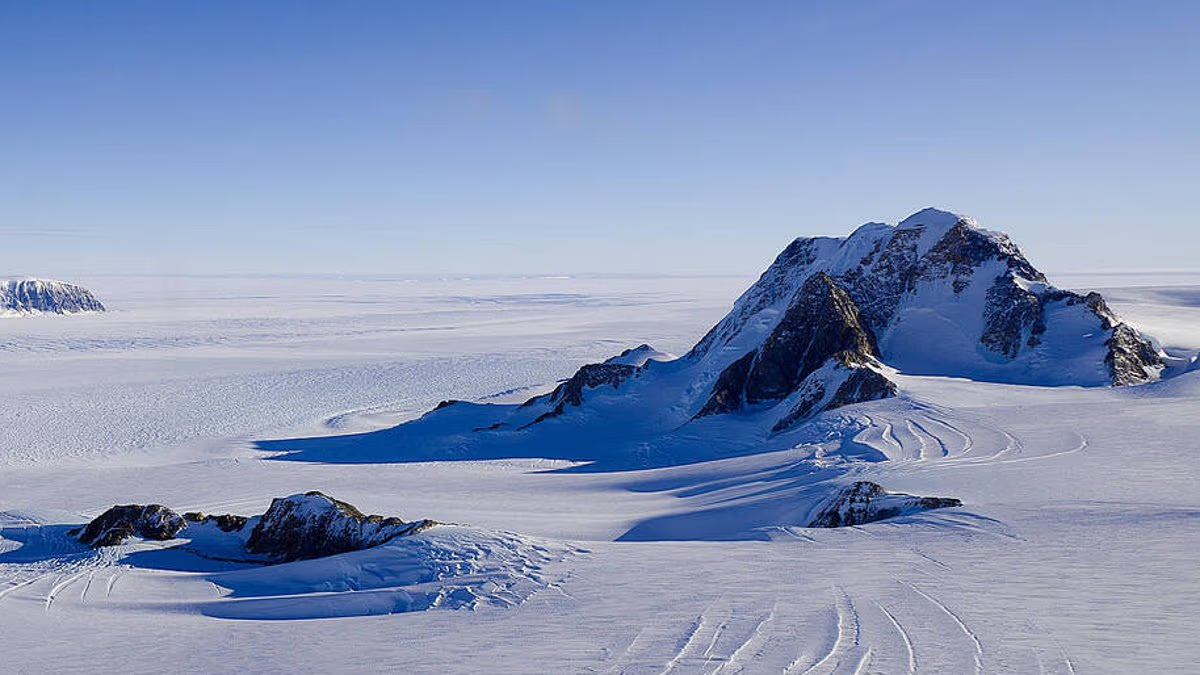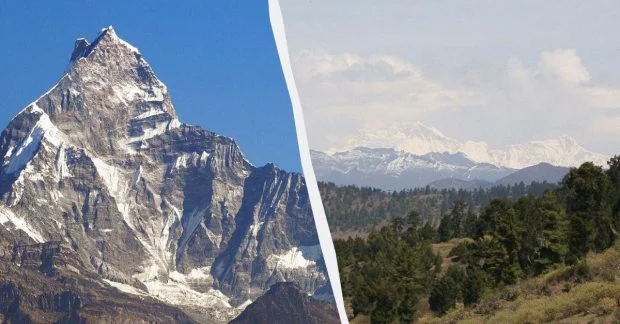
Are there places on Earth where humans haven’t been? And if so, why? Aaron Jones, New YorkSend new questions to nq@theguardian.com.Readers replyUnder my sons’ beds. It’s Indiana Jones territory … AirbombNo human has been to the molten core of the planet. We’ve barely even been down a few kilometres from the surface. There’s a lot more to the planet than the thin smear of atmosphere, dirt, water and organics sitting on top of its solid parts.Going outwards, you can make an argument that all the way out to our L1 and L2 Lagrange points is part of the Earth, as our gravity dominates out to there, even if there is no atmosphere. No human has been remotely close to that far out yet. KillerMuppettThe bottom of my garden. hojogerUntouched … snowfall in Aberdeenshire earlier this year. Photograph: Jeff J Mitchell/Getty ImagesAny ice, even snowfalls in your garden, are a new surface. It’s an untouched and unseen place right to the point when you step outside your door.In reverse, rocks erode. Years of attrition, freeze and thaw cycles, small particles washed away with rain or dramatic changes such as cliff falls. All erosion exposes new rock surfaces. Rocks that were laid down, perhaps thousands of millions of years ago; once thrust higher than Everest, but are now eroded close to sea level. Formed before there were animals, let alone humans, to see or touch the place they now rest in. At a molecular level, the whole surface of the Earth is a new “place” nobody has been before every time you pass. leadballoonI’ve just had a new toilet bowl installed and the plumber assures me (boldly) that no one has gone there before. EddieChorepostIf it’s a quality brand, they’d have tested it before it left the toilet factory. salamandertomeIt’s bog standard. EddieChorepostBut once the first person goes, there’ll be a chain reaction. maikiLots of the Arctic and Antarctic. The few humans who have been there have concentrated in specific areas or on direct routes to the poles or other targets. So lots left untrodden. Same with mountains – even the ones that have been climbed will have parts which are just not accessible. Apart from that and the ocean floor, then probably not much. Even the “wilderness” regions (deserts and rainforests) have been inhabited and traversed for a very long time. bucketI flew hang gliders for over 35 years. Many times, wrestling my glider while spiralling in tight thermals just a couple of hundred feet above incredible rocky spires in the Sierra Nevadamountains, I would look down at these wild inaccessible promontories and feel pretty sure no human had ever set foot there. Leo Jones, Santa Rosa, California, by emailThe American sweet shops in central London. On a more whimsical note, About 25 years ago on Radio 4’s Home Truths, John Peel did a lovely series on finding the most boring Ordnance Survey 1km square in the UK. When the winner was announced, a reporter very specifically went there and found it rather charming, if devoid of specific human constructions. RandomPresudonymProbably, in the heart of the extremes. The arctic regions, the deserts, the rainforests, deep, deep ocean. VeltateclaCattle cooling off in Buckinghamshire during the June heatwave. Photograph: Maureen McLean/ShutterstockIf you look at a field of cows, no human has been inside any of them. salamandertomeI have been in a field with a Hereford bull. Very quietly around the edge of it. Seferli_OdaYes, there are places earth humans haven’t been; namely the molten lava meniscus in the Kīlauea Volcano, at Hawaii’s National Park, United States. John Thornton, by emailGangkhar Puensum, Bhutan. At 7,570 metres (24,836 ft) it’s both the highest mountain in Bhutan and the highest unclimbed mountain in the world. There were four attempts to reach the summit in the 1980s, but Bhutan subsequently banned all climbing of mountains higher than 6,000 metres in 1994, and then banned all mountaineering in the country in 2003 in deference to local beliefs. So long as Bhutan remains the last remaining Tibetan Buddhist kingdom, this is unlikely to change.I’m visiting Bhutan in September; I won’t be going anywhere near Gangkhar Puensum, though if I’m fortunate I might be able to see it on a clear day. SunnyMelbourneA great example is the highest peak in south-east Asia. It is Hkakabo, based in Myanmar’s far north. The one and only ascent by a Japanese climber in the 2000s is debatable. Nicholas Richardson, by emailSurely Arctic Canada, Alaska’s extreme North and Arctic Russia. The heart of the Sahara as well. The barren lands mostly. What about the hundreds of islands in Norway? EdComicsThere isn’t a place in the Sahara that has not been explored, at the very least by those tireless nomads, the Fulanis. And when you add the Tuaregs, Berbers, and Bedouins of north Africa you can bet every part of it has been visited. ObjectiviteThe Fulanis are not, and never were, a Saharan people. Their influence covered the southern Sahara and west Africa. They never crossed the Tademaït or the great sand seas, or reached the Libyan desert.Rock formations in the Hoggar, Algeria. Photograph: Frumm John / Hemis/AlamyIn the Sahara itself, the Hoggar covers 550,000 sq km, and while it can’t be described as “unexplored” (ask anyone trekking to Assekrem), it’s so vast that there are certainly large areas that have never been walked on, and peaks that have never been climbed, simply because the Tuareg don’t have a tradition of climbing mountains and European visitors have concentrated on looking for rock art rather than, for example, finding the source of the ancient Tamanrasset river.And there are huge areas of the Sahara that have never been physically visited because the traditional caravan trails and raiding routes avoided the more hostile areas, and even modern mechanical transport can’t go everywhere … Have you ever been there? I have, often. BritinNormandyThe Great Pyramid is like a museum model explaining how inaccessible places can exist. Inside it, using sophisticated muon detectors, voids have been identified. One is at least 30 metres long. Since the pyramid was built no human has been inside. Indeed no sophisticated probe has managed to explore its secrets. Perhaps the void is a metaphor for reminding us that some things are unachievable. BensblokeTrue, but it doesn’t count for the purposes of this question. Somebody must have been there once, in order to build it. SpoilheapSurferI’ve been to paradise, but I’ve never been to me. rab1827Ogof New Park cave in Gower has not been fully mapped. I am sure many caves exist like this. rivenessYes and the “Go to places no one has ever been to” cruise, leaves Southampton dock on Friday. It’s a one time offer. woodworm20I am sure I’ve read there are unexplored parts deep in Papua New Guinea. CroneRangerHopefully there are and will always be places on Earth where humans have not been and can never ever go. SparkySparkYeah, that’s just as ridiculous as the people who once said we’d never go to the moon or never sail around the world or never fly, etc. Even if it’s in 500 years time, there will come a point where everywhere on Earth has been fully explored and there’s nothing left except out there in space. Never is a long time for anything, nothing ever lasts that long. KultharDrax‘I hear a fox cough … So near, and yet so far’ Photograph: Colin Varndell/AlamyAlmost everywhere. It’s an always-available thrill when travelling or when standing still to pick out a single tree or remote slope which one can be sure no one has ever touched. As I write, at just after 3am, I hear a fox cough in its hole in the wood at the edge of the garden. So near, and yet so far. Christoph Warrack, Sussex, by emailNigel Farage’s constituency office? CD Mole, by emailSteve Backshall did a BBC series called Undiscovered Worlds which involved visiting places that fitted the title. On more than one occasion he came near to death trying to reach them despite having world class survival experts on hand. The world is full of places which are untouched by man and the romantic in me finds that immensely comforting. jazzualJust started watching this series and it’s fascinating! Can’t drag myself away from the screen. ReluctantRedAny telecom company call centre. FirmlyDiracTwenty years ago I worked in a call centre contracted to O2. We were always there. Seferli_OdaThe places where I left my car keys/glasses/comb/pen/… etc. FirmlyDiracThe feel of an ancient, uncut page … Photograph: Vincent O’Byrne/AlamyComing across an antiquarian book whose pages are still uncut always causes a slightly strange, sad feeling. alisoncoweAmong the caving community, a widely used estimate is that only about 10% of Earth’s explorable caves are known, implying that roughly 90% remain undiscovered or unexplored. Whether the extent of what we do not know and have never visited is accurate or not, discoveries of new, apparently unvisited cave systems are still reasonably common even in densely populated regions. Practical experience suggests that a significant amount of the underground/speleological environment remains unvisited by humans. Keith_LawderThere are still many unclimbed peaks and an almost uncountable number of unclimbed routes. Philustrate2I find it more reassuring to think that our ancestors probably went most places, at some point. Humanity in our modern form has been around for hundreds of thousands of years, and someone probably visited everywhere long before European colonial explorers stamped their names on things (or are yet to). PorthosBehind their mirrors? kunsthandSouthampton. No self respecting human would go there. MarkearI used to work onboard P&O ferries going out of Southampton to France and Spain. We lived on board for three weeks and came off for two weeks. The best commute to work ever, from London at the start of the three weeks and back to London at the end of the three weeks.We had a day off once in Southampton, something broke in the boat, I wandered around Southampton for the first time. Um! A windswept desert of no interest.
Readers reply: Are there places on Earth where humans haven’t been?
The long-running series in which readers answer other readers’ questions takes a deep dive into the unknown and untrodden …
2,195 words~10 min read