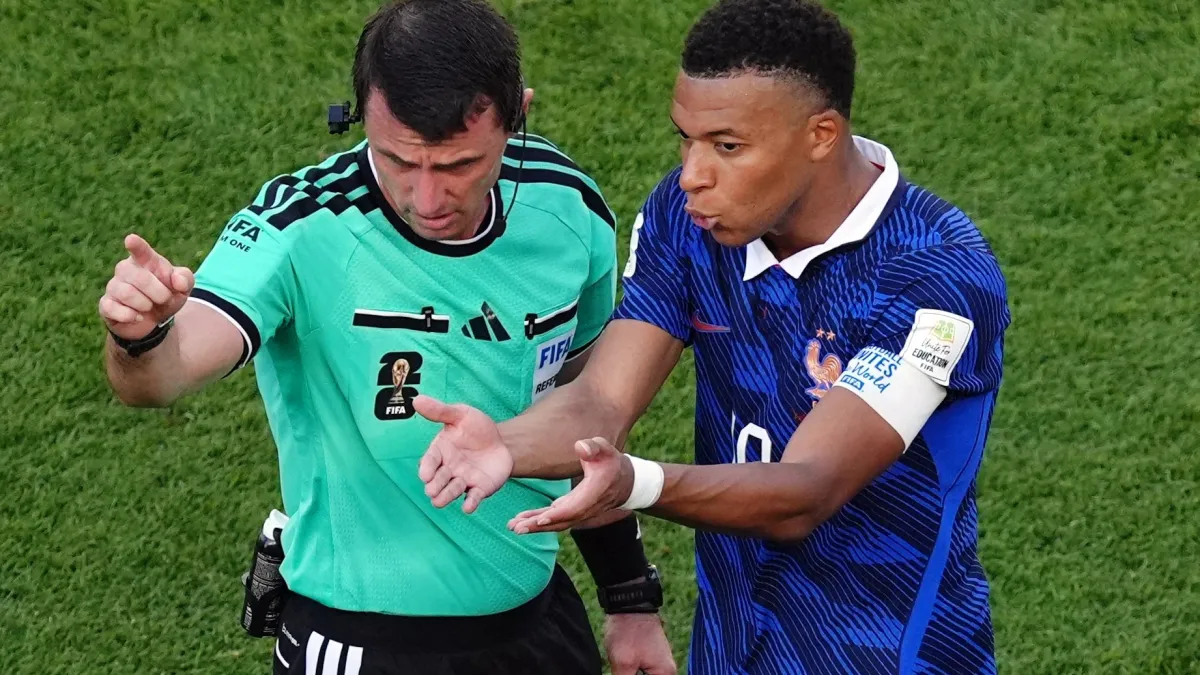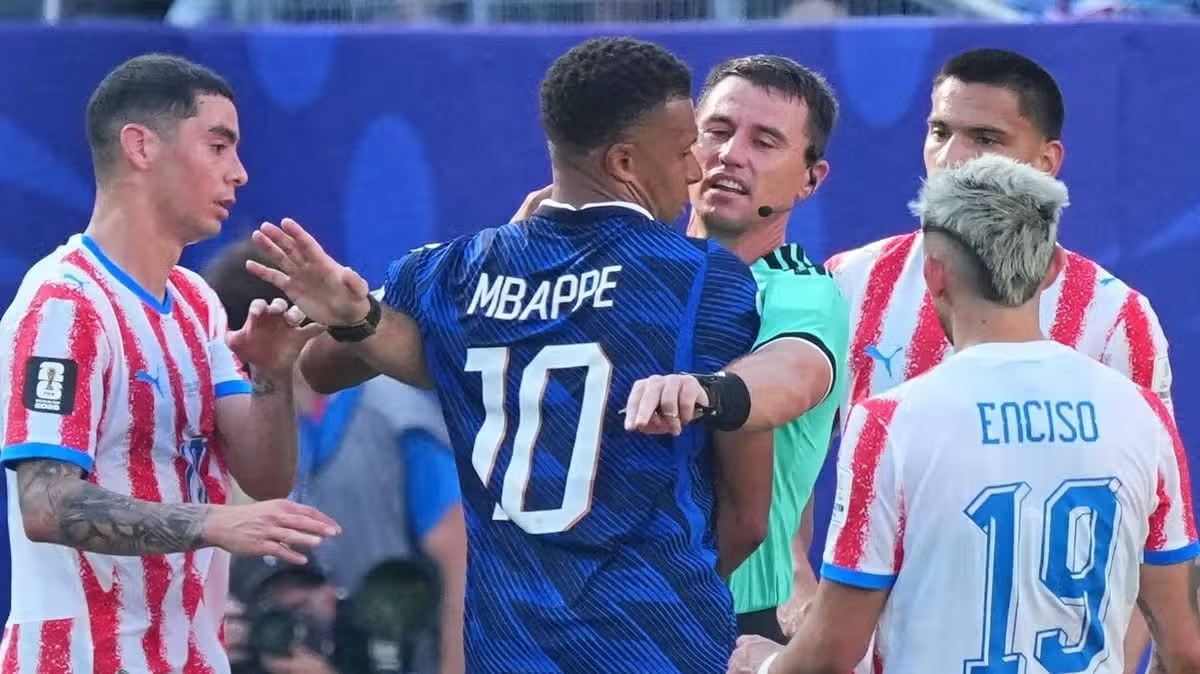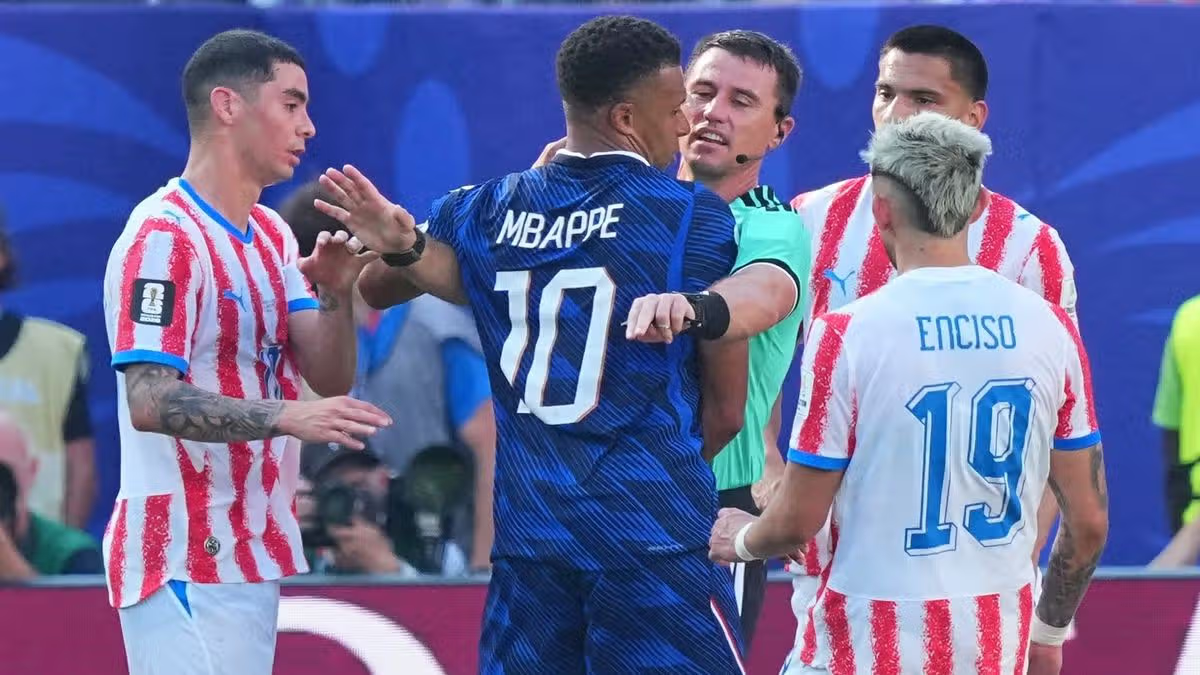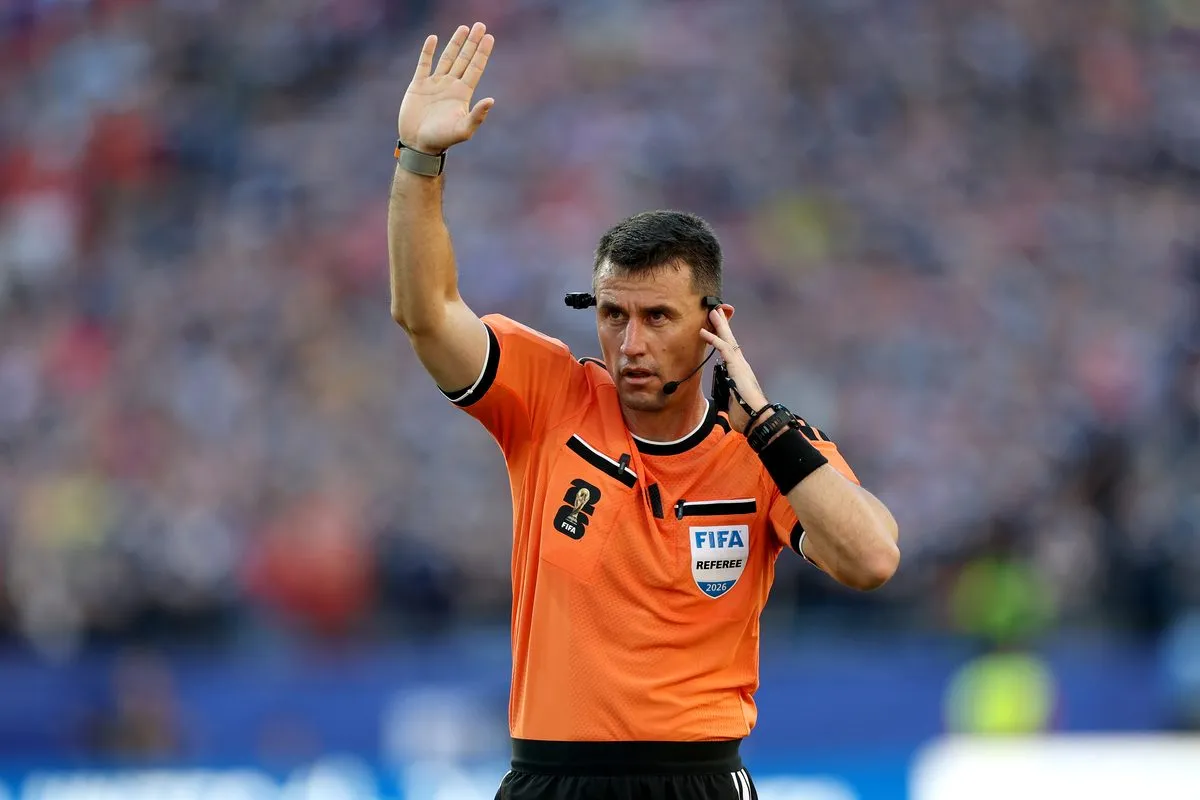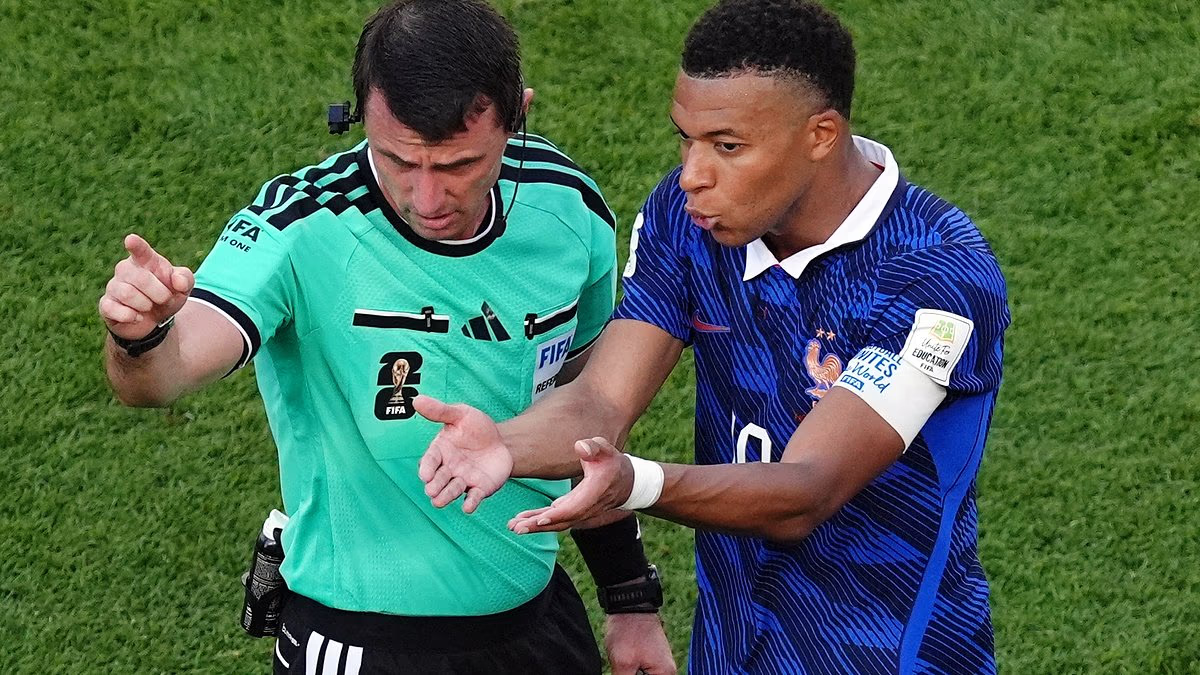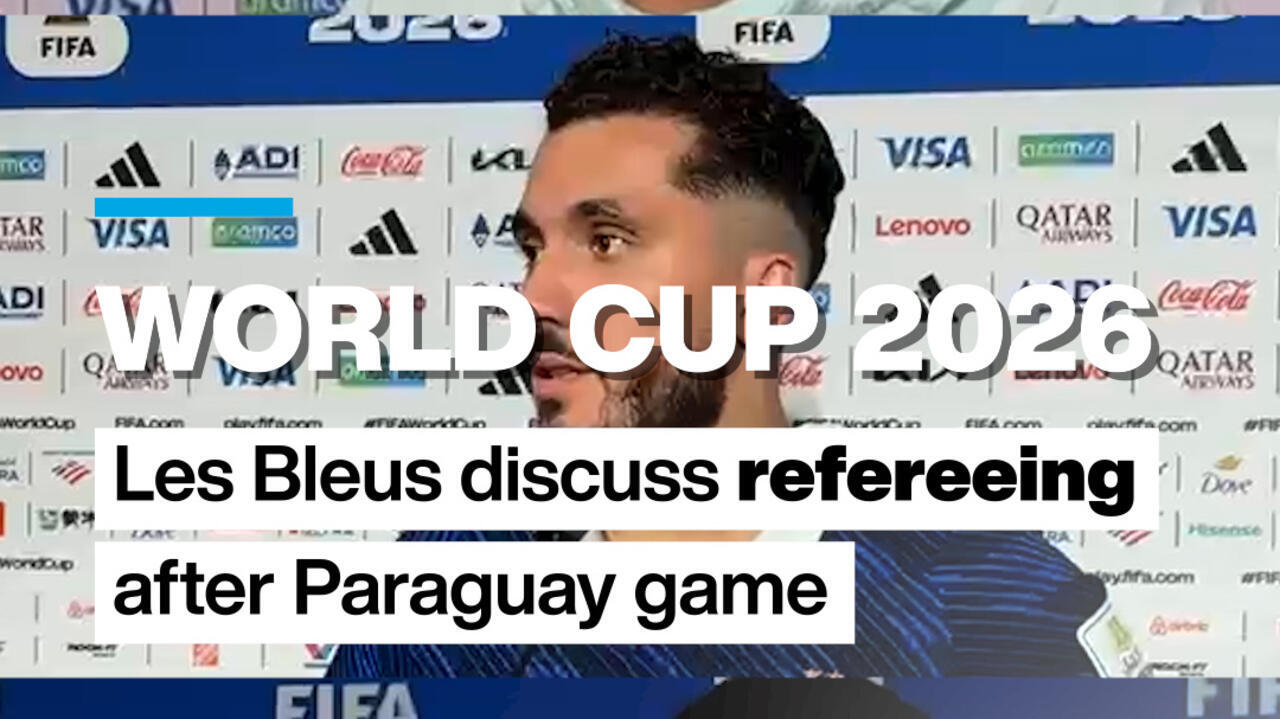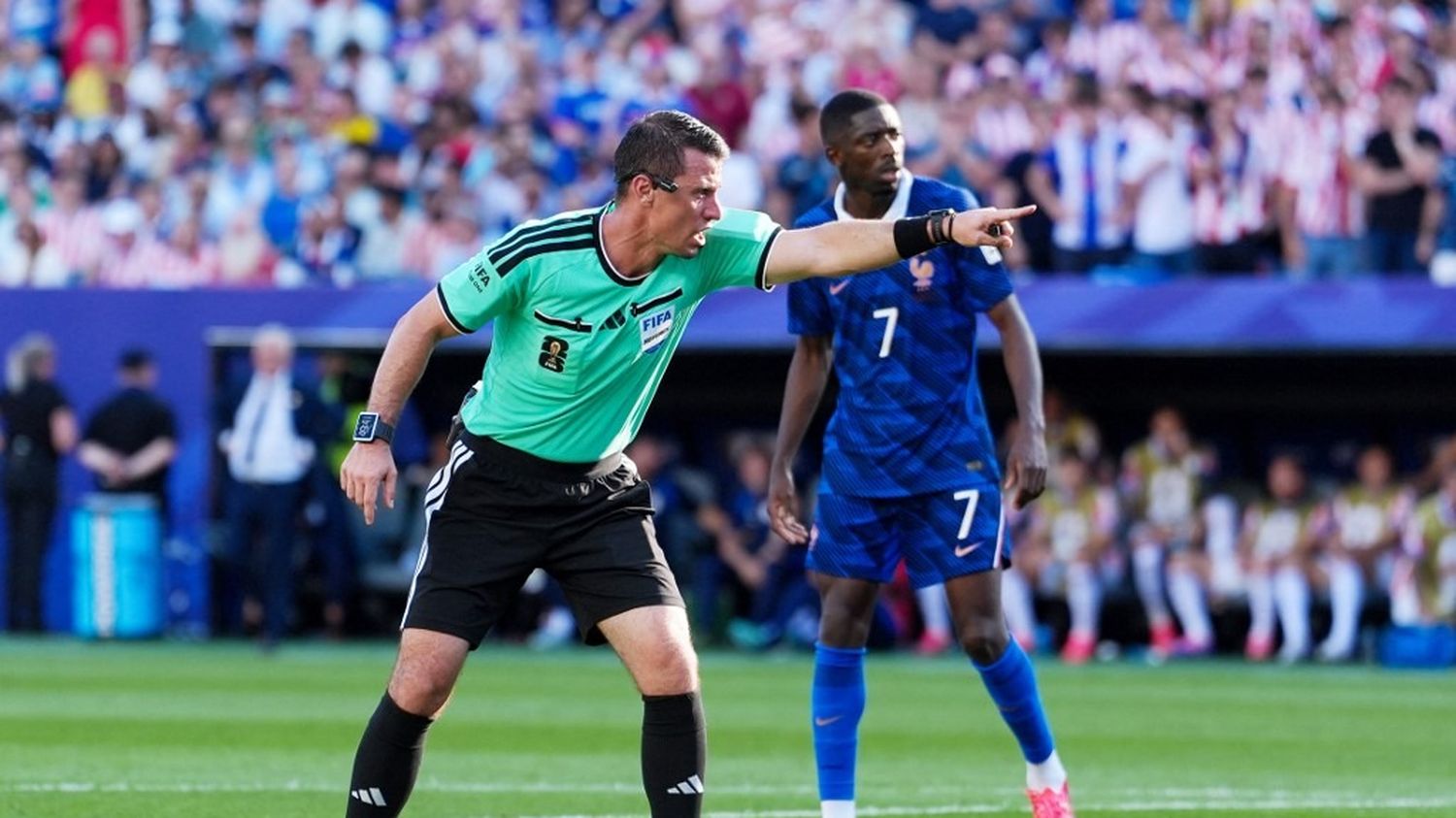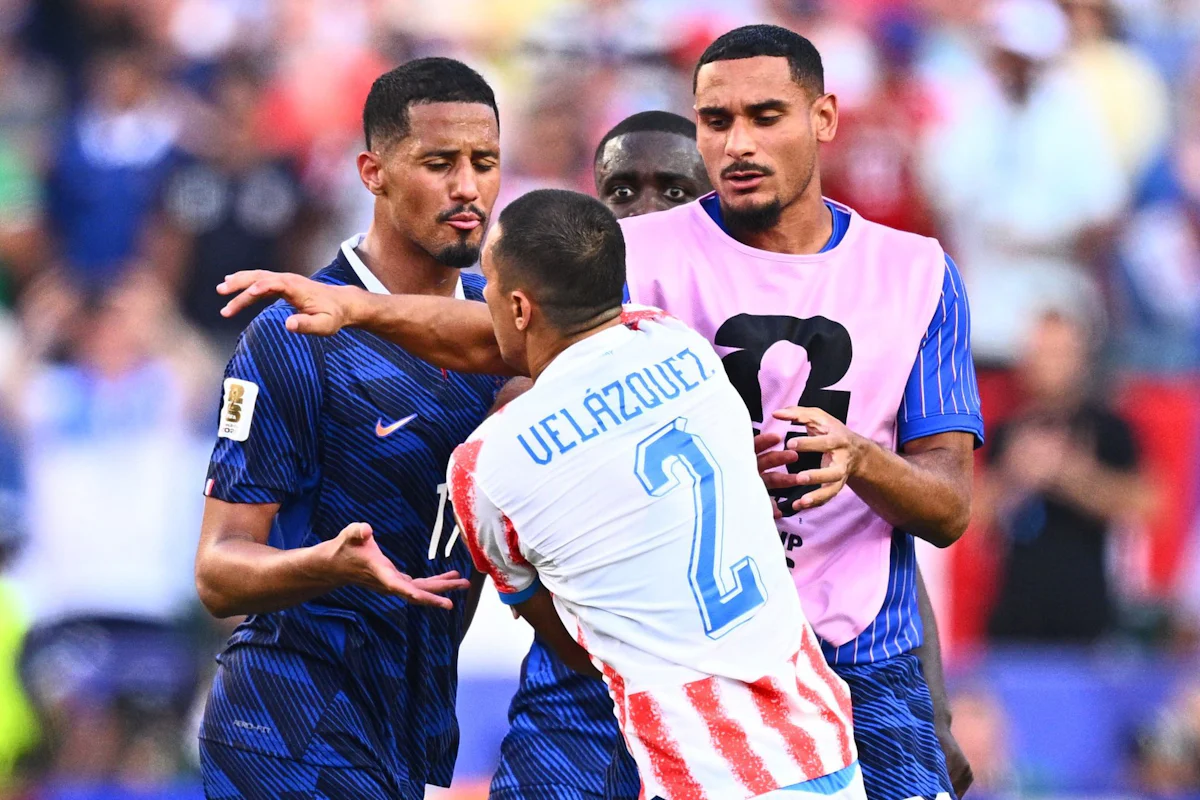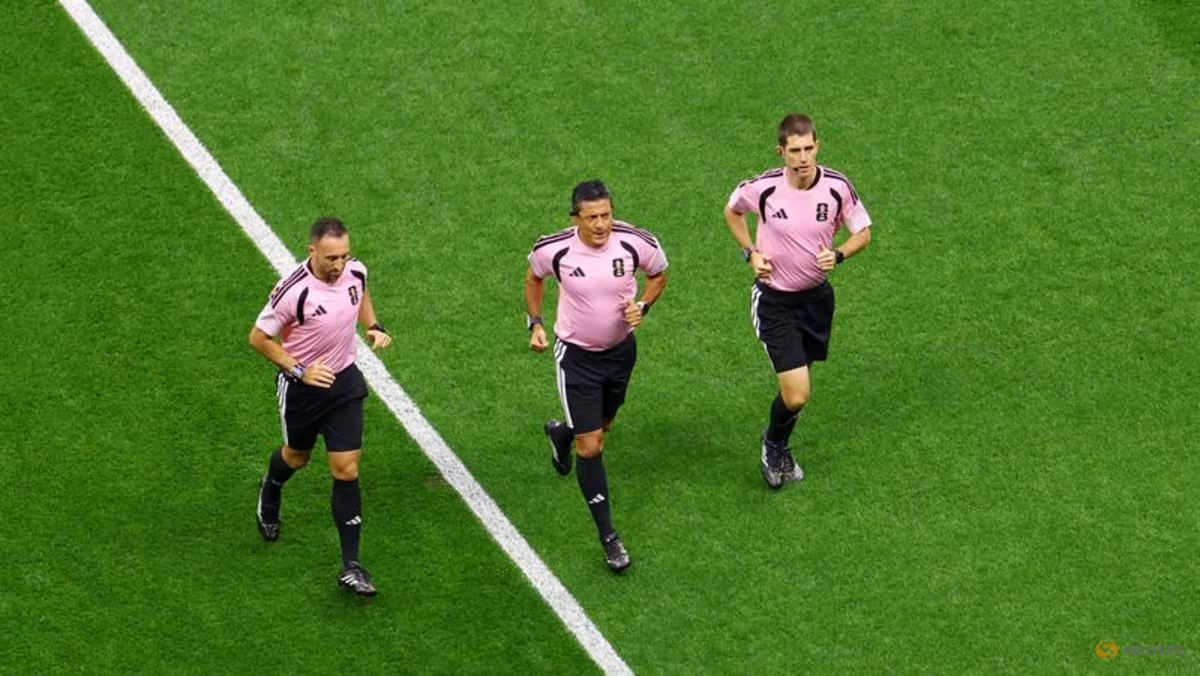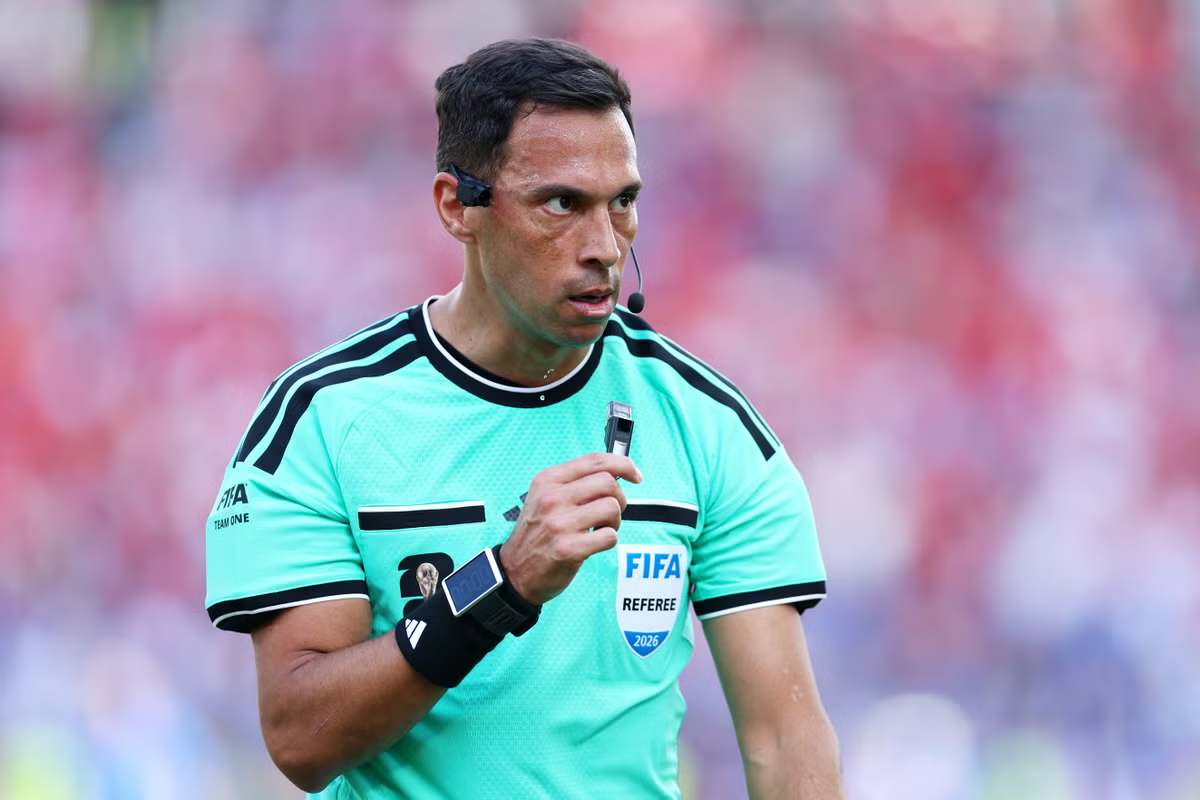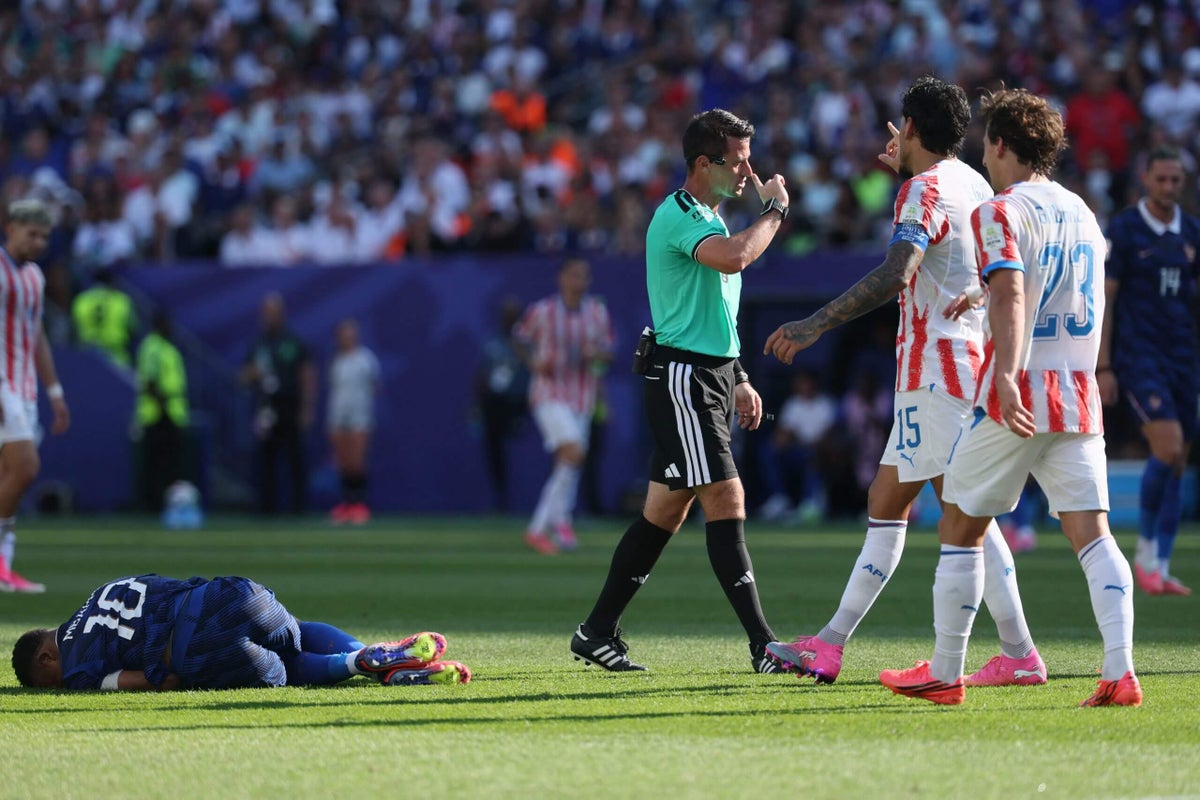
“Ilgiz Tantashev, une presentation catastrophique” ran the headline in the French sports newspaper L’Equipe, and even someone with no knowledge of that language would not need Google Translate to decipher what that meant.Tantashev was the referee of the France vs Paraguay World Cup last-16 tie that was among the most physical, bordering on brutal, of the tournament to date. Yet remarkably none of the South American players received a yellow card.The Uzbekistan official’s performance has prompted questions about the way matches are being officiated, the role of VAR and how appointments are decided.There is no doubt that the tolerance level for fouls and yellow cards has been higher in this tournament than in previous editions.At Qatar 2022, there was an average of 27.7 free kicks and 3.55 yellow cards per match, whereas this time the corresponding figures are down to 24.4 and 2.54.It is tempting to assume this is all on the refs, but the reduction in yellow cards is at least in part due to a law change. No one will be carded for dwelling over a restart any more, as instead the ball will be given to the other team.It is also the case that player behaviour changes over time, which always includes working out how to bend the rules without breaking them.Nonetheless, the evidence suggests that referees are trying to allow the game to flow by allowing more physical contact, especially with the upper body.Foul tackles in which the player challenging for the ball makes meaningful contact with their opponent first are still being penalised, but more shoulder-to-shoulder duels and aerial contests are being allowed to pass.The threshold for yellow cards appears much higher than in previous tournaments. Referees are only issuing cautions for reckless fouls, where the offending player enters with little hope or even intention of winning the ball, or for calculated offences designed to prevent promising attacks.The upshot has been deliberate trips, shirt pulls and handballs are punished with free kicks only, whereas previously such ‘non-footballing actions’ were more likely to attract cards.Players and coaches pick up on these changes in refereeing style and start pushing their luck as the tournament progresses and the stakes rise.FIFA’s approach to VAR has also had an impact. It still seems unsure whether technology should be used to reach the right or best decision, or to support the on-field referee as much as possible.Take these examples. In the USMNT’s match with Paraguay, Tim Ream was wrongly carded for a foul on Miguel Almiron, who had dived. In a breach of protocol, the VAR intervened, the referee stopped play after it had restarted, and the card and free kick were both switched. It was wrong in protocol, but the ‘right’ decision was reached and it landed well with the public, so FIFA let it pass.In Germany vs Ecuador, there was an obvious offence when Aleksandar Pavlovic raised his boot so high in playing the ball that he inadvertently kicked defender Pedro Vite in the head. It was an obvious free-kick and the subsequent German goal should have been ruled out, but the VAR found a way to back the referee’s call.Pavlovic clearly had raised boot in the lead-up to Germany’s goal against Ecuador (Patrick Smith – FIFA/FIFA via Getty Images)Tantashev’s performance in the France vs Paraguay fixture has also called the appointment process into question.FIFA has a neutral confederation policy, which in this case meant that none of the referees at the World Cup from Europe or South America were eligible.There are plenty of well-qualified officials from Africa, Asia and North America, but resources are undoubtedly thinner and this round also contains Switzerland vs Colombia and Brazil vs Norway.Tantashev was a perfectly reasonable appointment in the circumstances, given his experience in the Asian Champions League and performances in his previous two matches at this tournament. But any match-up involving European and South American sides requires extra careful handling.The game needs to grow up. Referees are hard-wired to see the world through neutral lenses and are certainly capable of parking any continental-wide bias before entering the field.Let’s see how the refereeing develops in the later stages, as the true contenders clash and the top officials come to the fore.The group stages often pass without controversy because there is less at stake and there are so many matches. Just as everyone starts discussing whether a referee has dropped a clanger, another game kicks off, and attention is diverted.This is the business end of the tournament, and the performances of the referees will be under greater scrutiny than ever.
The Ref: Do players need more protection from referees at this World Cup?
This is the business end of the tournament, and the performances of the referees will be under greater scrutiny than ever.
773 words~4 min read