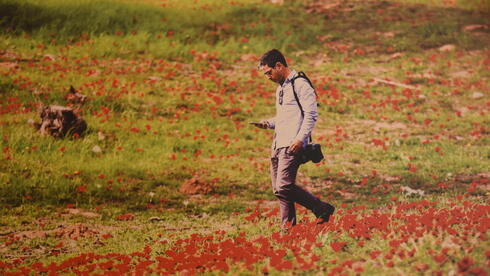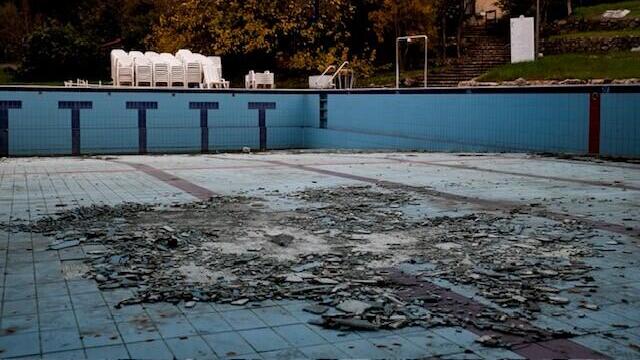
For 16 months, Roy Kasher documented his evacuated hometown of Kfar Giladi, capturing the destruction and abandonment left by the war; now on display in the kibbutz museum, the images offer residents a record of loss and a tool for processing traumaEti Abramov|A shattered light-blue swimming pool, laundry hanging on a rack in an abandoned home and a guard post standing in the middle of nowhere. At first glance, it looks like imagery from places hit by extreme disaster, such as Chernobyl. On second glance, an Israeli viewer realizes with alarm that Chernobyl is here, just three hours from Tel Aviv.In early June, the exhibition “A Man Hanging His Yesterday” by Roy Kasher opened at the “Beit Hashomer” museum in Kfar Giladi. It features striking and haunting photographs from some of the most difficult days for the kibbutz, which was founded 110 years ago, faced many security threats over the years but had never been evacuated until the turbulent fall of 2023.Gallery Laundry hanging on a rack in an abandoned home (Photo: Roy Kasher)Originally, Kasher, 32, a native of the kibbutz, planned to study music. “When the war broke out,” he recalls, “I had just finished Rimon School of Music and I was supposed to start working on music projects.”Following the events of October 7, he felt he could not sit at home and went in the first days after the disaster to the Gaza border communities, armed with courage and his phone, where he began his relationship with photography.“I never had a real camera,” he says, “and little by little I realized I was good at it and that I loved it. When I was called up for reserve duty in Gaza and understood I would be without a phone for operational security reasons and therefore without a camera, I posted: ‘Who can donate an old digital camera?’ In the end a friend brought me one, and that is how I got into it.”Kasher served in the reserves in the Jerusalem Brigade. “Operation Iron Swords was not my first war,” he says. “First, I enlisted during Operation Protective Edge and from basic training was sent to Gaza.”Roy Kasher. 'I never had a real camera' (Photo: Yanai Shapiron)After his unit was released in late December 2023, Kasher, who had finished his studies and therefore left his apartment in Ramat Hasharon, found himself without a home.He made a conscious decision to return to the shelled and evacuated kibbutz. “My parents were evacuated to a hotel in the Kinneret area,” he says, “but my brother, who was in the local emergency squad, stayed in the kibbutz. I came to him and went out to photograph. Even then I understood this was a historic event.”The atmosphere, he recalls, was anxious, and people were uneasy about the young man walking through the kibbutz paths with a camera. “In the emergency squad,” he laughs, “they didn’t really like me walking around them, and I was also reprimanded several times by the army, but I felt I needed to document it.”“I was obsessive. I photographed the entire kibbutz and specifically the members’ homes from the outside. There is not a single centimeter I did not photograph. I was in a kind of low mood and I found in these photos an echo of my mental state.”From time to time he would upload the images from evacuated Kfar Giladi to his Facebook page and send friends, who were staying in hotels around the Kinneret, “a greeting” from home.“Being in the kibbutz during that period,” he recalls, “was difficult and sad. I remember saying to myself: the community is not here, they left home and do not know what is happening. I felt I had to tell them what was happening in ‘home.’ The private home and the collective home.”A neglected light-blue swimming pool (Photo: Roy Kasher)Did it depress them?
They told him to put down the camera. He captured his abandoned kibbutz frozen by war.
For 16 months, Roy Kasher documented his evacuated hometown of Kfar Giladi, capturing the destruction and abandonment left by the war; now on display in the kibbutz museum, the images offer residents a record of loss and a tool for processing trauma
1,965 words~9 min read