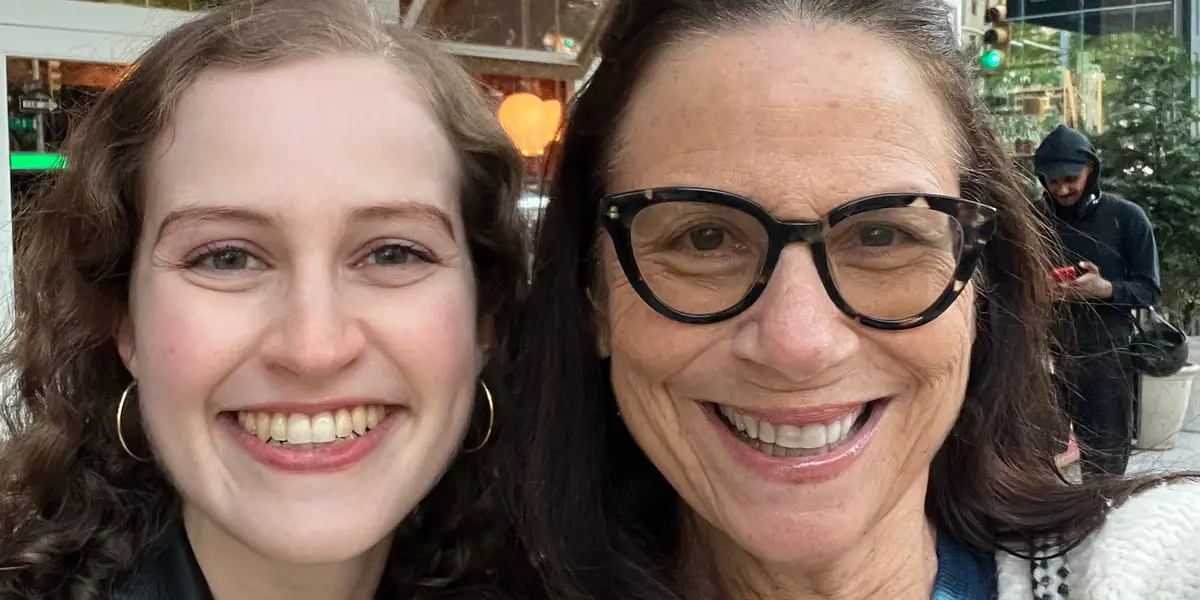
The author with her 64-year-old friend at a Manhattan coffee shop.
Courtesy of Jacqueline LeKachman
In August, I quit my steady job as a New York City public high school teacher to start a full-time graduate program in Manhattan. I worried about the choice not only because I loved my work with the kids, but also because I had traded a consistent paycheck and affordable health insurance for tens of thousands of dollars in tuition.When I was teaching, I prepared for the cost by scrimping to save every cent I could. But my account balance still wouldn't fully cover two years of school and living expenses.Throughout my savings journey, I learned a lot of lessons, especially from my older friends.I jumped into major money-saving modeAs a result, I redoubled my frugal efforts. I made a rule that I wouldn't eat out or order takeout unless it was someone's birthday. I asked to meet people in parks rather than restaurants and suggested $5 happy-hour spots from a meticulously crafted list on my phone. On rare occasions when I dined out, I looked at the prices before deciding what to order and pored over the bill with a calculator.It worked. While it was still difficult to watch my savings dwindle — buoyed occasionally by small deposits from part-time jobs — I kept my costs (relatively) low for a 20-something in the city. Most friends understood my restrictions or were in similar situations.I worried when my older friends routinely paid for meBut this approach didn't work as well with my five older friends from my intergenerational writer's group. We'd been meeting weekly on Zoom for several years when we started visiting each other in our home states across the country. As women in their 40s and 60s in dual-income households with established careers, they understandably gravitated toward nicer places where the cheapest cocktail cost $20. My dive bars with weirdly stained walls weren't going to cut it.