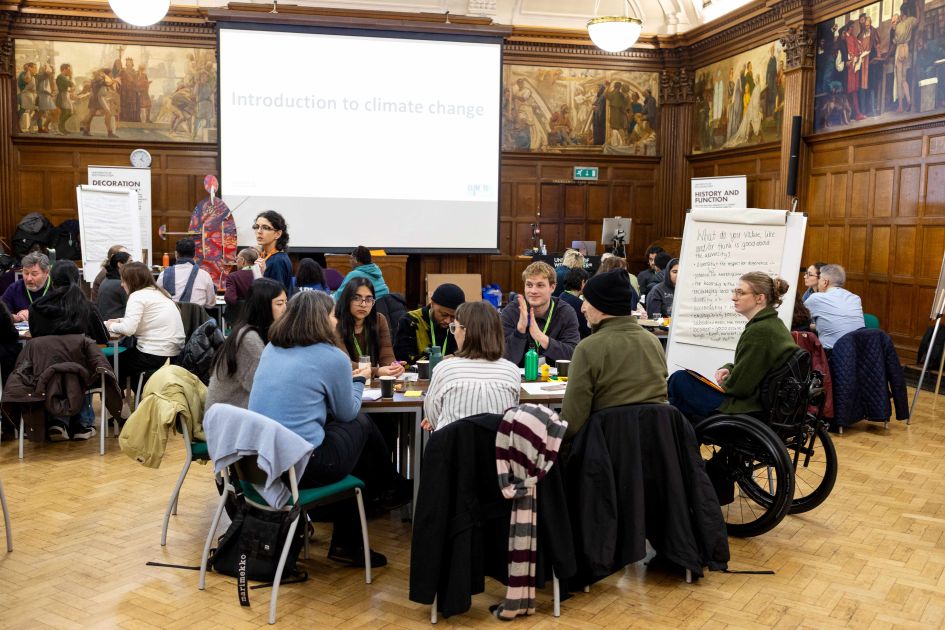
“Citizens’ assemblies” can be used to tackle some of higher education’s biggest problems, according to staff and students who have helped devise climate policy for the University of Westminster.
In what is thought to be a first for a UK university, a 45-strong group recently submitted 51 recommendations for how to make Westminster more sustainable, and are now keen to share what they learned with others.
Ro Spankie, a principal lecturer in architecture at the university and one of the original proponents of the initiative, said it was inspired by watching similar processes unfold at French universities in Paris.
Spankie said she’d heard interest in replicating the model from colleagues at the likes of King’s College London and Kingston University, adding that while “every university will do it a little bit differently”, the model could stimulate discussion and problem-solving in a sector grappling with multiple crises.
“We have to bring change into higher education,” Spankie said. “We just can’t keep going on thinking the only solution is to put the cost of a degree up…[Assemblies like this] give us another way of doing things, because having a genuine deliberation where everyone is talking from an equal footing [creates] a really interesting space, rather than the pyramid structures of committees that the traditional university is built on.”