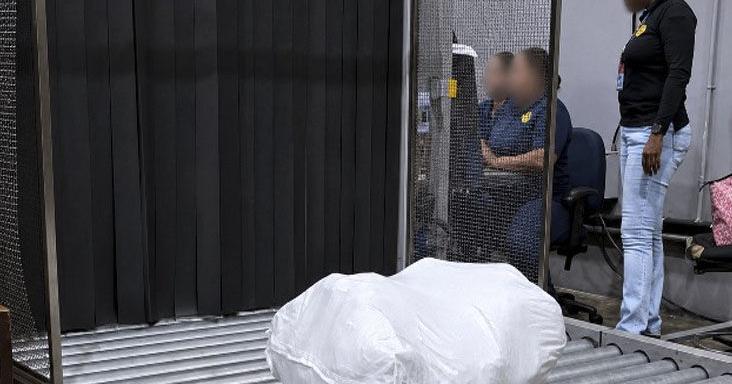
The Central Bank of Trinidad and Tobago says it is preparing to strengthen oversight of cross-border cash shipments and foreign exchange reporting under planned reforms to the Exchange Control Act.The bank made the disclosure after public questions arose about the export of US currency following a probe into a US$2 million shipment that was seized by Customs and Excise officials.While declining to comment on the specific circumstances of the case, the Central Bank said the matter remains under investigation.At the same time, it defended its management of the country’s foreign exchange system while acknowledging that improvements are needed.“The Bank recognises that there are many areas of the management of the system that need to be strengthened and a number of initiatives will be rolled out in the coming months. This includes updating the Exchange Control Act,” It stated.“The revisions are expected to clarify certain dealings in foreign currency and related matters, including the reporting requirements of the authorised dealers to the Central Bank. This will enhance the supervisory oversight of the foreign exchange system and strengthen the requirements for cross-border cash shipments,” the Central Bank stated.The Central Bank said it is working with the Ministry of Finance and other stakeholders on legislative reforms aimed at closing the gaps in the existing framework and strengthening supervision of authorised dealers under what is proposed to be renamed the Foreign Exchange Act.“The Governor has noted that these changes are considered necessary in managing some of the foreign exchange issues that the country has been facing and which need to be addressed in the short to medium-term,” It stated.The bank also sought to clarify that authorised foreign exchange dealers are legally permitted to export foreign currency from Trinidad and Tobago, despite persistent shortages of US dollars in the domestic market.On Friday, the Express exclusively reported the seizure of the US$2 million by Customs and Excise officials who intercepted the cash at Piarco International Airport on June 25.The money, which was contained in a white crocus bag, was destined for Miami, with a stop in Jamaica, when concerns were raised over aspects of the accompanying documentation.The cash was subsequently taken into the custody of the Central Bank of Trinidad and Tobago while investigations continue.The Express understands that Customs and Excise launched an investigation to verify the documentation and determine whether all regulatory and procedural requirements governing the export of large sums of currency had been satisfied.The Express also learnt that United States authorities are assisting with investigations.In a statement titled “Central Bank statement on current foreign exchange matters”, the bank said it was exercising caution because of the ongoing investigation but recognised public concern about US currency exports amid persistent foreign exchange shortages, where demand continues to outstrip supply.“The Central Bank of Trinidad and Tobago (Bank) refers to media reports regarding the ongoing investigation into a quantity of US Dollar (USD) currency that was earmarked to be shipped out of the country,” it stated.“In light of the ongoing investigations, the Bank needs to exercise care in making any statement at this stage, but recognises that the public has questions about the exporting of US currency. These questions have arisen in the context of domestic demand for foreign exchange outstripping the supply and where legitimate requests for foreign exchange are not always met. The main query raised is whether USD exports are legal,” it stated.The Central Bank yesterday said that from a legal standpoint, an authorised dealer under the Exchange Control Act, Chap. 79:50, namely a bank or non-bank financial institution licensed under the Financial Institutions Act, 2008, is permitted to export any notes of a class that are, or have at any time been, legal tender in Trinidad and Tobago or in any other country.“Exports and imports occur among authorised dealers as part of their operations. With respect to exports of US cash, where a compensating credit in an equivalent amount is wired back to Trinidad and Tobago and the funds sold in the local market, there is no net export of the currency,” It stated.“This clarification in no way speaks to any the matters that the investigative agencies may be addressing. At this stage, the Central Bank will not make any comment that can potentially compromise the investigations and will continue to cooperate with the relevant agencies in bringing this matter to a conclusion,” the Central Bank stated.Meanwhile, NCB Merchant Bank (Trinidad and Tobago) Ltd confirmed that the US$2 million seized by Customs and Excise officials belongs to the bank and said the shipment was being transported in the normal course of business.Responding to questions from the Express on Thursday night via e-mail, chief executive officer Marli A Creese said, ‘The cash referred to belongs solely to the bank.’Addressing the circumstances surrounding the US$2 million, Creese stated, ‘The cash was being couriered in the normal course of business in compliance with all applicable laws and regulations.’He also confirmed that the bank has been engaged by investigators and is co-operating fully.‘We have been contacted by the Customs and Excise Division in relation to the shipment for additional verification and confirmations. The bank has complied with all requests,’ Creese said.On reports that Customs identified deficiencies in the accompanying documentation, he explained that the issue related to requests for further information.‘Additional supporting documentation was requested and the Bank has provided that documentation,’ he said.Creese confirmed that, to the bank’s knowledge, the money has not yet been released.“As far as we are aware, the funds remain in custody at the Central Bank awaiting clearance for shipment,” he stated.Asked if the bank was satisfied its own procedures had been followed, Creese maintained, ‘All usual and required protocols were adhered to.’
Central Bank plans tighter oversight
The Central Bank of Trinidad and Tobago says it is preparing to strengthen oversight of cross-border cash shipments and foreign exchange reporting under planned reforms to the Exchange Control Act.The
941 words~4 min read