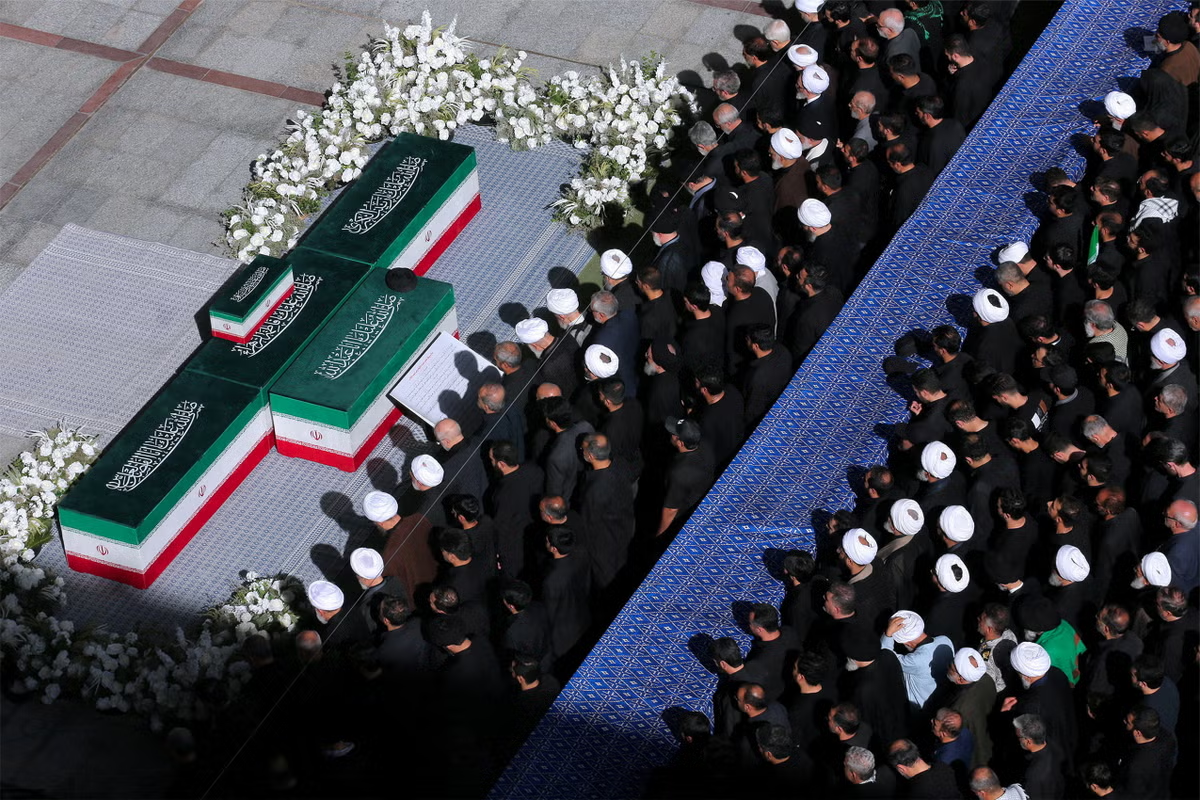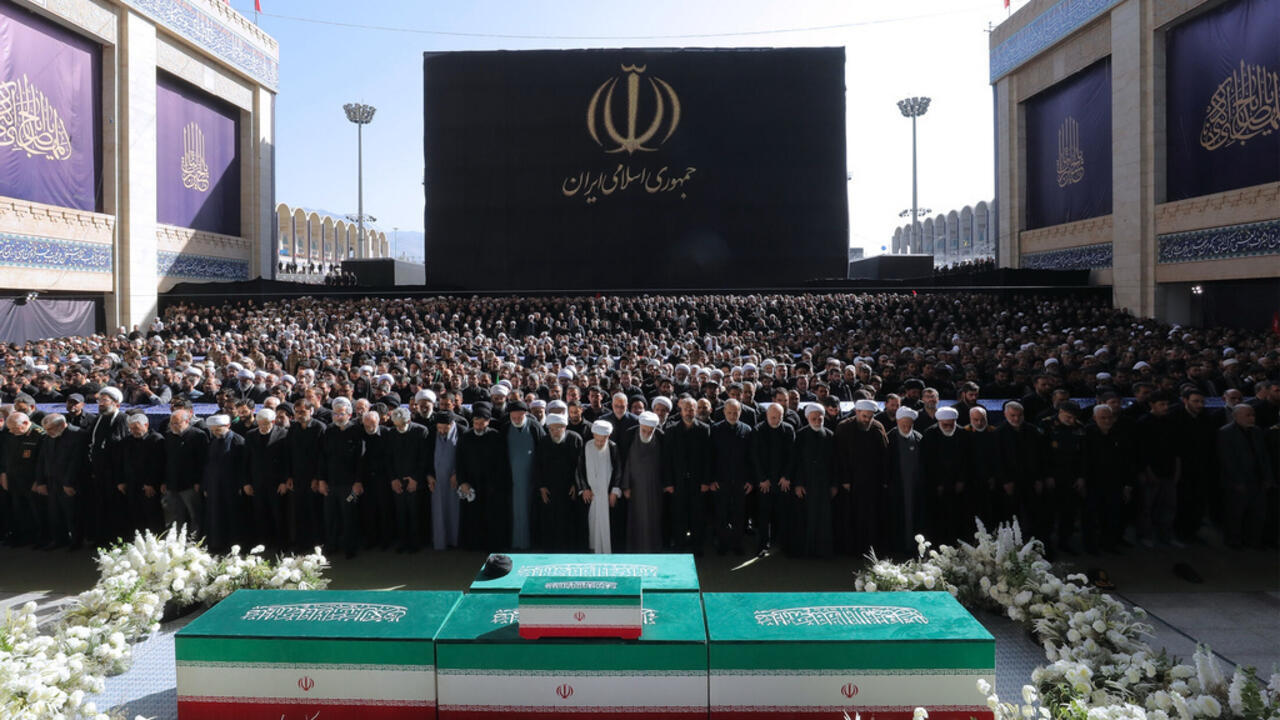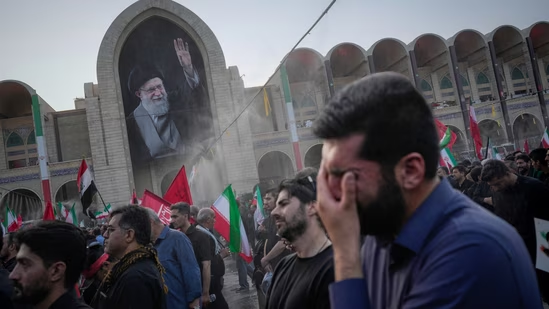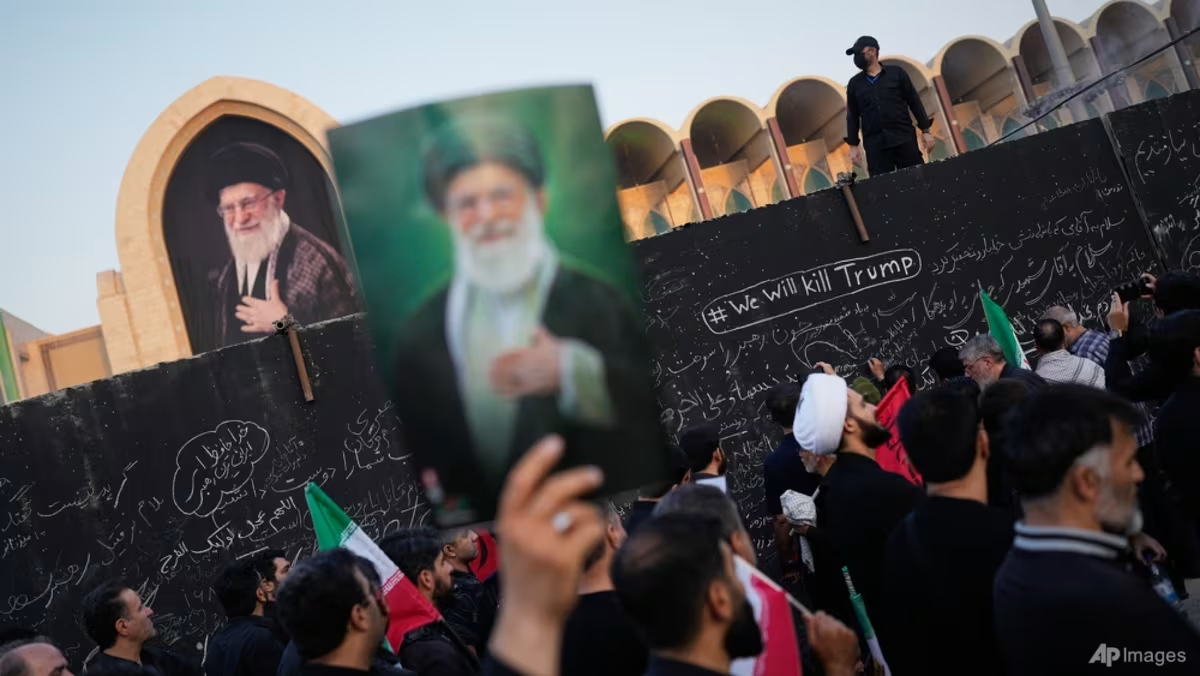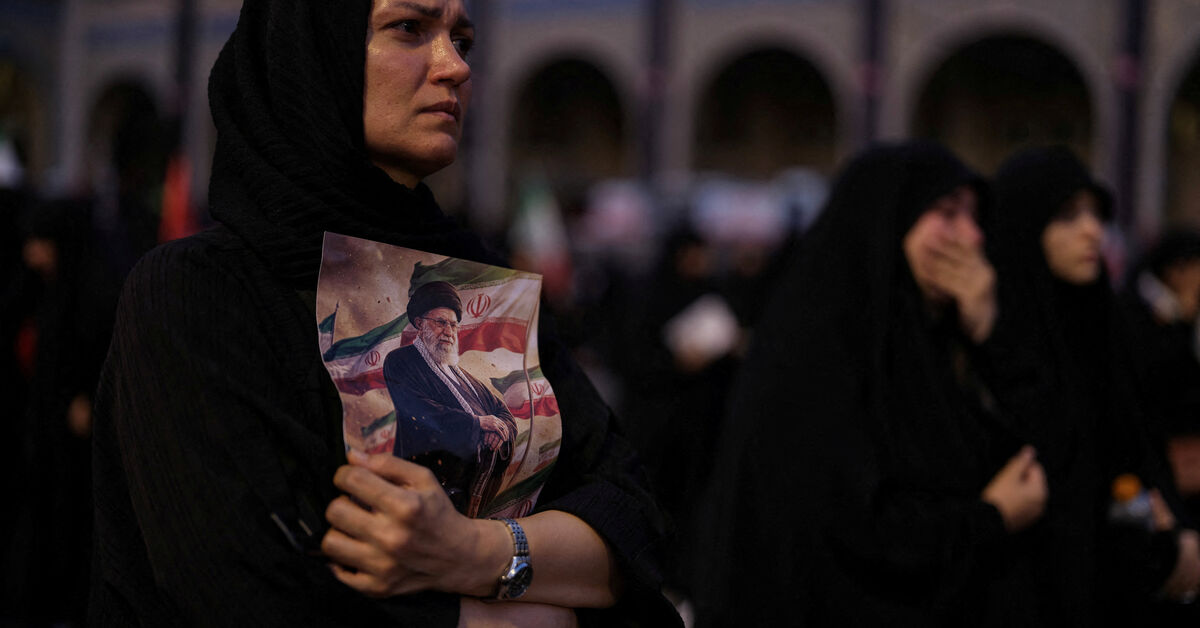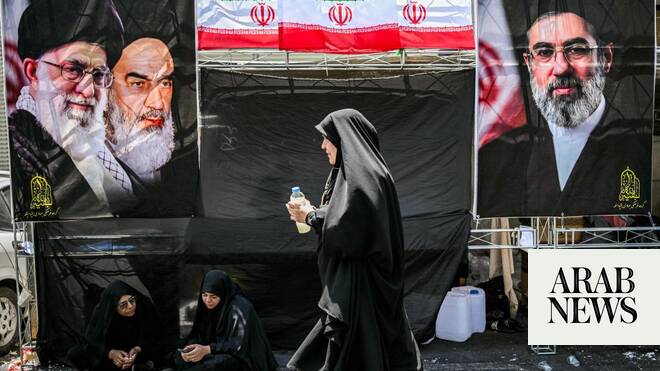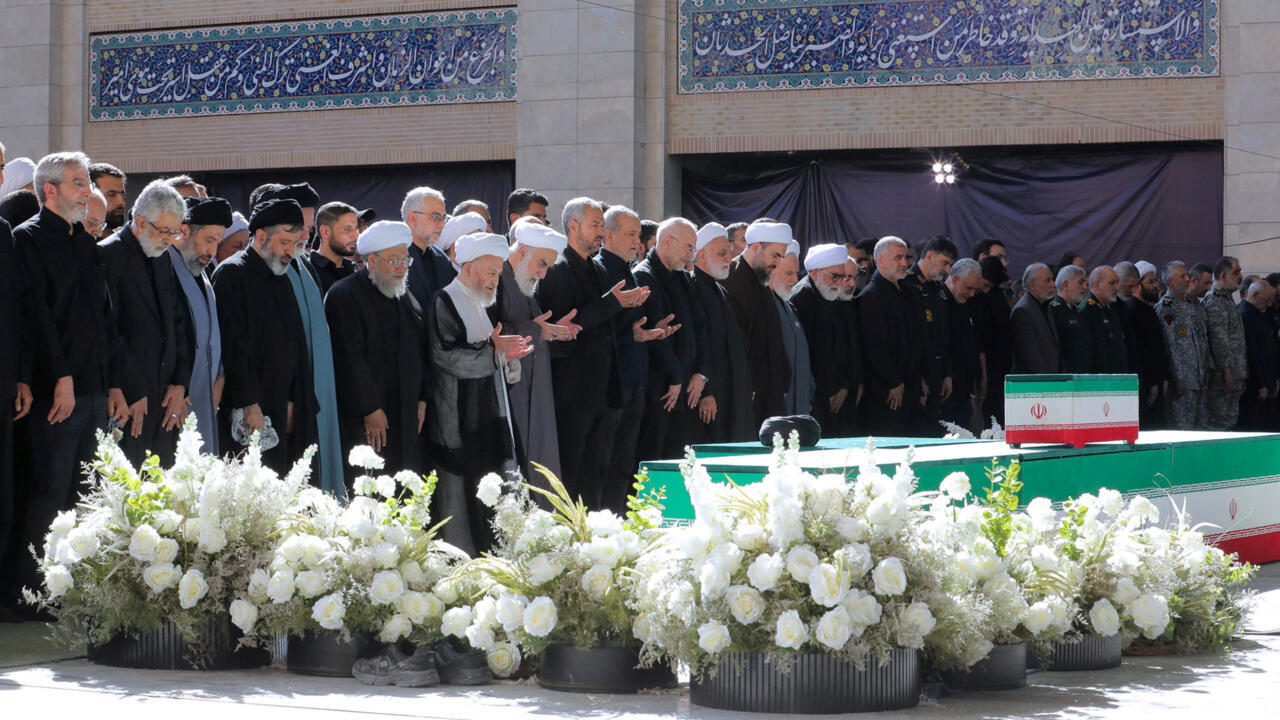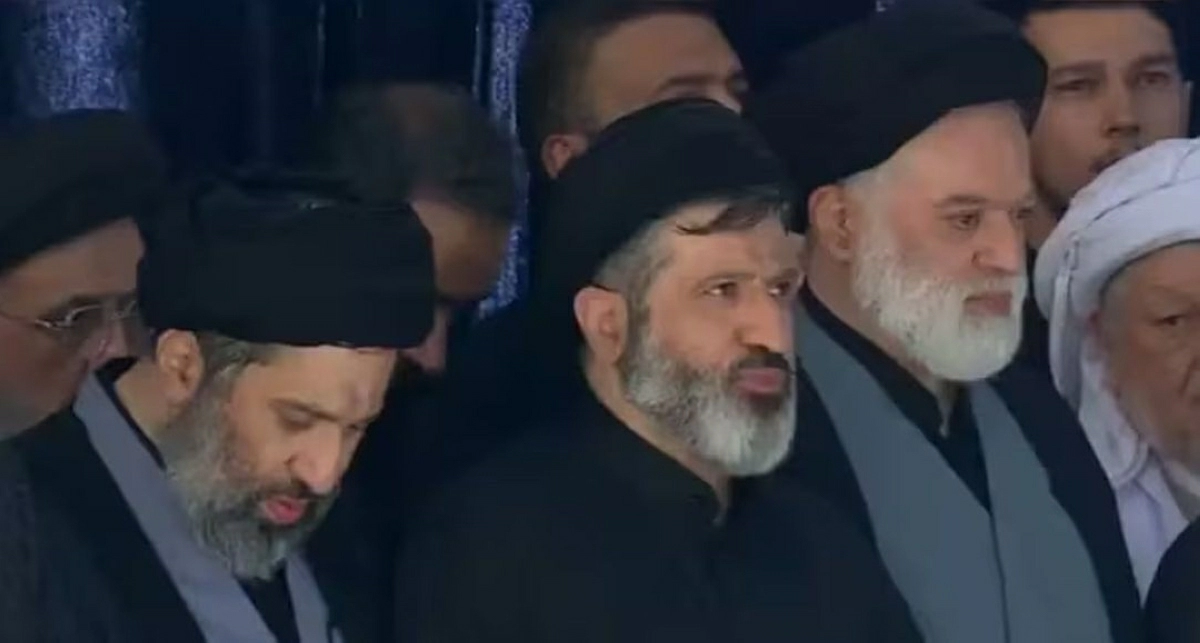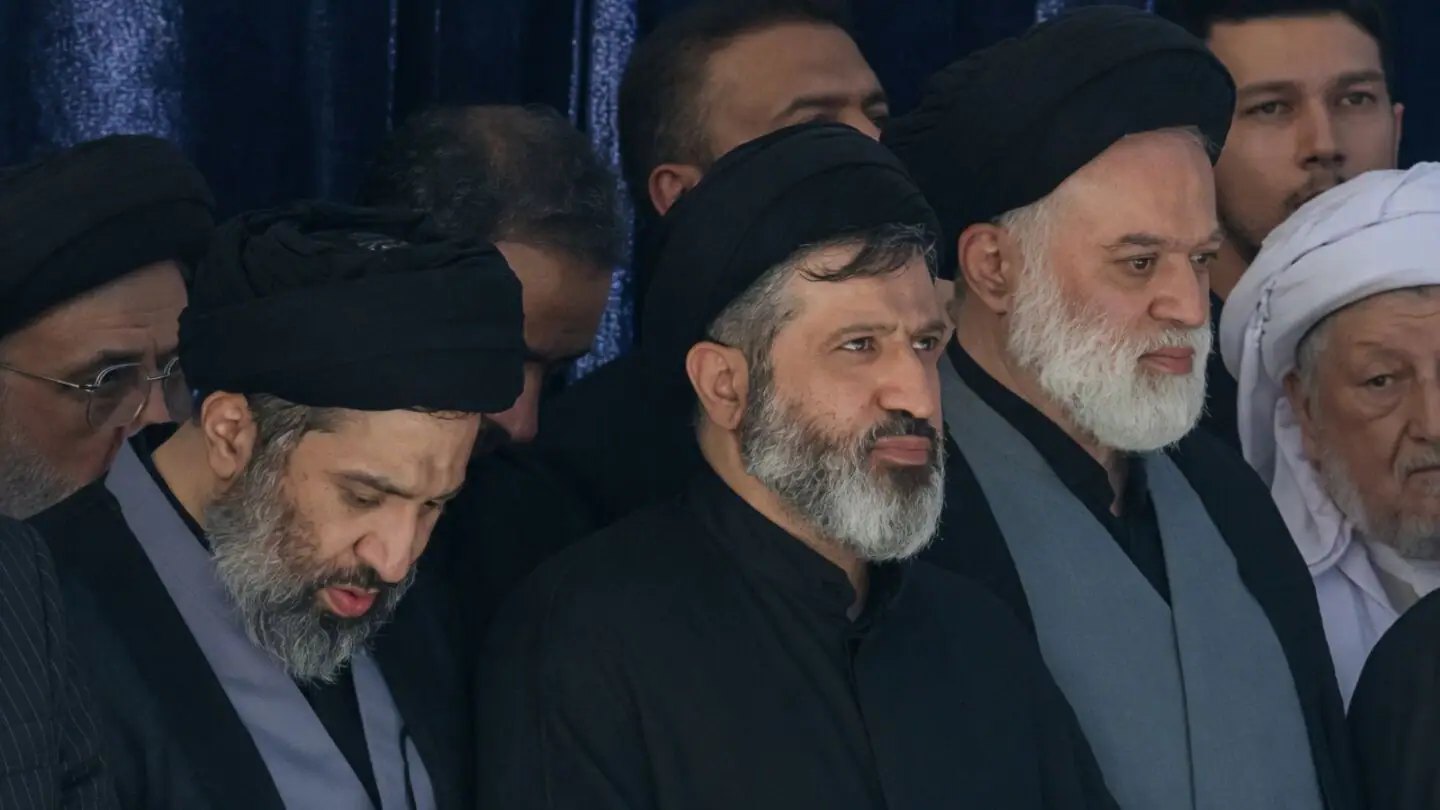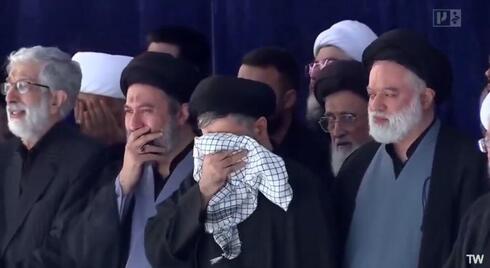
Masoud, Mostafa and Meysam Khamenei seen crying at their father’s funeral in Tehran, while new supreme leader Mojtaba has yet to appear publicly since his appointmentYahli Wintel, news agencies|The funeral for Iran’s Supreme Leader Ayatollah Ali Khamenei continued Sunday, months after he was killed in the opening strike of the war.Amid fears of Israeli surveillance, senior Iranian officials arrived to pay their respects, including President Masoud Pezeshkian, parliament speaker Mohammad Bagher Ghalibaf, who leads Iran’s negotiating team with the United States, and Quds Force commander Esmail Qaani.Senior Revolutionary Guards officials at Ali Khamenei's funeralKhamenei’s sons Masoud, Mostafa and Meysam also appeared at the ceremony and were seen weeping. His son Mojtaba, Iran’s new supreme leader, was not seen with his brothers and has not appeared in public since his appointment was announced.The ceremony’s emcee, poet Mohammad Rasouli, called before a crowd of hundreds of thousands for the death of U.S. President Donald Trump.“Why is the most despicable person in the world still alive?” he asked, drawing cheers from the crowd. Rasouli added: “The world is no longer a safe place for Trump.”GalleryKhamenei's sons at his funeralChants of “Death to America” and “Death to Israel” rang out during the funeral, while participants held banners calling for the killing of Trump and Prime Minister Benjamin Netanyahu.Meanwhile, despite Trump’s promises to stop the suppression of protesters in Iran, the crackdown on opponents of the regime has continued and, according to some reports, intensified. Amnesty International figures published by The New York Times said about 6,000 people have been arrested across Iran since the war began Feb. 28.The regime has recently increased its use of the death penalty, accusing some opponents of cooperating with the United States and Israel.Participants holding up signs calling to 'kill Trump'Analysts who spoke with the American newspaper said Iran’s government is trying to use Khamenei’s funeral to project broad public support for the rule of the ayatollahs, despite widespread dissatisfaction among Iranians over the economic crisis and political repression.Sunday and Monday were declared public holidays across the Islamic Republic to allow people to miss work and attend the mourning ceremonies.AFP reported that the funeral site was full Sunday morning, as were nearby streets. Participants carried Iranian national flags, portraits of Khamenei and red flags symbolizing a call for revenge. Authorities said between 15 million and 20 million people were expected to attend mourning ceremonies in Tehran.Senior Revolutionary Guards officials at Ali Khamenei's funeralTemperatures in the Iranian capital were expected to reach 95 degrees, though the heat was not expected to reduce attendance.Khamenei’s funeral ceremonies began Friday, when his coffin was placed in the Imam Khomeini Mosque in Tehran, a vast prayer complex where senior regime officials and foreign delegations arrived to pay respects. The mosque was opened to the public Saturday, and crowds began filing past the coffin, a procession expected to continue Sunday.On Monday, a mass procession is scheduled to carry the coffin from the mosque to Tehran’s Azadi Square, with authorities preparing for millions of participants. On Tuesday, the coffin is to be taken to the Shiite holy city of Qom. On Wednesday, it will be taken to Iraq for farewell ceremonies in Najaf and Karbala, also holy to Shiites.Mourners at Khamenei's funeral (Photo: Majid Saeedi/Getty Images)Khamenei is expected to be buried the following day in another mass ceremony in his hometown of Mashhad in northeastern Iran, another important Shiite religious center.Former Russian President Dmitry Medvedev and Chinese representatives were among those who attended the ceremonies. Iran claimed at least 13 countries, including several from Eastern Europe, Africa, the Gulf and East Asia, decided not to attend because of U.S. pressure.Iran’s Tasnim news agency said some of those governments later contacted Tehran through diplomatic channels to explain their absence.According to the report, U.S. officials conducted a campaign to deter foreign delegations from attending the mourning ceremonies in Tehran. Iran claimed U.S. Secretary of State Marco Rubio issued a classified directive last week to American embassies instructing them to tell host governments that attendance at the funeral would be considered an “unfriendly step that could have negative consequences” for relations with Washington.
Khamenei’s sons mourn in public, but successor Mojtaba remains out of sight
Masoud, Mostafa and Meysam Khamenei seen crying at their father’s funeral in Tehran, while new supreme leader Mojtaba has yet to appear publicly since his appointment
684 words~3 min read