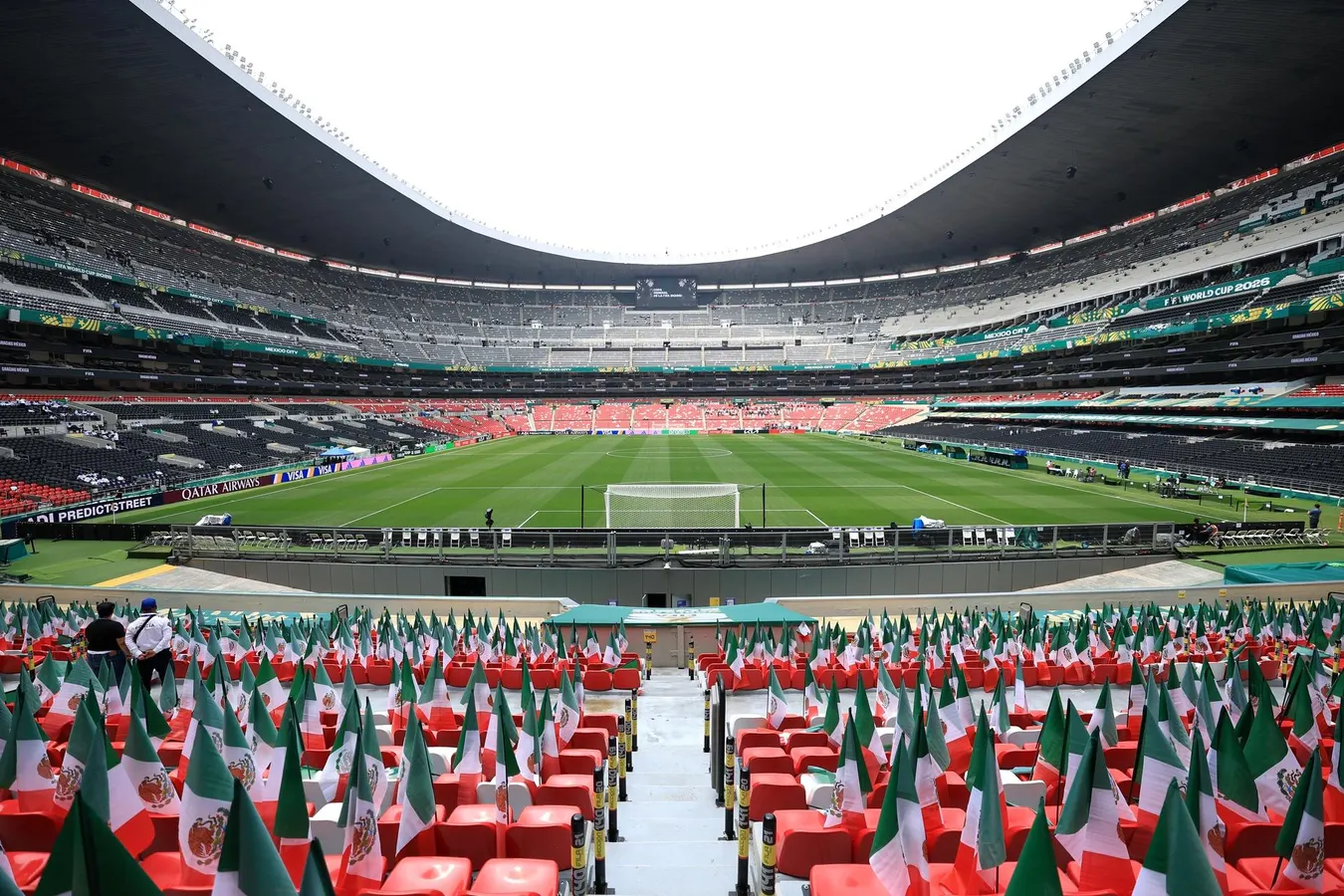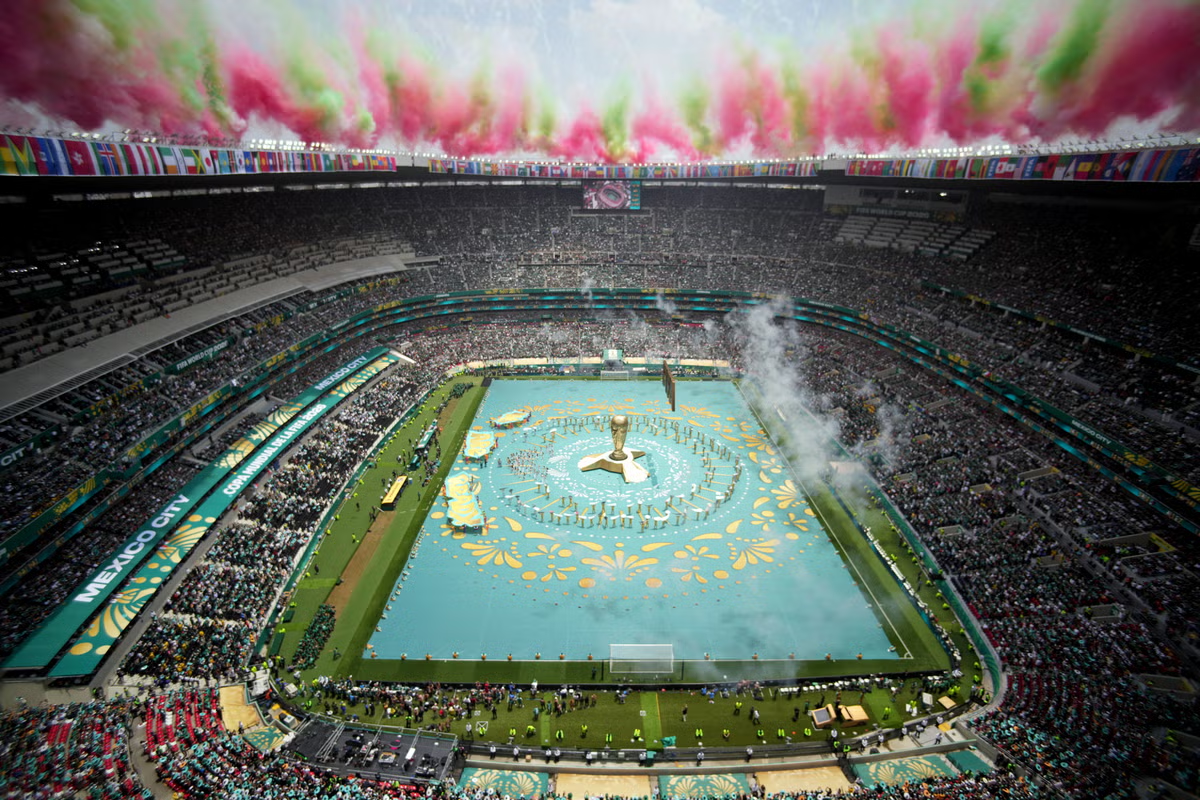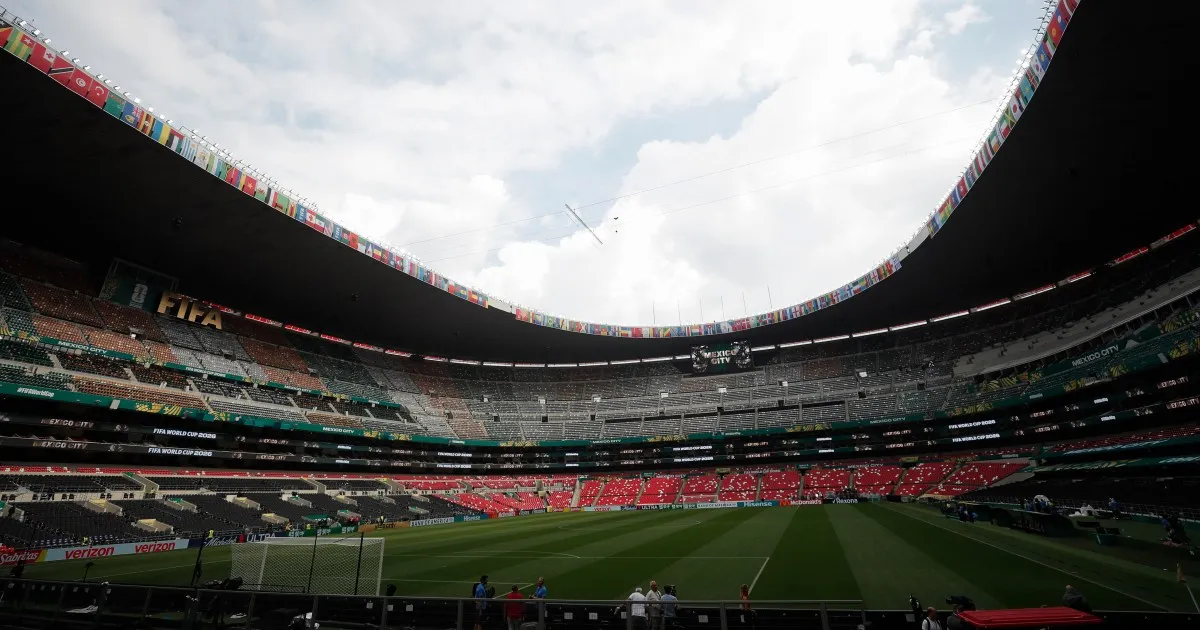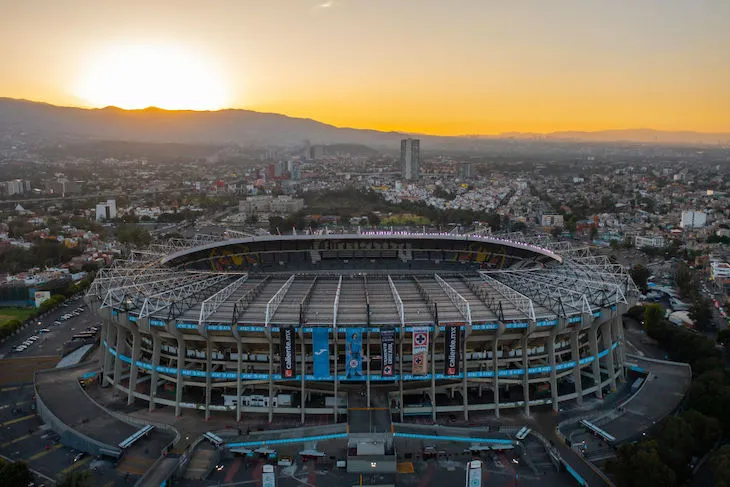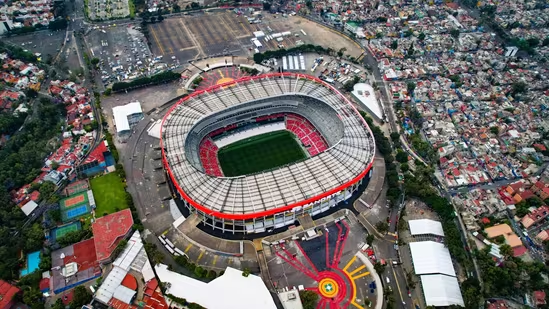
Fifa World Cup 2026 round of 16: Forty years after Maradona's Hand of God, England side face Mexico at a stadium 2,240metres up, unbeaten there since 2013. In the early hours of Monday, Thomas Tuchel's England will walk out of a tunnel in southern Mexico City, past a shrine to the Virgin of Guadalupe, and onto a pitch sunk into an old lava field 2,240 metres above sea level. Waiting for them will be a stadium that has not seen its hosts lose since 2013, a crowd believed capable of generating an artificial tremor, and the accumulated weight of a World Cup quarter-final etched in England’s history.Construction for the Azteca stadium in Mexico City began in 1962. (Courtesy: Mexico City official website)Estadio Azteca does not merely host football matches, it appears to curate them. This is where Brazilian legend Pele won his third world cup, where Argentina’s Diego Maradona produced both a piece of outrageous cheating and the most celebrated goal in the sport’s history, and where elevation itself can be an opponent.As Tuchel's side prepare to face world cup co-hosts Mexico there, the altitude, the noise and the ghosts of 1986 can together make up a demanding round of 16 assignment for the Three Lions.Also read: 500Hz motion chip & football that needs to be charged: The Fifa tech that knocked out Croatia from 2026 world cupThe ground beneath the featIt was in 1960 that Mexican Football Association president Guillermo Canedo set out to build a stadium grander than Brazil's Maracana. Architects Pedro Ramirez Vazquez and Rafael Mijares Alcerreca chose a site in the Santa Ursula district sitting atop the Pedregal de San Angel — a landscape of fractured volcanic basalt. Engineers found rock at unpredictable depths across the site, and roughly 180 million kilograms of it had to be blasted away before construction could begin in 1962, Fifa says.That volcanic foundation was incorporated into the design as an asset rather than an obstacle. A crater was carved, and the stadium built into it, lowering its centre of gravity and letting large sections of the pitch and seating bowl sit below ground level.The bowl, local media report, is split into four sections that can move separately if an earthquake strikes. It was this feature, they say, that protected the ground from extensive damage when Mexico City was shook by a magnitude-8 earthquake in 1985.Vazquez and Mijares rejected the flat, athletics-track-ringed ovals fashionable in the 1960s, and opted instead for a steep, football-only stadium. This resulted, architecturally, in a continuous elliptical structure with no internal columns, which – in turn – meant there were no bad seats and no blind spots.The steep upper-tier of the stadium is known to compress the sense of distance between the stands and the pitch, an effect that has helped make the Azteca's noise legendary in footballing history.For locals in Mexico City, the Azteca is a living, breathing soul. One, where even silence tends to have a sound.Around the ground, Mexicans call the stadium — officially named Estadio Ciudad de México for this world cup— “Azteca” or “Coloso”, short for the Colossus of Santa Ursula, the district’s patron saint.Also read: England team booed upon arrival at Mexico hotel ahead of their round of 16 tie against the co-hostsThe stadium was officially named Estadio Ciudad de México for this world cup. (Courtesy: Fifa)Three world cups, one Hand of GodThere’s no other stadium that has hosted three world cup tournaments (1970, 1986 and 2026), and all four of Fifa's global men's tournaments (world cup, Confederations Cup, under-20 and under-17 world cups).But beyond these records are electric fixtures of the past. In 1970, Italy’s 4-3 semifinal win over West Germany has long been considered one of international football’s finest matches. That same year, in 1970, Pele lifted the Jules Rimet Trophy at the stadium for a third and final time.Italian forward Angelo Domenghini, who played in that semifinal and the final, later called the Azteca "a thing of beauty". It was “huge” and “spectacular”, he said. Pope John Paul II, addressing over 100,000 fans there, told the crowd it was a privilege to stand where such unforgettable football had been played.But it was 1986 that eternally lifted the Azteca into the halls of history.In that year’s world cup quarter-final, in the shadow of the Falklands war, Maradona scored the ‘Hand of God’ goal with a fisted finish against England. Moments later, he followed it with a mesmeric dribble past English defenders and goalkeeper Peter Shilton to net the ball and immortalise his dance as 'goal of the century'.Argentina won 2-1, and went on to lift the world cup trophy after defeating West Germany 3-2 in the final, also played at the Azteca on 29 June 1986.England, meanwhile, have not played a competitive match at the stadium since that 1986 defeat.Also read: ‘They kicked the crap out of me’: Lionel Messi on Cabo Verde's fight after Argentina survive bruising WC knockout scareDiego Armando Maradona (third from left) runs past English defender Terry Butcher (left) on his way to goalkeeper Peter Shilton (right) before scoring goal of the century during the world cup quarter-final between Argentina and England on June 22, 1986, in Mexico City. (AFP)Pele compared the Azteca to Brazil's Estádio do Maracanã. (Courtesy: Fifa)Thin air, thick disadvantageAt an elevation of 2,240 metres, the Azteca is categorised by Fifa under its moderate-altitude stadiums. Here, lower barometric pressure means each breath delivers fewer oxygen molecules to the bloodstream. Hearts beat faster, breathing quickens and fatigue arrives earlier.The effect of playing at high altitudes has been measured.A peer-reviewed analysis of altitude's influence on the 2010 World Cup found that unacclimatised visiting sides recorded reduced sprint distances and slower recovery. Another study of altitude's impact on player performance found comparable drops in high-intensity running output among sea-level teams competing above 2,000 metres.An earlier 2007 study of more than 1,400 South American matches found that home sides at high altitude won 82.5% of matches against lower-altitude opponents, with every 1,000 metres of elevation worth roughly half a goal to the home team.Thinner air at that altitude changes how the ball performs too. Reduced drag means shots and crosses travel faster and further, while a weaker Magnus effect (phenomenon that causes a moving ball to swerve) — flattens the curve on spinning strikes. It's why experts and coaches advise visiting teams not to kick the ball for the first time on Azteca after the whistle has blown.Also read: Mbappe's handshake snub triggers ugly World Cup scenes as goalkeeper throws ball at him: 'We know how to play dirty too'England manager Thomas Tuchel during press conference with England's Jordan Henderson. (Reuters)Advantage to MexicoThe El Tri, as Mexico are known, have lost only eight of roughly 150 matches at the Azteca and have not been beaten there since a 2013 defeat to the US. It amounts to a run of 26 unbeaten games.England have played six matches at the ground, losing to Mexico there in 1985 and to Argentina in 1986. They have a 1969 draw against Mexico and a 1986 win against Paraguay to offset those results.Former West Ham midfielder Nigel Reo-Coker, who played at the Azteca for Montreal Impact in 2015, told the BBC it was the most physically demanding place he had ever played. Simply catching his breath was a battle, he said.Former Australia international Craig Foster raised another issue — the crowd and its surround sound-like acoustics. Home fans, he said, keep growing louder until opponent players “start to implode”.Former Mexico captain Pavel Pardo said any visiting team arrives at the Azteca knowing suffering is guaranteed.Nonetheless, England players have insisted they are looking forward to the fixture. Forward Marcus Rashford said his side would not be dwelling on the conditions while coach Tuchel has voiced hope that "karma" might finally repay England for 1986. The coach, still, admitted there simply was no time for acclimatisation to the altitude.England, it seems, will just have to defy the odds.Prerna Madan leads the explainers and immersives team at Hindustan Times, bringing more than eight years of editorial experience across India's three largest English-language newsrooms — Hindustan Times, The Times of India and The Indian Express. Her career spans the full range of modern news journalism: digital-first production, print news desks covering metro, national, and front-page, and editorial decision-making at the planning and commissioning stage. From managing coverage of Assembly elections and the Union Budget to steering the reporting, editing and production of in-depth reporting into the Delhi-NCR’s pressing issues, Prerna has honed journalistic storytelling that spans genres, topics and formats. Running through her current work is a facility for complexity — translating consequential, difficult material in the fields of policy, science, environment and politics into rigorous, accessible journalism that sets out to answer two critical questions: why it matters, and what happens now. Prerna holds a degree in English Literature from the University of Delhi and a postgraduate diploma from the Indian Institute of Mass Communication.Read MoreSee Less
Estadio Azteca: The fortress where England must beat Mexico, altitude and history
Fifa World Cup 2026 round of 16: Forty years after Maradona's Hand of God, England side face Mexico at a stadium 2,240metres up, unbeaten there since 2013. | Football News
1,493 words~7 min read