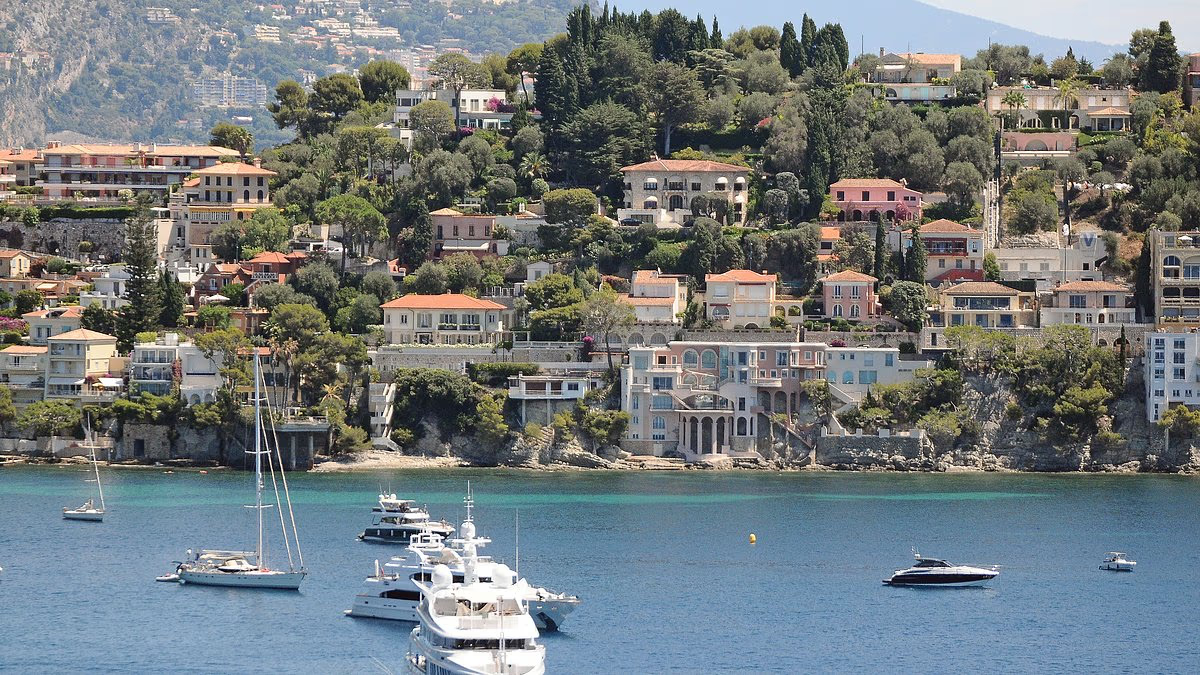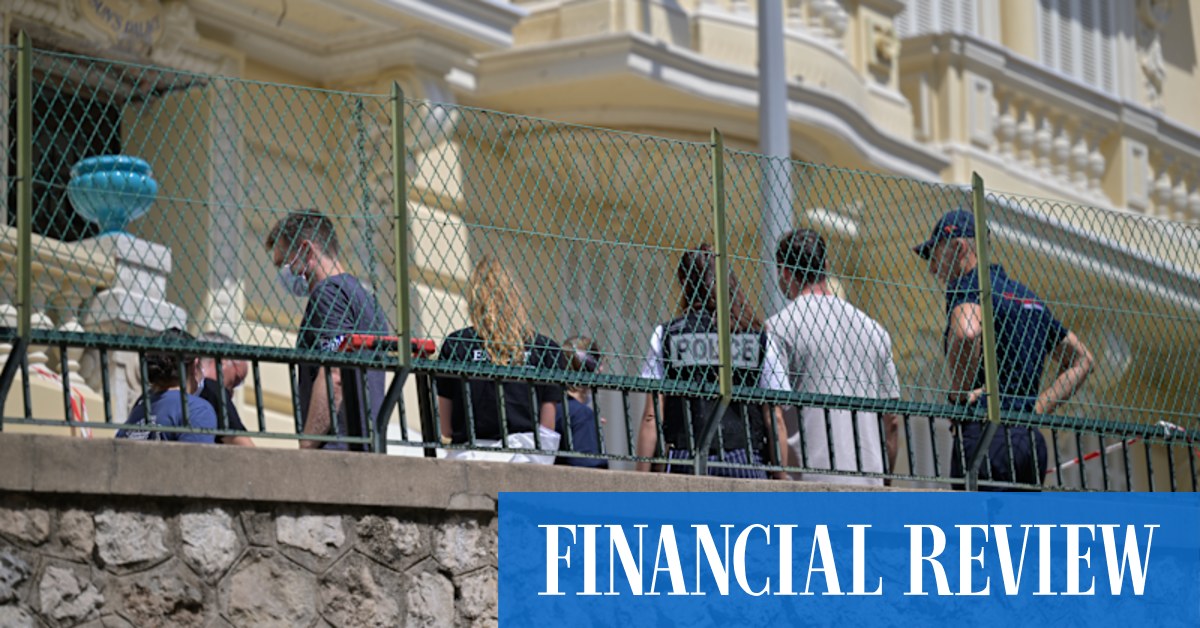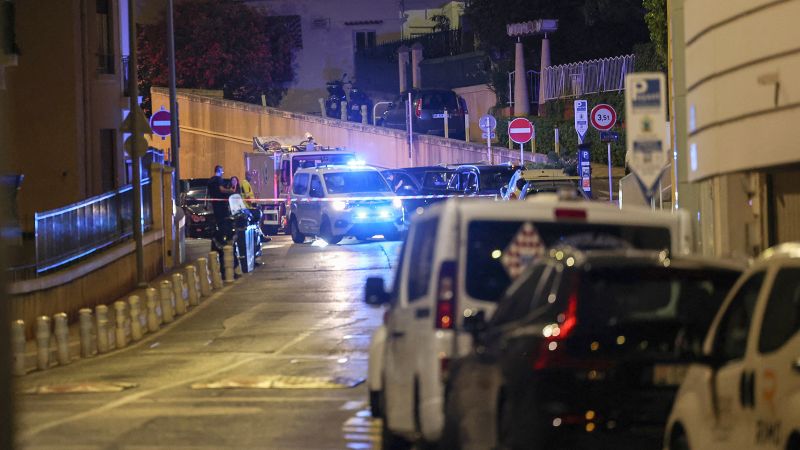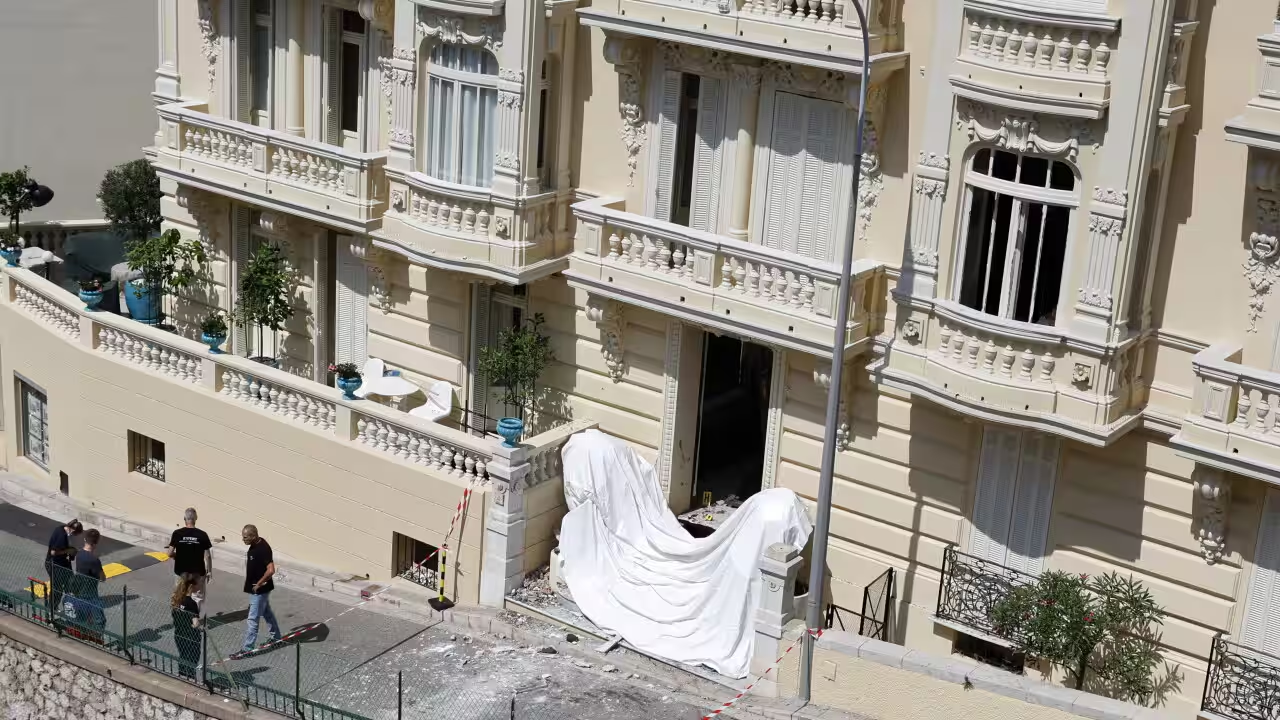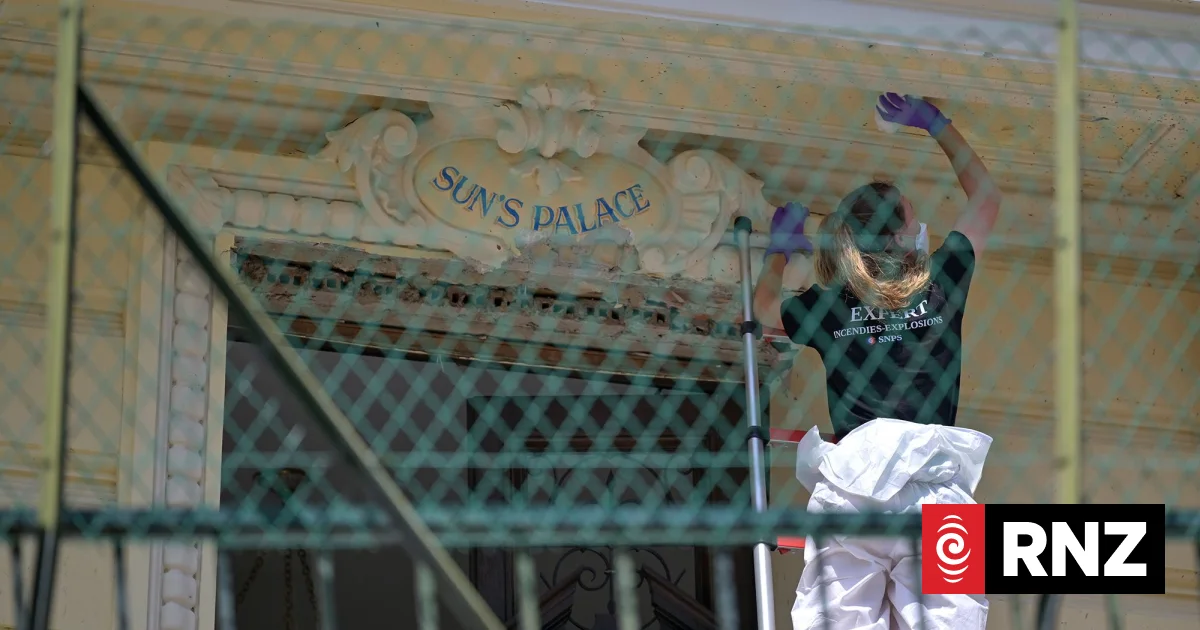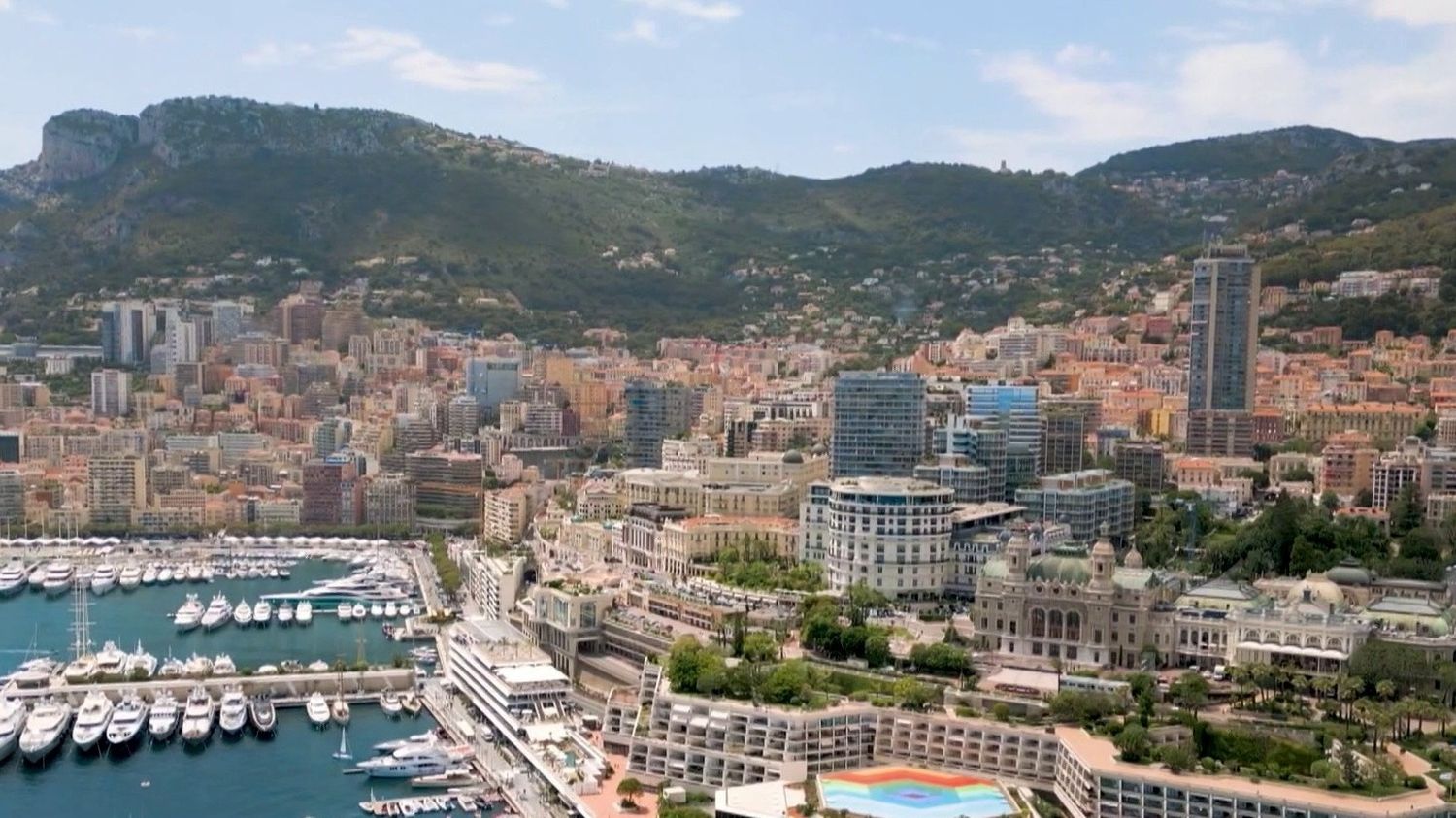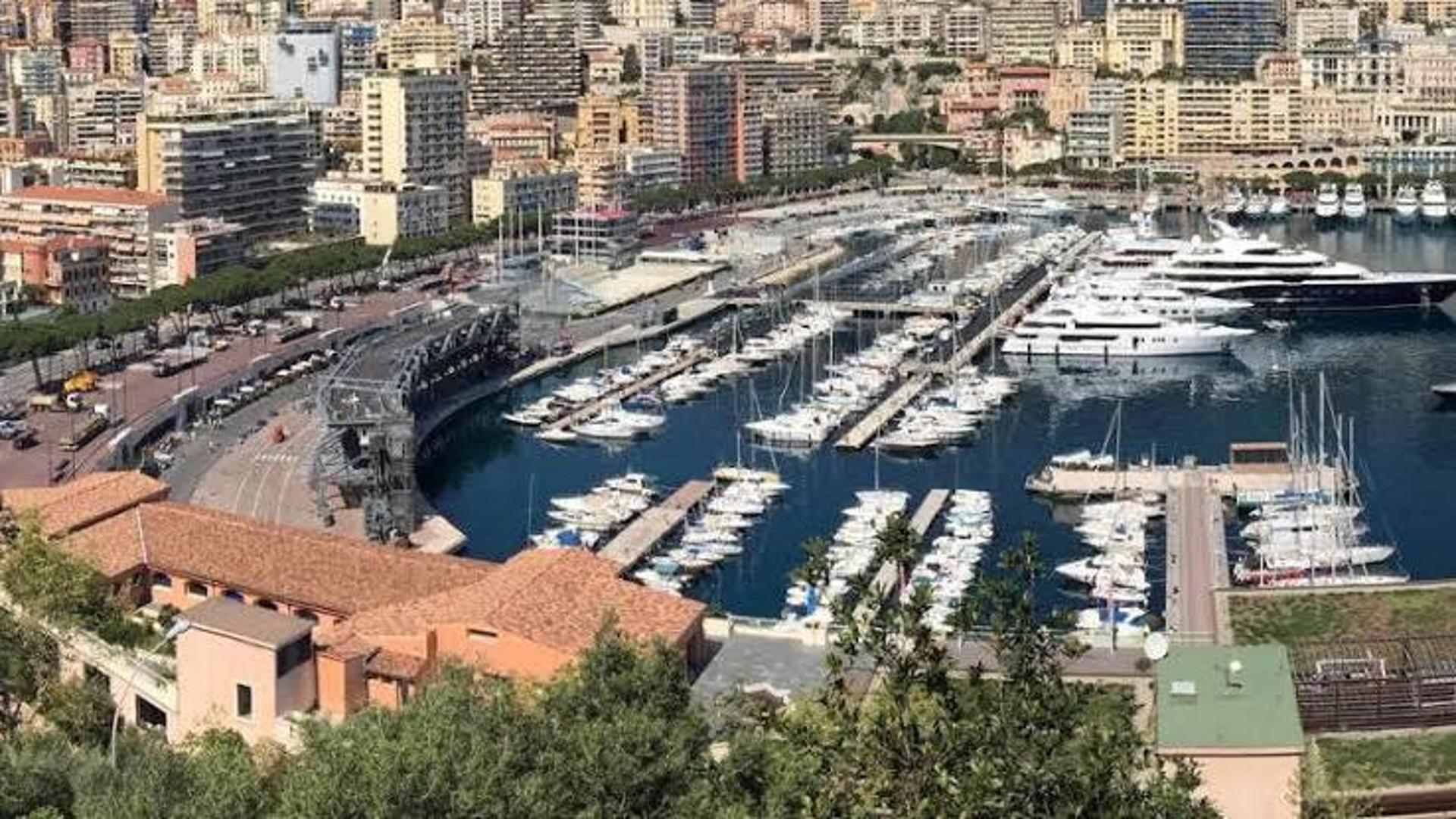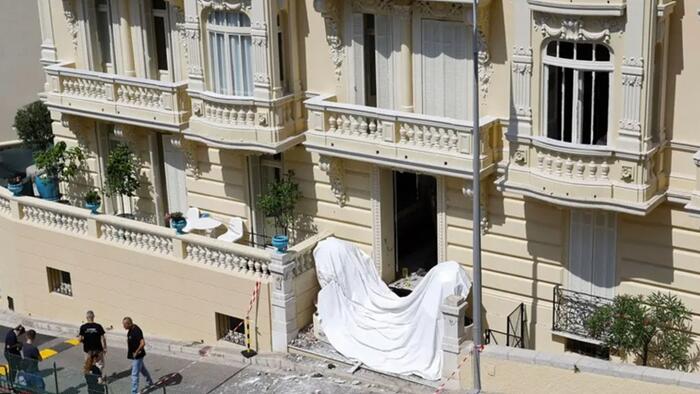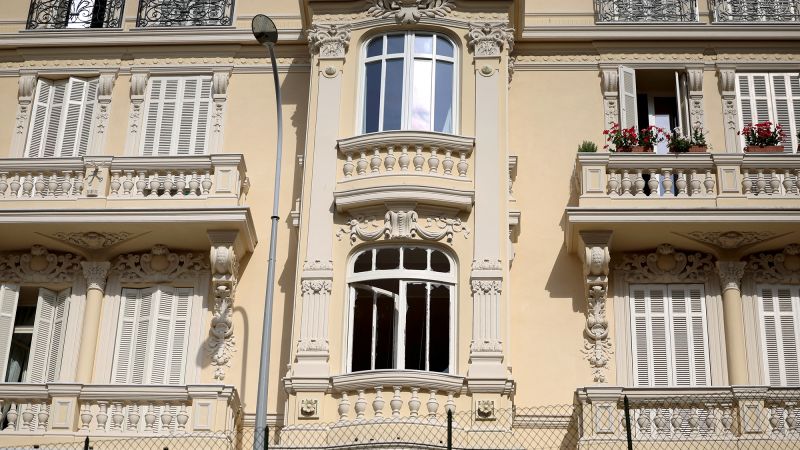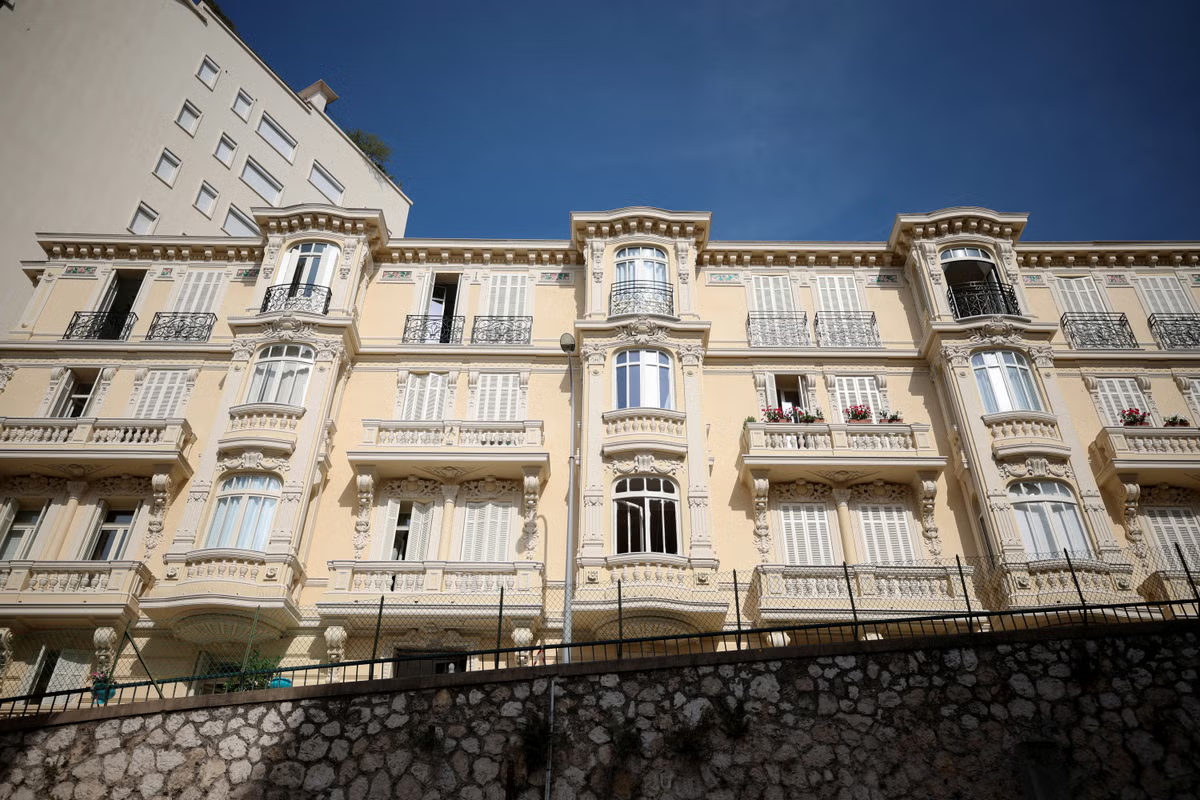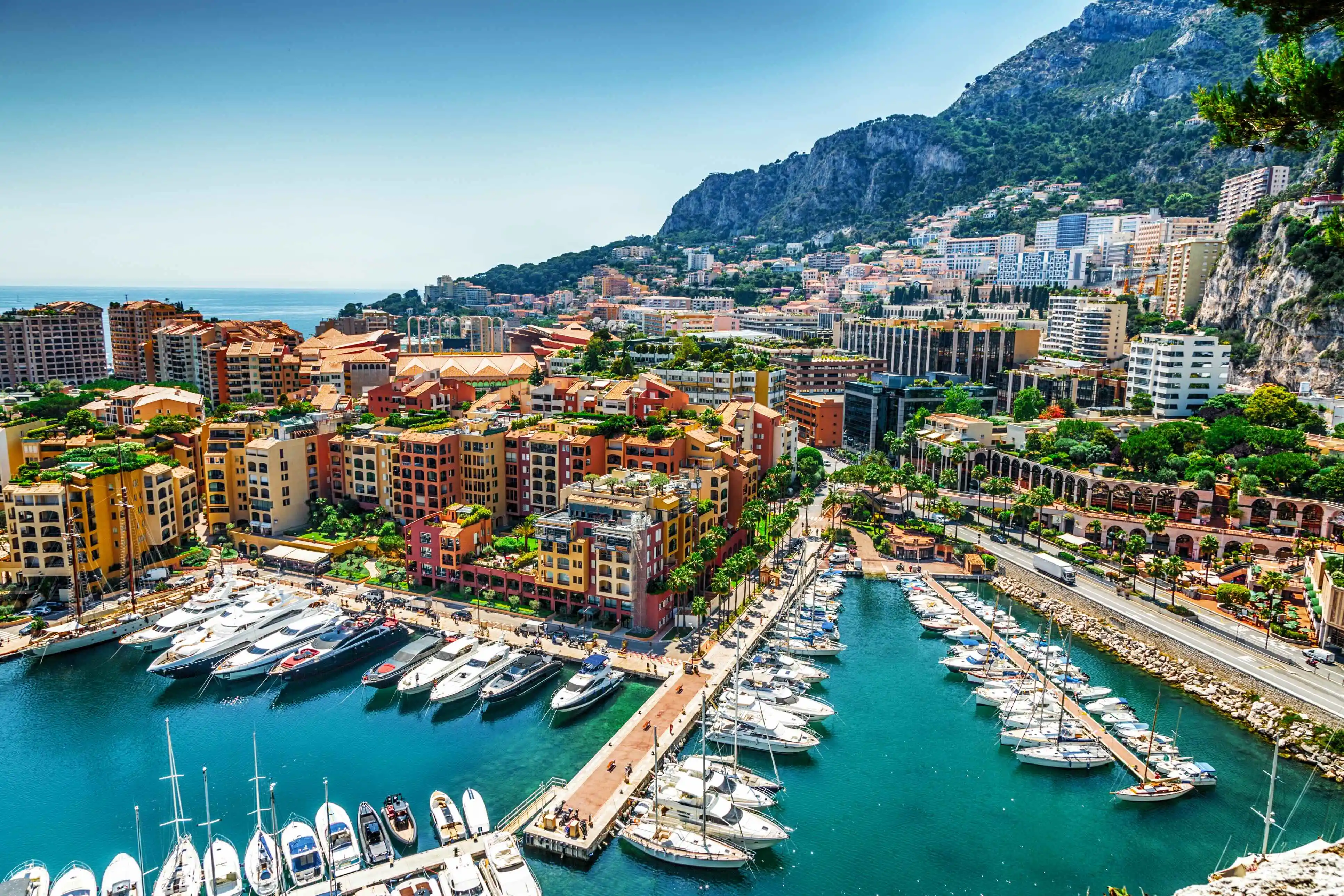
A sunny place for shady people” is how the English writer William Somerset Maugham described Monaco, the tiny Mediterranean principality that was once perceived as glamorous, but is now tainted by money laundering, murder, and, most recently, a parcel bomb meant for a sanctioned Ukrainian-born oligarch.The latest scandal to envelop Monaco reads like a bad thriller. Vadym Yermolaiev, who is linked with various dodgy business dealings in Russia before he became a Cypriot resident, was the victim of a parcel bomb planted in the foyer of his apartment building in the district of La Rousse. The homemade device was deposited minutes before it struck him and his mistress (who, according to French media, lost both her legs) and their 13-year-old son. All are currently in hospital. Interpol has named a 39-year-old woman from Ukraine, Anastasiia Berezovska, as the suspect. She has since been spotted in Germany, and a Monaco prosecutor said she was disguised as a man. Anastasiia Berezovska is wanted in connection with the bombing in Monaco earlier this week (Interpol)And just as you thought this was bog-standard oligarch mobster behaviour, there comes the news that Yermolaiev’s older son, Artur, was prosecuted in Estonia for a large-scale call-centre scam operation that targeted investors. While Artur Yermolaiev was convicted, and there is no suggestion that Vadym Yermolaiev was involved in his son’s fraud, a source told French newspapers that “people would have been lining up to gun down” the real-estate mogul, giving local police an even bigger headache than anticipated.Monaco has had a reputation as a safe haven for rich people (there is no income tax or capital gains tax); 3,000 Brits, including Sir Philip Green and Sir Jim Ratcliffe, call Monaco home. But this reputation has been badly tarnished by the somewhat late-to-the-table discovery that some of the private bankers and wealth managers who make up the 38,000-strong population are not necessarily the kind of people you’d want as sons-in-law. The war in Ukraine certainly hasn’t helped. In the past few years, dozens of oligarchs have poured into the land mass equivalent of Central Park with seemingly no questions asked. A report by the Global Magnitsky Justice Campaign claimed that millions of euros in illegal funds linked to fraud committed by Russian oligarchs had also been parked in Monaco. The report was ignored. Ask no questions, tell no liesA bomb-disposal team at the scene following an alleged attack involving an explosive device in the lobby of a residential building in Monaco (AFP/Getty)“Don’t ask any questions” has long been the Monaco motto. It might have stayed that way, had the French version of HMRC not got fed up with their own high-net-worth residents – who reside a short walk away from Monaco in the south of France – skipping out on tax payments themselves. A 400-page report was commissioned by the French National Assembly and was published in June 2000. It accused Monaco of having deliberately established lax banking laws, including a guarantee of anonymity, to attract rich people, many of them French. The report also stated that the monetary surveillance systems were so poor that even if Monaco’s officials wanted to help prevent money laundering, they would be unable to.“A loose system is not just tolerated here,” said Arnaud Montebourg, a socialist member of parliament who helped write the report. “It was created on purpose.”In 2024, Monaco was placed on the grey list of the famous 40-nation Financial Action Task Force. (Many said it was originally blacklisted, then downgraded for whatever reason.)Monaco had 10 times the number of bank accounts as residents, leaving 60 per cent of the 340,000 unaccounted for (Getty)Some of the findings of the report border on comical. Wire transfers to notoriously dodgy places like the Cayman Islands were never reported at all. Thirty-seven such “suspicious illegal transactions” took place despite $44bn (£33bn) being held on deposit. At the time of the investigation, Monaco had 10 times the number of bank accounts as it had residents, leaving 60 per cent of the 340,000 unaccounted for. At the centre of the dodginess are the so-called “private bankers”, whose principal job is to court rich people – sometimes not opening their file, or even examining it, in case some unpleasantness resides inside (the report describes one folder, about a Russian oligarch, that was never translated, and whose contents were likely never read). While the main suspect remains on the run, this assassination attempt is just the latest plot twist in an increasingly dark chapter for the Mediterranean principalityIt all came to a dramatic head in 2026, when Monaco’s financial regulator, the AMSF, fined a well-known entity, UBS Group AG, €6m (£5.1m) for its “weak” money-laundering controls and counterterrorist financing failures, as well as its non-compliance with the know-your-customer obligation. One specific passage cites that a report of a suspicious wire transfer was filed 253 days late, presumably giving the client an entire tax year to launder his money elsewhere. A billionaire’s playground with a health warningMuch of the socialising between rich clients and their wealth managers takes place at “Jimmy’z Monte Carlo”, something of an institution in the principality, where high-rollers spend thousands on bottles of vodka and champagne.But while residents splash their cash freely when they visit Monaco, their wives are frequently absent. While tax exiles have to stay a certain number of days to qualify for the benefits, their wives often refuse to visit, opening a floodgate of opportunities for the local call girls, who are not hard to spot in many of the high-end establishments. Monaco is a magnet for the sorts of people you would cast in a Netflix murder mystery, except there’s no need to invent any characters. They live there already.In December 1999, a fire tore through a Monaco penthouse belonging to Edmond Safra, a billionaire banker (Netflix)One of the country’s most famous murders is now the subject of a Netflix true-crime documentary, Murder in Monaco. In December 1999, a fire tore through a Monaco penthouse belonging to Edmond Safra, a billionaire banker who had long been obsessed with his personal safety. It was originally billed as a break-in by armed intruders, later morphing into a tale of arson by one of Safra’s nurses, American Ted Maher, who had allegedly sought to secure his lucrative job by seeming to rescue his boss from the flames. Assuming he was being kidnapped, Safra had barricaded himself in a bathroom with another nurse, which resulted in both dying of smoke inhalation. Maher – the court eventually found out – had injured himself deliberately and set the fire using tissues soaked in flammable liquid. To this day, not everyone is convinced that the facts are as stated (Maher withdrew his confession, claiming exhaustion and pressure).This dark tale came after the fatal shooting of billionaire Helene Pastor, a 77-year-old property heiress killed while visiting her son, who was in hospital at the time. It later transpired that it was her own son-in-law, Wojciech Janowski, who had ordered the professional “hit” to safeguard the inheritance of his sick common-law wife (she survived). Prince Albert, four-day-old heir to the Monegasque throne, in the arms of his mother, Princess Grace, in the Royal Palace of Monaco at Monte Carlo in 1958 (PA)Scandals are part of Monaco folklore. The famous “Dossiers du Rocher”, published in 2021 and based on the contents of an anonymous website, exposed the dark side of the famous Monegasque royal family. Hacked emails exposed offshore trusts, hidden holdings, financial irregularities and explosive details, including payments made to Prince Albert II’s mistresses and two illegitimate children. The dossiers also detailed the lavish spending habits of his wife, Charlene. While the main suspect remains on the run, this assassination attempt is just the latest plot twist in an increasingly dark chapter for what was once regarded as a Mediterranean paradise for some of the wealthiest people on the planet. As the ugly underbelly of this stretch of the French Riviera is increasingly exposed, it feels as though the fun is over for Monaco’s royal family, money launderers and sanctioned oligarchs. In the land of luxury yachts, Formula One and high-end casinos, discretion is always the name of the game. When that is no longer guaranteed, the ultra-rich move on. But, as the world grows more unstable, the idea of anywhere being a truly safe haven is becoming harder to sustain. Maybe the safest option for the world’s richest men would be to pay tax. Now there’s a thought.
Paradise lost: How Monaco became the billionaire’s playground with a health warning
Tainted by murder, money laundering and now a parcel bomb, Monaco no longer feels like a safe haven. Helen Kirwan-Taylor explores the dark underbelly of the iconic Mediterranean resort
1,409 words~6 min read