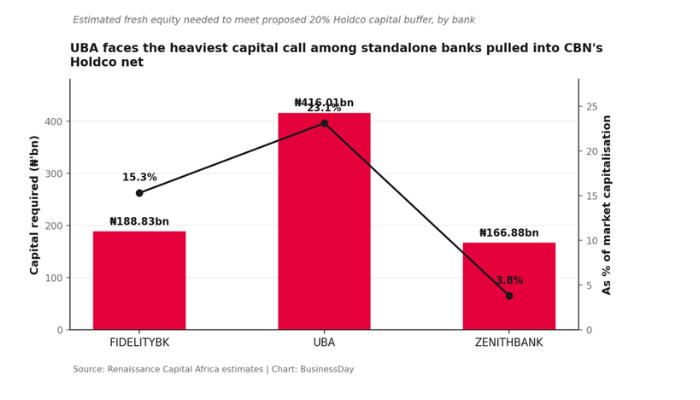
The Central Bank of Nigeria’s (CBN) recent exposure drafts on the Revised Guidelines for Financial Holding Companies and the Ring-Fencing of Closely Linked Entities represent perhaps the most far-reaching restructuring of Nigeria’s financial conglomerate architecture since the introduction of the holding company framework in 2014. Coming at a time when the banking industry is still adjusting to the recapitalisation exercise, these proposals seek to strengthen corporate governance, enhance regulatory oversight, protect depositors’ funds and insulate banks from risks arising from non-bank subsidiaries and related entities.
The broad objectives of the reforms are both timely and commendable. Over the last decade, Nigerian banking groups have evolved into increasingly complex financial conglomerates with extensive Pan-African operations and diverse subsidiaries spanning insurance, pensions, payments, asset management and fintech businesses. While this diversification has created opportunities for growth and efficiency, it has also generated new channels through which risks originating from one part of the group can spread to the regulated banking entity. Consequently, the CBN’s determination to reinforce financial stability and align Nigeria’s supervisory framework with global standards is understandable.