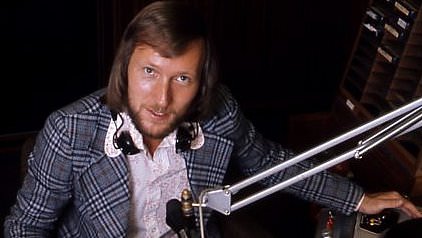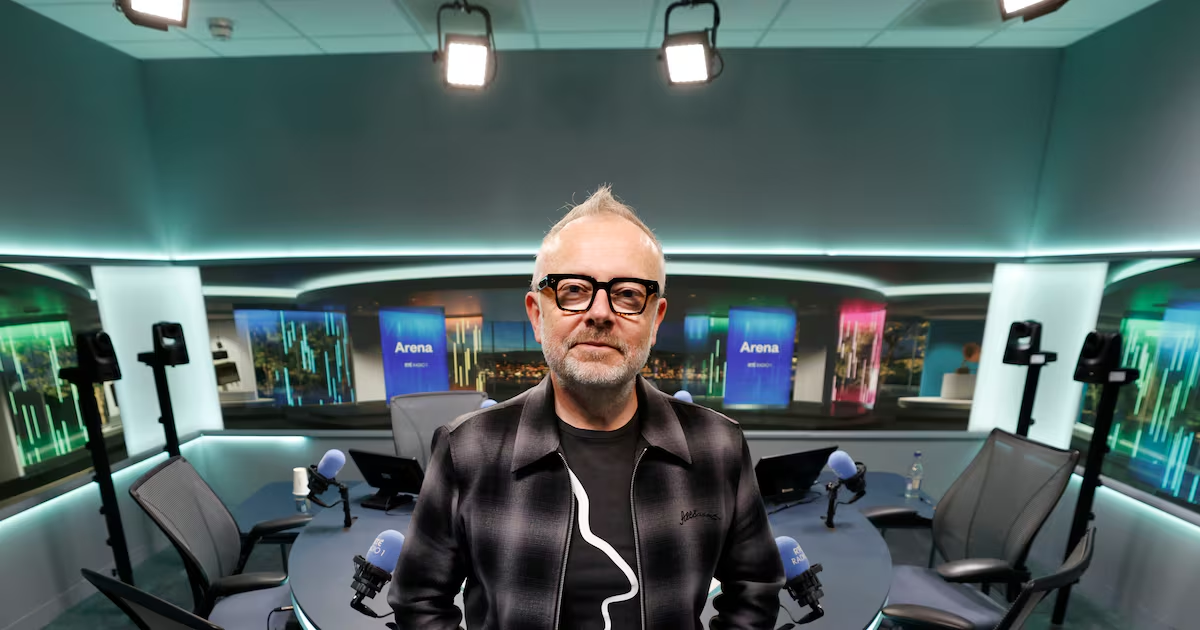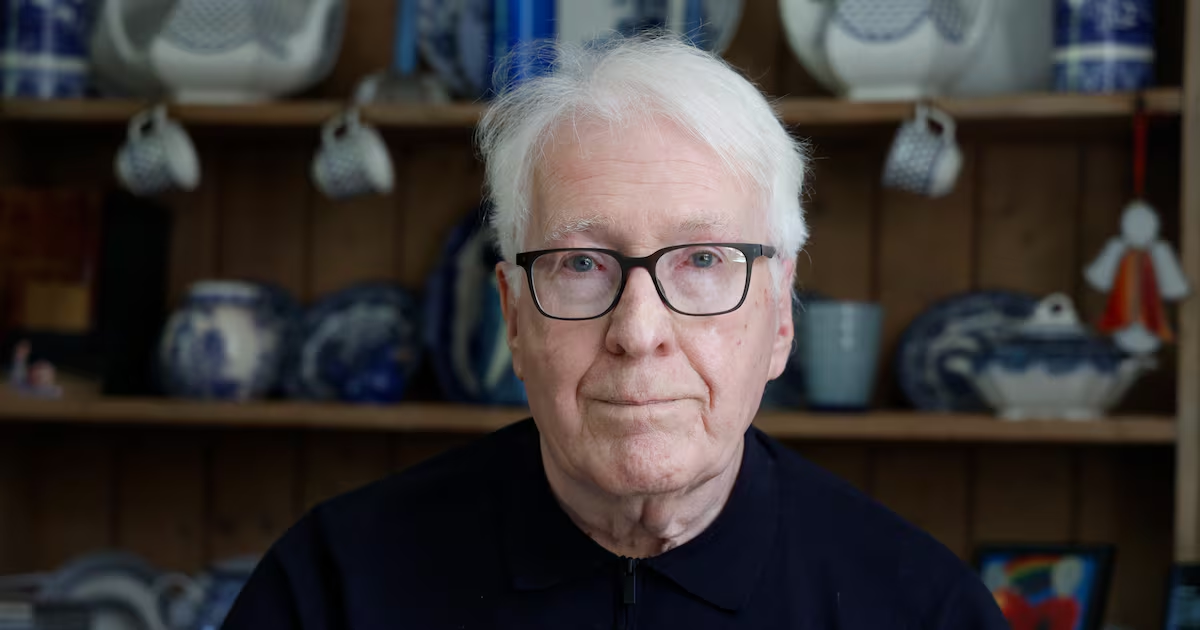
It has been a month since former RTÉ broadcaster Brendan Balfe’s wife Eileen died. Her Mass card is still on the mantelpiece in the lovely double-fronted home in Dún Laoghaire, Co Dublin, they shared for decades, raising their two children. The couple were married for 52 years. Eileen got cancer in 2010, the year Balfe retired from RTÉ. She had been suffering with dementia the last few years, and recently had moved into a nursing home. “We knew we were in the last chapter, but we thought she’d have longer. She just slipped away,” he says. When she died, Balfe was in the process of selling the house to downsize, and that process is continuing now. It has been a welcome distraction from the grief, sorting through the house contents, dealing with the admin. He has some fine art and eye-catching mementos from over 50 years in broadcasting scattered around the house. Balfe was, for anyone who likes setting table quiz questions, the first face in colour from RTÉ TV studios, the first voice on 2FM and the last voice on RTÉ Radio 1 Medium Wave. He started with RTÉ as a teenager when it was located in the GPO – a side hustle to a full-time job in insurance – and back in his day, his voice was as familiar as that of the late Gay Byrne to Irish audiences. Fans of Bowman: Sunday: 8.30, John Bowman’s weekly radio archive show, will hear him regularly featured. He has been an announcer, presenter, producer, scriptwriter, author and performer. In 1979 he conceived and presented a 20-part radio show called Sounds of the Century which was the radio model for Reeling in the Years. His Pathetic News was for years the only satire on RTÉ radio. He has lectured in broadcasting, won international awards for radio comedy, written a memoir called Radio Man and, in 2016, toured a one-man show about his life in broadcasting, I’m Sorry We’re Off The Air.Brendan Balfe (centre) presenting Off the Beat in 1980 with Frank Hall and Hugh Leonard. Photograph: RTE Archive He turned 80 last year. His birthday celebrations were somewhat subdued as his wife wasn’t well, but there was a small family dinner in his daughter Ellie’s house with his son John. “Two beautiful people.” The festivities included a surprise compilation of video messages from friends in broadcasting such as Pat Kenny, “saying they were quite fond of me”. Balfe does not look 80. What’s his secret? “It’s all the cocaine,” the comedy writer deadpans. He had a heart operation five years ago, but other than that he has very few ailments. We talk about how he spends his days. The house business is taking up a lot of time. I’m surprised to learn he doesn’t listen to Radio 1 any more. He is mostly a Lyric FM man. Did he hear they changed all the theme tunes on Radio 1? “I did. And it’s the oldest trick in the book. It’s a stupid thing to do. Those theme tunes catch your ear when you’re in the house, you know it means it must be 3 o’clock. It’s a lazy way of showing ‘I am in charge’. Why not change something about the programme, the content, instead? It’s lazy. And stupid.”[ RTÉ radio at 100: Brendan Balfe on a century of Irish broadcastingOpens in new window ]He’s not best pleased with RTÉ at the moment. Late last year, he wrote to a member of senior management – “I don’t want to mention names” – pitching ideas for programmes to commemorate the 100th anniversary of RTÉ radio. “I offered some suggestions for programmes to mark the anniversary but I didn’t get a reply. Not even a ‘piss off, we’re busy’, you know? I think it’s bad manners. I was very annoyed by that.”He worked closely with Gay Byrne through the years. What would Gaybo think? “Well, Gay used to say ‘there’s a small difference between suggesting and begging. I don’t fall into the latter category’. And nor do I.” Another close friend is former RTÉ broadcaster Mike Murphy: “He thought it was outrageous.” Balfe says he did subsequently get a call from someone in RTÉ television who was making a film about the 100th anniversary. “They said they’d get back to me and never did. So I’m not ringing back and saying ‘Do you remember me?’ I can live without it.”Gay Byrne in the radio studio on March 20th, 1963. Photograph: RTÉ It seems a shame that Balfe and his broadcasting expertise isn’t being mined by RTÉ. A resource such as Balfe is rare. He has extensive knowledge of the RTÉ archives and an acute sense of Irish audiences. The breadth of his experience is extraordinary. He was head of music policy on RTÉ Radio 1, giving many established Irish musicians their first radio play, and performed comedy gigs supporting Rosaleen Linehan and Frank Kelly. In 1974 his bestselling comedy album Balfe, Bothered and Bewildered was released, the first of its kind in Ireland. A lot of what he ended up doing was accidental. He fell into things. One of his favourite songs is a country tune called I Hope You Dance. It has the lyric: “And when you get the choice to sit it out or dance, I hope you dance”. He says: “It suits me as I like to take opportunities and I generally say yes to everything.” ‘There used to be a big melting pot in RTÉ, an air of creativity, sparks happening. Radio and TV mixed together, there was a buzz about the place … last time I was in there, there was tumbleweed’Balfe has a lot of wisdom to pass on. For example, the trick about trying to get a job, he always tells his two beloved teenage grandchildren Lulu (17) and Anna (14), is: “Don’t write to an organisation, always get a name.” Aged 18, he wrote to former head of light music Kevin Roche at RTÉ. He’d been listening to Radio Luxembourg and wondering how the likes of legendary presenter Pete Murray got their jobs. The letter said something like: “I could be God’s gift to Irish radio and if you play your cards right I might come in for an audition.” This time RTÉ replied and Roche got him in for an audition. He was working for an insurance company earning IR£4 a week at the time. Each shift as an RTÉ continuity announcer paid IR£6. “My dad said, ‘Do you not think you should move?’ I said ‘Dad, can I?’ It meant I was giving up a secure, pensionable job.” And that’s how he started. He did a voice test with 300 applicants and landed the job of continuity announcer under Terry Wogan. Balfe was soon in charge of sponsored programmes which began in the 1950s and ended in 1980. These were shows sponsored by commercial clients. In one of many quirks of his career, he had the experience at 16 of getting Gay Byrne’s autograph while attending the first Late Late Show, and then three years later hiring Byrne for a sponsored programme with Urney Chocolates. Brendan Balfe did a voice test with 300 applicants and landed the job of continuity announcer under Terry Wogan. Photograph: Katie Collins/PA Talk of sponsored programmes brings us on to RTÉ’s recent troubles. I ask what that was like for the veteran broadcaster, looking on. “Veteran? I hate that word.” Assessing RTÉ’s problems, the “very experienced” broadcaster notes that when he retired 16 years ago, against his wishes, he adds, “a whole new raft of people came in to manage. Most of them wouldn’t have a clue about radio or broadcasting if it bit them in the leg. They might have had a degree ... and that was about it.” He quotes BBC broadcaster Huw Wheldon, who famously said the whole point of broadcasting was “to make the good popular and the popular good”. “There used to be a big melting pot in RTÉ, an air of creativity, sparks happening. Radio and TV mixed together, there was a buzz about the place … last time I was in there, there was tumbleweed, everybody looking worried, nobody talking to each other ...” Having said that, the former RTÉ staff member has “very few spies” in RTÉ at the moment. Some of his former students from when he ran the radio course in the Institute of Art, Design and Technology work there. “But I don’t hear anything,” he says. Balfe was one of the first producer/presenters in the organisation. Observers said he held his talent lightly, the work speaking for itself. “I didn’t have a rule book, just instincts and principles.” One of his bosses was head of the announcing section, Denis Meehan. “He always said the audience is not stupid. So my motto has always been ‘assume they are bright’.”‘My daughter says I’ve to do things like go to Lisbon for the weekend or go to Brazil. I just want to live and not have to worry too much’He learned on the job from people at the top of their game. “You had the best training by doing,” he says. He would seek out people to interview that he admired. American musician Tom Lehrer was a memorable one, and he also went to Hollywood to interview singer Peggy Lee. “It was one of my first jobs as a presenter/producer. Peggy Lee was on a walker, she’d hurt her hip. She wanted to do the interview in the bedroom. She was lying on the bed and sipping tea. Her bedroom was lined with books and she told me she was reading a book about Michelangelo. She said ‘imagine seeing David in that block of marble’. Isn’t that fabulous?’ And that’s actually how you produce people. I’ve used that trick ever since. You find David or Davina in the block of marble. Chip away until you find the real person and let them be that person.” Broadcasters that Balfe admires include John Kelly and Aideen Gormley of Lyric FM. But he thinks broadcasting is a bit of a lost art. Photograph Nick Bradshaw/The Irish Times He continued to work after retirement, including a series for RTÉ called The Irish Voice, charting 50 years of history through radio. It was produced as a three-CD anthology and, he recalls proudly, became the bestselling CD of 2011. The last programme he did was called Me & Gaybo, on Lyric FM. What does he think about people being forced to retire at 65? “I think it’s mad. It should be optional.” His RTÉ pension is €100 a week, and he also gets the State pension. He’s selling the house so that he can have a bit of money. “My daughter says I’ve to do things like go to Lisbon for the weekend or go to Brazil. I just want to live and not have to worry too much.”Is he lonely? “By definition I am because Eileen is gone, but she’s been gone for the last two years really.” He is close to his children. John works in the hotel industry, and Ellie, a former editor of Tatler, has a health podcast. “Ellie just got engaged, so even in the grieving period there are lovely surprises.” Broadcasters he admires include John Kelly and Aideen Gormley of Lyric FM. But he thinks broadcasting is a bit of a lost art. “I haven’t listened to Radio 1 for a long time. I’m not rushing to turn it on.” He hasn’t heard the new Liveline. “I just can’t be bothered moving the dial from Lyric.”He goes to bed at 1am, watching CNN late into the night. He enjoys a lie-in. For the past 15 years he’s been caring for his wife, so he’s getting used to a new rhythm. It’s been satisfying sorting through his memorabilia for the house sale and thinking back over his varied career. As we finish up, he tells me about his friend, entertainer Maxi, ringing him recently to ask for stories about the Leaving Certificate for a piece she was writing in Ireland’s Own. He did his Leaving in 1963, the first year of the Irish oral exam, when his teacher Mr O’Driscoll told the class one question they would definitely be asked was: ‘What do you want to be when you grow up?’Sixteen-year-old Balfe said “radio announcer”. Mr O’Driscoll told him the Irish for that was “bolscaire craolcán” which of course is what he ended up doing, and so much more. “Oh Brendan! Brendan Balfe. You did things WHOLE and not by HALFE,” as singer Cathy Davey put it in a beautiful book of tributes for his 65th birthday. When he had the choice, he danced. “It’s been a wonderfully happy life,” he says.
Former RTÉ broadcaster Brendan Balfe: ‘I haven’t listened to Radio 1 for a long time’
Balfe was the first face in colour from RTÉ TV studios, and in his day, his voice was as familiar as that of Gay Byrne to Irish audiences
2,131 words~10 min read