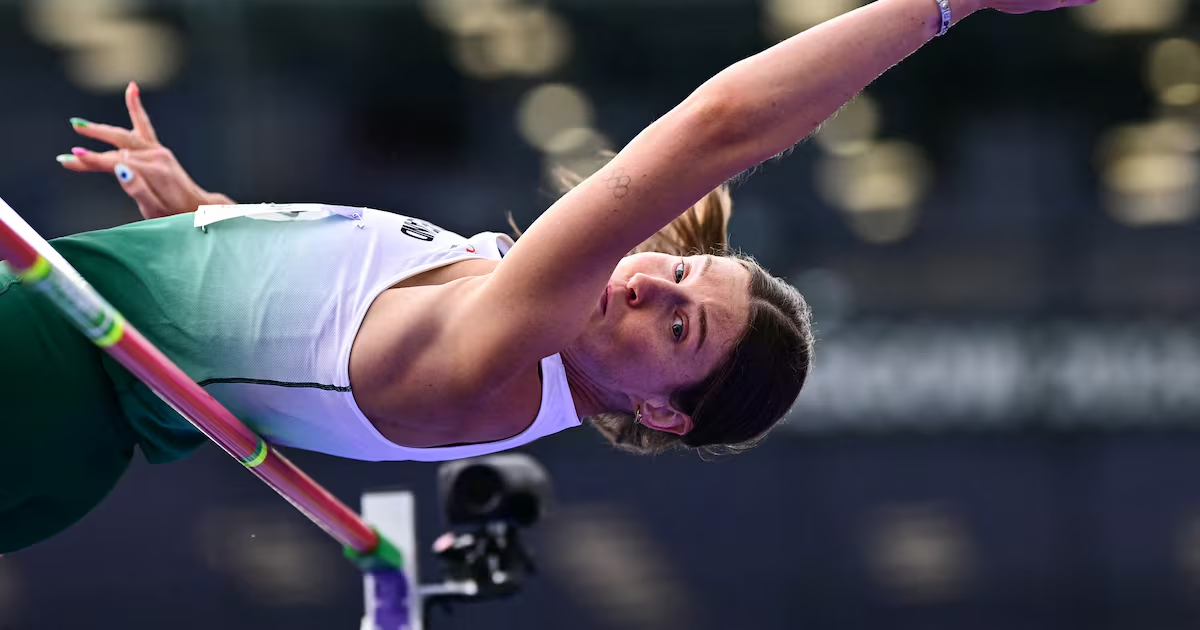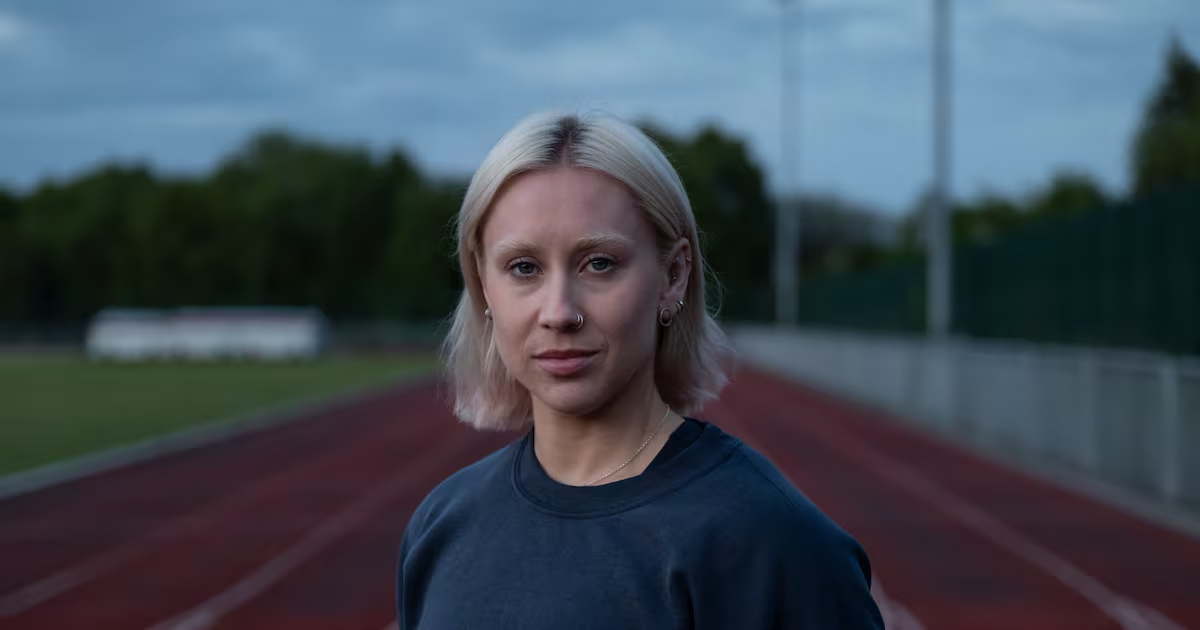
In a four-year Paralympic cycle, you can’t always count on motivation.Two years on from my third Paralympic Games, the post-Paris afterglow has faded but LA is still a while away. If ever motivation was likely to wane, it would be around now.There’s no infinite supply of impetus that keeps athletes going. Motivation ebbs and flows, but when you’re going through a tough patch, that’s when you need to stick to your process.Not every training session will feel 100 per cent; some days the win will be that you simply showed up and got it done. Not every race is going to go your way, but you can learn from what didn’t go to plan and work on it.Motivation can set the goal, but discipline achieves it.The athletics boom in Ireland after Paris has been incredible, and it’s amazing to see the jump in the number of children, particularly girls, going to their local athletics club to give it a try.The girl who showed up to Raheny Shamrocks as a six-year-old never imagined athletics could one day be her full-time job, but 22 years on and I’m a double world champion and a Paralympic bronze medallist. [Comerford has vision impairment owing to an inherited retinal disease.]After competitions, the first thing the club will ask is for me to come down and do a session with the juveniles and show them my medals.It’s the proudest day because that was me as a kid, looking up to the older athletes. It’s lovely to have that connection with them – that you’re not just someone on the telly, you’re someone in their community showing that if they want to be an athlete, it’s possible. It’s important to have visibility in sport, but it’s even stronger when it’s in your own community.But the harsher side of sport is that it’s not a job for life; your career can all of a sudden be cut short.Orla Comerford winning gold at the 2025 World Para Athletics Championships in New Delhi, India. Photograph: TockoMackic/Inpho Working with my sports psychologist, Jessie Barr, a former Irish Olympian, has taught me the importance of celebrating every achievement. When you set the bar higher and you run faster, it leaves you wanting more. You probably don’t get to a high level without that natural tendency, but it can be also the thing that cuts athletes off at the knees because you’re not taking a moment to recognise the progress you’ve made.I’m definitely a glass-half-full kind of girl, but the bad days will probably outnumber the good in sport, so to not acknowledge your wins, big or small, is doing yourself a huge disservice. You never know when a personal best, a medal or a race will be your last, so celebrate them.While it’s hopefully a long way down the track, I have a certain peace around when the end of my athletics career comes knocking. It’s not a thing of fear for me because there’s so much I want to explore.Ever since school, art is something that never felt like work. It was always something that made me feel at ease. My teacher spotted that and encouraged me to apply for the National College of Art and Design, and studying there has helped shape me as a person.[ Orla Comerford: ‘Female sprinting in Ireland is probably the strongest it’s ever been’Opens in new window ]It might not seem like sport and art have much in common, but so much of art college was about learning to ask questions – question the approach, question the process – which is also useful in athletics. If something isn’t quite working, take a step back and try to figure out what’s going on and how it can be improved.It also made me see that when you’re present in a process, you get so much more out of it. LA is the big goal, but there are plenty of smaller ones to break up the space in between, and it’s the small goals that fuel you day-to-day. It’s easy to get caught up with the end result, but if you’re present and try to improve all the little things along the way, it all falls into place.Another thing that art and sport have in common is that if you want to get the most out of them, you have to give them everything. That means that, for now, it’s athletics all the way, because when the time comes for me to hang up my spikes, I want to do so having given it my all, leaving the sport in a better place than where it was when I set out.Having a platform to speak up for equality and inclusivity feels like a privilege because my progress has come off the back of athletes who went before me, people who stood up and made a point for inclusion. It’s only right to do what I can now to continue that fight.A lot of that work is around lobbying for inclusive events, and to achieve that I’ll happily be the thorn in people’s sides trying to get as much access and coverage as possible in the hope that the next generation don’t have to struggle for their place.Because all we ever want as women in sport, as para-athletes, is the opportunity to compete. I don’t want any special treatment; I just want the opportunity to show people what I can do.Comerford at the World Para Athletics Championships in India last year. Photograph: TockoMackic/Inpho It was a dream come true to pull on the Irish vest for the first time. It was surreal to be living a moment I’d imagined for so many years, and it was every bit as exciting as I’d hoped it would be. It took me another few years to truly feel like I belonged on that team – not just making up the numbers, but believing I was there to compete and challenge alongside the best.During seasons when I was carrying injuries or didn’t feel I’d performed to the level I was capable of, I often felt like I hadn’t represented my country as well as I wanted to, and that weighed heavily on me. I’ve always wanted to put my best foot forward – not just for myself, but for my family, my community and my country. In recent years I feel I’ve finally been able to do that.Setting a new personal best and equalling the European record in recent weeks were incredibly proud moments. They weren’t just milestones – they’ve given me even more belief that there’s another level to reach. I’m excited for the opportunity to race on home soil at the Morton Games in Dublin next week in what promises to be a stacked international mixed-classification para race, and hopefully continue building on that momentum.There’s no feeling quite like representing Ireland. Pulling on the Irish vest gives me an extra edge in those big championship moments. Hearing the crowd, seeing the Irish flags and knowing who you’re racing for is incredibly motivating. It’s something I’ll never take for granted, and it’s a feeling I absolutely love.In conversation with Muireann Duffy
Paralympian Orla Comerford: ‘You never know when a personal best or a race will be your last’
The athlete on the precariousness of a sporting career, her pride at showing her medals to the children of Raheny, and fighting for inclusivity
1,189 words~5 min read