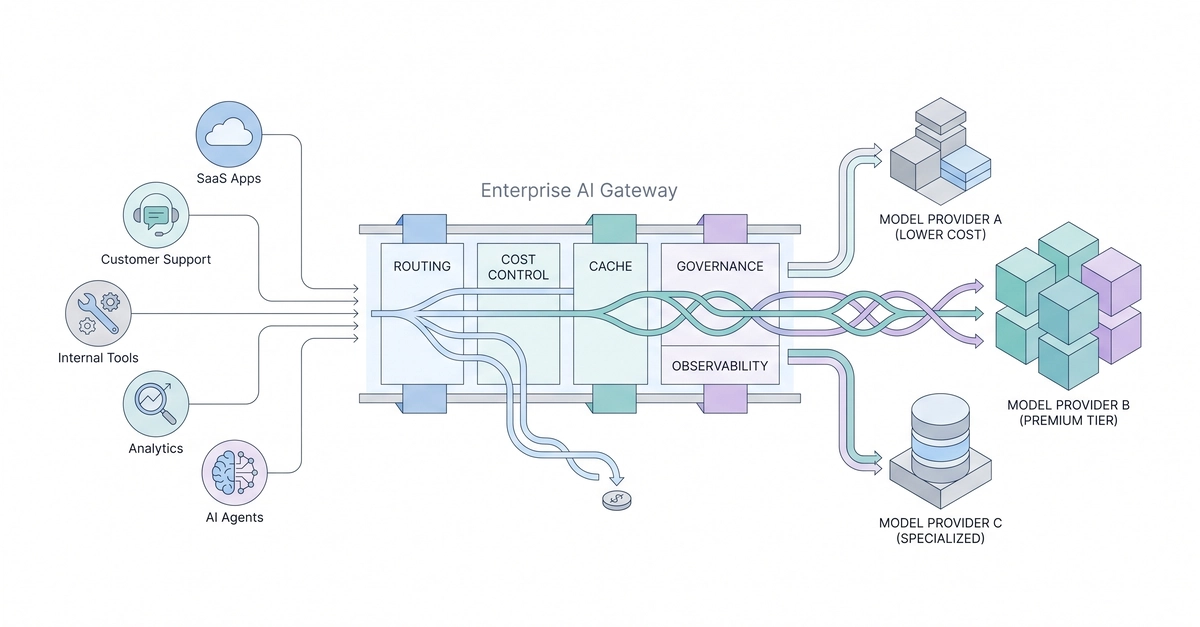
In production environments, deploying LLM agents without financial guardrails is a recipe for operational disaster. Standard implementations operate statelessly, treating every incoming request with identical resource allocation. Whether a user asks a routine question or triggers an enterprise infrastructure emergency, requests are blindly forwarded to premium, high-reasoning models. This architecture leads to highly inflated API token bills, variable latencies, and exposure to infinite loop resource drain.
To address this challenge, I built an Autonomous Customer Escalation & Budget Gate—an intelligent backend middleware layer that sits directly inside the application execution loop to handle cost management, performance telemetry, and conditional routing dynamically.
The Core Production Flaw: Static vs. Dynamic Routing
Traditional API routing architectures attempt to solve cost optimization using static, upfront classification models. These external classifiers inspect a prompt before execution and try to predict the complexity tier required.
This project implements an entirely different paradigm: Speculative Runtime Execution. By leveraging cascadeflow as an in-process orchestration layer, the backend gateway can establish an optimistic pipeline. It defaults traffic to fast, cost-efficient edge models (such as llama-3-8b-instruct), evaluates response parameters during runtime against compliance constraints, and dynamically triggers an escalation track to high-reasoning fallback structures (llama-3-70b-instruct) only when critical conditions demand it.