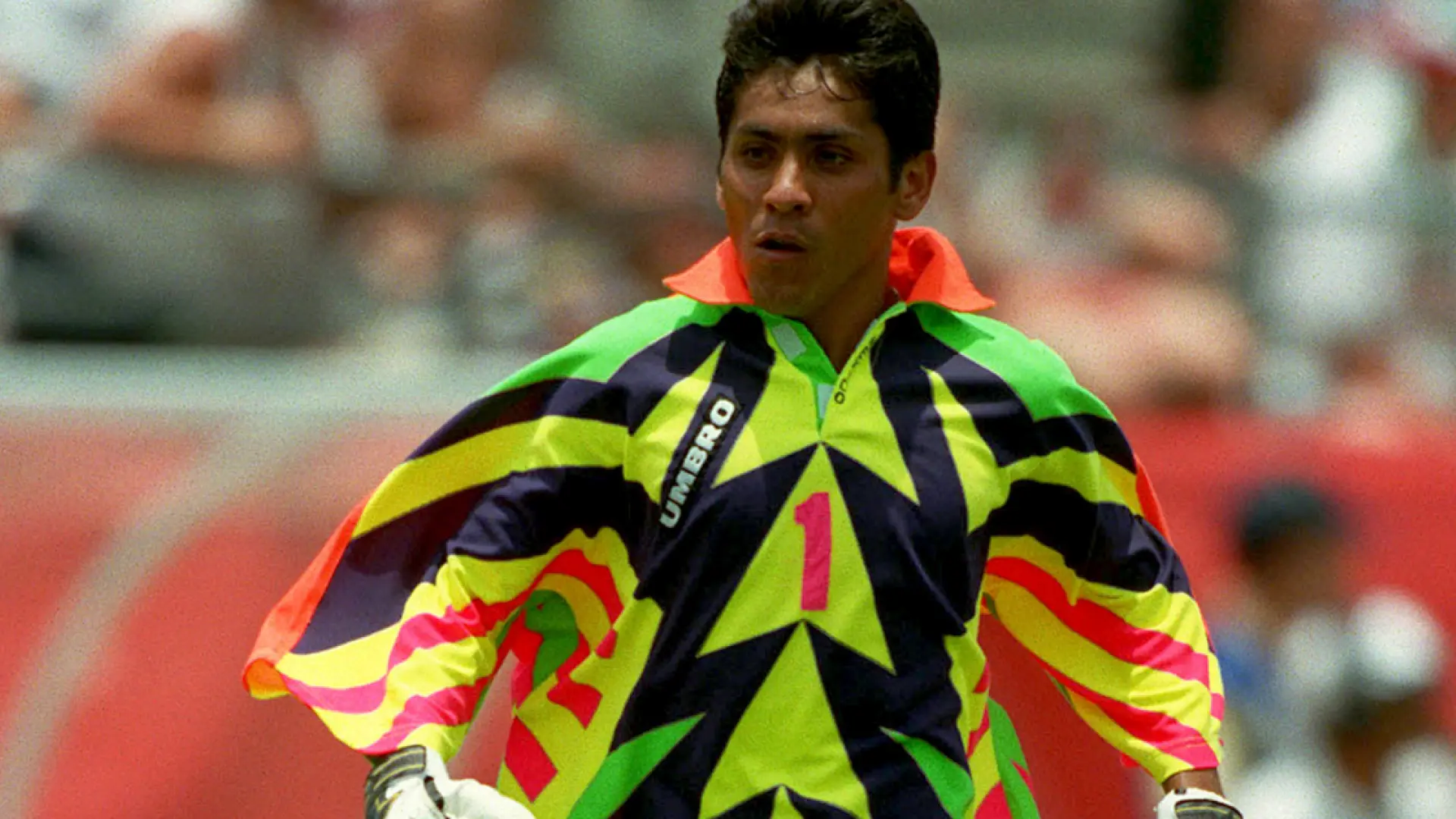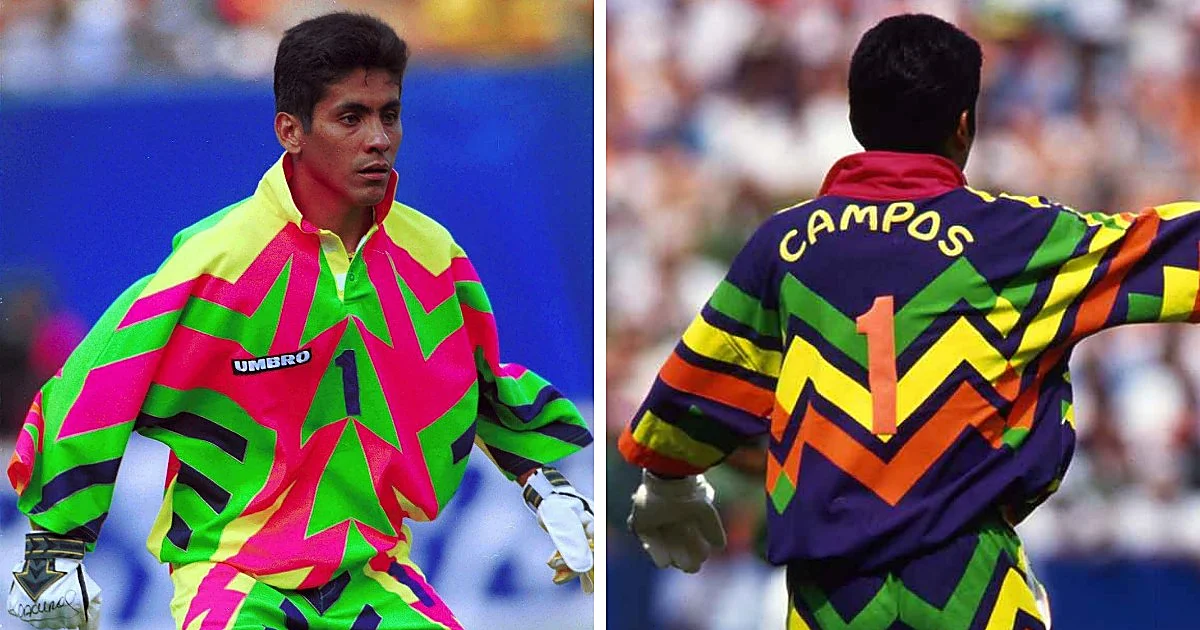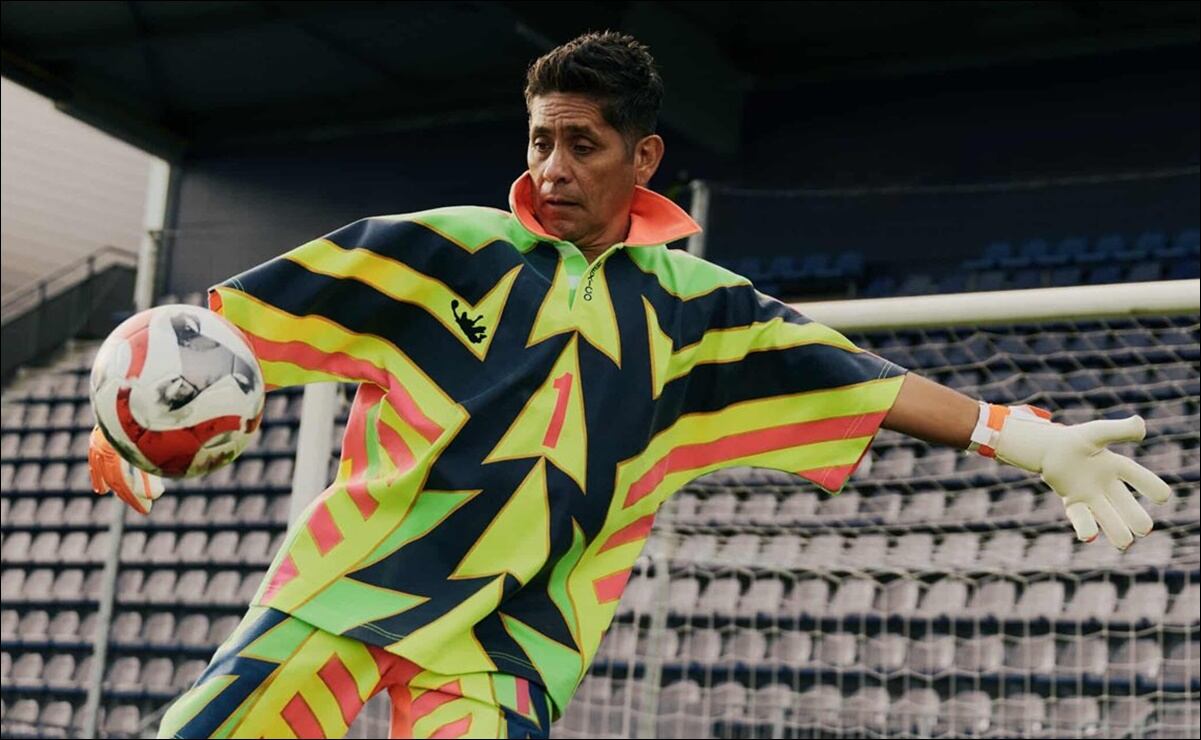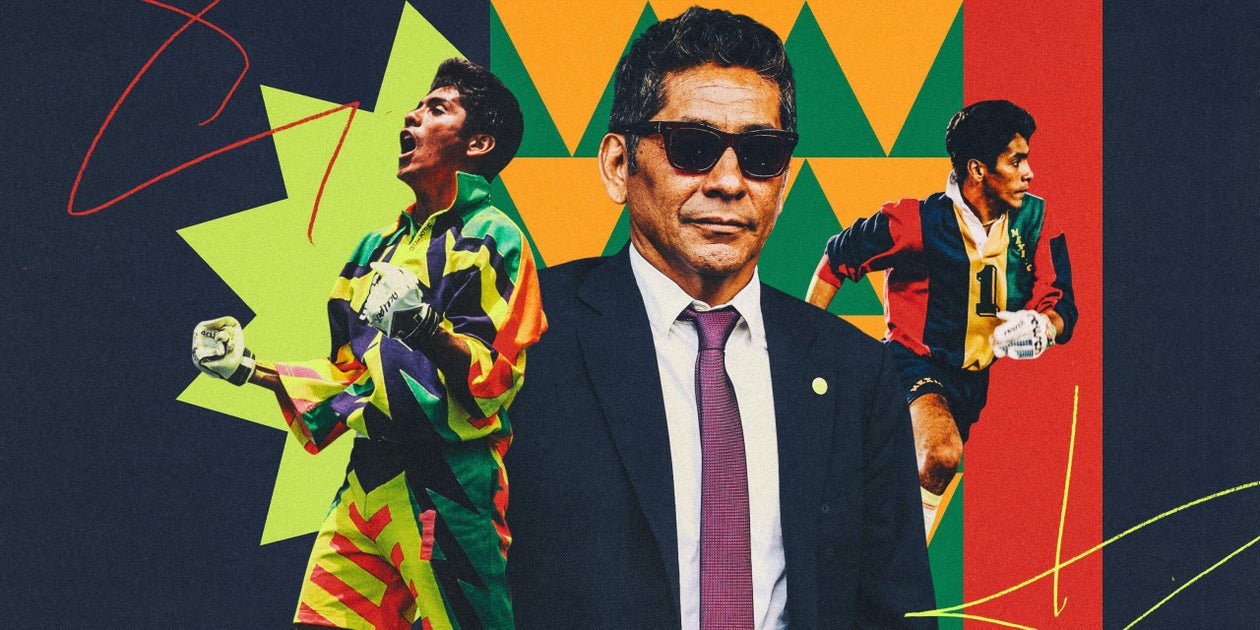
“I could do it all,” says Jorge Campos, a broad smile breaking across his face like one of the waves he used to catch as a kid in Acapulco.Campos, one of Mexico’s most beloved footballers and certainly its most iconoclastic, proceeds to reel off a list of his attributes. The self-assurance is unsurprising. This, after all, is a man who won 129 caps for his country and was once named the third best goalkeeper in the world.But here’s the thing: Campos is not talking about his reflexes or his handling. He is explaining how good he was as a forward.“I was deadly in the penalty area,” he says. “I could play through the middle or from the left. I liked to dribble, to really go at my man. I used to do this move… a little stepover, a feint here, then I’d go inside at pace. I didn’t have amazing technique but I was very, very quick. And when it came to scoring goals, I really wasn’t bad.”We’ll come to the other stuff in a moment — the kits, the charisma, the coaches who tried to tame him. It is worth lingering here for a moment, however. This is an essential part of the Campos story, one of the keys to understanding him.If you only have a passing knowledge of his career, you probably have him pinned as a goalscoring goalkeeper. You might group him with Rogerio Ceni, Jose Luis Chilavert and Rene Higuita, all of them dead-ball experts in gloves, guys who would abandon their posts to take free kicks and penalties for their teams.Campos played in a similar spirit but he was different. He reckons he only took eight or nine penalties during his 15 years as a professional. Free kicks? Not really his thing. No, he scored most of his career goals — around 46 by his count, although records vary — while playing outfield.He was not a goalkeeper with a side project. Campos was two players in one, a footballing renaissance man.When he first broke through, it was as a striker. Later, after making his name as a goalkeeper, he would often play the first half of matches in goal and the second half outfield. He had the No 9 on his goalkeeper’s jersey and played as one if his team was losing.“I know it sounds crazy,” he laughs, “but it’s true. You can watch the videos.”Get free access to the most comprehensive World Cup coverage in The Athletic appCampos’ double life began during adolescence. He got his start with a team his dad managed in Acapulco, a seaside resort town on Mexico’s south coast. He had three brothers, all of them budding footballers. All of them polyvalent, too.“The oldest was a goalkeeper and the other two were strikers, but my dad used to switch us around,” Campos recalls. “It was normal for us. ‘I’ll go in goal today, you go up front.’ I actually wanted to play in goal more but for a long time my dad said that I was too young. So I played as a forward.”He did eventually get his chance between the posts, doing enough to earn a contract with Mexico City club Club Universidad Nacional, better known as Pumas. “It was hard to get there,” he says. “I’m not tall. I’m not strong. Sure, I’m handsome, but that’s not relevant!”Campos bursts out laughing — a regular occurrence — before returning to the story. “I realised I was different when I arrived at Pumas,” he says. “People looked at me strangely when I asked to play up front as well as in goal.”Campos, pictured here in 1993, was a keen surfer in his youth (Mike Powell/Allsport)He was lucky enough to find a kindred spirit: Miguel Mejia Baron, a former Pumas player who had just taken over as manager. With an established goalkeeper, Adolfo Rios, already at the club, Campos feared he would spend years on the bench. So he pleaded with Mejia Baron to let him play outfield, even if only for the reserve team.“He really believed in me and gave me a chance,” says Campos. “But he said I had to train like mad. He knew I didn’t really like to train, but I started putting the work in, doing all the drills the forwards did. I trained, trained, trained for a whole year as a striker and played up front for the reserves. And because I kept scoring, he moved me up to the first team.”Campos scored 22 goals in all competitions in the 1989-90 season. He stopped getting the funny looks.“I used to tell people that I was one of a kind,” he says. “That was my catchphrase, my mentality: ‘I’m the best, I’m one of a kind, you can put me up front!’ When I started scoring all those goals, I said to Miguel, ‘I told you I was a goalscorer!'”He might easily have carried on as a striker. A squad reshuffle the following season changed his course. Mejia Baron asked him to go back in goal. Campos, who hadn’t done any goalkeeper training for a year and a half, baulked. Mejia Baron’s response? “You always said you were one of a kind.”Campos cackles. “I didn’t have any of the kit,” he says. “I had to rush out to buy gloves the day before the game.”From that point on, Campos started the vast majority of games in goal (the emphasis is on ‘started’). Mejia Baron took to moving Campos up front in the second half of matches. Even when he and Campos went their separate ways, the pattern held.
Jorge Campos: Goalkeeper, striker, artist, icon
Mexico's most celebrated footballer was always far more than just his country's No 1, as he tells Jack Lang
2,756 words~13 min read