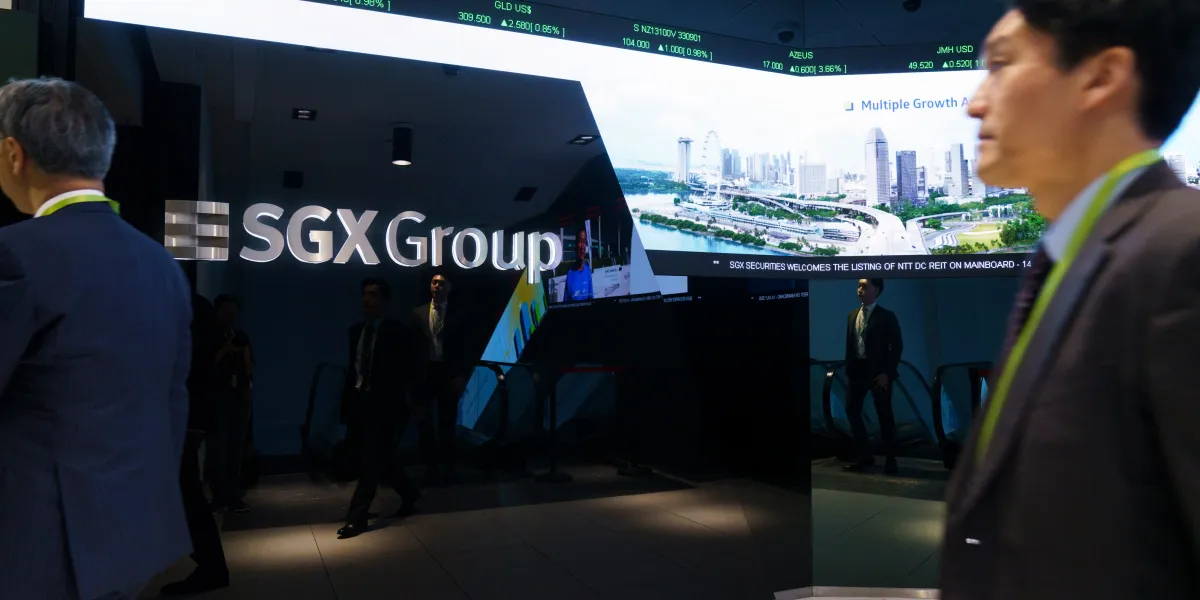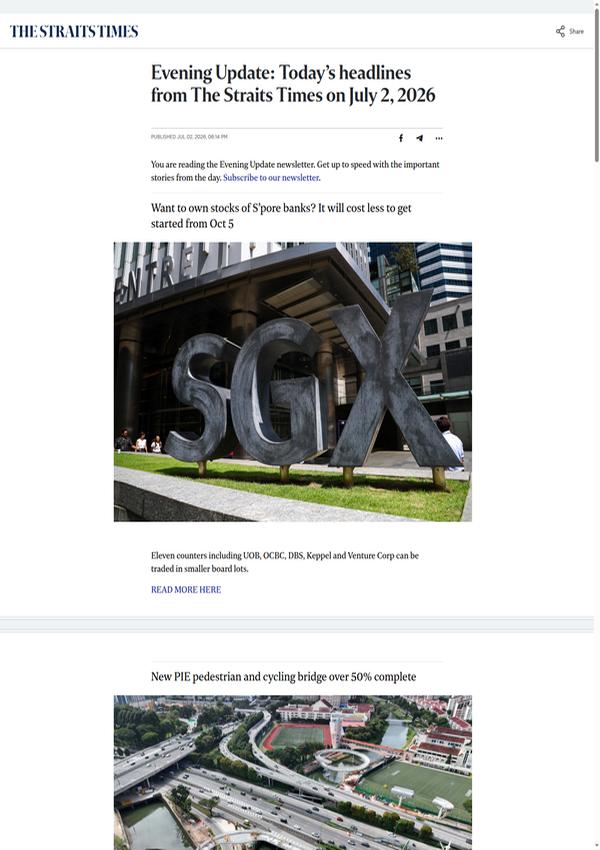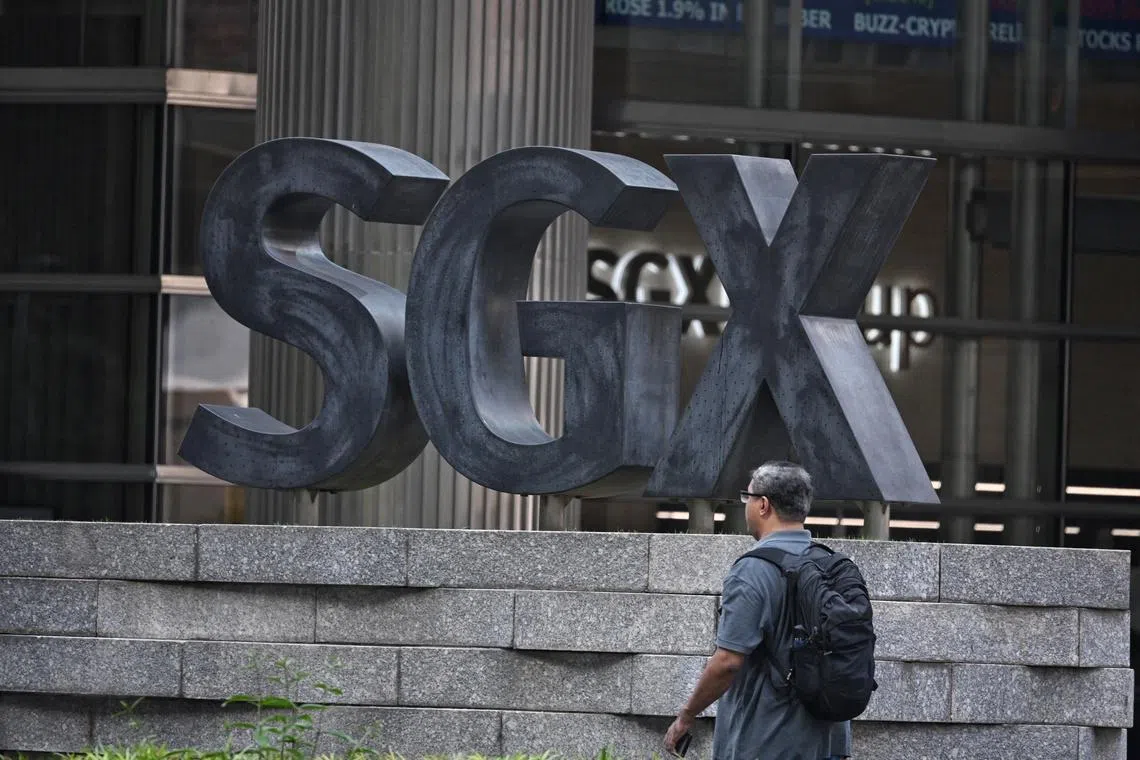
SINGAPORE – Singapore saw a flurry of initial public offering (IPO) activity this week, with several companies lodging listing documents for the local bourse. The rush came amid improving market sentiment, with the Straits Times Index rising more than 1 per cent over the week to close at 5,244.29.If the conditions are right, the Singapore Exchange (SGX) could record 20 to 30 IPOs in 2026, building on the 15 listings in 2025.As of late May, there had been five new listings, with four more expected in the coming months – Foundation Healthcare Holdings (FHH), All-Link Air & Sea, EGP Energy Corporation and AirTrunk.However, the performance of recent SGX IPOs has cast a shadow. About 60 per cent of those listed over the past year have struggled post-debut. For example, co-working space provider JustCo, the most recent addition on May 22, was trading more than 40 per cent below its offering price about a month later.The poor showings may weaken investor confidence and affect demand for future IPOs, prompting would-be listers to either delay their mainboard debut or list elsewhere in the region. It remains to be seen whether these companies can sustain their pre-listing hype. Private healthcare group FHH was reportedly “multiple times oversubscribed” for its IPO, with strong demand from international and cornerstone investors, according to people with knowledge of the deal.The Temasek-backed healthcare company, which operates four medical centres, is looking to raise $242 million from its IPO. Of this, $118 million will come from 10 cornerstone investors, and the rest from 162.6 million shares on offer to the public and international investors at 76 cents per share.The IPO, which opened on July 1, will close at noon on July 6. Trading of the company’s shares is expected to commence on SGX on July 8 at 9am. FHH’s market capitalisation will stand at $1 billion upon listing.Earlier in the week, both electrical infrastructure solutions and service provider EGP Energy and logistics solutions provider All-Link Air & Sea lodged a preliminary prospectus on June 30 to list on the SGX mainboard. Lastly, data centre operator AirTrunk, which is backed by global investment firm Blackstone, was expected to have filed confidentially for an IPO of a real estate investment trust, though the timing was not confirmed, according to people familiar with the matter.Bloomberg reported in April that AirTrunk had sought to raise about US$1.5 billion (S$1.9 billion) from the offering.The yen was on a roller coaster in the past week against the US dollar and Singdollar, with steep drops and climbs.The Japanese currency first dipped against the Singdollar on June 30, then slid past 125.7 on July 1 – an all-time low against the Singapore currency – before rebounding 0.6 per cent to 124.725 on July 2.The yen hit a 40-year low against the US dollar on June 30, breaking through the 162 mark.Among the reasons for the yen’s slide is the gap between Japanese interest rates and those of other central banks, such as the US Federal Reserve.Interest rates in Japan remain low compared with the US, even though the Bank of Japan has raised them multiple times since 2024. In June, they hit a 31-year high.This has led to capital outflows as investors borrowed yen and invested in assets with better returns outside Japan, putting pressure on the yen.The Bank of Japan is expected to hike rates further this year, although expectations are growing that the Fed will also tighten, meaning that the gap will remain.The Singapore Business Federation’s National Business Survey of business sentiments for the first quarter, released on July 1, found that large companies and small and medium-sized enterprises expected higher costs in the months ahead, with the manufacturing sector having the strongest anticipation of cost pressures.With electricity tariffs for Singapore households to rise by 17 per cent and the town gas tariff up by 7.1 per cent from July to September, businesses and sectors heavily reliant on electricity are no doubt doing what they can to lower costs.Some businesses chose to either pass on the increases to customers, such as some food and beverage operators increasing service charges, or took steps to conserve and reduce their use of electricity to lower operational costs.Shares of Sembcorp Industries, the largest utilities company on SGX by market value, fell by 7.86 per cent over the week, closing at $5.98 on July 3.Shares of Keppel Infrastructure Trust, which holds assets like City Energy and the Keppel Merlimau Cogen plant, dropped 2.75 per cent over the same period, ending the week at 53 cents.More retail investors here can now own shares in Singapore’s local banks if they so please, thanks to the downsizing of SGX board lots. From Oct 5, the standard board lot size will be cut from 100 units to 10 units for instruments priced above $10, up to $100.For instruments priced above $100, the standard board lot size will be cut from 100 units to one unit.DBS shares have been trading around $65 to $66 as of mid-2026. OCBC shares have been hovering slightly below $25, and UOB’s between $37 and $40.Besides stocks, the changes will also cover stapled securities, real estate investment trusts, business trusts, company warrants, excluding special purpose acquisition company warrants, as well as depository receipts and depository shares.The initial reduction will take place for 11 stocks priced above $10. They are UOB, OCBC, DBS, Keppel, Venture Corporation, Great Eastern Holdings, Haw Par Corporation, Jardine Cycle and Carriage, Jardine Matheson Holdings, Prudential and SGX.The board lot size reductions will remain even if the stocks fall below the $10 or $100 thresholds, SGX said. It will conduct a review every quarter to see if additional instruments can qualify for the reduced board lot size, with the next review taking place in January 2027.On July 1, SGX also announced some rule changes that would better safeguard shareholders and set a baseline in service standards by brokers, to ensure their processes give investors enough time to respond to corporate actions. For one, depository agents will be allowed to hold securities on behalf of clients in omnibus broker custody accounts from July 15.SGX’s regulatory arm also proposed to subject depository agents to enhanced requirements and oversight to ensure that retail investors opting for broker custody accounts are well served, which include implementing minimum service standards for brokers and depository agents to safeguard shareholder rights.And by 2027, all brokers that are SGX members must notify customers about annual general meetings, unless customers have opted out of receiving such information.White Sands mall at Pasir Ris, a comforting landmark for Singapore national service recruits before and after their basic military training at neighbouring Pulau Tekong, has been sold by Frasers Centrepoint Trust (FCT) to Growth Capital for $467 million. The sale is expected to be completed by end-September.Growth Capital is an entity linked to Jack Investment Group, which also owns Leisure Park Kallang and the retail spaces on the first and third levels of Thomson Plaza. Jack Investment Group is headed by Hainanese businessman Han Chee Juan.Following the sale, FCT’s retail portfolio will comprise eight retail properties: Causeway Point, Century Square, Hougang Mall, NEX, Northpoint City, Tampines 1, Tiong Bahru Plaza and Waterway Point.Mining company CNMC Goldmine, currently listed on Catalist, has received in-principle approval from the SGX to transfer to the mainboard.The company said on July 3 that the transfer is subject to several conditions, including obtaining shareholders’ approval by way of a special resolution at an extraordinary general meeting and complying with SGX’s listing requirements.Shares of CNMC rose more than 9 per cent to hit $1.21 at close on July 3.CNMC said public investors tend to place a bigger premium on SGX mainboard-listed companies than on those on the Catalist board. The move would also give the company access to a larger and more diverse investor base, including institutional investors whose mandates may restrict them to SGX mainboard-listed companies.Against a backdrop of a strong gold rally in the past year, CNMC posted a record revenue of US$128.4 million (S$165.7 million) for its financial year 2025, more than double the previous year’s figure. Net profit attributable to shareholders was a record US$42 million.Gold prices hit an all-time high of US$5,589.38 an ounce on Jan 28. On July 2, it hovered near US$4,200 an ounce.Markets could be volatile next week, with the minutes of the Federal Open Market Committee (FOMC) to be released on July 9. The minutes from the Fed’s June meeting, the first under chairman Kevin Warsh, may offer clues on whether policymakers remain hawkish over interest rates.At the June 16–17 meeting, the FOMC voted to keep the federal funds rate unchanged at a target range of 3.50 per cent to 3.75 per cent. Warsh also commited to delivering price stability amid rising inflation.
SGX on course for bumper crop of IPOs, yen on roller coaster
Explore the latest on SGX IPOs, yen fluctuations, and key Singapore market insights. Read more at straitstimes.com. Read more at straitstimes.com.
1,456 words~7 min read