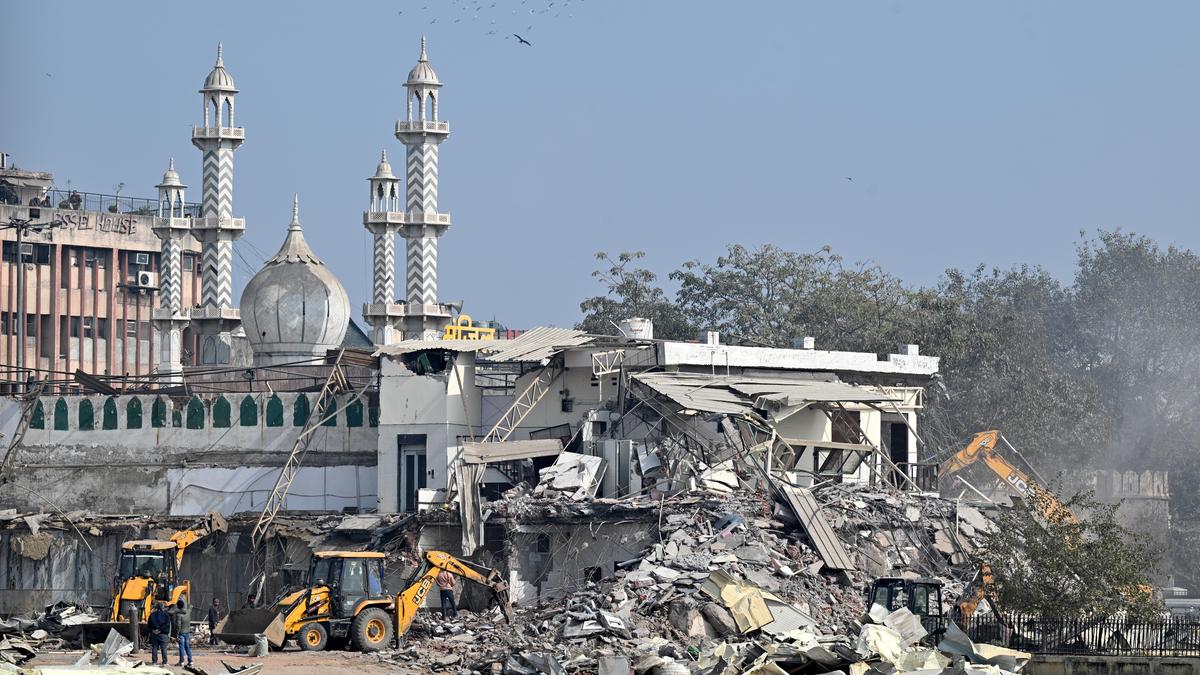
The systematic annihilation of Muslim livelihoods has been a central marker of the Modi years. This has been caused in part by the frequently violent activism of non-government formations fraternal to the Bharatiya Janata Government and affiliated to the Rashtriya Swayamsewak Sangh. What is sometimes missed is the central role in all of this of the state.It is important to understand that what the country has witnessed – and India’s Muslim citizens have endured – under Narendra Modi’s leadership is not merely a random conglomeration, a massing of unconnected individual hate attacks on Muslim livelihoods. The years of Modi’s leadership have witnessed a conscious and catastrophic dismantling of the livelihoods and economic foundations of an already highly dispossessed community through both law and policy.Analysts observe that “while Muslim disadvantage has been widely noted… there are few policies in place to protect them”. Such policies could include building better educational infrastructure in Muslim majority areas, training more Muslim teachers, enhancing the quantum and coverage of scholarships for Muslim children and youth, and taking strict action against discrimination. On the contrary, the effort is in the reverse direction, with many scholarship schemes for minority children either wound up or severely under-budgeted.Worse, during the Modi era, there are many state policies that target Muslim livelihoods directly. These include hardened cow protection laws. Under-budgeting and poor public provisioning of schools, medical centres and infrastructure in settlements with high density of Muslim populations is the rule, not the exception. Bulldozers have in these years deliberately targeted Muslim properties.But these are not all. I will speak here of examples of other state policies and laws of the union and Bharatiya Janata Party state governments which have been deleterious to Muslim livelihoods. These are laws that openly or tacitly abridge or extinguish Muslim livelihoods on the pretext of many outlandish jihad conspiracy theories; the halal ban; and changes in the waqf law. Each of these state policies and laws have had a direct inimical impact on the livelihood opportunities of Muslims, and their security and dignity at work.Halal bans“Halal” in Arabic means “permissible”. Aditya Menon’s thoughtful essay for The Quint reveals many flaws in the understanding of the idea of halal. Halal is widely understood by its opponents only as a way of slaughtering animals for meat, by slitting of the throat while reciting the Kalma. This is an important part of halal, but halal is a much broader concept. And in fact, the Quran describes anything that is “permissible” or “lawful” as halal and dubs what is “forbidden” and “unlawful” as haraam.For instance, banking that earns interest or unlawfully earned wealth is haraam. Islamic Banking (that does not charge or earn interest) is halal, as is halal tourism in which hotels do not serve alcohol and provide separate swimming pools for men and women. In food items, foods and drinks containing the meat of pigs, blood, carrion (meat of an animal that is dead already), alcohol and most narcotic substances are haram. A pharmaceutical product that does not contain alcohol or pig gelatin would be certified as halal.A significant example of state actions directly aiming to damage Muslim livelihoods is the halal bans. The Uttar Pradesh government in 2020 imposed a ban on halal-certified food products in the entire state. The Uttar Pradesh ban covered not just food products, but also drugs, medical devices, and cosmetic products with halal-certified labels.This ban followed many agitations by Hindutva organisations against halal-certified products. A “#BoycottHalalProducts” campaign was launched around 2019 by Hindutva organisations Sanatan Sanstha and Hindu Jagruti and vigorously supported by Sudarshan News TV channel.Sanatan Prabhat, a Hindutva group of periodicals, described halal certification as a kind of “economic jihad” aiming at the “Islamisation of India”. They maligned the meat trade as somehow linked to terror, and hoped to win the support of Sikhs who have a religious injunction against eating halal meat, as well as the Dalit Khatik community whose traditional occupation is the sale of meat. It hoped to pit both Sikhs and Khatiks against Muslims.Menon explains that the Sikh religious bar is not just on halal, but on the meat of any animal slaughter that involves rituals (and therefore would also include Hindu animal sacrifices that are common among Nepali Hindus among others). He quotes a Sikh tweet that reflects a common sentiment among the Sikhs he interviewed: “I don’t eat halal or any other meat that has been slaughtered under a religious/belief custom/ceremony/ritual, I don’t have any problem with people eating halal or anything else, Sanghis trying to pit Sikhs against Muslims is a joke! ....”The Tender Chicken you buy in Karnataka, which was promoted by BJP MLA @CTRavi_BJP is halal certified too... pic.twitter.com/coV7pI5SWD— Mohammed Zubair (@zoo_bear) April 1, 2022
Harsh Mander: The destruction of Muslim livelihoods by state laws and policies in India
Campaigns against halal products, claims of ‘spit jihad’ and new Waqf law have dismantled the economic foundations of an already dispossessed community.
3,533 words~16 min read