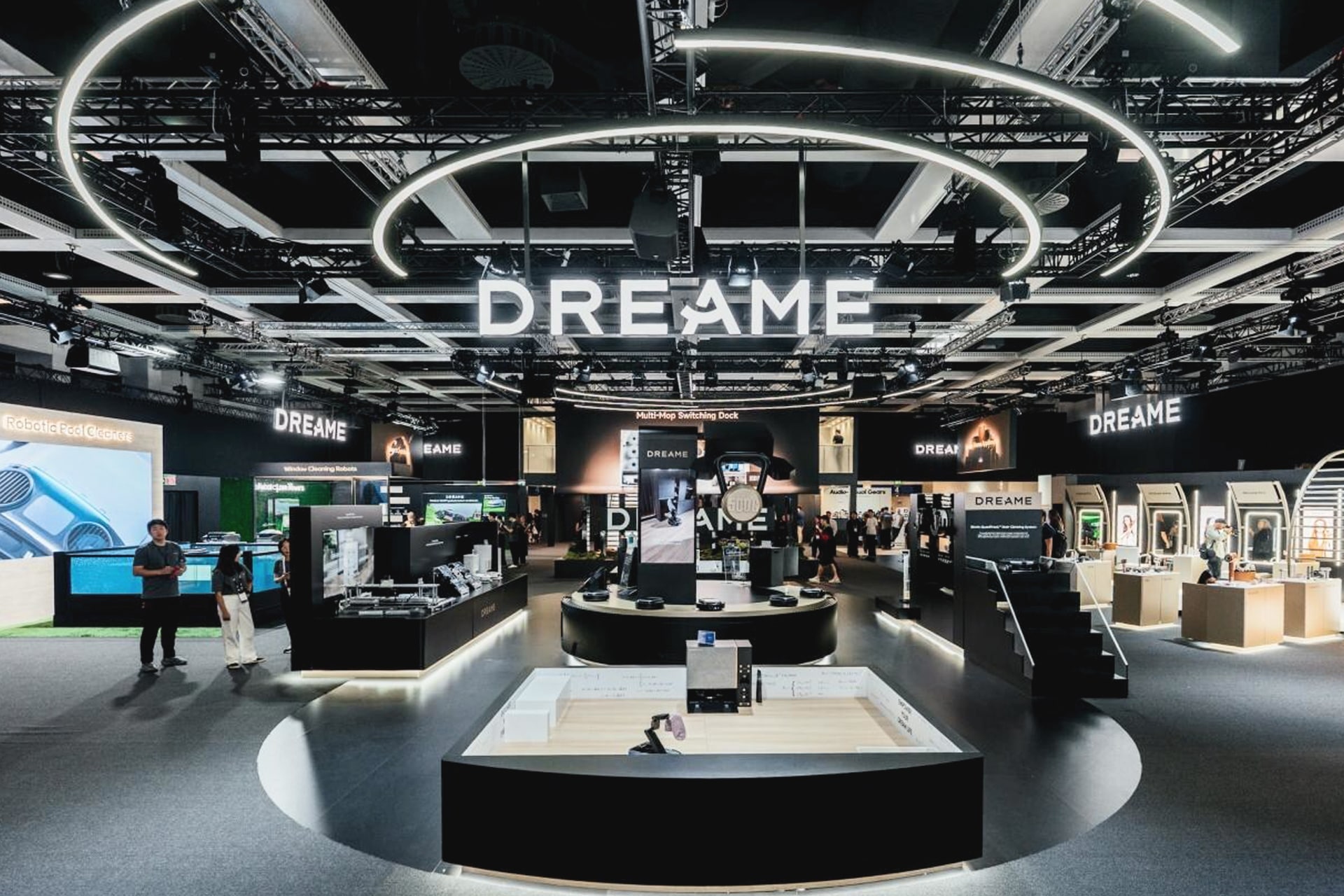
Chinese makers lead on scale and speed, while Korean rivals bet on trust and security Chinese brand Dreame’s L50s Pro Nano robot vacuum cleaner (Dreame) Once a niche appliance, robot vacuum cleaners have become a test of whether Samsung Electronics and LG Electronics can regain ground in a fast-growing Korean market increasingly shaped by Chinese rivals.China's strength in the sector is reflected in trade data. Figures from the General Administration of Customs of China showed China exported 11.32 billion yuan ($1.67 billion) worth of robots in the first quarter. Cleaning robots, a category newly added to customs product codes this year, accounted for 7.75 billion yuan, or 68.5 percent of the total.The category includes both household robot vacuums and commercial cleaning robots, giving Chinese companies a wider export base across homes, offices, hotels and public spaces. In the consumer market, brands such as Roborock, Dreame and Ecovacs have rapidly moved from value-for-money products into the premium segment.Market tracker International Data found that the world's five largest household robot vacuum makers last year were all Chinese companies, with a combined market share of 54.5 percent. Roborock topped the list with a 17.7 percent share. Roborock’s Qrevo Edge 2 robot vacuum cleaner (Roborock) Roborock's overseas revenue surged 63.5 percent on-year to 10.44 billion yuan, accounting for 56 percent of total revenue of 18.7 billion yuan. The company ranked first in more than 10 markets, including Korea, the US and Germany.Dreame has also gained momentum this year. Citing IDC data, the company said it ranked first globally in both robot vacuum sales volume and revenue in the first quarter. Operating in more than 100 countries and regions, it has strengthened its premium lineup with AI-powered cleaning technology and robotics engineering.Chinese firms are also expanding beyond the home. Gausium ranked first in the global commercial cleaning robot market in 2024 with a 12.9 percent share, according to industry data, underscoring the broader reach of China's cleaning robot ecosystem.Much of China's advantage comes from speed. Batteries, motors, sensors and other key components can be sourced domestically, helping manufacturers shorten development cycles and control costs. China had more than 1 million registered robot-related companies last year, while investment in embodied AI and robotics reached 73.54 billion yuan.Chinese brands' growing influence is increasingly visible in Korea. Market researcher GfK expects the Korean robot vacuum market to surpass 1 trillion won ($644 million) this year, more than doubling from about 430 billion won in 2023.Growth has been driven by premium models featuring AI functions, automatic mop cleaning, automatic water supply and drainage systems, and advanced obstacle avoidance. Chinese brands moved early to capture demand across both premium and affordable categories."Robot vacuums are no longer just cleaning devices. They are becoming AI appliances that move around the home and collect spatial and behavioral data," an industry source said. Samsung Electronics’ Bespoke AI Steam Ultra robot vacuum cleaner (Samsung Electronics) That has raised the bar for Samsung and LG. The challenge is no longer simply launching another robot vacuum, but giving consumers a reason to choose Korean brands in a category where Chinese rivals have already built scale.Samsung last month launched a standard version of its Bespoke AI Steam robot vacuum, expanding the lineup beyond the Ultra and Plus models introduced earlier this year. The company is emphasizing its Knox security platform as robot vacuums increasingly map homes and process user data, while also highlighting AI-based object recognition and navigation technology. Features such as steam sterilization, automatic mop washing and drying, and threshold climbing are aimed at premium buyers. LG Electronics’ Home Bot AI Objet Collection Roni robot vacuum cleaner (LG Electronics) LG, meanwhile, has returned to the segment with the Home Bot AI Objet Collection Roni, its first new premium robot vacuum in two years. The model combines AI-based obstacle recognition with 100-degree-Celsius steam functions for mop hygiene and an automatic water supply and drainage system integrated into its Hidden Station. LG is also emphasizing its LG Shield security system to protect data across devices, servers and mobile apps."Chinese brands gained an early lead while Korean companies were slow to respond with new models," the source said. "But as robot vacuums become part of the AI home appliance ecosystem, competition is likely to shift toward security, service reliability and brand trust."
Samsung and LG's next China battle: Robot vacuums
Once a niche appliance, robot vacuum cleaners have become a test of whether Samsung Electronics and LG Electronics can regain ground in a fast-growing Korean ma
713 words~3 min read