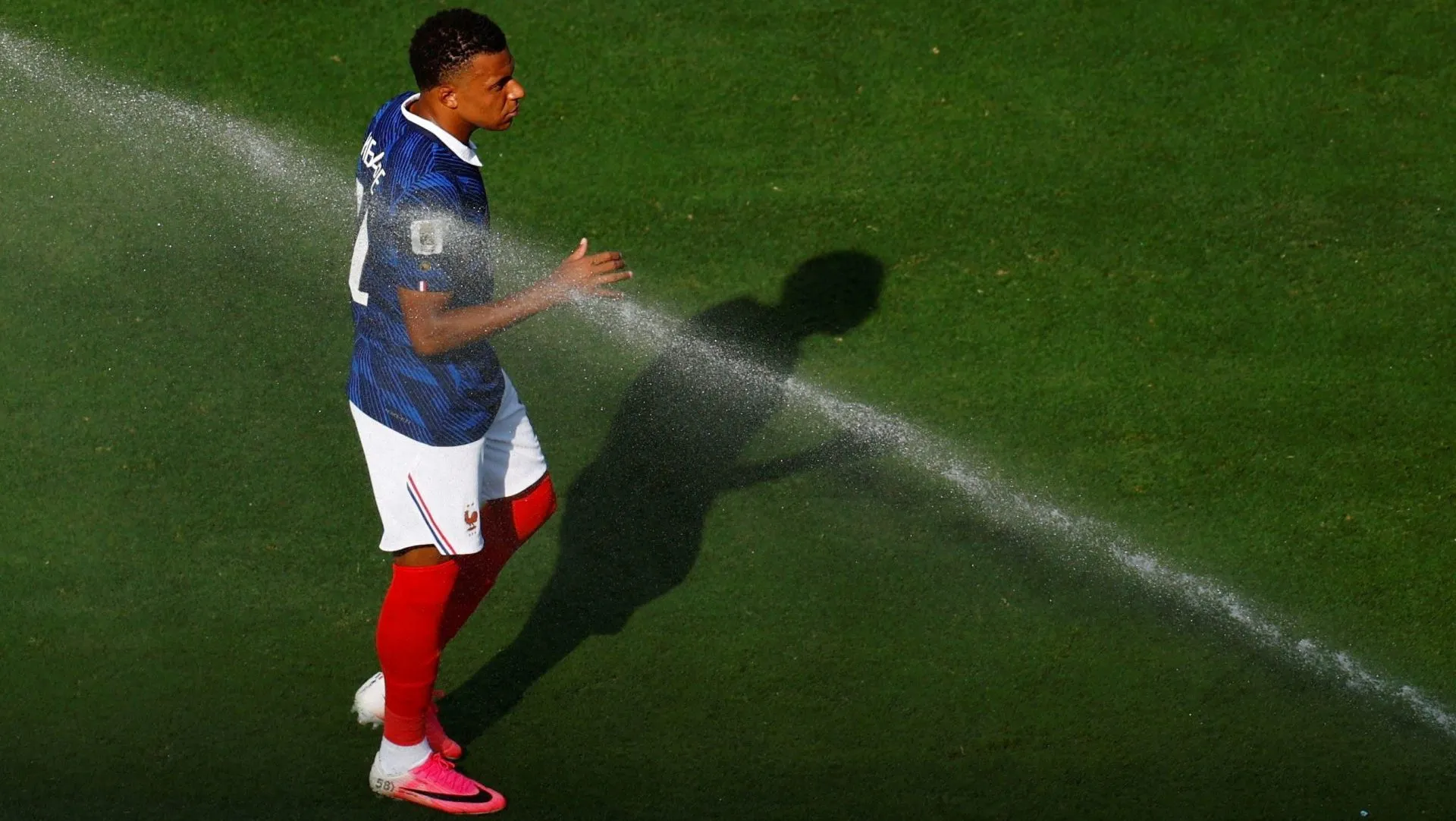
This World Cup is going to be hot and at times stormy, with a sizeable chunk of its 104 games set to be played above 90F (32C).Spread across the United States, Canada and Mexico, it is likely to be the warmest edition since the previous World Cup in North America, when the U.S. hosted it solo in 1994.While extreme heat and humidity will affect how matches are played, thunderstorms could provide the greater logistical challenge.Under the thunderstorm protocol in place, a match must be suspended if lightning or electrical discharge is detected within an eight-mile radius of the stadium involved.Once that happens, a 30-minute countdown begins, but resets if another strike is detected before it ends. On June 22, the game between France and Iraq became the first World Cup game delayed by the storms, stopping for more than two hours.To help understand which games will be most affected, The Athletic is working with Aaron Mentkowski, chief meteorologist at WKBW-TV Buffalo, to provide a daily forecast. Aaron will join live coverage to explain what’s happening during storm delays.Canada vs MoroccoNGR Stadium, Houston. Kick-off: 12 pm local timeAn indoor match, but it will be hot outside of the stadium. A Heat Advisory is in effect from 11am to 7pm today. The temperature at 12pm will be 91F (33C) with mostly sunny skies in Houston. After the match at 2pm, the temperature rises to 95F(35C) with winds out of the southwest at 5 miles per hour.Paraguay vs FranceLincoln Financial Field, Philadelphia. Kick-off 5 pm local time.A scorcher in Philadelphia today.Near-record warmth is expected in Philadelphia for the Paraguay vs France match. This will be one of the hottest World Cup matches ever played. This game will be compared with the June 27, 1994, match in Dallas, where the high temperature was 101F (38C).An Extreme Heat Warning is already in effect for Philadelphia until 8pm Saturday, and the game is scheduled to start at 5pm. The high temperature forecasted in Philadelphia for Saturday is 100F(38C), which is close to the record-high of 103F(39C), set on July 4, 1966. It will be dangerously hot with a Heat Index between 105F(41C) and 110F(43C).At 5 pm the temperature will be 99F(37C). The storm threat will increase during the game. Along with the heat, the threat for storms will also need to be monitored.The pitch during this match will be even hotter with a field temperature possibly exceeding 110F(43C). Fortunately for the players, they’ll be competing on natural grass, which is meaningfully cooler than artificial turf. FIFA banned artificial turf outright for 2026 and spent significant money on natural grass for all 16 stadiums. Still, 110-120°F (43C to 49C) on the grass is brutal for players’ feet and lower legs, and radiant heat off the surface adds to the heat-stress players experience with an air temperature of 100°F(38C).Not only will the heat be a major concern for fans, players and the referees, but severe thunderstorms are possible after 5pm Saturday. The main threat from these potential storms will be damaging winds.Jul 4, 2026Connections: Sports EditionSpot the pattern. Connect the termsFind the hidden link between sports terms
World Cup weather: France vs Paraguay to be one of hottest matches ever played
All you need to know about the weather forecast for today's World Cup games
519 words~2 min read