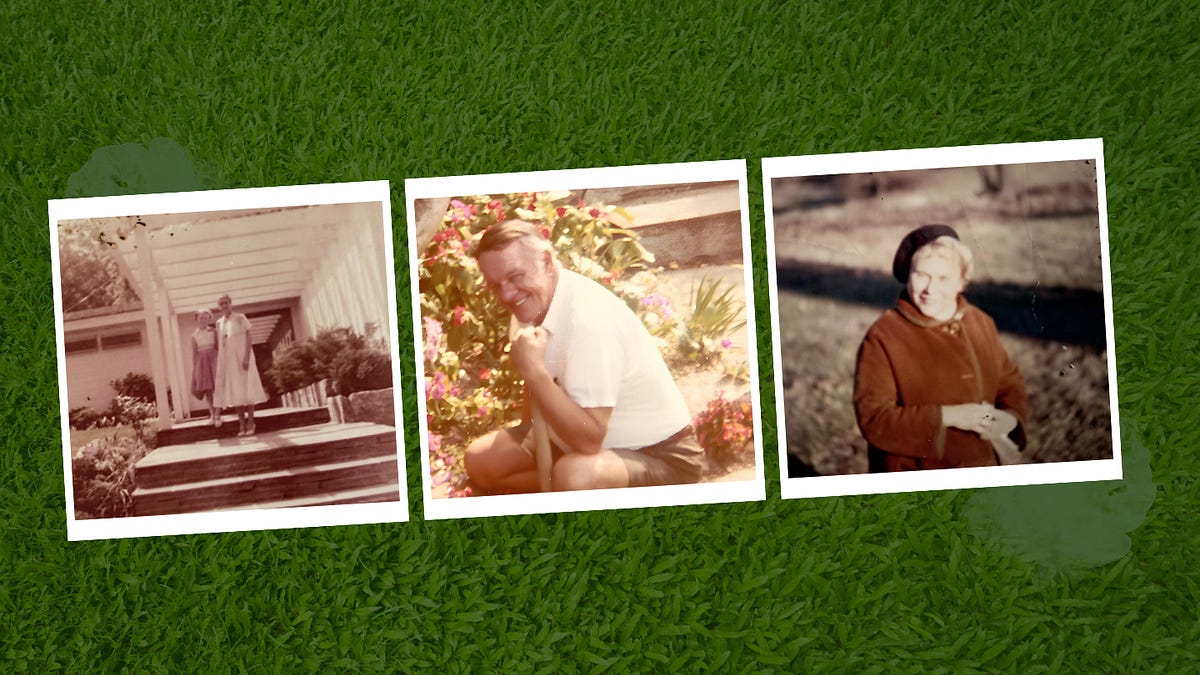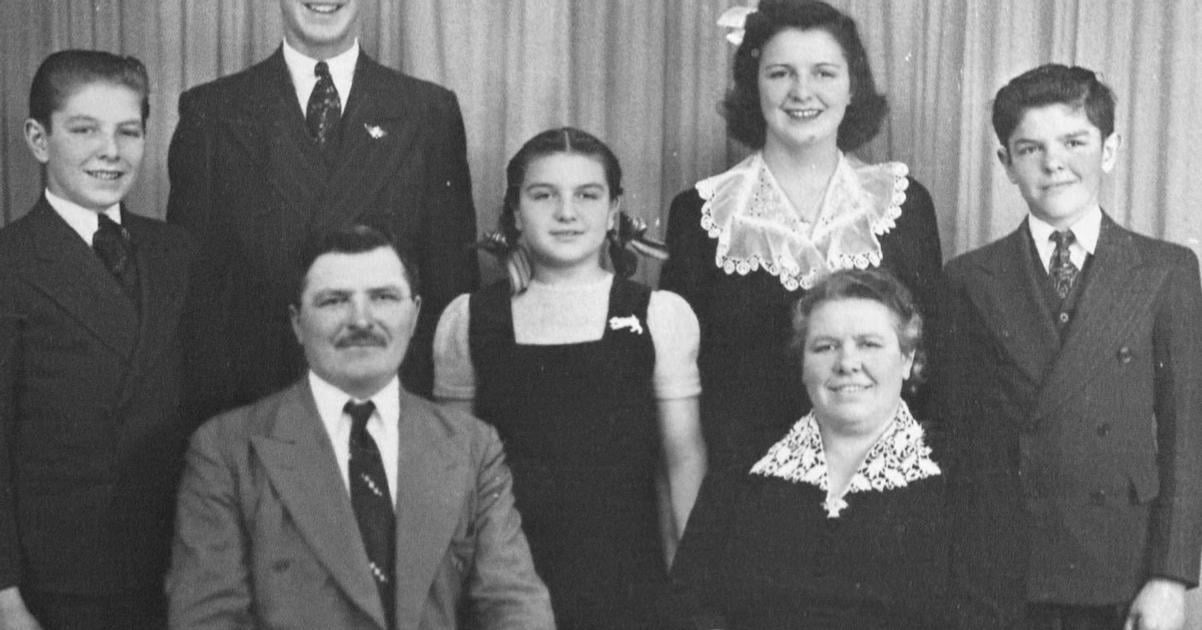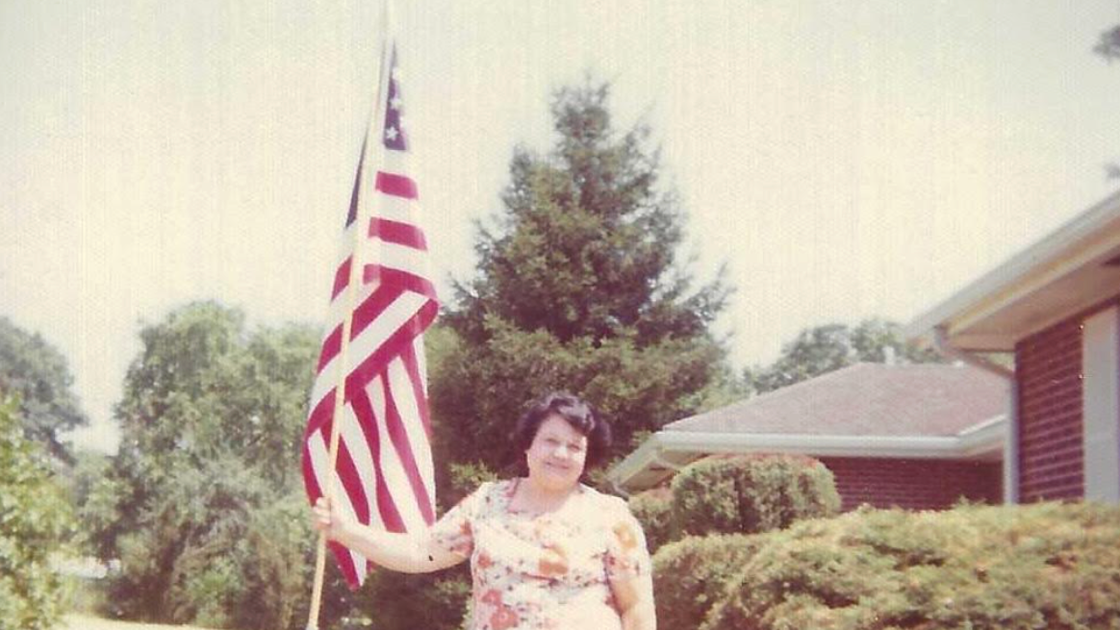
My mom had a thick Italian accent and could usually be found rooting around in our family’s vegetable garden sporting a housedress with a produce-stained apron. It wasn’t the image of a traditional 1960s American mom that I encountered on TV and in movies when I was growing up, and yet, she was fiercely proud to be a U.S. citizen.Mary Louise was her Italian parents’ first child born in the United States, and she seemed convinced the Founding Fathers themselves had risen from the dead and personally planned her birth on July 4, 1913.The author's mom with the American flag (sometime in the 1970s).Courtesy of Fran TunnoTo Mom, the Fourth of July wasn’t just Independence Day; it was a national celebration held in her honor. She loved every second of it: the parades, the sparklers, the fireworks, the patriotic songs. And every year, without fail, we had to take a photo of her standing proudly in front of our home beside Old Glory or the holiday just wasn’t complete.Shortly after Mary Louise was born, my pregnant grandmother left my grandfather and returned to Italy, taking my infant mom and my toddler aunt with her. They remained there for 12 years, and lived through World War I and a pandemic. When my grandfather finally convinced my grandmother to return to America, he was suddenly reunited with three daughters, ages 11, 12 and 13, none of whom he really knew and none of whom spoke English. Still, my mother was thrilled to come back. She relished the fact that she was the only one of the three sisters born in America, undisputed proof that she was a true U.S. citizen. If she could have wrapped herself in the stars and stripes and paraded up and down the street in front of their home, she would have. My mom and her sisters were placed with second graders in Catholic school here because the nuns had no idea what to do with adolescent girls who spoke no English. The little kids laughed when Mary proudly shouted the answer to a math problem in Italian. After enduring more than enough humiliation in that classroom, she decided she hated school and quit attending. My two aunts, who both finished high school, didn’t speak with an accent, but my mom never lost hers. Nothing offended her more than people making assumptions about her because of how she talked. If anyone questioned where she was from, she’d fire back indignantly, “I wassa born in dis country! I’mma United States-a citizen!” But even people’s misperceptions never made her lose her love for all that America was said to promise. My mom believed this was where dreams came true, where you could build a family, a life, and a bigger future than the one you were born into if you found a willing partner and weren’t afraid of grinding to get what you wanted. The author's mom on her birthday.Courtesy of Fran TunnoMary Louise found a man who had also grown up in Italy and was willing to work hard alongside her. My father went to bricklayer school, learned his trade and set out to become the most determined and diligent mason anyone had ever met.He laid brick and block for other people all day, then came home at night and built my family’s future home. My brothers and my mom were his mortar mixers, handing him supplies until daylight faded, while most other families in our neighborhood were inside watching television. It took him two years to build our house with his own hands, brick by brick, block by block.Our new neighborhood wasn’t like the one we’d left behind, where every block had at least one Italian relative or friend, and we were surrounded by loud voices and people shoving food at you before you could even say hello. Our new neighbors had names like Pfeiffer, Shafer, Herr, Smeltzer, Pfleghar, Anderson, Golbertson... and then there we were... the Tunnos. It felt like being part of one of those second-grade quizzes where you pick the one thing that doesn’t belong. My father didn’t have my mother’s thick accent, but he was hurt when he saw that the neighbors on both sides of us built fences along our property line. No one else in the neighborhood had fences beside their home. Staring at them, bewildered, I remember hearing my father say, “What did they think we were going to do?”My parents did their best to fit in, and made the deliberate decision not to teach us Italian. Still, no matter how they tried to integrate, I always felt a little different. I had frizzy brown hair and brown eyes, not the silky blonde hair and bright blue eyes that smiled back at me from TV commercials and magazine ads. By fourth grade, I spent hours doing whatever I could to straighten my hair enough to look like the other girls in my class.I never noticed the sideways glances when my mom walked into a room, but she did. As a child, I didn’t understand the assumptions people made about someone who speaks with an accent — that sounding different somehow meant being less intelligent. Then I became a teenager, and little by little, I started judging my mother too. The glances. The assumptions. The judgments. The fences. They spoke volumes. I used to think we’d moved past all that, but here we are, approaching America’s 250th anniversary, and it feels like we’re slipping backward instead of moving forward.The author's mom with the American flag (circa 1988).Courtesy of Fran TunnoWhen I got older and had children, I thought, finally I’ll see my kids grow up and go to school where they feel like they completely fit in because they’re “real” Americans. I didn’t want them to feel like me or my mom. We lived in Glendale, California, where roughly 30% of the population is Armenian and the rest is a mix of many other nationalities. It meant my kids ended up feeling other than, like I did, but for a very different reason. In hindsight, that was one of the best things that could have happened. It was good for them to grow up surrounded by people who didn’t look or sound like them — countless ethnicities and backgrounds and approaches to life. There were even a few other Italians. We welcomed all of them and their families into our home, and I loved meeting them and learning about their lives. Many of them became close friends. Our children learned to bond over what they had in common instead of what set them apart. We celebrated their differences. The delicious foods and the customs they shared were a window into how other families lived and how much richer the world is when you pay attention to and learn from the people and places around you.I’m grateful that my kids learned that different doesn’t mean scary, strange, weird, or worse, as too many of our leaders warn us. It just means someone has a story that you haven’t heard yet and a whole world outside your front door to learn about.I know, I sound like a Pollyanna. But I’m not naive. I can see what is happening in this nation as we celebrate our 250th birthday in the “United” States. The division, the finger-pointing, the ugliness, the judgment that I hoped was dissipating is still here. It was just hiding until people thought it was OK to show that side of themselves again, prodded by politicians hoping to score political points. I think my parents would be disappointed to see where we are today, but, like my mom, I don’t want to lose belief in the promise and potential of our nation.I still believe that what makes America great is that we are all different and yet here we are, in the same country, trying to give our kids a better life and figure things out as we go, even if we stumble sometimes along the way.We may not agree on the path forward, but if we’re willing to stop, listen, and respect each other, I hope we can at least begin to understand why others think the way they do, and maybe even learn something in the process. The author (black shirt, second from the right), her mom (center), and the rest of her familyCourtesy of Fran TunnoThis year, when I see the fireworks on our nation’s 250th birthday, I’ll remember my mom’s faith in America. We’ve experienced hard times before, and we, no doubt, will again. Things will change; they always do, but I have to believe that what’s right, honest, and good will eventually win. Call me naive — I don’t care. This is the energy I want to bring forward into the next 250 years.And you know what? After we’d lived in my childhood home for more than two decades, Mr. Pfeiffer told my dad he regretted building that fence, which made my father smile. Progress takes time — and it’s worth fighting for. I know this country is too.Fran Tunno is the author of “Come on Down! A Little Story about my Italian Mom’s Big Dream.” She lives in Pittsburgh and enjoys writing, cooking, nature walks, sharing stories, hearing from readers, and feeding people. Connect with her on her website, FranTunno.com, or on her blog, AtFransTable.com.Do you have a compelling personal story you’d like to see published on HuffPost? Find out what we’re looking for here and send us a pitch at pitch@huffpost.com.
My Neighbors Built Fences After My Immigrant Family Moved In — Then Came A Moment We Never Saw Coming
“My mom believed this was where dreams came true.”
1,585 words~7 min read