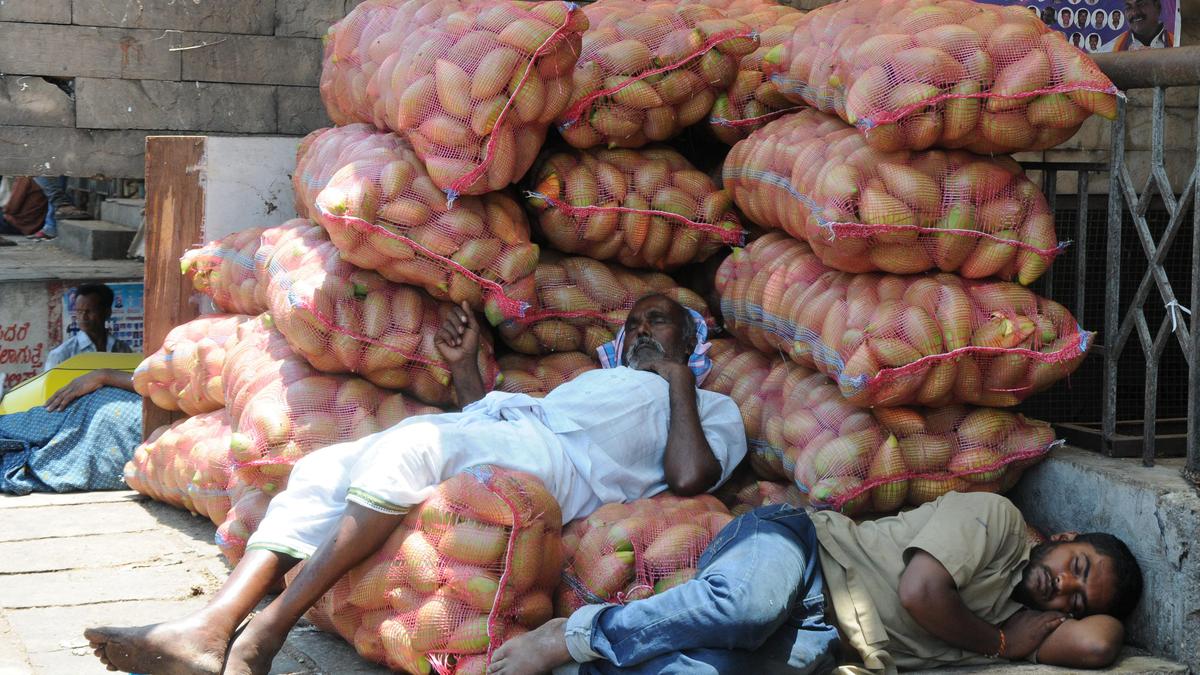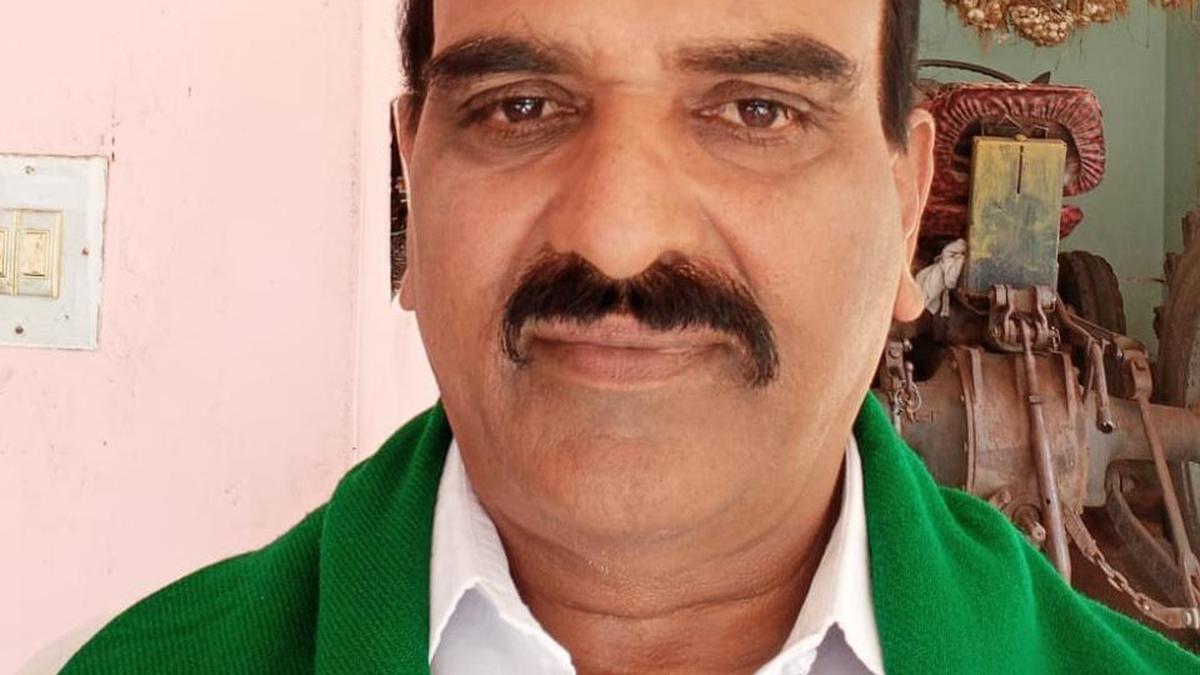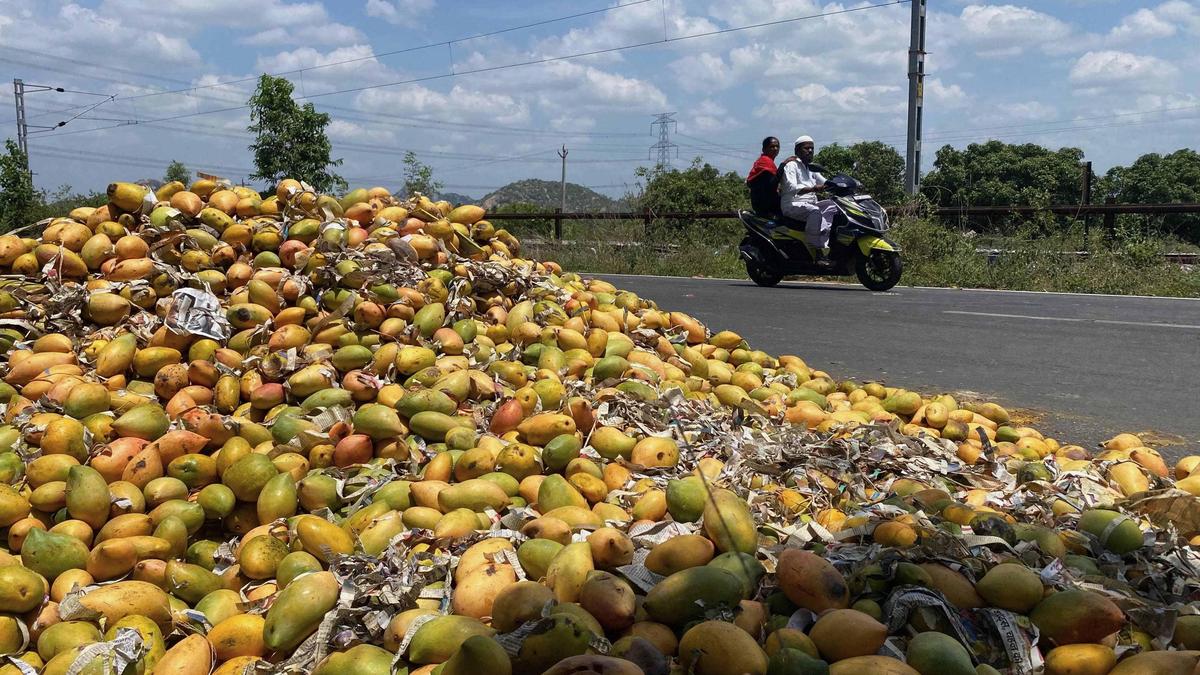
In a major move to protect the interests of thousands of mango growers facing one of the sharpest price crashes in recent years, the Union Government has approved a two-pronged strategy to stabilise Andhra Pradesh’s Totapuri mango sector, which generates an estimated annual turnover of over ₹4,000 crore.Apart from constituting a high-level expert panel headed by the Indian Council of Agricultural Research (ICAR) to examine the structural issues confronting the industry, the Centre has also cleared the implementation of the Price Deficiency Payment (PDP) under the Market Intervention Scheme (MIS) for the 2026-27 marketing season.The crucial decisions came after a season of bumper production led to a steep fall in farm-gate prices, leaving mango growers across the erstwhile Chittoor district (now comprising parts of Tirupati, Chittoor and Annamayya districts) and other moderate and lesser-known mango-growing belts in the State struggling to recover even their initial investment.Mango pulp industryUnlike premium table varieties such as Banganapalli and Alphonso, Totapuri is cultivated almost exclusively for industrial processing. The variety is known for its fleshy pulp, high recovery rate, low fibre content and suitability for mechanised extraction. These qualities have made it the preferred raw material for India’s mango pulp industry. The pulp is widely used in fruit beverages, juices, bakeries, yoghurt, baby food, confectionery and a range of processed food products in both domestic and overseas markets.Andhra Pradesh is India’s largest mango-producing State, with the crop cultivated over nearly five lakh hectares and an annual production of close to 40 lakh tonnes in a normal year. Totapuri is regarded as the backbone of the processing industry, with the erstwhile Chittoor district alone accounting for more than 1.2 lakh hectares under cultivation. Significant acreage is also found in Sri Sathya Sai, YSR Kadapa, Anantapur, Kurnool, Krishna and Anakapalli districts, besides smaller pockets in North Andhra.Chittoor has emerged as one of India’s largest mango-processing hubs, housing around 47 pulp processing units. These industries collectively procure nearly seven lakh tonnes of Totapuri mangoes and produce about four lakh tonnes of mango pulp. Nearly 80% of the pulp is exported to West Asia, Europe, the United States and Southeast Asian countries, while the remaining quantity caters to India’s food and beverage industry.During the 2024-26 seasons, favourable weather resulted in bumper harvests, but procurement by the pulp industry slowed considerably. Industry representatives argue that export demand from the Gulf region weakened from February and is yet to recover fully because of the ongoing West Asia crisis.Mismatch between supply and demand“The pulp industry was already carrying unsold inventories from previous seasons. The mismatch between supply and demand flooded procurement centres, causing prices to tumble,” said a pulp unit manager who claims to have witnessed over two dozen mango seasons in Chittoor.“For Totapuri farmers, the impact is immediate. The variety has little or no demand as a table fruit. We depend almost entirely on pulp factories. We have no alternatives when processors reduce procurement. As the fruit is highly perishable and cold storage infrastructure remains inadequate, many farmers are forced into distress sales,” said Kothur Babu, President of the Chittoor District Mango Producers Association.Mango growers unanimously point out that they invest heavily in irrigation, fertilisers, labour and orchard maintenance. But when prices crash, they are left with no option but to sell at whatever rate is offered because the fruit “cannot remain on trees indefinitely.”“We do not need subsidies. What we need is a fair price that covers our production costs,” said Janardhan Thota, a grower from Irala mandal near Chittoor.Against this backdrop, the Union Ministry of Agriculture and Farmers Welfare has approved the Andhra Pradesh government’s proposal to implement the Price Deficiency Payment under the Market Intervention Scheme. The scheme is expected to cover up to 2.16 lakh metric tonnes, representing 25% of the estimated production of around nine lakh tonnes. The Market Intervention Price (MIP) has been fixed at ₹1,747 per quintal, with compensation for the price difference capped at 25% of the MIP. As per the approval, the scheme will remain in force for one month from the date of the first procurement transaction.All India Food Processors’ Association (AFPA) Chairman (South Zone) Kattamanchi Govardhan Bobby said that, as part of the Centre’s strategy to strengthen Andhra Pradesh’s mango economy, industry stakeholders have urged the Union Government to establish a Directorate General of Foreign Trade (DGFT) office and an Inland Container Depot (ICD) in Chittoor district.“This will significantly strengthen the district’s export-oriented mango industry. A DGFT office would simplify export documentation, expedite regulatory clearances and improve access to trade-related services. An ICD would reduce logistics and transportation costs by enabling local handling of export consignments instead of routing them through distant container terminals,” Mr. Bobby said.More than 30,000 families, including farmworkers, factory workers, transporters, traders and seasonal businesses, depend directly or indirectly on the mango sector for their livelihood. The proposed infrastructure is expected to improve export efficiency, reduce transaction costs, enhance global competitiveness and ultimately help farmers secure better price realisation.
Centre’s intervention to stabilise Andhra mango sector | Explained
Union Government's strategy aims to stabilise Chittoor's mango economy amidst price crashes and enhance export competitiveness for growers.
824 words~4 min read