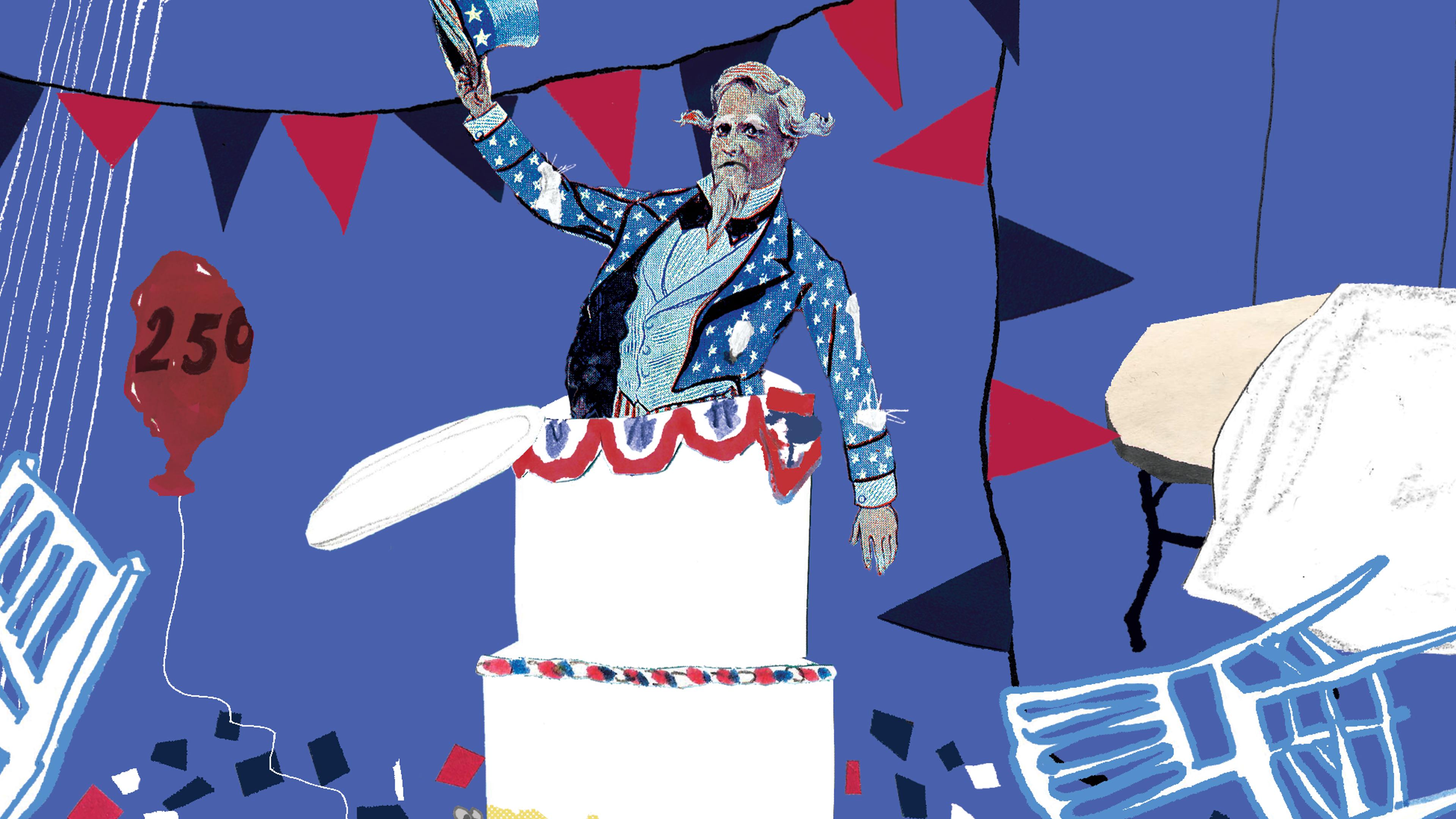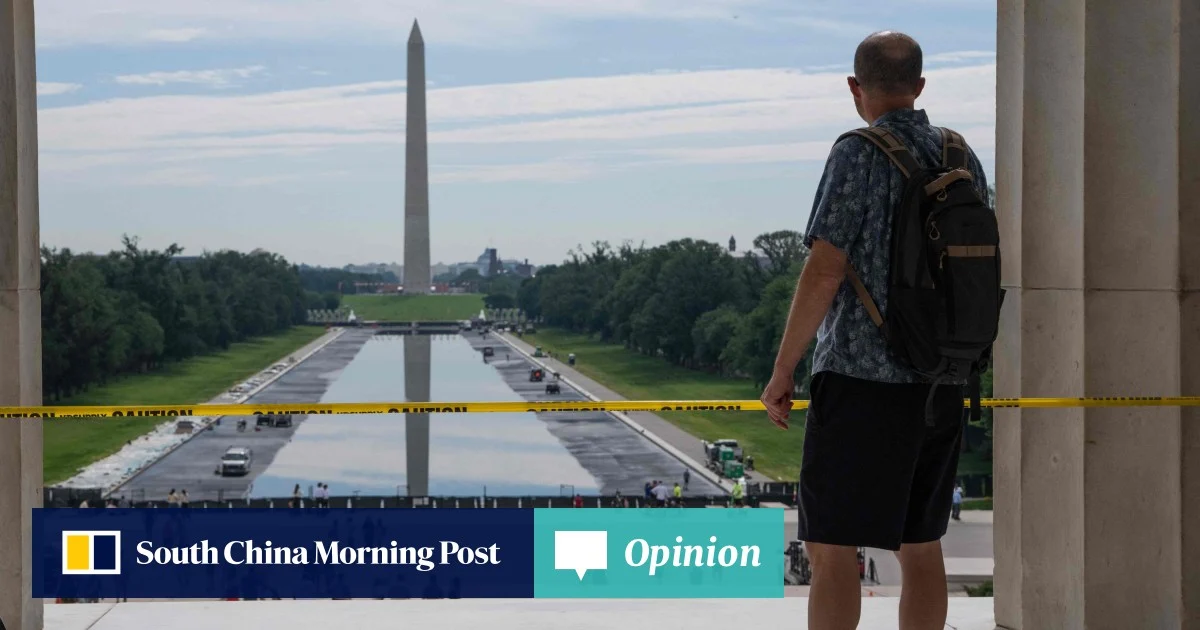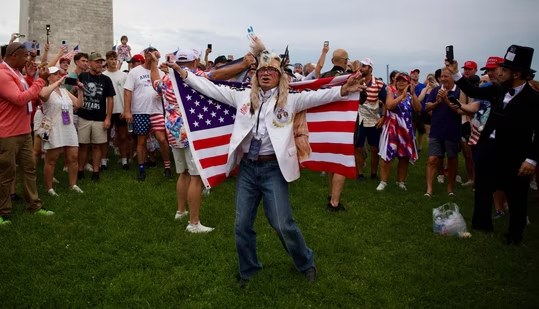
American exceptionalism is an overblown and provincial tradition, but it’s our 250th birthday, so let’s indulge. As The New Republic’s USA 250 series showed—on newsstands now!—the country has gotten a lot wrong, but it’s also gotten a lot right. Here are some of the biggest achievements we can boast about, but which, in the Trump era, are eroding or precarious.Welcoming immigrants: In his last speech as president, more than two years after signing the biggest amnesty for undocumented immigrants in world history, Ronald Reagan expressed the political consensus on the subject by quoting from a letter he’d received, “You can go to live in France, but you cannot become a Frenchman. You can go to live in Germany or Turkey or Japan, but you cannot become a German, Turk or Japanese. But anyone, from any corner of the Earth, can come to live in America and become an American.”Donald Trump was the first modern president to express an attitude toward immigration that was more hostile than that of the average member of his own party. Now, although the Supreme Court did at least uphold birthright citizenship this week, we have seen recent immigrants subjected to a reign of terror with violent deportations, cruel detentions, and immigration agents functioning as a fascist force. Higher education: The U.S. has long been home to one of the best higher education systems in the world, with the greatest variety of majors, prestigious institutions that draw top talent from around the world, as well as accessible working-class schools like community colleges and regional universities. Our college sports are also unrivaled worldwide.But it’s all falling apart. Tuition is unaffordable to many American families, and the number of college-age Americans is declining. While American higher education has long been a boon to overseas students—and vice versa, since they tend to pay full tuition—an increasingly hostile immigration regime has curbed the number of students coming here to study. Cuts in federal funding for research and student aid are also hitting schools hard and impoverishing the college experience. Science: The U.S. has had some of the best infrastructure to support science in the world. In addition to our now-besieged universities, we have been the envy of the world with government agencies like the Centers for Disease Control and Prevention, which has virtually eliminated malaria and polio from the United States and is responsible for the eradication of smallpox, the only human disease totally eliminated from the world.But with decreases in funding and attacks on foreign nationals coming to the U.S. to do research, labs are closing all over the country, scientists are relocating, and many science students are choosing other fields.Consumer goods: Early in the Cold War, as the Americans and Soviets competed to prove whose system was superior, the latter pointed out that under communism, no one was homeless, no matter how poor. Capitalism, America’s boosters countered, could deliver better stuff: TVs, toasters, vacuum cleaners, dishwashers. Vice President Richard Nixon and Soviet Premier Nikita Khrushchev had a famous “Kitchen Debate” during the 1959 World’s Fair, where the U.S. put shiny appliances and gadgets on display. Khrushchev played it cool, saying, “We have all these things.” While it was true that the Soviets were trying to deliver higher-quality goods, the success of that project was limited; envy of America’s designer jeans and shopping malls persisted throughout USSR communism. With the rise of globalism, consumer goods have gotten even more affordable to Americans. The drive for cheapness has had myriad knock-on effects in the U.S. economy, especially for working-class people, and the goods we consume now aren’t as well made or durable. With Trump’s tariffs—and increased energy costs due to the Iran war—the prices are rising, too. Innovation: Capitalist propagandists love to boast that the United States is the world capital of innovation—and they’re right. We are responsible for most major inventions, including the steamboat, cash register, air conditioner, personal computer, cell phone, the internet, and much more. There are many ways to measure innovation, but one crude one is the number of patents. By that tally, the U.S. is still second only to Japan. But there are reasons for concern. The spread of AI may hamper people’s ability to think creatively. Less speculatively, much of the entrepreneurial energy in this country comes from recent immigrants, and Trump has made it much more difficult for people—including high-skilled workers—to come here. An even more direct blow is the Trump administration’s cuts to R&D, which an analysis by the Congressional Budget Office last year found would decrease innovation. Gay rights: Even decades before Stonewall, the U.S. had the first organized gay rights movement and has been a beacon for LGBTQ people all over the world. Trump, however, has made bigotry toward trans people central to his administration, and so have many of his fellow conservatives. He has erased many legal protections for LGBTQ Americans and even in some instances mandated discrimination (and in further backward moves, this week the Supreme Court upheld state bans on trans people in girls’ and women’s sports). Feminism: American women led the world for decades in striving for full civic personhood. After winning the right to vote in 1920, they, decades later, famously disrupted the Miss America pageant, won the right to abortion, and entered the workforce en masse. Trump’s two elections reflected unease with all that, and his administration has rolled back equal rights provisions for women.National parks: Our national park system—more than 85 million acres of land—has long been the envy of much of the world. Even the Chinese government, no slouch at public infrastructure creation, regards it as a model. We constantly celebrate our great wilderness in America, from legends about the frontier to the “purple mountains’ majesty” of our national anthem to car ads that panoramically revel in the Western landscape. But the park system is what has kept much of that glorious landscape from being turned into auto dealerships, coal mines, or strip malls, as it all would be if our oligarchs had their way. The national parks have never been more popular, in 2024 reaching a record high of 331.9 million visitors. Yet Trump’s cuts to the system have been severe, reducing the NPS workforce by 25 percent, even as he spends lavishly on his immediate environs, like the algae-plagued Lincoln Memorial Reflecting Pool.Pop culture: This country was the birthplace of rock and roll, soul, jazz, and rap. And Hollywood in its heyday made the best and most popular mass-market movies in the world. American pop culture has been one of our greatest exports. There is life in our cultural production machine yet: Last year’s K-pop Demon Hunters, an American production, was a global phenomenon. But with Hollywood’s increasing dependence on IP tentpoles—superhero franchises, sequels, remakes—and the AI slop beginning to infect internet platforms like Spotify, America’s cultural dominance looks shakier every year.Secular government: Americans have enjoyed freedom of religion, enshrined in the First Amendment, which has also—equally importantly—meant freedom from religion in our everyday interactions with the government. To the far-right theocrats in Trump’s government, however, “there is no such thing” as separation of church and state in the Constitution. They dismiss the concept as propaganda from “the anti-God left,” and have been working to tear down the wall that our Founders erected between church and state.
Ten Great American Achievements We Can’t Take for Granted
Our achievements as a country are real, but they’re imperiled by Trumpism and other threats.
1,217 words~6 min read