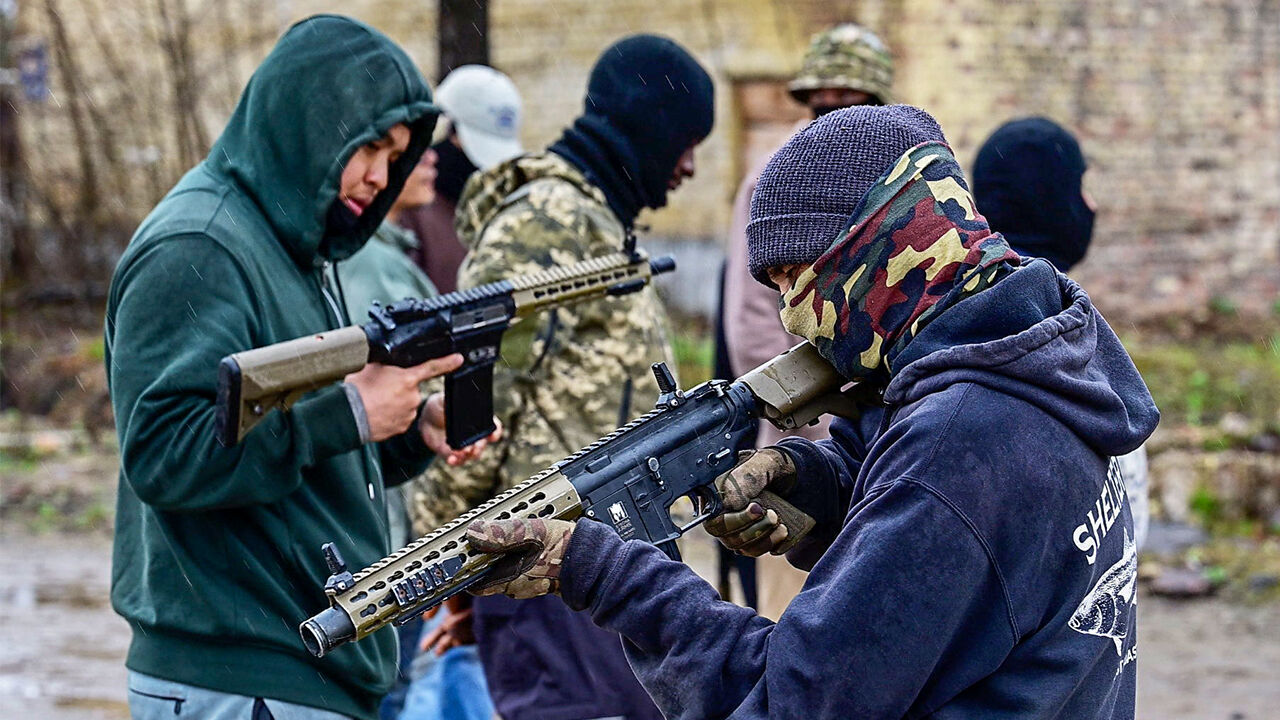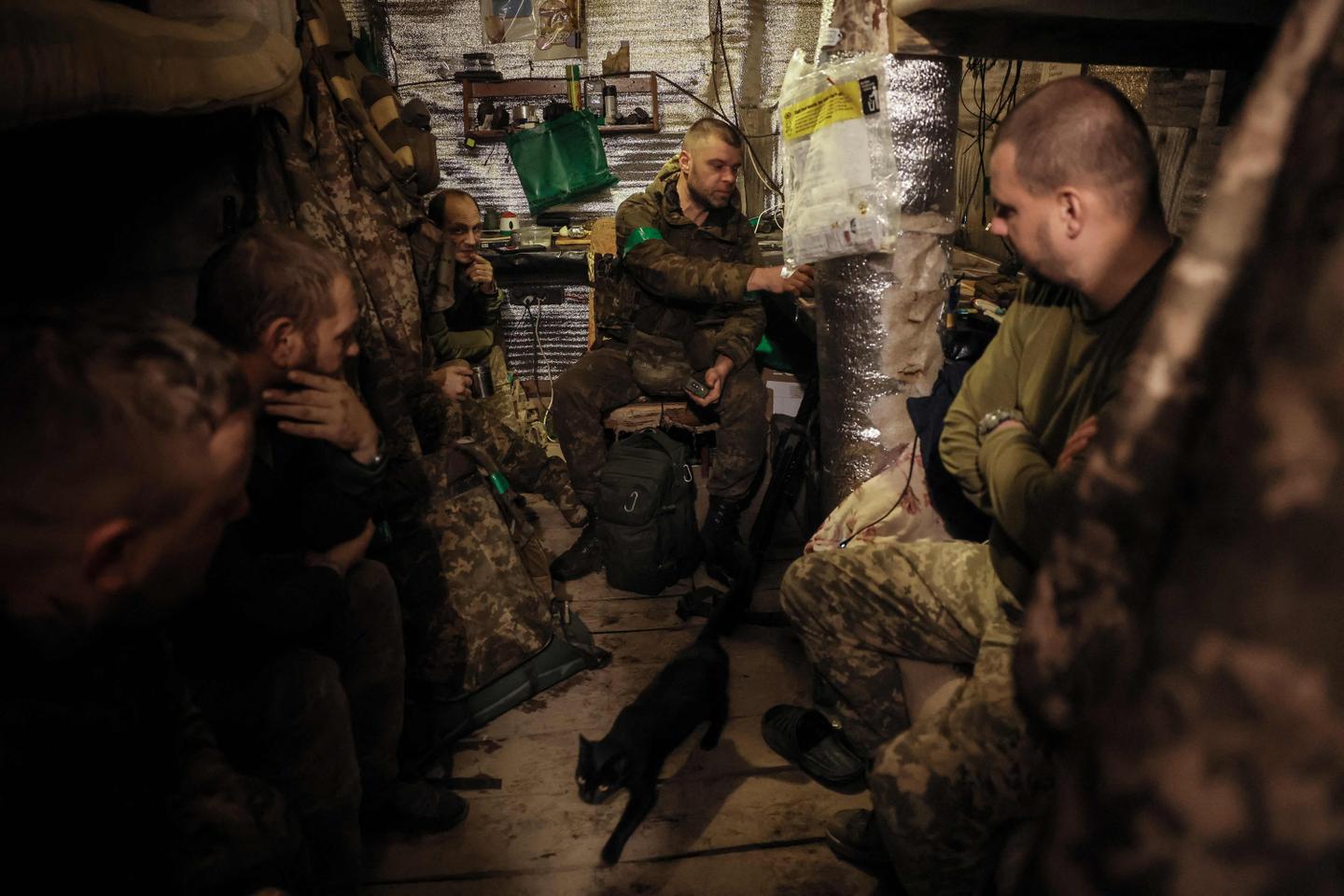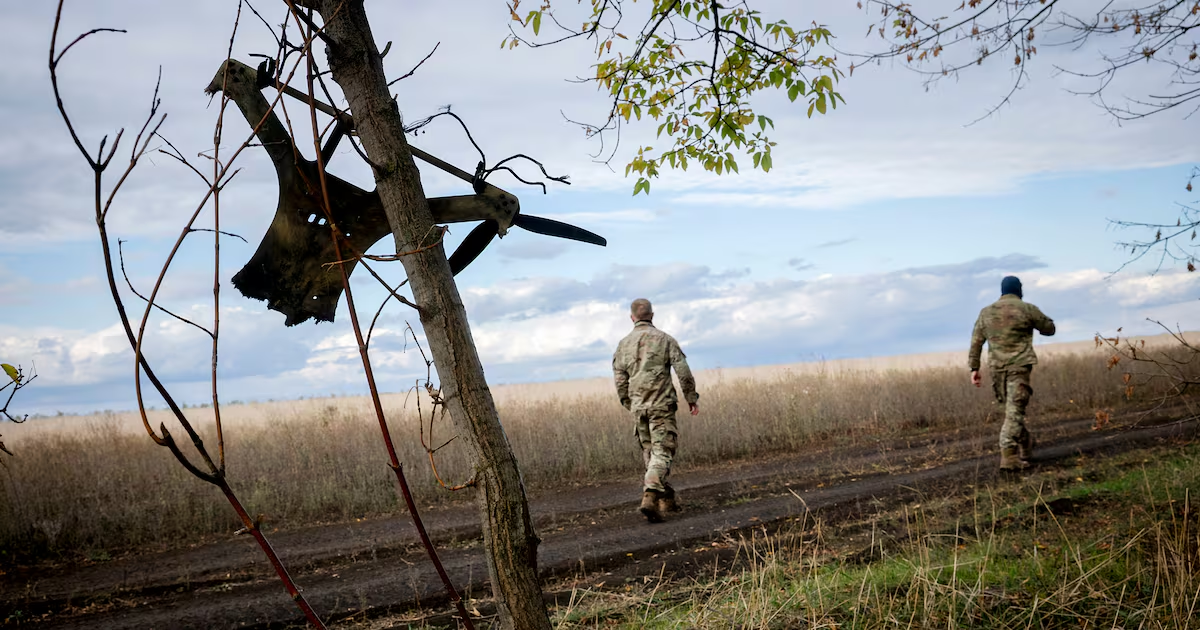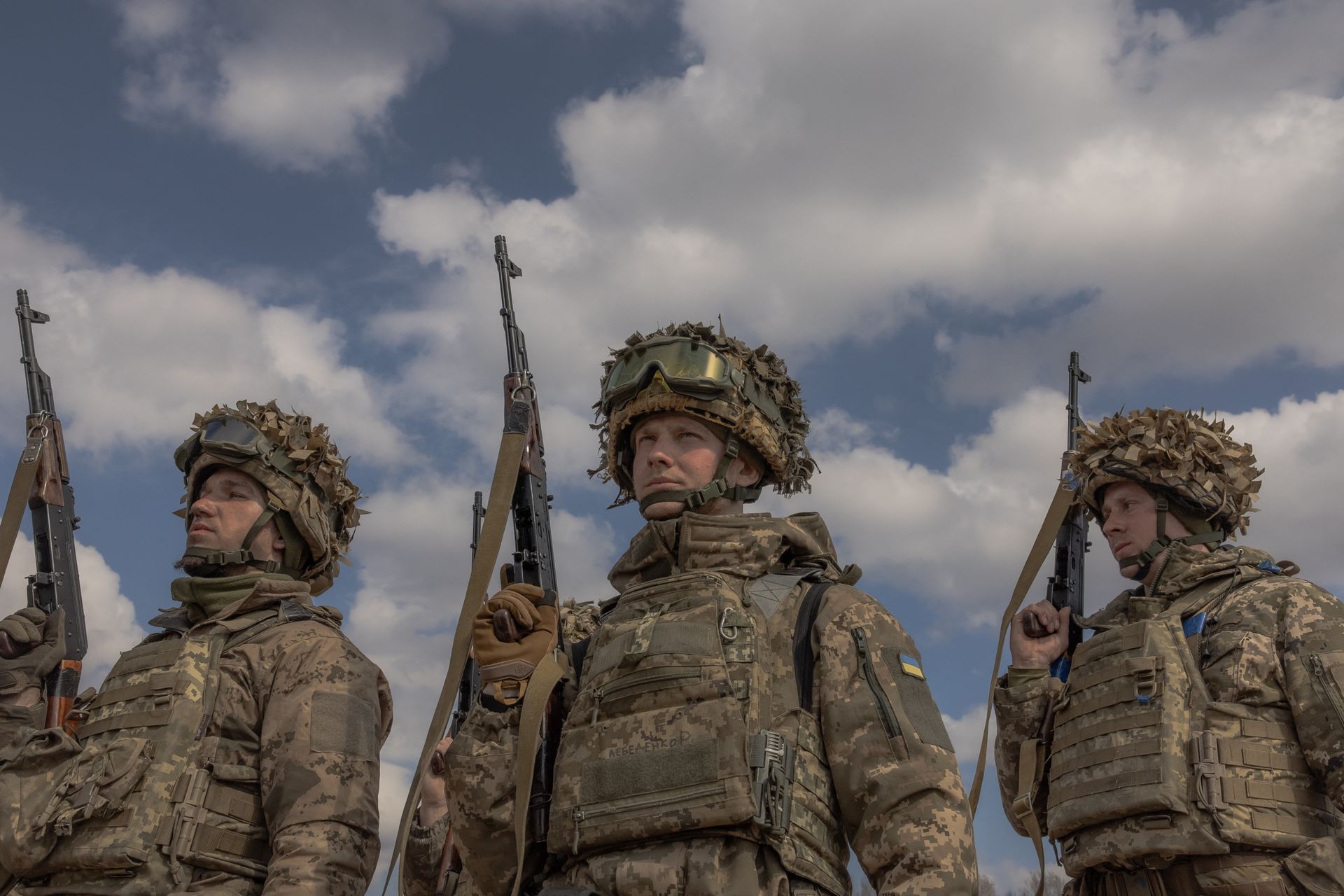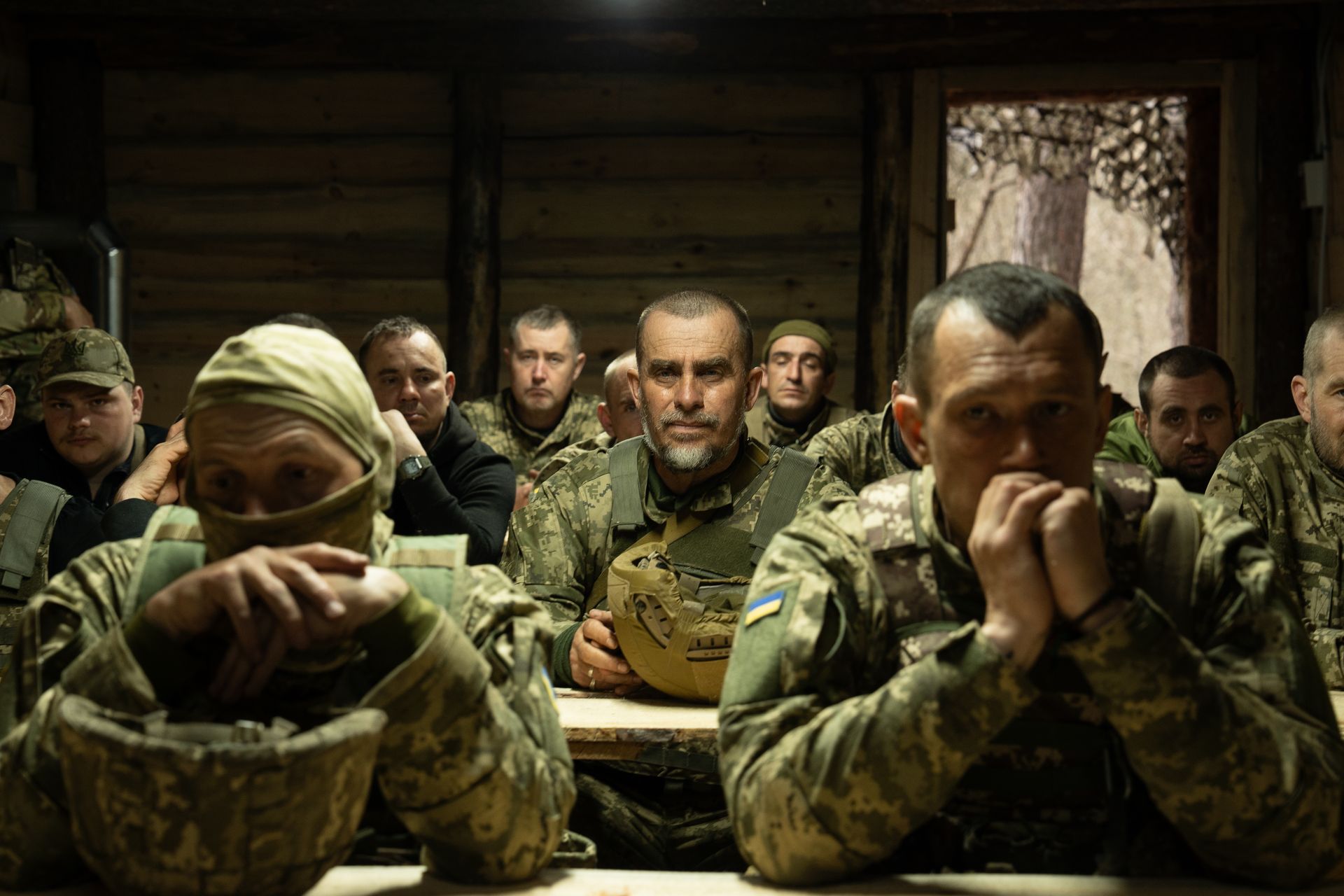
Recruits from Ukraine's 66th Mechanized Brigade attend a briefing led by the unit's psychological support service representative in Kharkiv Oblast, Ukraine, on April 2, 2026. (Patryk Jaracz / The Kyiv Independent)KHARKIV OBLAST — New recruits walk into a small, overcrowded log-framed tent, taking their place in the line for lunch to fuel up for the long day of training ahead. The line ends at two large steaming pots: one filled with potato-and-bean soup, the other with sausages.Laughter and chatter from those who arrived early enough to be the first to eat bring warmth to what could otherwise be a bleak atmosphere. The recruits would soon be deployed to the front, many of them about to face the harshest conditions as infantry for the first time in their lives.Here, in a secluded forest not far from the front, a few dozen recruits are undergoing an additional two-week training program after finishing boot camp and arriving at their unit, the 66th Mechanized Brigade. The "adaptation period," implemented across the Ukrainian military, is designed to supplement what new soldiers learned in basic training and to give them time to get to know their commanders and comrades before their first mission.The officers are trying to cram as much knowledge as possible into the "adaptation period" to increase their chances of survival, amid a challenging battle to motivate the recruits, who are increasingly older, have health complications, and only want to go home.The recruits had already completed half of the day's training on radio communications and on how to find coverage in the current drone-dominated phase of the war.More than four years since Russia launched its full-scale invasion of Ukraine, the majority of Ukraine's recruits were drafted to serve in the military, with the lack of motivation being an issue, especially if, in some cases, they were violently grabbed off the streets.The recruits in the 66th Brigade are no different. Trying to get recruits to change their mentality and understand the importance of defending their country is difficult, particularly when working with full-grown adults, many of them well past middle age, according to the officers.A psychological support service representative of Ukraine's 66th Mechanized Brigade, who asked to be identified as "Black," leads a briefing for recruits in Kharkiv Oblast, Ukraine, on April 2, 2026. (Patryk Jaracz / The Kyiv Independent)"If a person hasn't come on their own, motivated, it's very difficult to change them in such a short period of time," Ihor, the chief sergeant of a battalion in the 66th Brigade, tells the Kyiv Independent after the recruits finish their lunch.The new soldiers arriving generally lack motivation, especially compared to 2022, when the war had just begun, and the military was full of highly driven individuals from top to bottom, always ready to head out to the front, according to Ihor, who goes by his callsign "Yeger." Trying to train soldiers who are not driven to learn is extremely difficult, commanders across multiple units told the Kyiv Independent."Now, the soldiers are not as motivated, but we are doing everything we can to boost their motivation," Ihor, who has fought in the brigade since its formation in 2022, says.Helping the recruits gain their confidence in the fight while also being honest with them about the brutality of the war, such as by recounting tough days on the front, is crucial, Ihor says.Recruits often lack confidence after the seven-week-long basic training, often feeling uncertain about seeing themselves as soldiers, but Ihor stresses that it was the same for officers like him at first although they began identify more closely with the military over the years.Ensuring that units prepare recruits as much as possible to reduce avoidable casualties is important, as the Ukrainian military faces a deepening manpower shortage and is increasingly bringing in less-prepared recruits, sometimes with age-related health issues, into the Armed Forces.
Inside the Ukrainian military's fight to motivate new recruits
KHARKIV OBLAST — New recruits walk into a small, overcrowded log-framed tent, taking their place in the line for lunch to fuel up for the long day of training ahead. The line ends at two large steaming pots: one filled with potato-and-bean soup, the other with sausages. Laughter and chatter from those who arrived early enough to be the first to eat bring warmth to what could otherwise be a bleak atmosphere. The recruits would soon be deployed to the front, many of them about to face the harshes
3,351 words~15 min read