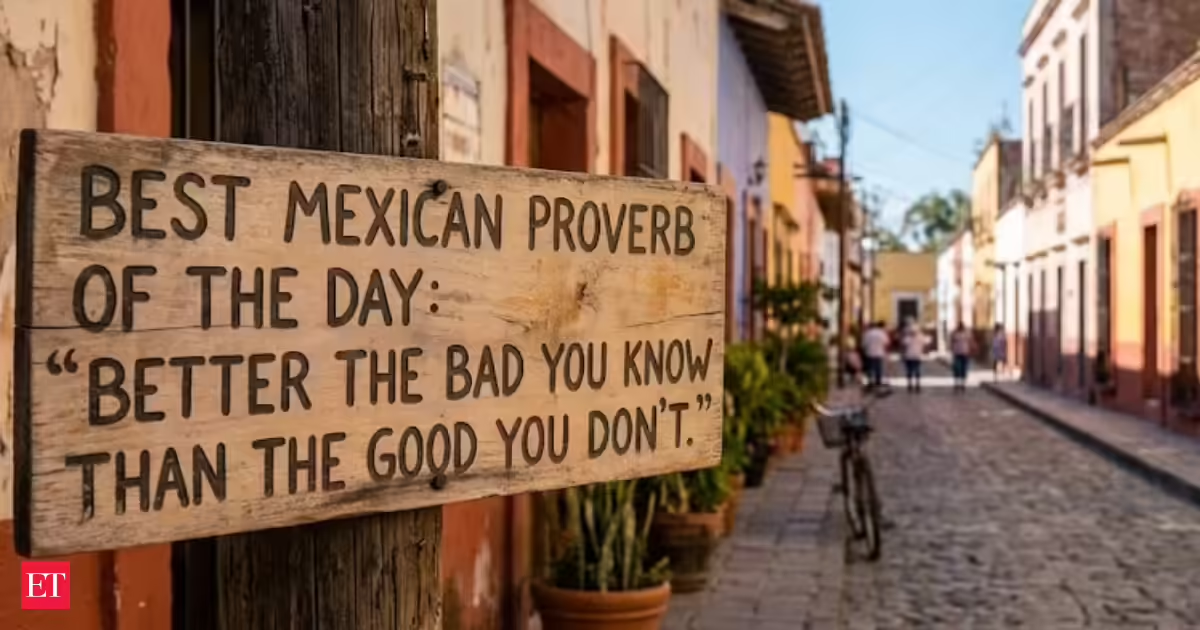
You double-check a decision, feel unsure, and still end up choosing the option that feels familiar. It’s not always about what’s best on paper, it’s about what feels safe.But why do people often stick with situations they already know, even when they’re not ideal? And why does uncertainty sometimes feel more uncomfortable than staying where things are imperfect?A well-known Mexican saying captures this everyday tension between comfort and risk, offering a simple but sharp insight into human decision-making.Mexican proverb of the day: ‘It is better the bad you know than the good you don’t know’ What this proverb meansOriginally “Más vale malo conocido que bueno por conocer”, the proverb translates to: “It is better the bad you know than the good you don’t know.” It comes from traditional Spanish-language folk wisdom, widely used in Mexico.On a deeper level, it reflects the idea that people often prefer familiar problems over uncertain possibilities. Even when a situation is not ideal, it can feel safer than risking something unknown that might turn out worse.Significance of the proverb in real lifeIn real life, this mindset shows up in jobs people don’t enjoy but hesitate to leave, relationships that feel stable but unfulfilling, or routines that feel limiting yet predictable. The unknown carries uncertainty, and uncertainty often feels like risk, even when it might lead to improvement.At work, people may stay in roles that no longer challenge or satisfy them simply because change feels risky. In relationships or life decisions, familiarity can create emotional comfort that outweighs logical evaluation. The takeaway is simple: comfort can quietly keep people stuck, even when better options exist.
Mexican proverb of the day: ‘It is better the bad you know than the good you don’t know’ - a lesson on decision-making and risk
Many people cling to familiar, albeit imperfect, situations due to a deep-seated fear of the unknown. A Mexican proverb perfectly encapsulates this tendency. This mindset often leads individuals to remain in unfulfilling jobs or relationships, prioritizing predictable discomfort over the potential risks of change, even when better alternatives might exist.
269 words~1 min read