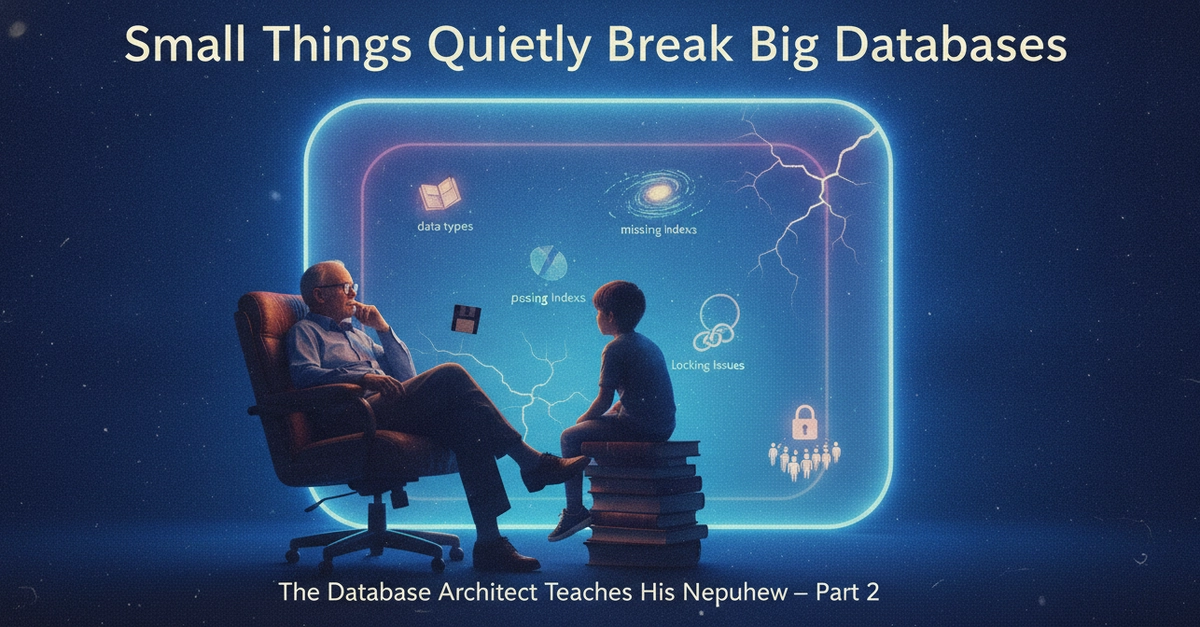
Same uncle, same nephew. Part 1 was about designing and guarding data. Part 2 is about the small, easy-to-miss mistakes that quietly destroy a database over time — explained simply, no heavy jargon, just plain talk.
Part 0: The Danger Isn't the Big Mistake — It's the Small One
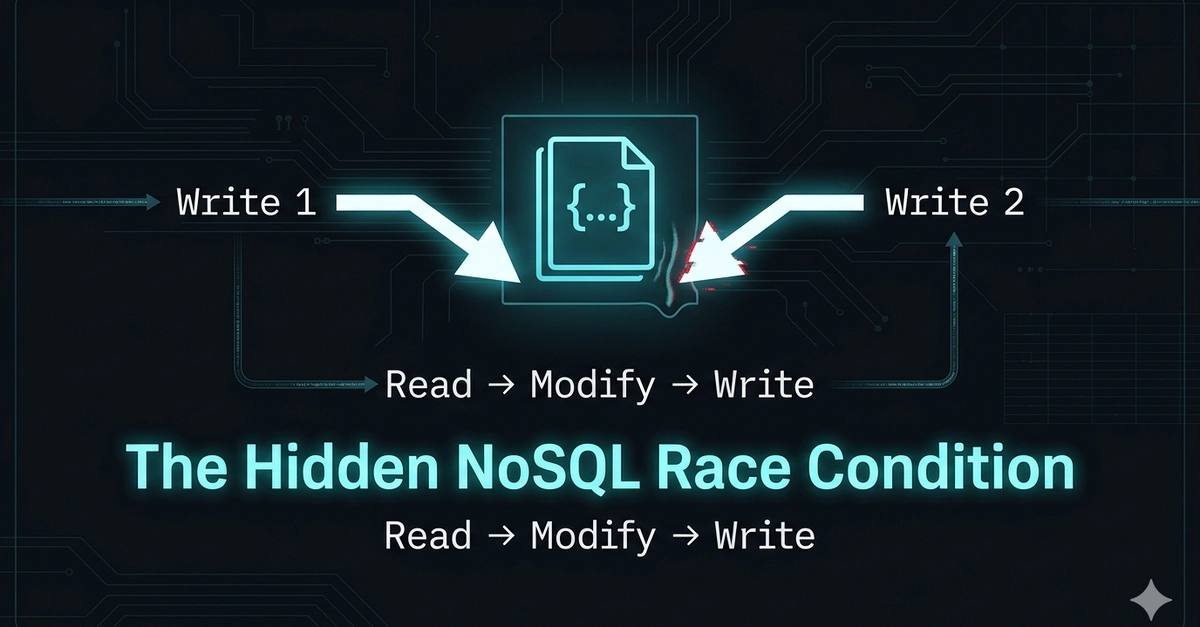
Part 1: Two People Editing the Same Thing at the Same Time
Imagine an online movie ticket booking site. There's exactly one seat left. Two people click "Book" at almost the exact same second. If your system isn't careful, both bookings can succeed — because both requests checked "is this seat free?" at the same instant, both saw "yes," and both went ahead and booked it. Now you've sold one seat to two people, and someone's going to have a very bad evening at the cinema.
How we prevent it, in simple terms: we tell the database, "when you're checking and updating something important, don't let anyone else touch it until you're done." It's like a fitting room in a clothing store — while you're inside trying clothes on, the door is locked, and nobody else can walk in and use it until you're out. The database has a version of this lock built in — you just have to remember to actually use it for anything that's checked and then changed, like seat counts, stock counts, or account balances.