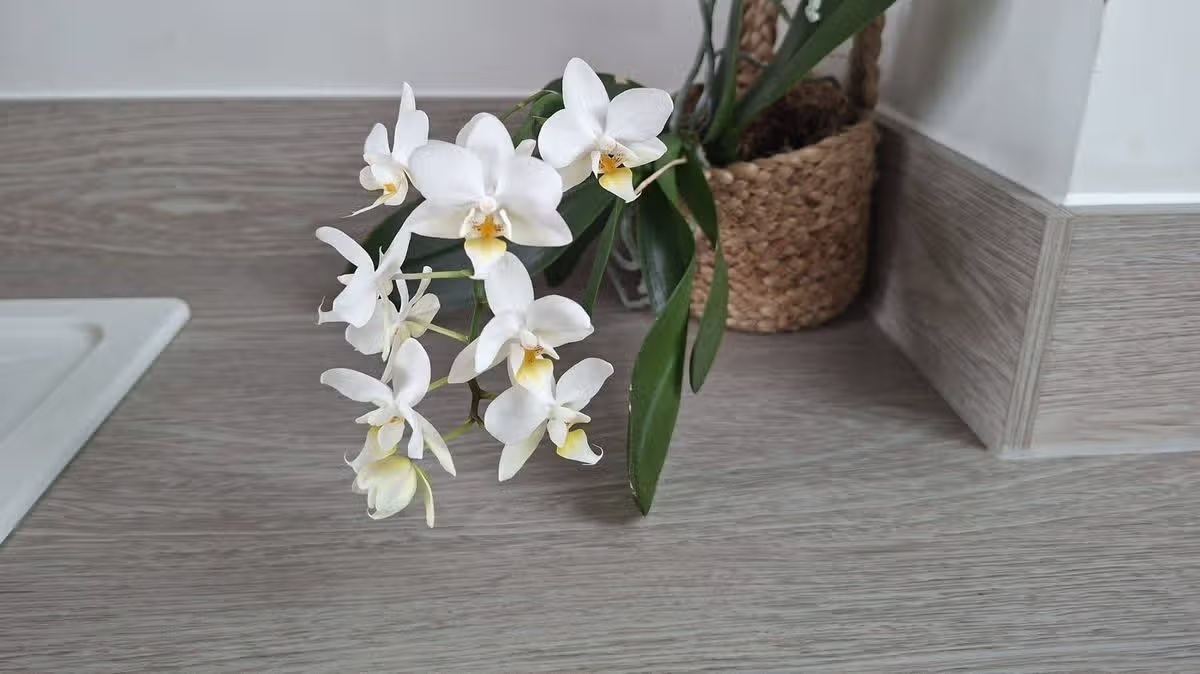
Orchids are a popular houseplant but can be tricky to care for09:23, 04 Jul 2026I've had my Phalaenopsis, or moth orchid, for several years now. While I've attempted to grow orchids before, this is the only one I've managed to keep alive.Moth orchids are reasonably priced and readily available at supermarkets and garden centres; nevertheless, they can be temperamental, which makes it tricky to maintain their health and encourage repeated flowering. Many people throw away their orchids once the flowers wilt and drop, but I've managed to get mine to flower two or three times a year with just one simple yearly practice.While it's tempting to lavish attention on your orchid, I've discovered that adopting a more relaxed approach works best for promoting new blooms. From my experience, overwatering, overfeeding, excessive pruning, and too much direct sunlight are the primary reasons orchids fail.The secret is to leave orchids alone far more than you would with more demanding plants—this means watering, feeding, and deadheading, but with a lighter touch than you'd apply to, for instance, peace lilies.How frequently to water orchids to encourage refloweringOverwatering is a frequent cause of orchid death, particularly if the warning signals go unnoticed. Because orchids are epiphytes—plants that naturally grow upon other plants—they need excellent drainage and air circulation around their root system.One of the first indicators of overwatering is root rot, where healthy silvery-grey or green roots become brown or black. Root rot is typically accompanied by soft, mushy roots, a damp, musty odour, and occasionally fungus gnats drawn to the waterlogged potting mix.To maintain a healthy orchid, water every seven to 10 days, cutting back to once a fortnight during the cooler winter months.Always make sure orchid roots are never left sitting in water by allowing the plant to drain fully after each watering.Check the roots to gauge when your orchid needs a drink: if they're bright green, hold off; if they've turned silvery grey, it's time to water.The best watering technique is to place the orchid in a sink half-filled with room temperature water for 10-15 minutes, giving the roots a chance to soak up moisture. Afterwards, leave the pot to drain on the draining board for a further 10-15 minutes to get rid of any excess water.How often to feed orchids to get them to reflowerOverfeeding can cause serious damage to orchids, as became apparent when a previous plant developed yellow leaves, brown roots and stunted growth due to too much fertiliser. Sadly, it never recovered despite every effort I made.When it comes to feeding orchids, less is definitely more. Use an orchid-specific fertiliser every three to four weeks during the growing season, and skip feeds altogether in winter.There are plenty of orchid fertilisers on the market; Baby Bio Orchid Food being a popular choice. Each product comes with its own instructions, so simply follow the packaging guidelines to avoid overfeeding.One crucial tip to bear in mind is to always water the root system with plain water first, to stop the fertiliser from scorching the roots.How to deadhead orchids to get them to reflowerOnce the flowers have wilted and fallen from the plant, the flower spike requires cutting back. While it might be tempting to cut the spike right down to the base, this should only be done if the stem becomes brown or straw-coloured.If the spike remains green and healthy, cut it back to the next visible node - a joint along the stem. Each node has the capacity to generate a new flower spike, so this promotes future flowering.How to position orchids to encourage refloweringIf you haven't done so already, it's essential to place orchids in bright indirect light. Direct sunlight is far too harsh and can damage the leaves.In their natural habitat, orchids thrive in rainforests below the tree canopy, where they're exposed to filtered sunlight.Article continues belowToo much sunlight can scorch the leaves, bleach them, or create a purplish-red discolouration.East- or west-facing windows are perfect, though any location with indirect light is suitable. I keep mine in the kitchen, where it receives variable sunlight and regular shade.Bathrooms are excellent for orchids owing to their elevated humidity levels. Alternatively, position your orchid on a tray of damp pebbles to increase humidity.
I get my orchids to rebloom throughout the year thanks to simple rule I follow
Orchids are a popular houseplant but can be tricky to care for
702 words~3 min read