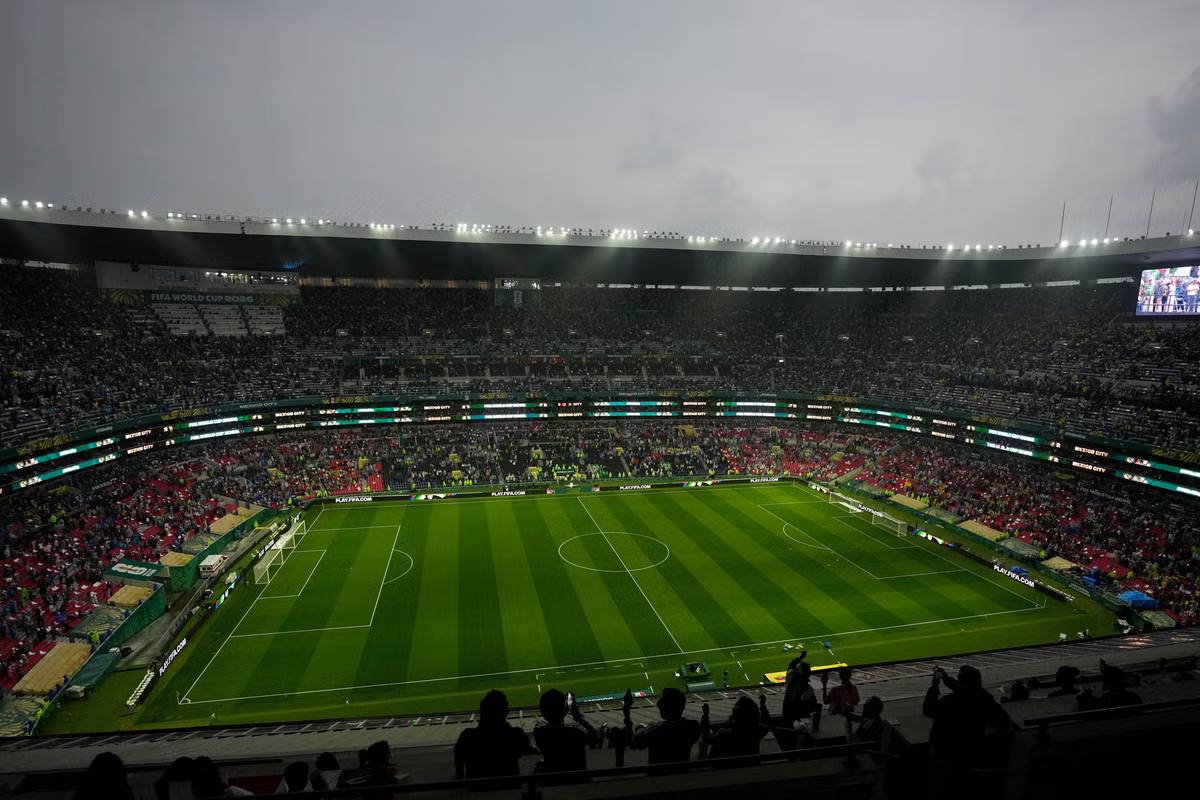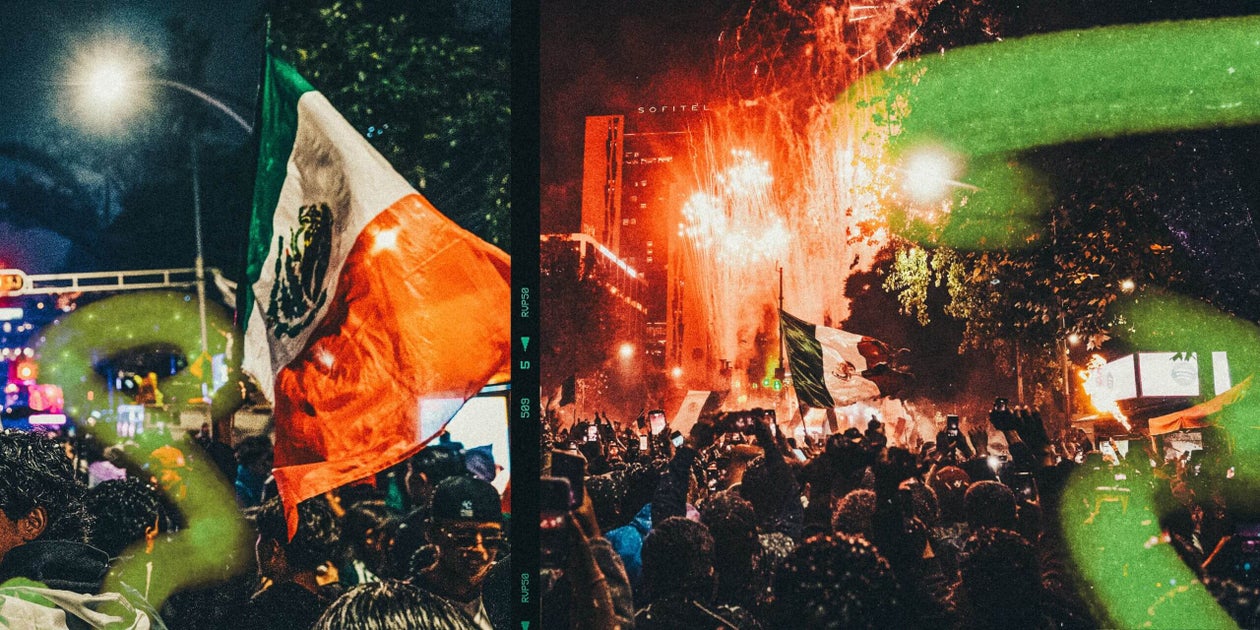
Norman Darcy, a former performance director for U.S. Soccer and the German Football Association, is talking about the mindset required when a team steps into the Azteca.“It is a little bit like the Shackleton experiment,” says Darcy. Ernest Shackleton, an Irish explorer, is remembered mainly for the 1914 Imperial Trans-Antarctic Expedition — which aimed to be the first to cross Antarctica, but his vessel Endurance was trapped and then lost in sea-ice. This turned a great explorer into a great survivor, as the expedition went down in legend for the extraordinary escape by those on board and a heroically safe return.Ahead of his quest, Shackleton put out one of the all-time great job postings: “Men Wanted for Hazardous Journey. Small Wages, bitter cold, long months of complete darkness, constant danger, safe return doubtful. Honour and recognition in case of success.”This, Darcy says, is one way for England’s players to visualize what awaits in Mexico City on Sunday night, where a passionate and talented Mexico team seek to reach their third quarter-final in World Cup history.OK, England’s players may not be encountering small wages, or bitter cold; but they will be hit by the elements, including daunting altitude, competing at 7,220ft above sea level, and a home nation which has, over the years, been suspected of gamifying every possible advantage.Last week, Ecuador fell victim to Mexico’s on-field and off-field exploits; comprehensively defeated on the pitch in the round of 32, but also disturbed in their sleep by fans playing loud music, revving vehicle engines, honking horns and setting off fireworks close to the Ecuadorean team hotel. Ecuador’s federation filed a complaint, arguing that this behavior “falls far short of the principles of fair play, equity, and unity that a football World Cup should represent.”In bygone years, those boundaries have been pushed even further. Charlie Davies, the former United States forward, scored a goal at the stadium in 2009 and looked up to see “coins, bottles and batteries” being thrown at him. Davies’ former USMNT team-mate Jozy Altidore has claimed a television was once thrown at the team bus and, on one occasion entering the stadium, he claims to have been struck by a “bag of pee.”“I get to the bench, it’s starting to stink, a little itch … I’m sitting there like ‘They really throw pee!'” Altidore told KRLD-FM, a Dallas-based radio station. “We didn’t have any extra shirts so I had to sit in that for 60 minutes … it was disgusting and nasty but it is real out there.”Since the stadium was adjusted, reducing the capacity, raising prices and adding suites, the atmosphere has become a little less intimidating. But it remains one of the most lionized amphitheaters in world soccer.Over the years, many have been beaten at the Azteca. Mexico has never lost at the venue across 10 World Cup games. They have conceded only four goals at the stadium in the 2020’s. Mexico have played 89 matches at the Azteca and won 70 of those, drawing 17 and losing only two. The team is unbeaten there since 2013, although it is worth remembering that the majority of Mexico’s opponents have been low-ranking CONCACAF sides.Mexico triumphed in a brilliantly passionate atmosphere in the round of 32 game at the Azteca (Juancho Torres/Anadolu via Getty Images)According to Darcy, now a performance consultant at MLS team Chicago Fire, preparation is key. “Some people go for the Shackleton idea,” he says. “Make the expectations way worse than what you’re going to face. Go through the mental exercise of all the potential difficulties. Think of the worst crowds you’ve ever played in, the noisiest stadiums, so that when you do get into the mix, you’ve already gone through that exercise and it’s not somebody dropping a mental bomb on you to the extent it takes you out of your game.“Preparation builds confidence. Just like the military, if we do all these pre-mortems and we work through all these potential problems, then when we get there, we’ve worked through 90 per cent of the stuff we’re gonna face so that if we face something unique and unprepared, we can really give focus to that. Otherwise, we’re just falling to our level of preparation.”That preparation can start months in advance, both on the security and operations side, but also for those specializing in the optimization of player performance.The U.S. has, over the years, drawn up a whole host of measures for visits to Mexico, as well as other particularly hostile Central American nations, including Honduras and Costa Rica, to ensure that the team is both prepared and secured.When, for example, the U.S. played at the Azteca against Mexico in a World Cup qualifier in March 2022, conversations took place up to six months in advance with security experts at the U.S. embassy in Mexico to ensure there was a level of co-operation and trust between the visiting team and the local police.According to multiple current and former U.S. Soccer personnel, who asked to remain anonymous to protect relationships, there was a previous case where the police escort provided to the U.S. team appeared to lead the team into more traffic by taking a more circuitous route to the stadium. To this day, it is not known or proven if it was intentional. A regional security officer tied to the embassy will make a special assessment of risks and logistics, while the embassy also ensures there is a police escort for not only the team but also the luggage and belongings of the U.S. travelling party.US fans being searched on the way into the Azteca in March 2022 (Doug Zimmerman/ISI Photos/Getty Images)The choice of hotel also plays a part. In Mexico City, visiting teams tend to stay either close to the airport to allow a quick getaway, or downtown in the heart of the city. Ecuador stayed in the Westin Hotel in the Santa Fe neighborhood, away from the downtown area, but fans tracked down their location and caused disturbances in the night. The U.S. federation by now has a number of contingencies.Ahead of the 2022 game, those safeguards included hiring security personnel to monitor fire alarms on guest floors at the team hotel. The federation also requested that the hotel block any domestic phone calls being received in hotel rooms housing the U.S. players, to avoid any prank calls in the early hours.When travelling to hostile environments, soccer players, like many celebrities, are also assigned with fake names to their hotel rooms to prevent any calls or deliveries being made to their rooms. Performance expert Darcy says players would be provided with earplugs, including newly designed ones which allow people to rest their head on the pillow without it feeling uncomfortable on the ear. “It can also add white noise to help dampen outside effects,” he says.Visiting teams, particularly from wealthy nations who have the means to pay for it, will also request the most secluded rooms in the hotel, and away from the street side to minimize noise exposure.Surveillance cameras were also placed on the team floors of the hotel, as well as in the lobby and meeting rooms, and local media were only permitted in the team hotel for official press events, while fans were barred from the premises altogether. Multiple officials say that players are advised, outside of training sessions, to remain in the hotel complexes at all times to avoid any risk of altercations or safety risks in public. The local U.S. embassy is also asked to make a judgment, which varies across Central America and the Caribbean, as to whether a risk assessment requires a bomb sweep of every room.Darcy says: “You’re definitely trying to mitigate as many risks as possible and some people could call it even paranoia potentially. But I’ve heard no shortage of stories, especially more so in the olden days. If you got one upset sous chef who doesn’t like who they’re feeding and they want to put something in the hamburger and give everybody upset stomachs, that is all possible. I’ve heard stories of that happening in the past.”
How England can handle the ‘mental bomb’ of the Azteca: Fireworks, fire alarms and worse
England's World Cup last 16 game is against Mexico at the Azteca, this is how other teams have prepared in the past and the challenges ahead
1,960 words~9 min read