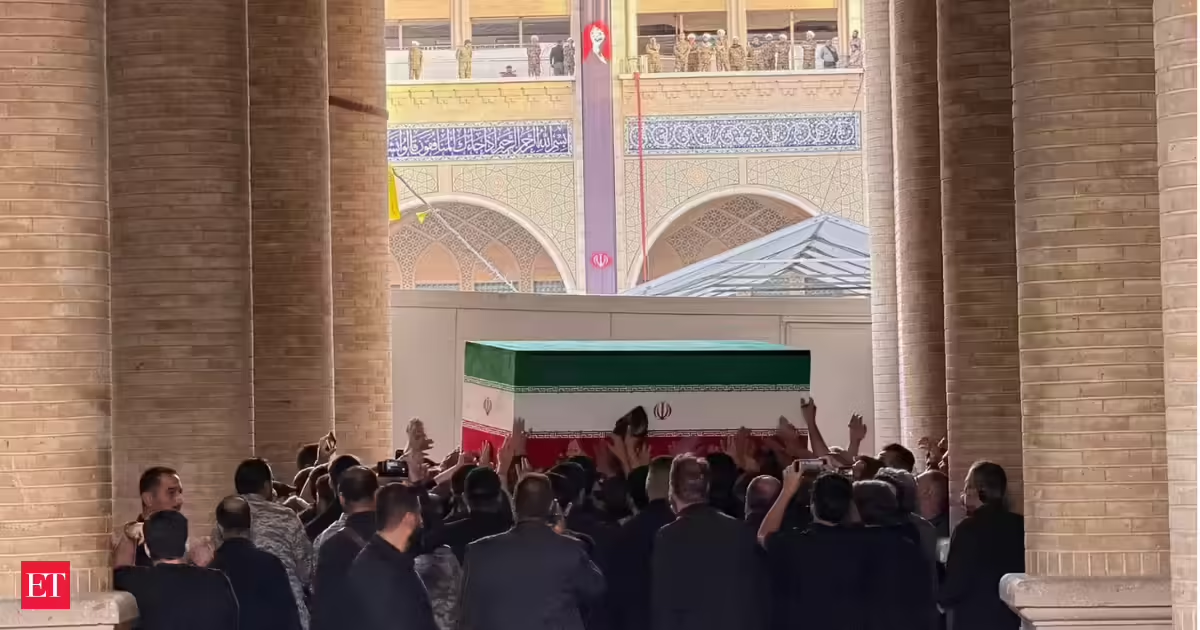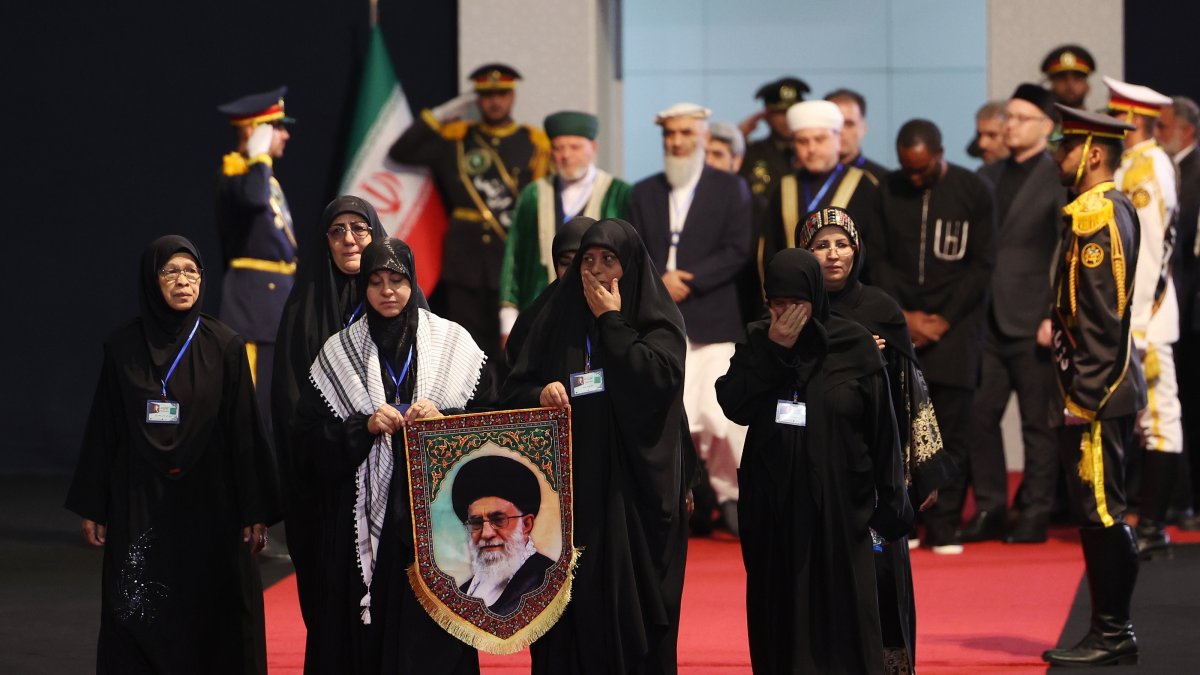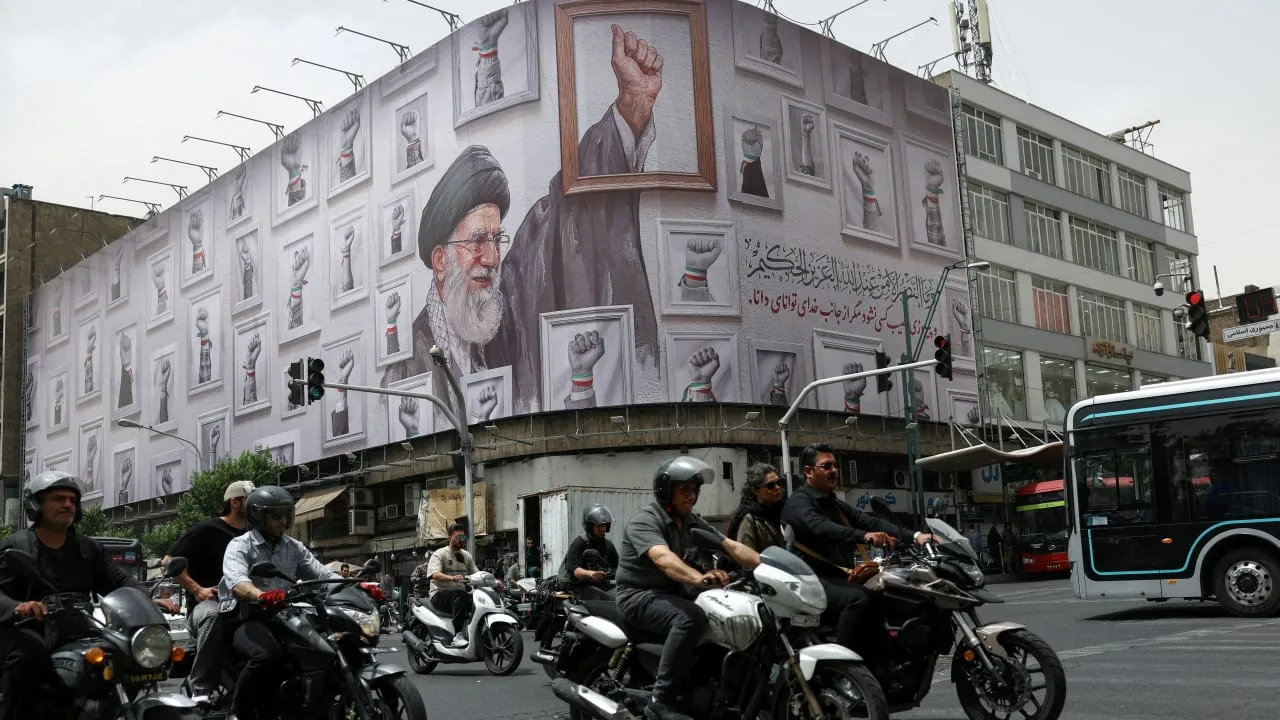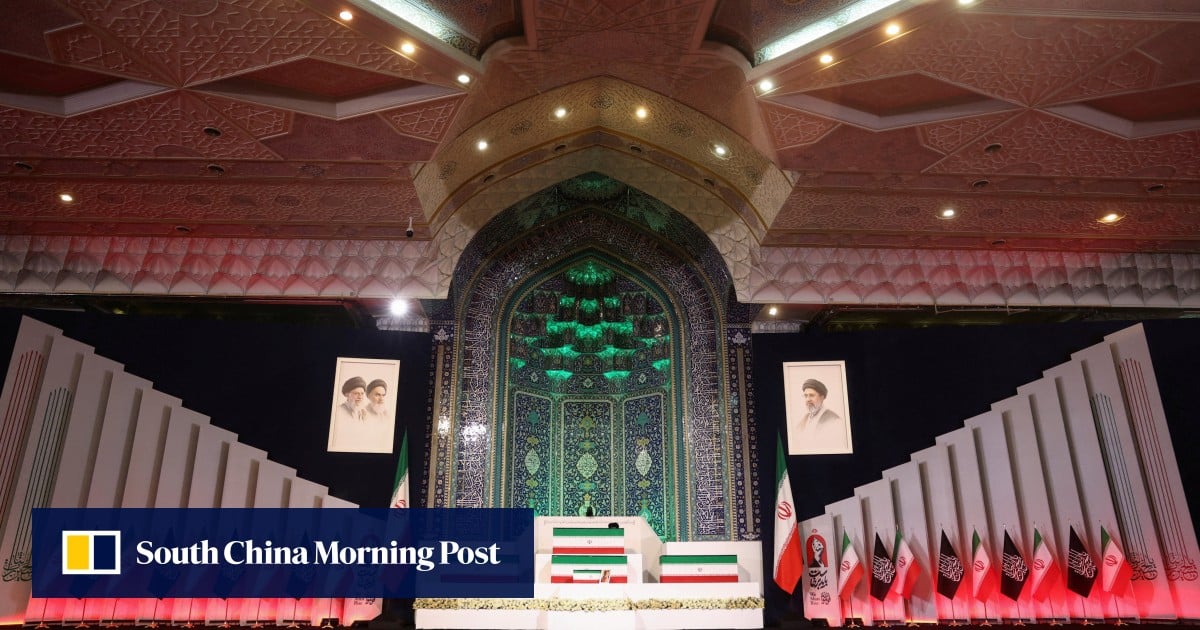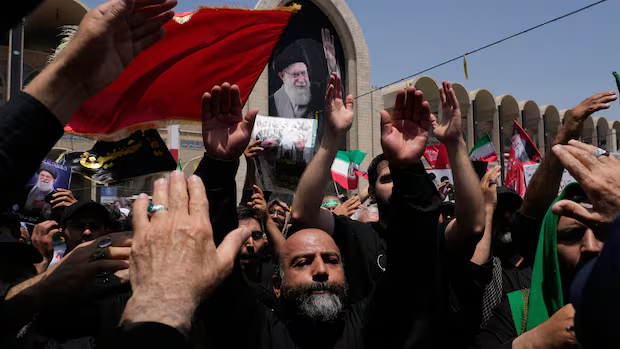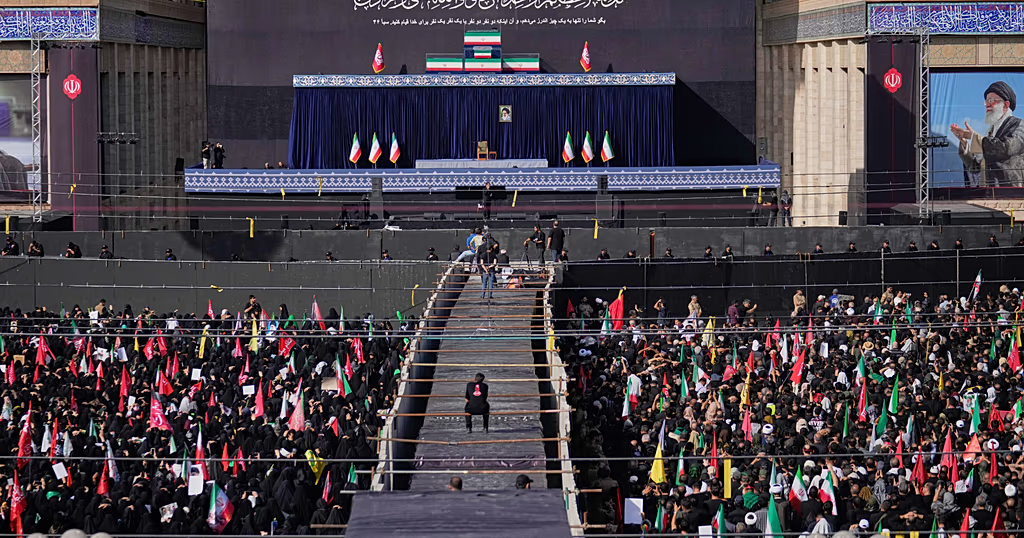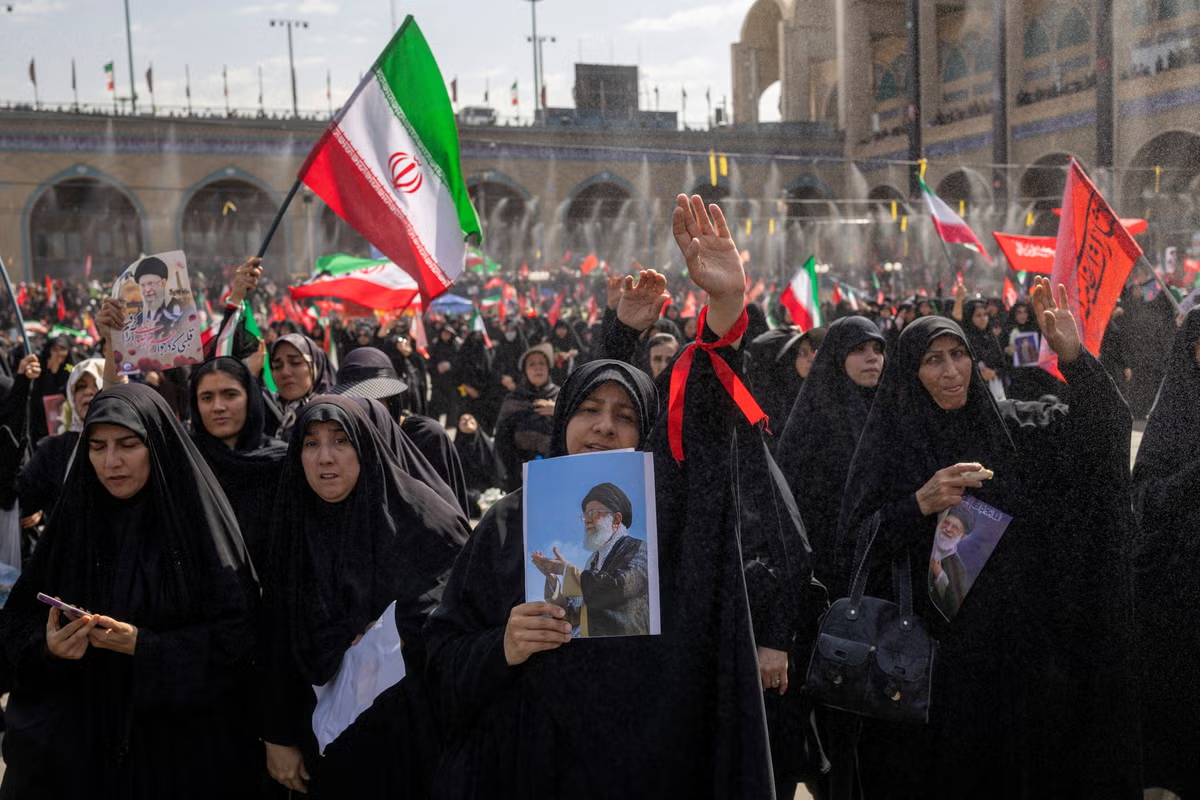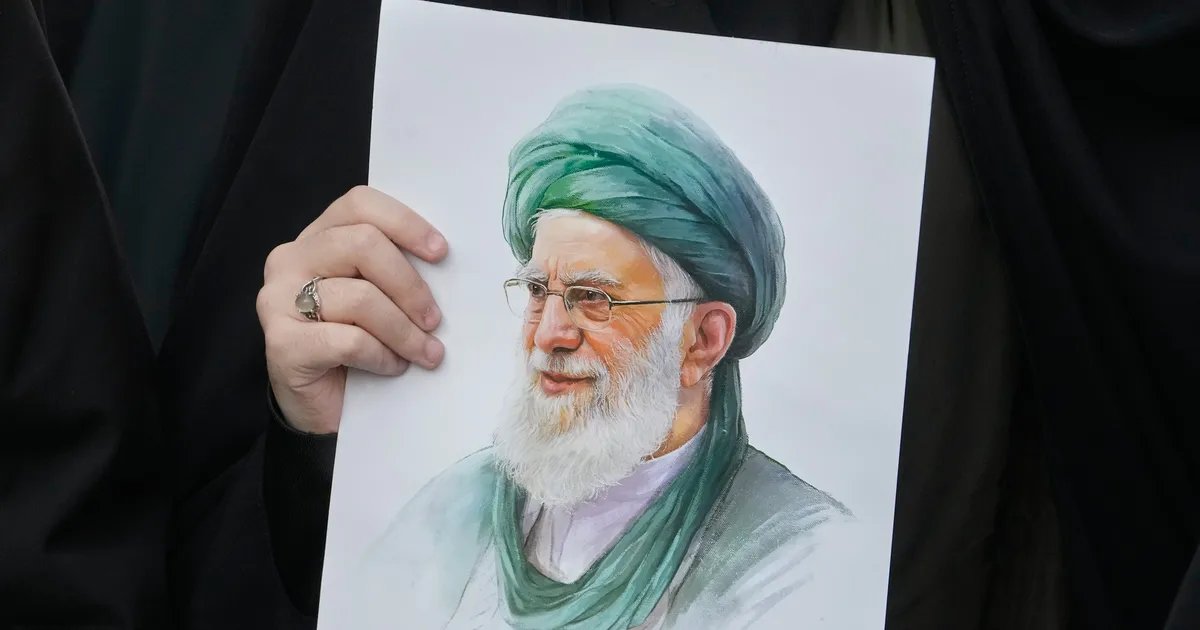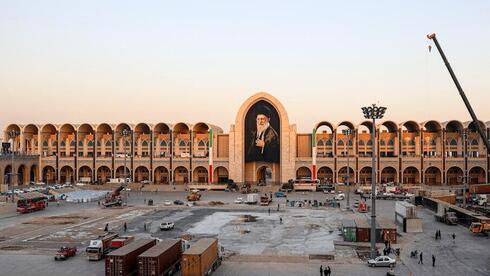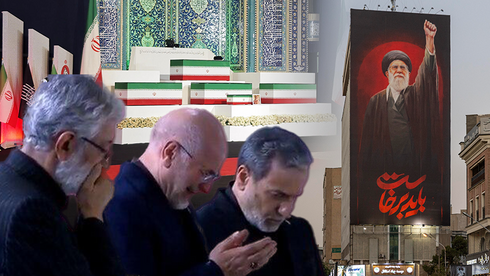
Millions expected at nearly weeklong ceremonies across Iran and Iraq as the regime casts its slain supreme leader as a Shiite martyr, projects unity after months of turmoil and vows revenge against Israel and the United Statesynet, news agencies|More than four months after Iran's Supreme Leader Ayatollah Ali Khamenei was killed in the opening strike of the war that sought to topple the Islamic Republic, Iran on Friday began a series of mass funeral ceremonies intended both to honor the longtime leader and to project strength after the conflict.Thousands began filing past Khamenei's coffin Saturday morning at Tehran's Imam Khomeini Mosque, as authorities imposed extensive traffic restrictions across the capital ahead of public mourning ceremonies that began at 6 a.m. Israel time.Iran bids farewell to Supreme Leader Ayatollah Ali Khamenei in mass funeralWATCH: Iranian Parliament Speaker Mohammad Bagher Ghalibaf weeps beside Ali Khamenei's coffin Iranian President Masoud Pezeshkian and senior officials weep beside Ali Khamenei's coffin as funeral ceremonies begin (Video: Reuters)People wait outside the mosque in Tehran, Iran, where Ali Khamenei's coffin was placed ahead of its public viewing Saturday morning The funeral events, spanning three cities in Iran and two in Iraq, are expected to draw millions of participants, according to Iranian authorities. Alongside public mourning, the ceremonies are being presented by the government as a demonstration of resilience following a war in which the leadership says it survived an attempt to overthrow the regime and emerged strategically stronger, citing what it describes as increased control over the Strait of Hormuz, a vital global oil shipping route.Khamenei was only the second supreme leader of the Islamic Republic. He succeeded Ayatollah Ruhollah Khomeini in 1989, a decade after the Islamic Revolution. During his 37 years in power, Iran expanded its influence across the Middle East while the Islamic Revolutionary Guard Corps gained increasing political and military power.Since Khamenei's killing on Feb. 28 and the appointment of his son Mojtaba Khamenei as his successor, hardline elements within the Iranian establishment and the Revolutionary Guard have further consolidated their influence. Despite reaching an agreement with the United States, Iranian officials have continued issuing threats against both the U.S. and Israel. Calls for revenge over Khamenei's assassination have become a central theme of the funeral ceremonies.The funerals were delayed for months. Initially, the ceremonies were postponed because of the more than monthlong war. Even after the ceasefire in April, Iranian authorities waited to hold the events during Muharram, the holiest month of mourning in Shiite Islam, culminating in Ashoura, which commemorates the seventh-century death of Imam Hussein.GalleryThe funeral of Ali Khamenei in Tehran, Iran Iranian President Masoud Pezeshkian and senior officials weep beside Ali Khamenei's coffin as funeral ceremonies begin (Photo: Reuters)(Photo: Reuters)The timing underscores Iran's effort to portray Khamenei not only as the country's leader but also as a spiritual leader for Shiites worldwide, and, after his death, as a martyr who sacrificed his life.Saturday's public viewing at Imam Khomeini Mosque also coincides with the 250th anniversary of U.S. independence, a symbolic contrast that Iranian officials have highlighted as Washington advances an agreement with the same government that President Donald Trump vowed during the war would face "total surrender."Iranian officials have pledged to stage what they describe as the largest funeral in the country's history. The nearly weeklong events could draw between 15 million and 20 million participants in Tehran alone, according to government estimates.The ceremonies began Friday with Khamenei's coffin being placed inside the vast Imam Khomeini Mosque complex, where senior Iranian officials and foreign delegations paid their respects. The mosque will remain open to the public through Sunday.(Photo: Reuters)(Photo: Reuters)(Photo: Majid Saeedi/Getty Images)On Monday, authorities plan a mass funeral procession from the mosque to Tehran's Azadi Square, where millions are expected to gather. On Tuesday, the coffin will be transferred to the holy Shiite city of Qom. On Wednesday, it will be taken to the Iraqi shrine cities of Najaf and Karbala for additional ceremonies before Khamenei is buried the following day in his hometown of Mashhad in northeastern Iran, another major Shiite pilgrimage center.Also placed beside Khamenei's coffin were the coffins of relatives killed alongside him in the opening strike, including his infant granddaughter and the wife of his son Mojtaba, who was wounded in the attack and has remained out of public view since then.Khamenei's black turban, traditionally worn by Shiite clerics who claim descent from the Prophet Muhammad, rested atop the coffin. A keffiyeh was placed beneath it, symbolizing both solidarity with the Palestinians and, in Iran's official narrative, revolutionary resistance.Among those attending were President Masoud Pezeshkian, Parliament Speaker Mohammad Bagher Ghalibaf and Judiciary Chief Gholam-Hossein Mohseni-Ejei, presenting a display of unity after reports of internal divisions during and after the war.(Photo: Majid Saeedi/Getty Images)(Photo: Majid Saeedi/Getty Images)(Photo: Majid Saeedi/Getty Images)Echoing scenes from previous funerals attended by Khamenei, including that of Quds Force commander Qassem Soleimani, senior officials appeared visibly emotional. Pezeshkian was seen wiping away tears, while Ghalibaf broke down sobbing. Foreign Minister Abbas Araghchi, standing beside him, briefly turned toward the parliament speaker before resuming a composed expression.A group of Iranian generals also saluted the coffin. Earlier this week, Revolutionary Guard commander Gen. Ahmad Vahidi, who succeeded Gen. Mohammad Pakpour after Pakpour was killed in the opening strike of the war, made his first public appearance since the conflict.Foreign delegations attended Friday's initial memorial service, though none represented Western countries. Among the highest-ranking visitors were Pakistani Prime Minister Shehbaz Sharif, whose government has played a mediating role with Washington, and Georgian President Mikheil Kavelashvili.Russia was represented by former President Dmitry Medvedev. Delegations from Hamas, Hezbollah and the Houthis also attended, along with representatives from Saudi Arabia, Iran's longtime regional rival, reflecting shifting regional calculations following the war. Family members of slain Hezbollah Secretary-General Hassan Nasrallah and former Hezbollah military chief Imad Mughniyeh also took part.Pakistani Prime Minister Shehbaz Sharif prays during Ali Khamenei's funeral procession in Tehran, Iran (Photo: AFP PHOTO/Pakistan's Prime Minister Office)A banner depicting Ali Khamenei is displayed in Tehran, Iran, ahead of his funeral ceremonies (Photo: Majid Saeedi/Getty Images)A portrait of Ali Khamenei is displayed at the Imam Khomeini Grand Mosque in Tehran, Iran, where his funeral ceremonies began (Photo: Majid Saeedi/Getty Images)Hundreds of mourners gathered outside Imam Khomeini Mosque before dawn Saturday in hopes of being among the first to pay their respects. Iran expects millions to attend ceremonies across the country, posing a major logistical challenge even before accounting for the severe economic crisis that has strained the country's finances and infrastructure.The government is counting on a massive turnout to project national unity and strength despite the country's economic difficulties and after large anti-government protests earlier this year that authorities violently suppressed.In preparation for the funeral ceremonies, Iranian state television has aired documentaries and tributes celebrating Khamenei's life. Tehran and other cities have been decorated with giant posters depicting him raising a clenched fist, a symbol promoted by the government after officials claimed his body was recovered with his hand still clenched.Authorities described the funeral preparations as an unprecedented logistical operation involving government employees, the military, labor organizations and organized volunteer mourning groups."We must rise and make the cry of the nation's blood heard before the world, so the world will know that the honorable and noble nation of Iran will not remain silent in the face of tyranny and will not relinquish the blood of its imam," Parliament Speaker Ghalibaf said this week. "It will be an epic act of heroism that will demonstrate to the world the greatness of the Iranian nation."
Iran’s leaders weep over Khamenei’s coffin in mass funeral show of defiance | Live
Millions expected at nearly weeklong ceremonies across Iran and Iraq as the regime casts its slain supreme leader as a Shiite martyr, projects unity after months of turmoil and vows revenge against Israel and the United States
1,255 words~6 min read