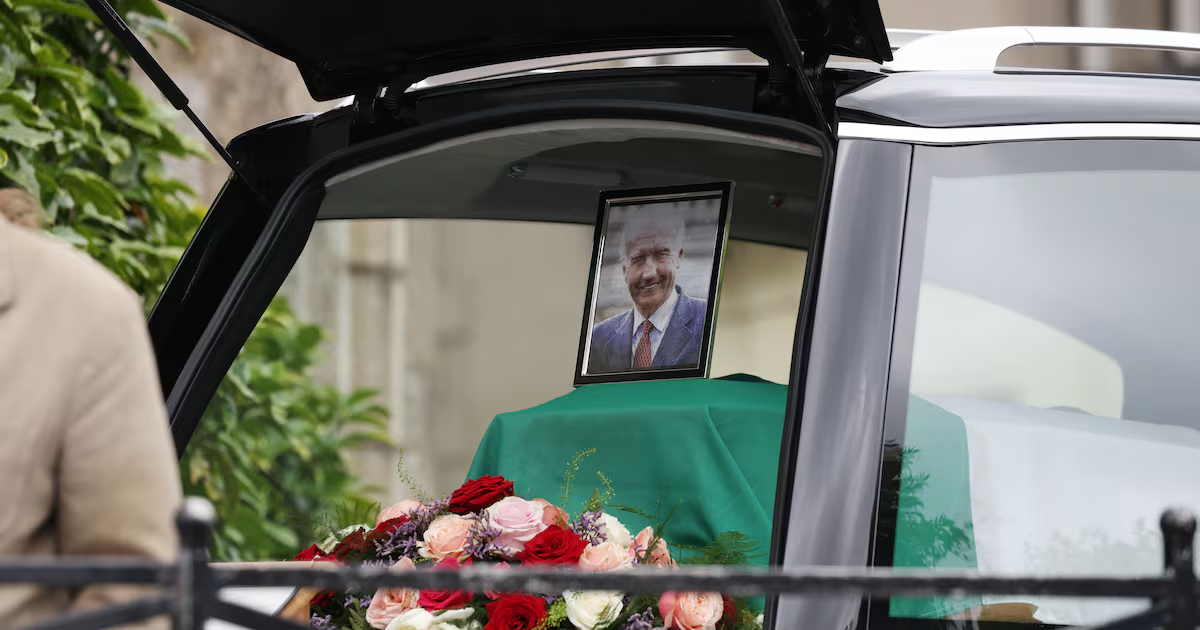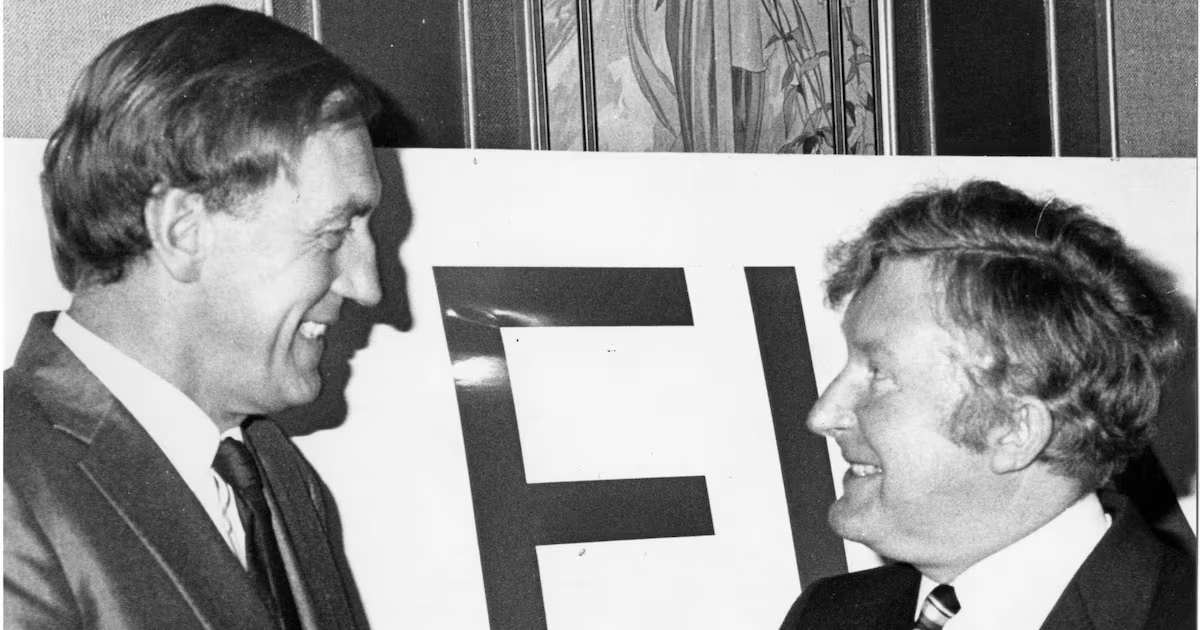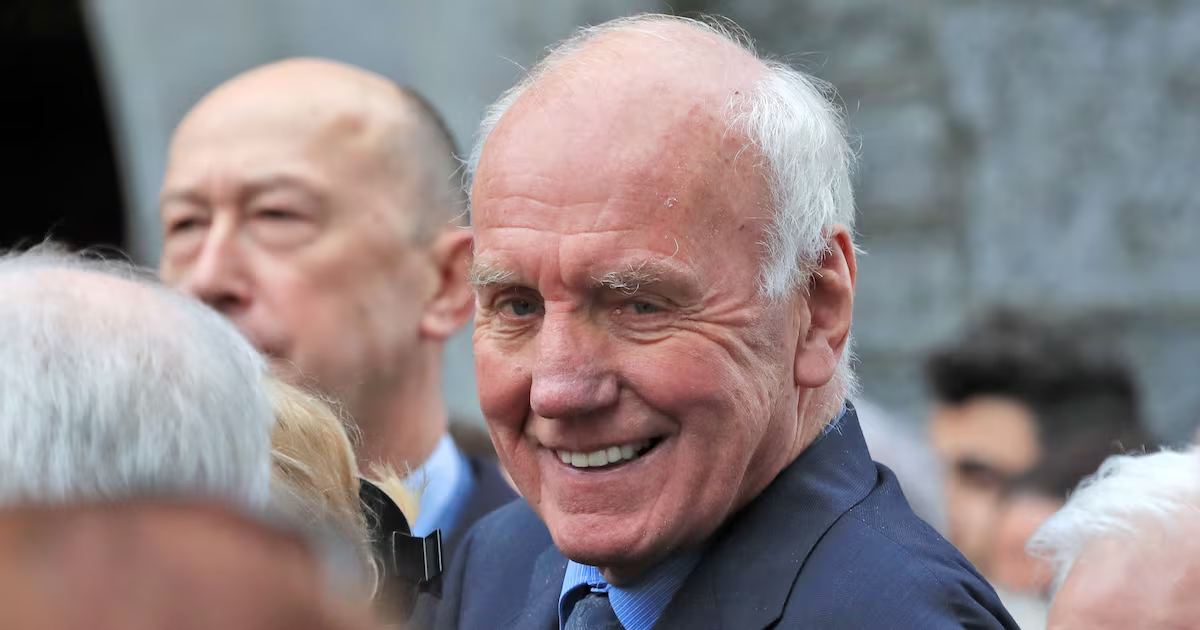
Born March 15th, 1935Died June 30th, 2026David Andrews played a prominent role in Irish politics for almost 40 years. His ministerial career was interrupted for more than a decade because of his opposition to Charles Haughey but he later served as minister for foreign affairs at a critical stage in the peace process.Andrews made an immediate impact following his election to the Dáil in 1965 with his imposing presence – he was more than 6ft tall – and confident, if languid, air. A bright future was forecast for him and the fact that he was the son of Todd Andrews, a leading figure in Fianna Fáil from its foundation, gave added weight to his reputation.His promotion to the important post of government chief whip in 1970 appeared to confirm that a glittering political career lay ahead but the convulsions in Fianna Fáil that followed the arms crisis that year delayed his promotion to the cabinet.An inveterate opponent of Charles Haughey and close friend of Des O’Malley, he was banished to the political wilderness during the 1980s. During that time he was comfortably re-elected as a TD for Dún Laoghaire despite, or maybe because of, the party leader’s undisguised antipathy towards him.Always courteous to political friends and foes alike, he developed a close friendship with Michael D Higgins, then a firebrand left-wing Labour TD. The two men shared a common view on the right of Palestinians to a homeland, and they made frequent visits to the Middle East together to promote that cause.Andrews was finally appointed to the cabinet in the 1990s and particularly relished being minister for foreign affairs during the negotiations that led to the culmination of the peace process.[ Former Fianna Fáil minister David Andrews dies aged 91Opens in new window ]David Andrews was born in 1935 at a time when Fianna Fáil was in the process of becoming the dominant party in the State. His father who had been active in the War of Independence and the Civil War boss of a number of State bodies, most notably Bord na Móna and CIÉ.The family lived in Dundrum in south Co Dublin and Andrews attended the Irish-speaking Coláiste Mhuire before going to boarding school at the Cistercian College in Roscrea, Co Tipperary. When he finished school, he went on to study law at UCD and subsequently qualified for the bar at King’s Inns.He built up a steady law practice and, in 1963, married Annette Cusack. The couple had five children. By that stage the political bug had begun to bite and he joined Fianna Fáil in the Dún Laoghaire constituency. He was selected to run as a candidate in 1965 alongside the sitting party TDs, Sean Brady and Lionel Booth.Andrews was the Fianna Fáil poll topper on his first outing, winning almost 8,000 votes and being elected alongside Booth. Brady, who had served as a TD for the area since 1927, lost his seat at the age of 75. The change was seen as symbolic of the takeover of the party by a new, more outward-looking generation.Andrews was appointed by Seán Lemass in 1966 to be a member of the all-party committee that was asked to review the Constitution. The committee made a number of far-reaching recommendations, including the modification of the territorial claim to Northern Ireland and the removal of the special position of the Catholic Church. It would take another 30 years for the territorial claim to be replaced by an aspirational clause, but fittingly Andrews was the minister for foreign affairs when the referendum to implement the change was passed in 1998 with more than 90 per cent voting Yes.Andrews supported Jack Lynch during the arms crisis of 1970, which convulsed Fianna Fáil. He was promoted to the position of government chief whip that year after Lynch sacked Charles Haughey and Neil Blaney from the cabinet. He replaced Des O’Malley, who became minister for justice, and the two men became close friends from then on.When Fianna Fáil lost office in 1973, he was appointed party spokesman on justice and social welfare. When Fianna Fáil returned to power in the landslide of 1977, he was deeply disappointed not to be appointed to the cabinet by Lynch. Instead he was appointed minister of state at the Department of Foreign Affairs.Novermber 1982. taoiseach Charles Haughey campaigning with David Andrews in Dún Laoghaire ahead of a general election. Photograph: Paddy Whelan When Lynch resigned in December 1979, Andrews and O’Malley were prominent supporters of George Colley, who was narrowly defeated for the leadership by Haughey. For the following decade he languished on the backbenches as the party was riven by internal heaves.Andrews never made any bones about his distrust of Haughey and backed each of the attempts to change the party leader in the 1982-1983 period. He went public about the level of intimidation directed against Haughey’s opponents, citing the attempt to deprive him of legal work he conducted for the insurance company PMPA.His brother Niall was also elected to the Dáil in 1977 and took the opposite side in the internal Fianna Fáil strife as a vocal backer of Haughey. He went on to become an MEP for Dublin.When Haughey finally departed in early 1992, Albert Reynolds brought David in from the cold and appointed him minister for foreign affairs. He was delighted with the move to Iveagh House, but his joy was short-lived. Following the election of November 1992, Fianna Fáil did a coalition deal with the Labour Party, and Dick Spring took over at Iveagh House, with Andrews being moved to defence and marine.When Fianna Fáil suddenly lost office at the end of 1994, the new party leader, Bertie Ahern, appointed Andrews opposition spokesman on tourism and trade, and when the party made it back to power in the summer of 1997, he was back in the cabinet, initially as minister for defence but was soon back in foreign affairs after Ray Burke’s shock resignation.It was a time of intense activity in the department, with the negotiations leading to the Belfast Agreement in 1998. Andrews was engaged with northern secretary Mo Mowlam in some of the key discussions that led to the agreement.Northern secretary Mo Mowlam and minister for foreign affairs David Andrews sign agreements at Dublin Castle. Photograph: John Cogill
David Andrews obituary: Former Fianna Fáil minister who played role in Belfast Agreement
An opponent of Charles Haughey and close friend of Des O’Malley, he was banished to the political wilderness during the 1980s
1,189 words~5 min read